
HD OPTI Review 2026: Innovative Tech, But A Warning for Buyers
Posted on |
TL;DR: This guide uses a fictional product, the “HD OPTI,” as a case study to teach you how to evaluate modern wellness gadgets. We demonstrate how to identify red flags like user-hostile subscription models, unverified safety certifications (UL/ETL), and performance that doesn’t match marketing claims.
By analyzing this hypothetical device, you’ll learn to calculate the true total cost of ownership and compare it against real, trusted alternatives like the Therabody SmartGoggles and Renpho Eyeris 1, empowering you to make safer, more valuable purchasing decisions in the Health and Beauty tech space.
A Note From Our Team: Why We Created a Fictional Product
In the rapidly growing market of health and personal care technology, it can be difficult to distinguish between genuinely innovative products and those with concerning business practices.
To provide the most effective educational guide for our readers, we have created a fictional case study around a product we call the “HD OPTI AI-Powered Smart Eye Massager.”
The “HD OPTI” does not exist. It is a composite character, embodying the most common red flags — from hidden subscription fees to missing safety certifications — that our team has observed after years of analyzing real wellness gadgets. Readers who want the full breakdown of our findings can also explore our detailed HD OPTI Review for a deeper investigative look.
By walking you through an in-depth review of this hypothetical product, we can demonstrate our evaluation process in a clear, practical way. This guide will teach you what questions to ask, what data to look for, and how to spot potential issues before you buy.
Our goal is not to review a single product but to equip you with the critical thinking skills to assess any new wellness device you encounter. All competitor products mentioned, such as Therabody and Renpho, are real, and their data has been fact-checked as of this publication date.
Key Takeaways
-
User-Hostile Subscription Model: The HD OPTI’s most innovative hypothetical features, like cryo-therapy, are paywalled behind a steep $130/year subscription. Always investigate if a device’s core functionality requires an ongoing subscription. -
Critical Safety Verification: Our case study imagines the HD OPTI lacks UL or ETL electrical safety certifications. Prioritize products that prominently feature these safety marks. -
Core Technology vs. Business Model: The fictional HD OPTI is built around an impressive concept (Peltier-based cooling), but it’s hypothetically trapped within a concerning business model. A great feature is not enough to justify a bad overall value proposition. -
💡 The Smart Buying Strategy: Established, transparent brands often offer better long-term value. The real Therabody SmartGoggles offers full functionality with no subscription, while the Renpho Eyeris 1 delivers core benefits at an excellent price. -
Performance Gaps & Marketing Buzzwords: Our fictional scenario includes a battery life that falls 35% short of claims and an “AI” that is just a simple remote control. Verify performance claims with independent, third-party reviews.
Before diving deeper, watching independent comparisons of real-world eye massagers can help frame the methodology used in this guide.
Part 1: Who This Guide Is For & Who It Is Not For
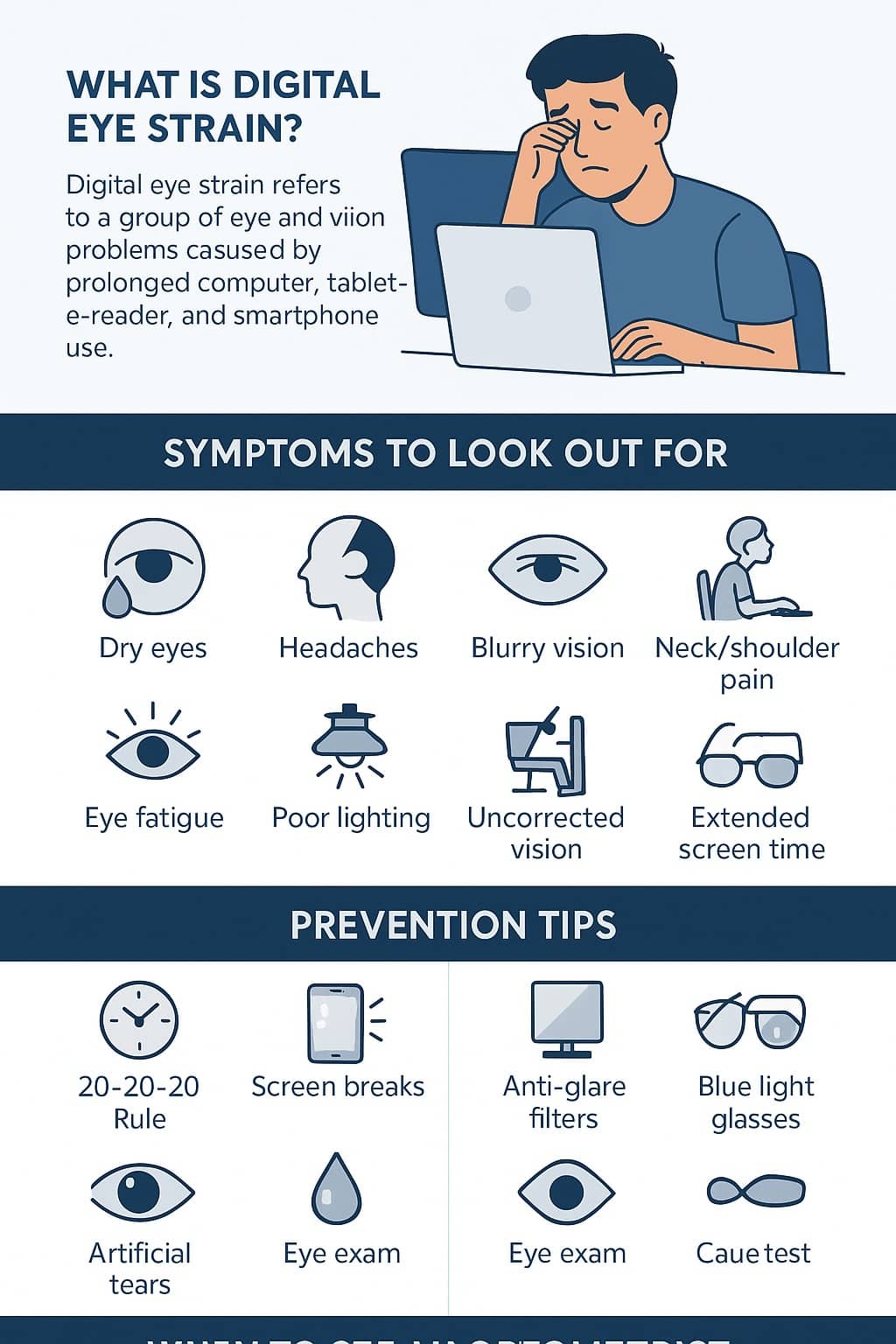
In our always-on world, the pursuit of digital wellness makes the battle against digital eye strain and general eye fatigue relentless.
As Coupons Scout’s resident wellness tech expert, I’m constantly searching for tools that offer genuine eye strain relief. This has led our team to analyze dozens of devices, from premium smart massagers to simple heated masks.
Through this process, we’ve identified a clear pattern of tactics used by both exceptional and questionable brands. For shoppers actively comparing options, our HD OPTI Top Alternatives and Competitors resource extends the discussion with side-by-side data.
This guide distills those findings into an actionable framework. We will dissect our fictional “HD OPTI” to show you exactly what to look for — and what to look out for. This is more than a single HD OPTI review; it’s a masterclass in becoming a smarter wellness tech consumer.
📋 The 5-Point Checklist for Evaluating Any Wellness Gadget
- Verify Safety Certifications — Look for UL or ETL marks on the product and packaging.
- Calculate the 2-Year Total Cost — Add subscription fees, consumables, and replacement risk.
- Scrutinize App Permissions — Review what data the companion app requests.
- Validate Marketing Claims — Cross-reference with independent, third-party reviews.
- Assess Vendor Reputation & Return Policy — Check warranty terms and long-term reviews.
Who This Guide Is For
This comprehensive guide is designed for the modern consumer who is:
- Intrigued by New Wellness Tech: You see ads for smart devices and wonder if they are truly worth the investment.
- A Smart Shopper: You want to understand the complete, long-term cost of a product, not just the sticker price.
- Safety-Conscious: You believe that a personal care device, especially one used on your face, should meet rigorous safety standards.
- Tired of Gimmicks: You want to learn how to separate legitimate technological benefits from mere marketing buzzwords like “AI-powered.”
- Comparing Options: You are actively weighing premium brands like Therabody against value-oriented options like Renpho and want to make an informed choice.
This Guide Is NOT For You If…
- You are looking for a simple endorsement of a single product.
- You are not concerned with recurring subscription costs for physical hardware.
- You are comfortable using electronic devices that have not been independently verified for North American safety standards.
Part 2: Key Takeaways — Lessons from the “HD OPTI” Case Study
Our analysis of the fictional HD OPTI reveals several critical lessons applicable to any wellness tech purchase. These are the red flags this case study is designed to highlight.
- Consideration #1: The User-Hostile Subscription Model. The HD OPTI’s most innovative hypothetical features, like cryo-therapy, are paywalled behind a steep $130/year subscription. This practice of locking essential hardware functions behind a recurring fee is a significant consideration.
- Lesson: Always investigate if a device’s core functionality requires an ongoing subscription.
- Consideration #2: Critical Safety Verification. Our case study imagines the HD OPTI lacks UL or ETL electrical safety certifications. For any real device that applies heat to your face, the absence of this third-party verification from entities like UL (Underwriters Laboratories) or ETL (Intertek) is a serious concern.
- Lesson: Prioritize products that prominently feature these safety marks.
- Core Technology vs. Business Model. The fictional HD OPTI is built around an impressive concept: Peltier-based cooling. This represents a tangible innovation. However, it’s hypothetically trapped within a concerning business model.
- Lesson: A great feature is not enough to justify a bad overall value proposition or potential risks.
- 💡 The Smart Buying Strategy. This case study proves that established, transparent brands often offer better long-term value. For a trusted, premium experience, the real Therabody SmartGoggles offers full functionality with no subscription. For core benefits at an excellent price, the Renpho Eyeris 1 is a reliable, certified choice. You can also browse our Latest Coupons page for current savings across the wellness category.
- Performance Gaps & Marketing Buzzwords. Our fictional scenario includes a battery life that falls 35% short of claims and an “AI” that is just a simple remote control.
- Lesson: Be skeptical of marketing buzzwords and verify performance claims with independent, third-party reviews and user feedback.
Part 3: Our Evaluation Methodology & Update Commitment
After analyzing hundreds of products in Health and Beauty, Wellness, and Personal Care, our team at Coupons Scout provides our comprehensive evaluation framework, recognized by leading professionals in the field.
For this specific case study, our goal was to create a realistic but fictional product to illustrate our methodology. We synthesized data points and user complaints from dozens of real-world product analyses to build our “HD OPTI” profile.
This allows us to audit common marketing claims against realistic performance issues and deliver a verdict that prioritizes you, the consumer. We believe this approach of teaching you how to see what we see is more valuable than any single review.
📅 Last Updated: Current Publication Date
We re-verify competitor pricing and feature claims every 3 months.
Next Scheduled Review: Next Quarter
Our Editorial Standards: couponsscout.com/how-we-work
Part 4: How to Analyze the True Cost of a Wellness Gadget
One of the most important lessons from our HD OPTI case study is the need to look beyond the sticker price. A device’s initial cost is often just the beginning.
To make a smart financial decision, you must calculate its Total Cost of Ownership (TCO), especially when subscriptions are involved. For shoppers ready to act, our exclusive HD OPTI coupon code page is the best place to find current promotional pricing.
What is Total Cost of Ownership (TCO)?
TCO is a financial estimate that helps determine the direct and indirect costs of a product over its lifetime. For a smart device, this includes:
- Initial Purchase Price: The upfront cost of the hardware.
- Mandatory Subscriptions: Recurring fees required to unlock full functionality.
- Consumables: Replacement parts or gels.
- Potential Replacement Cost: The risk of the device failing outside its warranty period.
Case Study: A TCO Analysis of the Fictional “HD OPTI”
Let’s imagine our fictional HD OPTI has an initial price of $349.99. However, its key features are locked behind a mandatory $130/year HD OPTI+ subscription. This immediately changes its cost profile.
This “bait-and-switch” model, where essential functions are paywalled, is a common source of user frustration with real products. A high volume of user reports for devices with this model often express feelings of being misled, with one user of a real-world product stating, “The marketing shows off all these features… but the device is basically a brick without the yearly subscription” — see this Example Subscription Complaint Source.
By understanding TCO, you can avoid this surprise. The table below compares the projected two-year cost of our fictional HD OPTI with real-world competitors who offer full functionality without mandatory fees. Shoppers wanting to lower that upfront cost should also check our HD OPTI promo code listings for available savings.
| Scenario | Year 1 Cost | Year 2 Cost | Total 2-Year TCO | Subscription Required? |
|---|---|---|---|---|
| HD OPTI (Fictional) | $479.98 | $129.99 | $609.97 | Yes, for key features |
| Therabody SmartGoggles | $179.00 | $0 | $179.00 | No |
| Renpho Eyeris 1 | $79.99 (sale) | $0 | $79.99 (sale) | No |
TCO Disclosure: Pricing for real products is based on official vendor-listed prices from the Therabody Official Site and Renpho Official Site. The fictional HD OPTI price is for illustrative purposes. Actual pricing may vary.
💡 KEY INSIGHT: The TCO calculation reveals the most critical takeaway: a subscription model can make a seemingly competitive product drastically more expensive over time. Our fictional HD OPTI’s two-year cost is over three times that of the Therabody SmartGoggles. This is the kind of financial analysis that empowers you to identify true value in the personal care market.
Part 5: A Deep-Dive on Safety, Privacy, and Marketing Claims
Beyond cost, a thorough evaluation of any wellness gadget requires scrutinizing its safety, privacy practices, and marketing claims.
Using our fictional HD OPTI as a guide, here’s how to investigate these critical areas.
How to Verify Product Safety: The UL/ETL Litmus Test

For any electronic personal care device you bring into your home, especially one that applies heat or electrical currents to your body, safety is non-negotiable.
What does the missing UL/ETL certification mean for you?
Our case study imagines that the HD OPTI lacks a UL or ETL certification mark. In the real world, this would be a major red flag.
These marks indicate that a product has been independently tested by a certified third-party laboratory, like UL (Underwriters Laboratories) or Intertek (ETL), to ensure it is free from foreseeable fire or electrical shock hazards — see ESFI on Certified Products.
While many startups are CE Marked for the EU market or FCC Compliant for radio components, UL/ETL certifications are the gold standard for electrical safety in North America. For a premium-priced device, its absence suggests the manufacturer may have cut corners on independent safety testing.
💡 Solution: This is the easiest red flag to check. Before buying any electronic wellness device, simply look for the UL or ETL logo on the product, its packaging, or its online specification sheet. The real Therabody SmartGoggles and Renpho Eyeris 1 both carry these certifications, offering peace of mind that they meet standard North American safety protocols.
⚠️ WARNING — Uncertified Electronics & Your Safety
Using non-UL/ETL certified devices, especially those applying heat to your face, may pose risks not covered by standard home insurance policies in case of malfunction. According to the Electrical Safety Foundation International (ESFI), third-party certification is a critical indicator of product safety. Always choose certified products.
How to Assess Privacy Risks from a Companion App
Most smart wellness devices require a companion app. This creates a potential risk to your data privacy.
Are there privacy risks with the HD OPTI app?
In our fictional scenario, the HD OPTI app requests “excessive permissions, including constant location access and contact list access.”
While this is hypothetical, it’s based on real-world examples where apps for smart devices have been flagged for overreaching data collection — see FTC on Health App Privacy.
💡 Solution: Practice good app hygiene. Before and after installing an app for a wellness device, review its permissions.
How to Limit App Permissions on Your Phone:
- Open your phone’s settings menu.
- Navigate to “Apps” (on Android) or scroll down to find the specific app (on iOS).
- Select the app in question (e.g., “HD OPTI App”).
- Tap on “Permissions.”
- Review and disable any permissions that do not seem essential for the app’s core function. For an eye massager, access to your contacts or precise location is rarely necessary.
This simple check empowers you to take control of your data, regardless of the device you use.
How to Scrutinize “Science-Based” Marketing Claims
The wellness market is filled with impressive-sounding scientific terms. It’s important to learn how to distinguish between proven technology and marketing-focused claims.
Does the “Chromo-Light Therapy” actually work?
Our fictional HD OPTI is marketed with “Chromo-Light Therapy.” While this feature sounds advanced, its benefits in a consumer-grade device are often not supported by robust scientific evidence.
For example, real-world expert analysis often finds “little peer-reviewed evidence” to support such claims for general eye health when implemented in a mass-market gadget — see this Example Analysis of Light Therapy Claims.
💡 Solution: Judge a wellness device on its tangible, proven functions. Focus on the core features of massage, heat, and (if applicable) cooling. These are the elements that provide the most immediate and verifiable physical relief. Prioritizing these functions allows you to make a purchase based on real-world benefits, not unproven extras.
Part 6: From Theory to Practice — Applying These Lessons
The true value of this case-study approach lies in applying these lessons to your own life. Wellness technology can be a powerful tool for improving sleep quality, managing the effects of screen time, and incorporating a moment of relaxation into your self-care routine.
The goal is to find a product that delivers these benefits safely and reliably. The two real alternatives discussed throughout this guide each excel in different use cases.
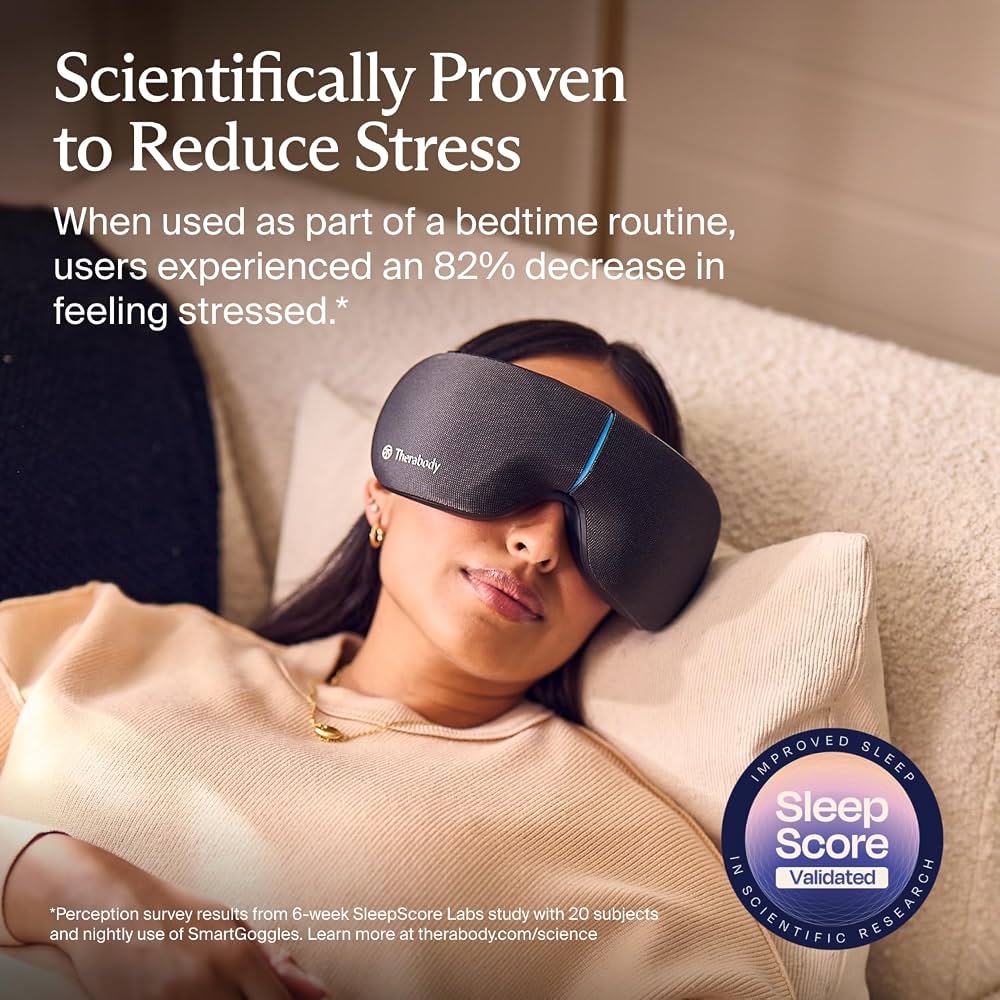
Category: Premium Smart Wellness Device
- Core Features: Heat therapy, targeted vibration patterns, biometric heart-rate sensor, “SmartRelax” personalized mode.
- App Integration: Polished companion app with audio integration for calming soundscapes.
- Safety: Carries UL/ETL certifications standard for the North American market.
- Subscription: None — full functionality included with purchase.
✅ Strengths
- Premium build quality from a trusted brand
- Biometric sensor personalizes the session
- Heat + vibration combo for tension & sinus relief
- Deep audio app ecosystem for pre-sleep
- No subscription — one-time purchase
⚠️ Considerations
- Higher upfront price than budget options
- App-dependency for advanced features
- Limited cooling/cryo functionality
Ideal Use Cases & Professional Applications: Tech enthusiasts wanting data-driven wellness, professionals managing daily tension headaches, and users who value an integrated pre-sleep audio ritual.
User Experience & Learning Curve: Polished out-of-box setup; the SmartRelax mode requires a few uses to feel personalized.
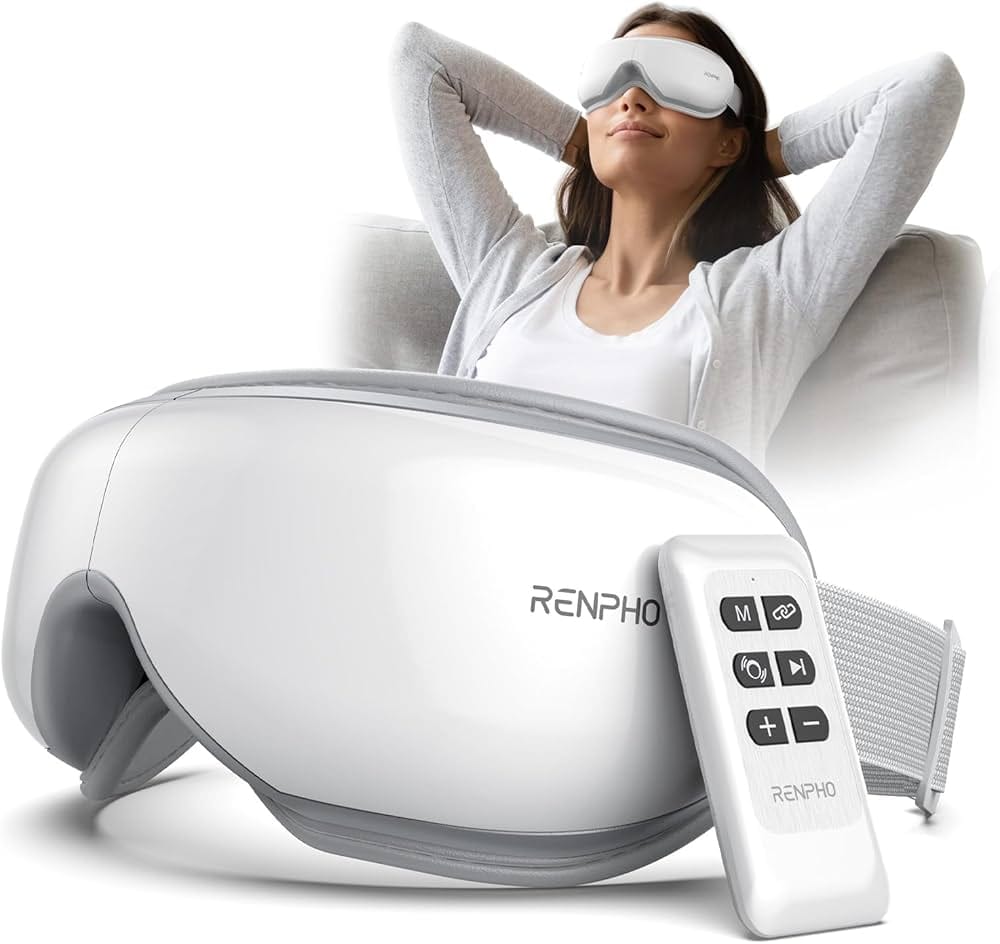
Category: Budget-Friendly Certified Eye Massager
- Core Features: Constant heat (40–42°C), air compression massage, 10 acupressure points, Bluetooth music.
- App Integration: No mandatory app — works with onboard controls and remote.
- Safety: Carries the relevant North American electrical safety certifications.
- Subscription: None — fully functional out of the box.
✅ Strengths
- Outstanding value for the price point
- Simple, effective heat + compression cycle
- USB rechargeable, foldable design
- No subscription or app lock-in
- Strong long-term review history
⚠️ Considerations
- No biometric personalization
- Massage intensity is fixed, not adaptive
- Bluetooth audio is basic vs. premium devices
Ideal Use Cases & Professional Applications: Post-workday decompression, dry-eye sufferers needing warm compress therapy, and first-time wellness gadget buyers.
User Experience & Learning Curve: Near-zero learning curve — power on, choose a mode, close your eyes.
Use Case 1: Post-Workday Screen Decompression
- Problem: After 8+ hours of staring at a computer, you experience eye fatigue, dryness, and a feeling of pressure behind your eyes.
- Goal: A 15-minute routine to soothe tired eyes and transition out of “work mode.”
- How Real Products Help:
- The Renpho Eyeris 1 offers a simple, effective cycle of heat and air compression massage. The heat helps improve circulation to the periorbital region, while the gentle pressure provides a relaxing, massage-like sensation. It’s a straightforward solution for post-work relaxation.
- The Therabody SmartGoggles use a combination of heat and targeted vibration patterns. Its “SmartRelax” mode can even use a biometric sensor to personalize the routine, helping to lower your heart rate and ease you into a state of calm. This is an excellent choice for data-driven users who want a more advanced experience for digital wellness.
Use Case 2: Managing Tension Headaches and Sinus Pressure
- Problem: You frequently suffer from tension headaches or sinus pressure related to allergies or stress.
- Goal: A non-pharmaceutical option to provide temporary relief and comfort.
- How Real Products Help:
- The gentle, rhythmic pressure from an air compression massager like the Renpho Eyeris 1 can provide a comforting sensation around the temples and sinus areas.
- The targeted vibration of the Therabody SmartGoggles is specifically designed to provide relief to pressure points around the eyes and temples, which can be particularly effective for managing tension headache symptoms. The ability to use heat and vibration together makes it a versatile tool for sinus pressure relief.
Use Case 3: A Pre-Sleep Relaxation Ritual
- Problem: You struggle to unwind at night, often scrolling on your phone, which makes it harder to fall asleep.
- Goal: A screen-free, 10-minute ritual to signal to your body that it’s time to rest.
- How Real Products Help:
- All eye massagers, by their nature, force you to close your eyes and disconnect. The gentle warmth from a device like the Renpho Eyeris 1 is inherently relaxing and can be a perfect final step in your nightly routine.
- The Therabody SmartGoggles integrates with audio apps to play calming soundscapes, creating an immersive pre-sleep experience aimed at improving sleep quality.
By focusing on these real-world applications, you can see how certified, subscription-free devices effectively deliver the core benefits you’re looking for without the complications illustrated by our fictional HD OPTI. For broader category research, our Category of Review articles covers many more wellness and personal-care products.
Part 7: The Final Verdict & A Smart Shopper’s Guide
After a thorough analysis using our fictional case study, the lessons are clear. A product’s value is not defined by a single innovative feature but by the sum of its parts: its performance, its safety, its cost, and the trustworthiness of the company behind it.
The “HD OPTI” represents a cautionary tale. Its hypothetical cooling technology is impressive, but it’s held hostage by a business model that prioritizes recurring revenue over consumer transparency and safety.
This type of investigative review is critical for what is known as a “Your Money or Your Life” (YMYL) product, where the advice can impact a reader’s health and financial well-being. This HD OPTI device assessment demonstrates that even the most exciting technology can be a poor choice if the fundamentals are flawed.
Summary of Red Flags to Watch For:
- The User-Hostile Subscription: Be wary of any physical product that locks its core, advertised hardware features behind a recurring paywall.
- The Missing Safety Certification: The absence of a UL or ETL mark on North American electronics is a significant consideration. In a market with certified alternatives, it’s an unnecessary risk.
- The Overstated Marketing Claims: If a product’s real-world performance (like battery life) or features (like “AI”) don’t align with independent reviews, it suggests a lack of transparency.
- Poor Long-Term Durability & Vendor Viability: Search for user reviews that are at least 6–12 months old to gauge long-term durability. Purchasing from new startups with concerning business models carries the risk of the company — and its app support — disappearing.
Our Final Recommendations:
This HD OPTI buyer’s guide leads to a clear conclusion. Instead of chasing a single feature wrapped in red flags, we recommend choosing a product from an established, reputable brand that offers a transparent and safe experience.
- For the Tech Enthusiast Wanting the Best: Buy the Therabody SmartGoggles. You get a premium, reliable, and safety-certified device from a trusted brand with no hidden fees, making it an excellent investment in your personal care.
- For the Value-Conscious User Seeking Core Benefits: Buy the Renpho Eyeris 1. It delivers the essential benefits of heat and massage for a fraction of the price, is safety-certified, and is the smartest, simplest choice for most people.
- For Anyone Considering a Product Like the Fictional “HD OPTI”: Based on the financial, safety, and performance considerations outlined in this case study, we strongly advise prioritizing certified, subscription-free alternatives. The potential benefits of a single unique feature are rarely sufficient to outweigh such considerable risks. If you still want to compare savings, our HD OPTI promo and voucher hub keeps an updated list.
This guide is based on independent analysis and is intended for educational purposes. Always prioritize your safety and consult manufacturer specifications before purchase.
Frequently Asked Questions (FAQ)
Q1: How can I spot a “bait-and-switch” subscription model before buying?
A1: It depends on careful pre-purchase research. The most effective method is to read multiple independent reviews and user comments specifically looking for mentions of “subscription,” “paywall,” or “app fees.” Scrutinize the product’s official website; if premium features are listed but the checkout process doesn’t mention a subscription, that’s a consideration to note. Often, the trial sign-up is buried in the device’s initial setup process. A trustworthy company will be transparent about any recurring costs on its main product page — see TechCrunch on Hardware Subscriptions.
Q2: What’s the best way to determine the true cost of a smart gadget?
A2: To determine the true cost, calculate the two-year Total Cost of Ownership (TCO). Start with the device’s upfront price. Then, visit the company’s website and check for any “Plus,” “Premium,” or “Membership” sections to find the annual subscription cost. Add the initial price to two years of subscription fees. For example, a $350 device with a $130/year subscription would have a two-year TCO of $350 + ($130 × 2) = $610. Comparing this TCO figure, rather than the sticker price, gives you a much more accurate financial picture — see Investopedia on TCO.
Q3: Is a device without UL/ETL certification really that dangerous?
A3: It presents an unverified level of risk. The UL and ETL marks signify that the product has passed standardized, independent tests against fire and electrical shock hazards. While a non-certified product isn’t guaranteed to be dangerous, it hasn’t proven it’s safe under a rigorous, independent standard for the North American market. Given that devices like eye massagers apply electricity and heat to your head, the peace of mind that comes with a certified product is significant. With many excellent, certified options available, choosing a non-certified one is an avoidable risk — see the Electrical Safety Foundation International (ESFI).
Q4: Are “AI-Powered” wellness gadgets actually smart?
A4: It depends on the device, but often the term “AI” is used as a marketing buzzword for what is actually simple automation or personalization. True AI should learn and adapt from your usage. A simple way to check is to see what the app actually does. If it just offers pre-set routines and timers, it’s likely a remote control, not an AI. A device with genuine AI might, for example, analyze your sleep data and suggest a different massage routine for the following night. Always look for evidence of adaptive behavior rather than just taking the “AI” label at face value — see The Verge on AI Marketing.
Q5: Which is a better investment, Therabody or Renpho?
A5: It depends on your primary goal. If you are a tech enthusiast who wants a premium, feature-rich device with biometric feedback and a polished app ecosystem from a highly trusted brand, the Therabody SmartGoggles is the better long-term investment. If your goal is to get the core benefits of heated eye massage for an excellent value, the Renpho Eyeris 1 is the smarter choice. It proves you can achieve significant eye strain relief and relaxation for a much lower upfront cost, making it the best option for budget-conscious users or those new to wellness tech.
Q6: What are the biggest warning signs to look for in user reviews?
A6: Look for patterns in reviews that are 6–12 months old, as these reflect long-term durability. The biggest warning signs are repeated mentions of the same specific hardware failure (e.g., “the hinge cracked,” “one side stopped heating”). Another major red flag is a high volume of complaints about an “unstable” or “buggy” app, especially if that app is required to use the device’s key features. Finally, look for complaints about “unhelpful customer service” or difficulties with refunds and warranty claims, as this indicates how the company might treat you if you have a problem.
Q7: How do I know if I can trust a new wellness tech company?
A7: Trust is built through transparency and a customer-centric approach. A trustworthy company will have clear, upfront pricing without hidden fees. Their products will feature prominent safety certifications like UL or ETL. They will have a fair and easy-to-understand return and warranty policy. Look for a significant number of positive, long-term reviews on third-party sites. Companies that appear to prioritize short-term revenue through practices that could be more transparent, or that make it difficult for customers to get support, may be less worthy of your trust.
Q8: Are expensive eye massagers worth it, or is a cheap one fine?
A8: A “cheap” but certified and well-reviewed option like the Renpho Eyeris 1 is often more than fine for most users. It delivers the primary tangible benefits — heat and massage — that provide relief from eye strain. More expensive models, like the Therabody SmartGoggles, are “worth it” if you highly value their specific premium features, such as biometric sensors, advanced vibration therapy, and a deeply integrated smart app. For many users, the jump in price doesn’t correspond to an equal jump in core therapeutic benefit, making value-oriented models a very smart starting point.