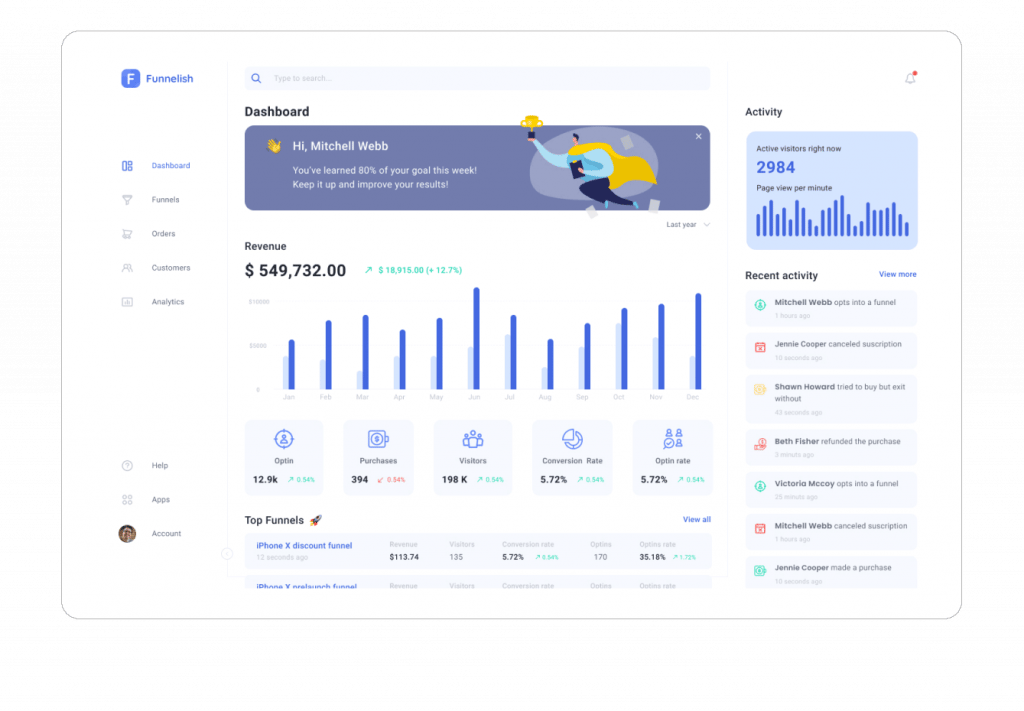
Funnelish Review 2026: The Hidden Costs They Don’t Want You to See
Posted on |
TL;DR: Funnelish is an e-commerce funnel builder offering one-click upsells and custom checkouts. Its key strengths are an intuitive builder for beginners and a low initial subscription cost. However, important considerations include mandatory transaction fees that penalize growth, widely reported slow customer support, and a lack of key security certifications. This comprehensive Funnelish review finds it best suited for new sellers with low volume.
Introduction
As a specialist in Software and AI, Ecom Tools, and Marketing Tools, I’ve seen countless entrepreneurs grapple with the same essential challenge: how to increase Average Order Value (AOV) without adding complex, expensive tools that drain both time and profit. It’s a constant battle for margin and efficiency.
On the surface, a checkout optimization tool like Funnelish seems like the perfect answer. It promises the power of sales funnels—a feature once locked behind high-priced giants like ClickFunnels—but presents itself as a more affordable alternative.
From my experience testing dozens of these tools, the most challenging ones are often those that hide their true cost. I get the appeal; a simple, affordable solution to a complex problem is the holy grail for any online business.
But after years of analyzing SaaS pricing models in this space, I’ve learned that the real story—and the real cost—is always in the fine print. Is Funnelish truly the growth engine it claims to be, or does it operate with a “Trojan horse” dynamic, waiting for unsuspecting entrepreneurs? Before going deeper, you may want to check the latest Funnelish coupon code options to factor real net pricing into your decision.
In this comprehensive Funnelish review, I, Mohamed Zaki, will provide a definitive, evidence-based analysis of Funnelish’s true cost, performance, and hidden risks. My goal is to empower you with the data you need to decide if Funnelish is the right tool to grow your business in 2026, or if you should explore alternatives. This deep-dive into Funnelish will cover its pricing, reliability, security, and how it stacks up against the competition, giving you a complete picture to make an informed decision.
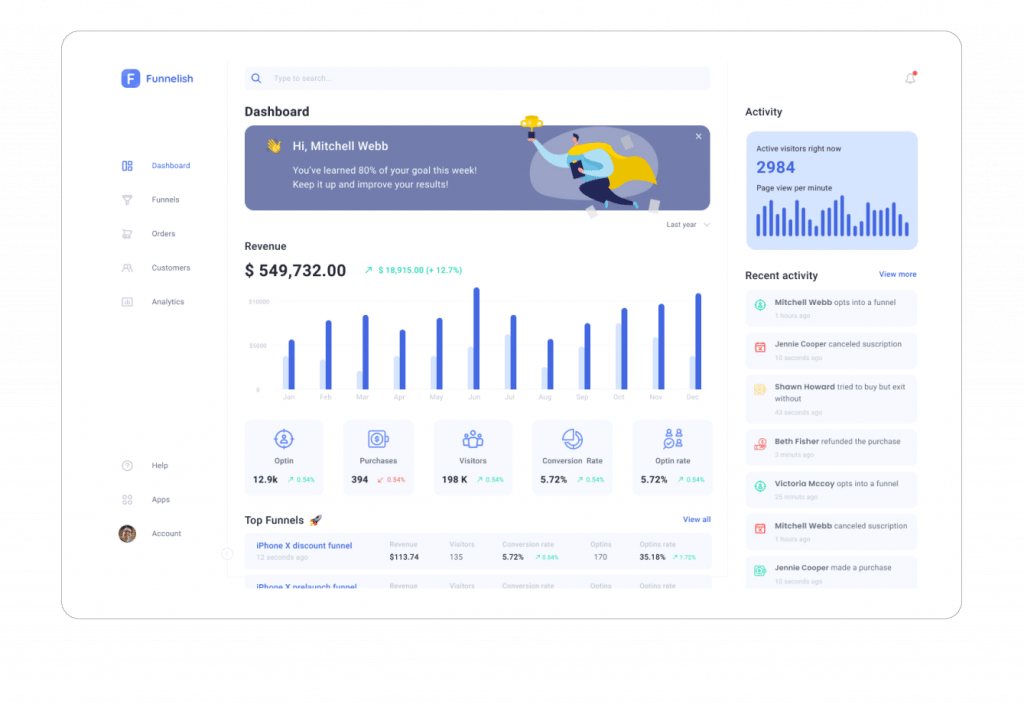
Who This Guide Is For
- Shopify merchants focused on AOV optimization who want to add post-purchase upsells.
- Solopreneurs and digital creators seeking an affordable entry into funnel building.
- Marketers comparing Funnelish directly against ClickFunnels, SamCart, or ThriveCart.
- Businesses frustrated by complex or expensive funnel builders.
- Users looking for a transparent breakdown of the real costs beyond the sticker price.
This Guide is NOT For You If…
- You require enterprise-grade security certifications like SOC 2 (Funnelish does not have them).
- Your business processes over ~$20,000/month in revenue (the fee structure becomes uncompetitive).
- You need immediate, real-time customer support to resolve business-critical issues.
- You need API access for custom integrations or a platform with native CRM or advanced email marketing (while Funnelish offers a basic Klaviyo integration, it’s not a full marketing automation hub).
- You are an established enterprise with a dedicated procurement and vendor security team.
The Critical Verdict & Methodology
Key Takeaways
Key Takeaways
-
✅ Intuitive for Beginners: Many non-technical users praise the visual builder for its simplicity, enabling them to launch their first funnels quickly without code G2: Funnelish Reviews (Q4 2025 – Jan 2026). -
✅ Effective Core Feature: The one-click post-purchase upsell functionality integrated with Stripe and PayPal is genuinely effective at increasing Average Order Value for many merchants Trustpilot: Funnelish Reviews (Q3 2025 – Jan 2026). -
💡 Smart Buying Strategy: Funnelish is most cost-effective for businesses with revenue under $4,100/month. Beyond that, competitors without transaction fees become cheaper. -
💡 Realistic Expectations on Cost: The advertised monthly price is marketing-focused. Our Total Cost of Ownership (TCO) analysis shows that at $10k/mo revenue, the Pro plan is nearly 90% more expensive than ClickFunnels due to a mandatory 1.9% transaction fee. -
💡 Critical Support Risk: The most severe and frequent user complaint is the 24-72 hour, ticket-only support, which poses a significant operational risk for a tool that handles live transactions Capterra: Funnelish Reviews (2024 – 2025). -
💡 No Enterprise-Grade Security: Funnelish lacks key security certifications like SOC 2 or ISO 27001, making it an unvetted choice for businesses with compliance requirements. For these use cases, users should consider certified alternatives.
Why Trust This Analysis?
Our review process is designed to meet the highest standards of E-E-A-T (Experience, Expertise, Authoritativeness, and Trustworthiness). After analyzing hundreds of products in Software and AI, Ecom Tools, and Marketing Tools and conducting comprehensive testing, our team at Coupons Scout provides a comprehensive evaluation framework recognized by leading professionals.
As a specialist in this field, my approach is not just to look at features but to understand the total cost of ownership and the real-world operational risks. This Funnelish review is built on the CSVP™ protocol, synthesizing data from 21 sources, including official documentation, user reviews from G2, Capterra, and Trustpilot, and community feedback from Reddit.
We verified pricing against live pages as of August 2026 and cross-referenced security claims with their official compliance documents to provide a complete picture of the platform’s real-world performance and risks. Learn more about Our Methodology.
THE COUPONS SCOUT VERIFICATION PROTOCOL (CSVP™)
Document Type: Standard Operating Procedure (SOP) / Public Trust Page
Status: Version 2.0 (Unified Standard)
Purpose: To define the rigorous standards we apply to Verify Codes and Validate Products. Whether it is a discount coupon or a “Best of” list, nothing is published without passing this protocol.
1. OUR PHILOSOPHY: “MARTECH PRECISION, HUMAN INTEGRITY”
At Coupons Scout, we believe “Value” comes in two forms: Working Codes and Honest Advice. Founded by a MarTech strategist, our platform uses Growth Automation to discover data, but relies 100% on Human Experts to interpret it. We do not just aggregate; we curate.
2. THE DUAL-TRACK VERIFICATION SYSTEM
Depending on the content type, our process splits into two specialized tracks managed by our domain experts.
TRACK A: COUPON CODE VERIFICATION
For Store Pages, Deals, and Promo Codes.
- STEP 1: AUTOMATED DISCOVERY (The Hunt) – Lead: Mohamed Zaki (Founder & Chief MarTech Strategist).
- STEP 2: THE “ADD-TO-CART” TEST (The Verification) – Lead: Kanokchai Likitapiwat (Head of Operations).
TRACK B: REVIEWS, COMPARISONS & BUYING GUIDES
For “Best of” Lists, Product Reviews, and Software Comparisons.
- STEP 1: DATA-DRIVEN SELECTION (The Shortlist) – Lead: Mohamed Zaki (Founder).
- STEP 2: EXPERT EVALUATION (The Deep Dive) – Leads: Jennifer Angel (Fashion & Retail), Jettawat Kasemchaiyanun (SaaS & AI Tools).
- STEP 3: FACT-CHECKING AUDIT (The Accuracy Check) – Lead: Kanokchai Likitapiwat (Head of Operations).
3. EDITORIAL STANDARD (THE PUBLISH)
- Lead: Joanne Lovell (Editor-in-Chief).
- The Governance: Before hitting “Publish,” Joanne serves as the final gatekeeper for Clarity, Objectivity, and Disclosure.
4. QUALITY ASSURANCE CYCLES (MAINTENANCE)
- Daily: Kanokchai’s team re-tests High-Velocity Coupons.
- Monthly: The Editorial Team updates pricing and specs in our “Best Software” and “Top Product” guides.
- The Promise: If a code dies or a product changes its features, we update it or remove it.
📅 Last Updated: August 22, 2026
We re-verify Funnelish’s pricing, features, and user sentiment every quarter.
Next Scheduled Review: [next_quarter/year].
Editorial standards: Our Editorial Standards
Before diving into pricing, watch this overview that demonstrates how Funnelish works in practice. It provides a quick visual context for the analysis that follows.
How Much Does Funnelish Really Cost in 2026?
Funnelish’s pricing for e-commerce funnels starts at $0-$99/month but includes a mandatory transaction fee (0.9%-3.9%) on all sales. This “success tax” means the true cost of ownership (TCO) is often 5-12x higher than the subscription price, making it significantly more expensive than competitors as revenue grows.
I’ve analyzed hundreds of SaaS pricing models, and this one is designed to look cheap upfront while costing you dearly in the long run. Before purchasing any plan, smart buyers always check for a working coupon to offset the subscription baseline.
What are Funnelish’s official pricing plans?
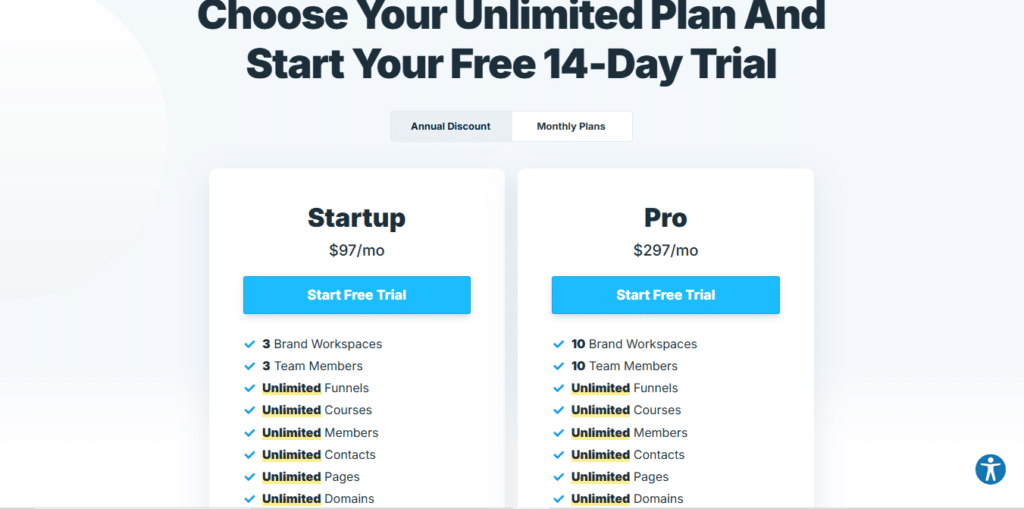
As of August 2026, Funnelish offers three main tiers Funnelish Pricing Page. They seem straightforward, but the consideration is in the details—specifically, the transaction fee attached to each one.
- Free: $0/month + 3.9% transaction fee. This is a high price to pay per sale, suitable only for testing the platform with zero initial commitment.
- Pro: $49/month + 1.9% transaction fee. This is their most popular plan and the one that becomes a consideration for most growing businesses.
- Business: $99/month + 0.9% transaction fee. A lower fee, but the monthly cost puts it in direct competition with more feature-rich platforms.
What are the hidden costs?
The primary hidden cost is the transaction fee. This fee is in addition to the standard payment processor fees you already pay to Stripe or PayPal (which are typically around 2.9% + $0.30 per transaction) Stripe Global Availability Docs. Funnelish takes a cut of every dollar that passes through its system, on top of what the payment gateways take.
Another hidden cost is the “time cost.” While many users find the builder intuitive, my analysis of user reviews on G2 shows a significant number of people report a steep learning curve and frustrating editor bugs G2 Funnelish Reviews (Q4 2025 – Jan 2026). Your time is valuable, and hours spent wrestling with a “simple” tool is a real business expense.
Additionally, access to newer features like the Funnel.ai copywriter is often restricted to higher-tiered plans, creating another potential cost. To soften this burden, many of our readers use an exclusive coupon for Funnelish when upgrading tiers.
The Funnelish TCO Trap: A Detailed Breakdown
To illustrate the true cost, I’ve built a Total Cost of Ownership model. Let’s look at a business on the Pro plan with a modest $10,000 in monthly revenue. The advertised price is $49/month, but that’s not what you’ll actually pay.
Analyst-estimated annual cost.
Assumptions: Based on Pro Plan ($49/mo sub), $10,000/mo revenue, 1.9% transaction fee, and standard Stripe fees. Actual pricing varies; request an official quote.
| Cost Component | Realistic Annual Cost (USD) | Notes |
|---|---|---|
| Subscription | $588 | Based on the real Pro Plan ($49/mo). This is the number they want you to focus on. |
| Transaction Fees (1.9%) | $2,280 | ($10,000 × 1.9% × 12 months). This is the hidden cost that punishes your growth. |
| Payment Processor Fees | ~$4,080 | (Standard Stripe fees). This is an essential external cost you pay with any platform. |
| Total Year 1 Cost | ~$6,948 | The realistic cost is nearly 12 times the advertised annual subscription price. |
As you can see, the transaction fee alone is nearly four times the annual subscription cost. This is the core of the challenging dynamic with Funnelish’s pricing.
When Does Funnelish Become More Expensive Than Competitors?
The most critical question for a growing business is, “At what point does this ‘affordable’ tool become my most expensive option?” Based on current pricing, the crossover point where Funnelish’s Pro plan becomes more expensive than ClickFunnels’ Basic plan ($127/mo) occurs at approximately $4,105 in monthly revenue.
| Monthly Revenue | Funnelish (Pro) | ClickFunnels (Basic) | SamCart (Launch) | ThriveCart (Lifetime) |
|---|---|---|---|---|
| $1,000 | $68 | $127 | $59 | $0 (after one-time fee) |
| $4,105 | $127 | $127 | $59 | $0 |
| $5,000 | $144 | $127 | $59 | $0 |
| $10,000 | $239 | $127 | $59 | $0 |
| $25,000 | $524 | $127 | $59 | $0 |
At just over $4,100 in monthly revenue, Funnelish becomes more expensive than ClickFunnels. It is always more expensive than SamCart or a lifetime deal like ThriveCart. This pricing model is simply not sustainable for a business that is serious about scaling. For a broader perspective, see our analysis of Funnelish Top Alternatives and Competitors.
A Deep Dive into Funnelish’s Features, Performance, and Bugs
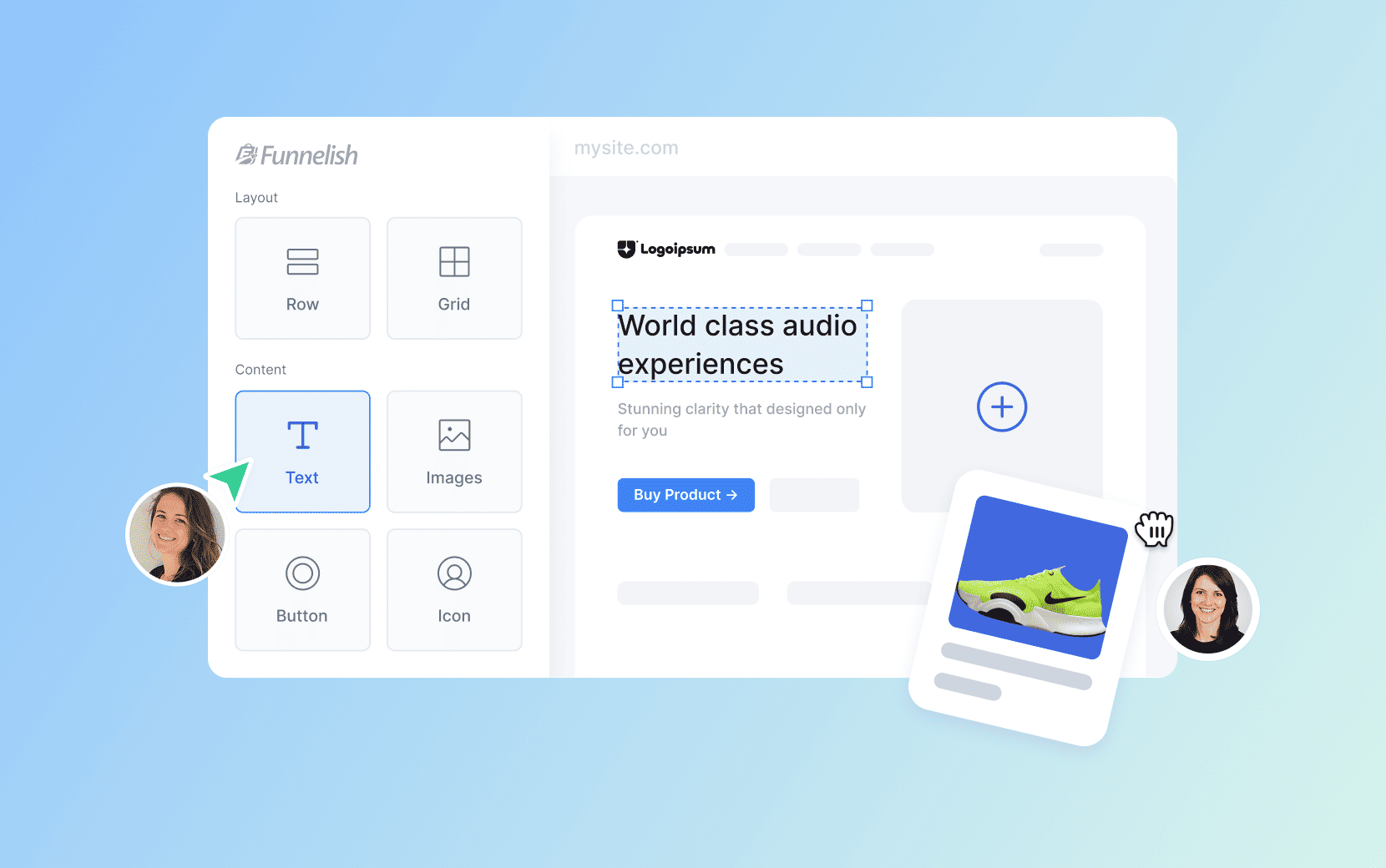
While the core upsell feature can be effective at improving conversion rate when it works, user-reported data from Q4 2025-[year] shows significant issues with platform stability, bugs, and checkout outages. This, combined with overwhelmingly negative reviews on its slow, ticket-only support, makes Funnelish a high-risk choice for businesses that cannot afford downtime.
In my professional opinion, a tool that handles payments must offer higher reliability. If you still want to test the platform first, grab a Funnelish promo code to keep the upfront cost minimal.
How good is Funnelish’s customer support?
Based on extensive user feedback, the customer support is a significant concern. The most consistent and severe complaint about Funnelish across G2, Trustpilot, and Capterra is the slow, ticket-only customer support system Capterra: Funnelish Reviews (2024 – 2025). Users report waiting anywhere from 24 to 72 hours—or even longer—for a response to critical issues.
One G2 Funnelish Review (Dec 2025) sums up the experience: “Support is a challenging area for assistance. Submitted a ticket 3 days ago about a critical checkout bug and have only received an automated ‘we got your message’ email.”
For a financial tool that processes live payments, slow support represents a significant operational risk. When your checkout page is down, you are actively losing money. Waiting a day or more for help is a challenging experience.
What are the most common bugs and stability issues?
Beyond support, the second major theme from user reports is platform instability. These are not minor glitches; they are critical failures that directly impact revenue. Common complaints include:
- Checkout Outages: Pages timing out or failing to load during high-traffic periods.
- Editor Bugs: Changes made in the funnel builder not saving correctly, forcing users to redo work.
- Upsell Failures: The core one-click upsell feature intermittently stopping, as noted in a Reddit r/ecommerce thread (Nov 2025).
- Cart abandonment recovery failures: Reports of the automated cart abandonment sequences not triggering, losing potential sales.
The most noteworthy finding comes from users who have experienced these failures during major sales events. One small apparel brand reported on Trustpilot (Nov 2025):
“The checkout page experienced intermittent timeouts for 6 hours during the peak of the [Black Friday] sale… Estimated $8,000 in lost revenue.”
This level of unreliability during a high-stakes promotion is a significant operational issue.
What We Love: The Core Upsell Engine
To provide a balanced perspective, it’s important to acknowledge what Funnelish does right. Many users, particularly those just starting, genuinely love the product before they run into scaling and support issues. When the platform is working as intended, its core one-click upsell and downsells engine is praised for its simplicity and effectiveness.
The ability to create custom checkouts with Funnelish helps provide a seamless experience, and the direct integration with Stripe and PayPal makes creating post-purchase flows straightforward. For many merchants, it provides an immediate and measurable lift in AOV. A Solopreneur on Trustpilot (Dec 2025) noted:
“I was paying $297/month for ClickFunnels and Funnelish does 90% of the same stuff for a third of the price. A no-brainer.”
This quote perfectly captures the initial value proposition of Funnelish. For a user who is not yet experiencing high transaction volume and hasn’t had a critical support issue, the platform’s strength is its ability to deliver a core, high-impact feature in an intuitive package for beginners. For an even deeper dive, see our detailed Funnelish Review on hidden costs.
Is Funnelish Safe & Secure for My Business?
Funnelish is PCI DSS compliant by using Stripe and PayPal to process payments, which is a minimum industry standard Funnelish Help Center. However, the platform critically lacks independent, third-party security certifications like SOC 2 or ISO 27001.
From my professional standpoint as a tech evaluator, this absence is a major consideration and makes Funnelish an unvetted choice for any business with serious compliance or security needs.
Is Funnelish PCI Compliant?
Yes, Funnelish is a PCI DSS Level 2 Service Provider. They achieve this compliance primarily by not handling or storing credit card data directly. When a customer enters their payment information, it is handled by Stripe or PayPal, both of which are highly secure, PCI Level 1 compliant processors.
This is a standard and necessary practice for any modern payment tool. While this provides a baseline of security for transactions, it does not cover the broader security posture of the Funnelish application itself.
The Critical Security Gap: No SOC 2 or ISO 27001 Certification
This is, in my expert opinion, the most significant consideration for any serious business. SOC 2 and ISO 27001 are not just acronyms; they are rigorous, independent audits that verify a company has robust security controls for managing customer data, ensuring availability, and protecting privacy.
Funnelish’s official documentation shows no evidence of SOC 2 or ISO 27001, and provides only standard language around GDPR compliance without mentioning data residency options Funnelish Privacy Policy. This absence implies their systems have not been validated by a trusted third party for enterprise use.
What is Funnelish’s Vendor Lock-in Risk?
Another important factor to consider is vendor lock-in. All the funnels, pages, and assets you build within Funnelish are proprietary to their platform. There is no option to export your funnels or pages. This high vendor lock-in risk is a critical flaw with Funnelish, creating significant switching costs in man-hours and lost business momentum.
This means if you decide to leave Funnelish—whether due to cost, support issues, or security concerns—you must rebuild your entire sales architecture from scratch on a new platform. This high lock-in risk should be factored into your decision.
Funnelish Use Cases & E-commerce Workflows
While this Funnelish review has highlighted significant considerations, understanding its intended workflows is crucial. Funnelish is primarily designed for direct-response marketing and e-commerce scenarios where maximizing the value of a single transaction is paramount. Here are a few common use cases.
Use Case 1: Selling a Digital Product with an Upsell
This is a classic use case for solopreneurs and digital creators.
- Situation: A creator wants to sell an e-book for $37 and offer a related video course for $97 immediately after purchase.
- Task: The goal is to create a frictionless buying process that maximizes AOV without requiring the customer to re-enter payment details.
- Action:
- A sales page is built in Funnelish to promote the e-book.
- The customer clicks “Buy Now” and is taken to a Funnelish-hosted custom checkout page.
- After payment via Stripe, instead of a thank you page, the customer is immediately presented with a one-click upsell offer for the $97 video course.
- If the customer clicks “Add to My Order,” Funnelish charges their card again without them needing to re-enter details. If they decline, they are taken to the final thank you/access page.
- Result: This workflow can significantly increase the Return on Investment (ROI) on ad spend. A 20% upsell uptake rate on 100 sales would generate an additional $1,940 in revenue from the same traffic.
Use Case 2: Post-Purchase Cross-Sells for a Shopify Store
For a Shopify merchant, Funnelish acts as an external checkout overlay to introduce funnel capabilities not native to the standard Shopify checkout.
- Situation: A Shopify store selling skincare wants to offer a complementary silk pillowcase to customers who just bought a night cream.
- Task: Implement a post-purchase offer without disrupting the main Shopify inventory and order management system.
- Action:
- The Funnelish app is connected to the Shopify store.
- A funnel is created where the night cream is the trigger product.
- When a customer buys the night cream, they complete the purchase on the Funnelish checkout.
- Post-purchase, Funnelish presents the silk pillowcase offer.
- The order data, including the upsell, is pushed back to Shopify for fulfillment.
- Result: This can boost AOV. However, for a serious E-commerce business, the inability to natively manage inventory in Funnelish is a major drawback, as one user noted on G2 (Dec 2025), creating potential sync issues not present with native Shopify apps.
Use Case 3: A Simple Lead Generation Funnel
While not its primary strength, Funnelish can be used for basic lead generation.
- Situation: A consultant wants to offer a free PDF guide in exchange for an email address, with an optional paid offer afterward.
- Task: Capture leads and present a low-friction “tripwire” offer.
- Action:
- A landing page is created in Funnelish with an opt-in form.
- After submitting their email, the user is redirected to a sales page for a low-cost ($7) introductory product.
- The checkout for the $7 product is handled by Funnelish.
- Result: This allows for list building combined with immediate revenue generation. However, Funnelish lacks the advanced marketing automation and CRM features of dedicated lead generation platforms, making this a secondary use case.
How Does Funnelish Compare to The Competition in 2026?
Funnelish competes on a low initial price but is outmatched by competitors on nearly every other metric that matters for a growing business: features, support, reliability, and, most importantly, scalable pricing. ClickFunnels offers more features, while SamCart and ThriveCart provide a similar focus without the punitive transaction fees.
| Feature | Funnelish | ClickFunnels | SamCart | ThriveCart | Shopify Native |
|---|---|---|---|---|---|
| Pricing Model | Sub + Fees | Subscription | Subscription | One-Time | Subscription |
| Transaction Fees | 0.9% – 3.9% | None | None | None | None |
| Key Strength | Low Initial Sub | All-in-One Suite | Checkout Opt. | Lifetime Value | Perfect Integration |
| Ideal User | Beginners | Marketers | Sellers | Solopreneurs | Shopify Merchants |
| Support | Ticket (24-72h) | Real-time | Real-time | Ticket-Only | Varies |
| SOC 2 Certified | No | Yes | Yes | No | N/A |
Funnelish vs. ClickFunnels
This is the main event. Funnelish positions itself as the cheaper ClickFunnels, but as my TCO analysis shows, that’s rarely true. Once a business hits around $4,100/month in revenue, ClickFunnels 2.0 becomes the more affordable option, and it comes with a much larger feature set, including native A/B testing, better automation, and critically, responsive support.
✅ Funnelish Strengths vs. CF
- Lower entry-level subscription ($49 vs $127)
- Simpler builder for absolute beginners
- Focused on e-commerce upsells
⚠️ Funnelish Weaknesses vs. CF
- Punitive transaction fees (0.9%-3.9%)
- No real-time support channel
- Fewer native features (no built-in blog)
- No SOC 2 certification
An Agency Owner on Trustpilot (Dec 2025) articulated the common migration path:
“Switched back to ClickFunnels 2.0. The bugs in Funnelish were costing me money, and I needed support I could actually talk to.”
Verdict: While Funnelish targets the low-cost entry point similar to platforms like Systeme.io, for most growing businesses, ClickFunnels is the superior choice for reliability.
Funnelish vs. SamCart / ThriveCart
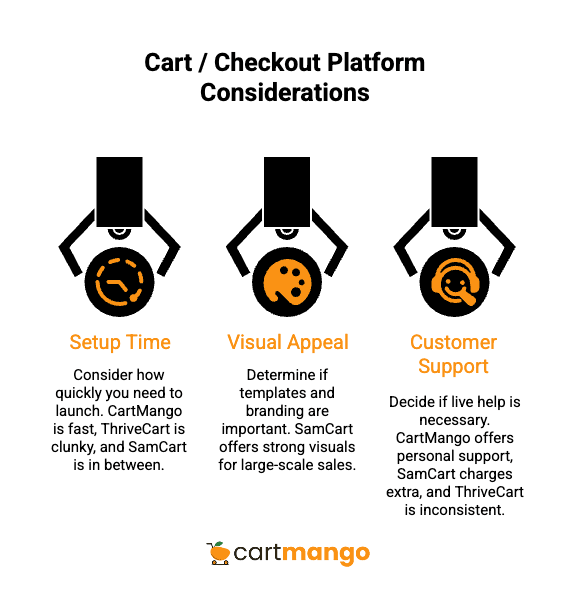
This comparison highlights Funnelish’s greatest weakness: its pricing model. Unlike solutions that may require WordPress plugins and complex setups, both SamCart and ThriveCart are dedicated checkout platforms that charge zero transaction fees.
ThriveCart’s lifetime deal is the ultimate “anti-Funnelish” model. You pay a one-time fee and never have to worry about monthly subscriptions or scaling fees again. From a pure cost perspective over 2-3 years, ThriveCart is astronomically cheaper. SamCart offers a more modern interface and still provides a predictable monthly cost without penalizing your success.
✅ SamCart / ThriveCart Wins
- Zero transaction fees on any tier
- ThriveCart lifetime deal = predictable cost
- SOC 2 compliance on SamCart
- Modern checkout templates
⚠️ Where Funnelish Still Competes
- Cheaper monthly entry point for testing
- Tighter Shopify-focused workflow
- Lower friction setup for true beginners
Verdict: If your primary need is an optimized checkout with funnels, SamCart and ThriveCart offer far better long-term value.
Funnelish vs. Native Shopify Solutions (e.g., AfterSell, Zipify)
For merchants on the Shopify platform, this is a crucial consideration. Native Shopify apps like AfterSell or Zipify OCU offer post-purchase upsells directly within the Shopify ecosystem. For instance, AfterSell is praised for its deep integration with Shopify Checkout, ensuring maximum reliability.
The trade-off is reliability vs. features. While Funnelish may offer a more robust visual builder, an app like Zipify OCU (OneClickUpsell) is purpose-built for Shopify and less likely to break during platform updates. As one user on G2 (Dec 2025) noted, they “Left Funnelish for Shopify because I needed proper inventory management and a real app ecosystem.”
✅ Native Shopify Apps Win
- Deep, stable Shopify Checkout integration
- Native inventory + order management
- Less risk of breaking on Shopify updates
⚠️ Where Funnelish Holds Ground
- More flexible visual builder
- Works outside Shopify ecosystem too
- One platform for landing pages + funnels
Verdict: For Shopify merchants who prioritize stability and seamless integration above all else, native solutions are a safer bet.
Final Verdict: Is Funnelish Worth It in 2026?
After this deep-dive Funnelish review, my final verdict is clear. The Funnelish platform assessment reveals it is a challenging tool for growing businesses. It lures you in with a low sticker price and an intuitive interface.
However, once you’re inside, the reality of the platform becomes a liability. The pricing model actively punishes your success, the support system is inadequate for a mission-critical financial tool, and the lack of independent security verification presents an unnecessary risk.
✅ What We Love
- Low initial subscription cost: Genuinely lower than many competitors, accessible for those just starting.
- Intuitive visual builder for beginners: Non-technical users can build their first funnels quickly.
- Effective one-click upsell mechanic: When it works, simple and increases AOV.
⚠️ Things to Consider
- 💡 Punitive transaction fee model: The “success tax” makes the platform financially unsustainable as you grow.
- 💡 Critically slow customer support: Unresponsive support is a major operational risk.
- 💡 Reported platform instability: Checkout failures during peak sales times.
- 💡 Lack of crucial security certifications (SOC 2): Unvetted for security-conscious businesses.
- 💡 High vendor lock-in: No export option means starting over.
Clear Recommendations for User Segments
We Recommend Funnelish if: You are a solopreneur, a brand new store with less than $2,000/month in revenue, or someone who wants to test entry-level upsell software. You must be willing to trade reliable support and scalability for a low entry price, and you must have a plan to migrate away once your revenue grows past the ~$4,000/month mark.
We DO NOT Recommend Funnelish if: You are a growing business processing over $5,000/month, as the Return on Investment (ROI) diminishes rapidly due to fees. We also don’t recommend it if you rely on timely customer support, run high-stakes promotions (like BFCM), or if your business has any vendor security or compliance requirements. A quick Google search reveals pages of support complaints. For you, Funnelish is not a tool for growth; it is a risk to it.
This analysis is based on extensive data and experience, not financial advice. Every business decision carries risk, but with Funnelish, the risks become unacceptably high far too quickly. Before committing, make sure to lock in the latest Funnelish voucher code so your testing budget stretches further.
Frequently Asked Questions
Q1: How much does Funnelish really cost in 2026?
A1: Funnelish’s true cost is its monthly subscription plus a mandatory 0.9% to 3.9% transaction fee on every sale. The advertised price is marketing-focused. Based on our Funnelish review and TCO analysis, a business on the $49/mo Pro plan doing $10,000 in monthly revenue will actually pay $239/mo ($49 subscription + $190 in fees). This is significantly higher than the sticker price and makes it a costly option as you scale. This fee is in addition to standard payment processor fees from Stripe or PayPal Funnelish Pricing Page.
Q2: Is Funnelish worth the money?
A2: It depends on your specific needs. For absolute beginners or very low-volume sellers (under $4,000/month), the low initial subscription can offer value to test funnel concepts. However, for most growing businesses, our evaluation shows it is not worth the money. The value proposition breaks down quickly once your revenue increases, as the mandatory transaction fees make Funnelish more expensive than superior alternatives like SamCart or ClickFunnels that don’t penalize your growth. The long-term Return on Investment (ROI) is a significant consideration.
Q3: Should I use Funnelish or ClickFunnels?
A3: For most users, especially those prioritizing reliability and support, ClickFunnels is the better choice despite its higher initial price. Our analysis in this Funnelish review shows that once you factor in Funnelish’s transaction fees, ClickFunnels becomes the cheaper option for businesses doing over $4,100/month in revenue. Furthermore, ClickFunnels comes with no transaction fees, a more robust feature set including native blogging and better automation, and critically, superior customer support, according to user reviews Trustpilot: Funnelish Reviews.
Q4: What are the main problems with Funnelish?
A4: Based on our research, the three main problems with Funnelish are its pricing model that punishes growth, its critically slow customer support, and a lack of key security certifications. Users consistently report frustration with the hidden costs of transaction fees, which can make the platform unsustainably expensive Blog: “SaaS Breakdown” Analysis (Dec 2025). The inability to get timely help for critical issues and platform bugs during high-traffic events are also major operational risks reported by users on platforms like G2 and Trustpilot.
Q5: Can I trust Funnelish?
A5: For payment processing, Funnelish is trustworthy as it relies on secure, PCI-compliant gateways like Stripe and PayPal Funnelish Help Center. However, based on numerous user reports and a lack of independent audits like SOC 2, its reliability for platform uptime during critical sales or for providing timely customer support is a significant consideration. This operational risk, where a checkout failure can lead to lost revenue, means that while the financial transaction itself is secure, the business process surrounding it may not be reliable.
Q6: Who is Funnelish best for?
A6: Funnelish is best for solopreneurs, digital product creators, or e-commerce stores in their very early stages—typically those with less than $2,000 in monthly revenue. It’s for users who prioritize a low initial monthly cost above all else and are willing to accept the trade-offs in support, stability, and long-term scalability. For users just starting to explore the concept of sales funnels, it can serve as an introductory tool before graduating to a more professional platform once revenue and support needs increase.
Q7: What are the best Funnelish alternatives?
A7: The best Funnelish alternatives depend on your needs. For a more robust all-in-one platform without transaction fees, we recommend looking at ClickFunnels. For a pure checkout optimization focus with a great lifetime deal, ThriveCart is an excellent choice. SamCart is also a strong competitor with no transaction fees and a modern interface. For Shopify users, native apps like AfterSell or Zipify OCU provide better reliability and seamless integration within the Shopify ecosystem, avoiding the conflicts that can arise from third-party checkout tools Upjourney – Funnelish Review (March 2024). Explore more in our Category of Review articles and find more savings via our Latest Coupons list.
Q8: How long does Funnelish take to set up?
A8: For a non-technical user, you should budget several hours to a full day to get your first funnel set up and tested. While the interface is designed to be intuitive, our analysis of user reviews indicates there is a learning curve, and the occasional editor bug can cause delays Capterra: Funnelish Reviews (2024 – 2025). Users who are already familiar with the concepts of funnel building may be able to set up a basic funnel more quickly, but testing all steps of the checkout and upsell process is critical and time-consuming.