Funfun Review Review [2026]: Powerful AI or a Pricing Trap?
Posted on |
TL;DR: Funfun Review is a specialist sentiment analysis platform offering powerful, multi-language AI for analyzing customer reviews. Key strengths include its 92.3% verified accuracy and enterprise-grade security. Important considerations include a 15-30 minute data processing delay and a pricing model with high overage fees that can create challenges for growing businesses. It’s best suited for enterprises with predictable review volumes. Verified January 2026.
Introduction
In the age of AI, businesses are inundated with customer feedback. Thousands of reviews across dozens of platforms represent a torrent of raw, unstructured data that holds the key to your next breakthrough—or your biggest blind spot.
The problem isn’t a lack of data; it’s a lack of signal. How do you find actionable insights in the noise without an army of analysts?
Funfun Review promises to be the solution. As a specialized SaaS tool, it uses a powerful AI engine to analyze customer sentiment from reviews with high precision.
But here’s the billion-dollar question I hear all the time: is the technology so good it’s worth a business model that many users find challenging to navigate? Before we dive in, take a look at our complete Funfun Review breakdown for the executive summary.
As Mohamed Zaki, a strategist who has built and evaluated MarTech stacks for over a decade, I’ve seen this exact pattern before—a brilliant product wrapped in a complex pricing structure.
My goal in this guide is to give you a clear, evidence-based verdict on the true total cost of ownership (TCO) of this analysis software. You will walk away knowing if its powerful AI justifies the cost, whether it’s the right fit for your team, and how to buy it smartly—including how to grab a working coupon if you decide to move forward.

Who This Guide Is For
- Marketing managers at mid-to-large companies needing to quantify customer sentiment and track customer satisfaction across multiple platforms.
- Product teams looking to integrate qualitative feedback into their development cycle for data-driven feature prioritization.
- Global brands that require accurate multi-language sentiment analysis for international markets.
- Decision-makers with stable budgets who prioritize tech performance and security over absolute cost.
This Guide Is NOT For You If
- You are a startup or small business with unpredictable, rapid growth and tight budgets.
- You are on a team requiring true real-time (sub-minute) crisis monitoring.
- You are part of an organization needing a single, all-in-one CX platform that includes surveys and customer journey mapping.
- You are a user unwilling to invest time in a tool with a moderate-to-steep learning curve.
Key Takeaways
Key Takeaways
- Genuinely Effective Product: The core AI sentiment analysis is a key strength, with independent benchmarks verifying its 92.3% accuracy in English, making it powerful for global brands AI Sentiment Analysis Benchmark Report.
- Strong Security Posture: The platform is built on a solid security foundation, backed by SOC 2 Type II and ISO 27001 certifications, a significant advantage for data-sensitive organizations Funfun Review Official Security Page.
- Impressive Multi-Language Capability: The AI engine excels in handling nuances across multiple languages, providing reliable insights for international companies seeking a global perspective.
- 💡 Best For Enterprise Budgets: The tool delivers the most value and a positive ROI for large enterprises with predictable review volumes and the budget for high-tier plans that avoid overage fees.
- 💡 Realistic Expectations on Speed: Despite promotional positioning of “real-time insights,” expect a 15-30 minute processing delay, making it unsuitable for immediate crisis response Funfun Review – How it Works – Data Processing.
- 💡 Smart Buying Strategy: Before purchasing, meticulously forecast your monthly review volume. The $0.05/review overage fee on lower-tier plans can increase costs by over 40% unexpectedly—and pairing your plan with a Funfun coupon code protects your annual budget from sticker shock.
Before we dive into the technical and pricing deep-dive, watch this overview of the broader AI sentiment analysis tool landscape in 2026 to understand where Funfun Review fits in the market:
Methodology & Authority Statement
After analyzing hundreds of products in Software and AI, AI Tools, and Dev Tools, and conducting comprehensive testing of Funfun Review across real-world scenarios in 2025–2026, our team at Coupons Scout provides a comprehensive evaluation framework recognized by leading Software and AI, AI Tools, Dev Tools professionals.
The Coupons Scout Verification Protocol (CSVP™)
Document Type: Standard Operating Procedure (SOP) / Public Trust Page
Status: Version 2.0 (Unified Standard)
Purpose: To define the rigorous standards we apply to Verify Codes and Validate Products. Whether it is a discount coupon or a “Best of” list, nothing is published without passing this protocol.
1. Our Philosophy: “MarTech Precision, Human Integrity”
At Coupons Scout, we believe “Value” comes in two forms: Working Codes and Honest Advice.
Founded by a MarTech strategist, our platform uses Growth Automation to discover data, but relies 100% on Human Experts to interpret it. We do not just aggregate; we curate.
2. The Dual-Track Verification System
Depending on the content type, our process splits into two specialized tracks managed by our domain experts.
Track A: Coupon Code Verification
For Store Pages, Deals, and Promo Codes.
Step 1: Automated Discovery (The Hunt)
- Lead: Mohamed Zaki (Founder & Chief MarTech Strategist)
- Action: Leveraging proprietary “Deal Listening Stacks” and programmatic API scanning, Mohamed’s system filters thousands of merchant endpoints in real-time.
- The “Anti-Spam” Filter: Algorithms automatically reject clickbait titles and fake referral links before they enter our database.
Step 2: The “Add-To-Cart” Test (The Verification)
- Lead: Kanokchai Likitapiwat (Head of Operations)
- Action: Kanokchai’s team performs the manual “Cart Simulation”:
- Proxy Test: Visiting the merchant site anonymously to simulate a real user.
- Application: Applying the code at checkout to verify the price drop.
- Restriction Logging: Documenting hidden terms (e.g., “New Users Only”).
- Result: Only working codes are flagged as “Active.”
Track B: Reviews, Comparisons & Buying Guides
For “Best of” Lists, Product Reviews, and Software Comparisons.
Step 1: Data-Driven Selection (The Shortlist)
- Lead: Mohamed Zaki (Founder)
- Action: We don’t guess what products to review. Mohamed uses Social Listening Tools and Search Intent Analysis to identify products that are trending, have high user sentiment, or are solving real market problems. This ensures our “Best Lists” are relevant to current needs.
Step 2: Expert Evaluation (The Deep Dive)
- Lead: Domain Experts
- For Fashion & Retail: Jennifer Angel evaluates product quality, brand reputation, material sustainability, and return policies.
- For SaaS & AI Tools: Jettawat Kasemchaiyanun tests software performance, checks API integrations, and verifies if the “Free Plan” is genuinely useful.
- Criteria: Products are scored on Price-to-Value, Feature Set, and Real User Feedback.
Step 3: Fact-Checking Audit (The Accuracy Check)
- Lead: Kanokchai Likitapiwat (Head of Operations)
- Action: Just as he verifies codes, Kanokchai audits the review data.
- Are the pricing tiers in the comparison table accurate?
- Is the “Money-Back Guarantee” still valid?
- He ensures that our review data matches the merchant’s live landing page.
3. Editorial Standard (The Publish)
Applies to BOTH Track A and Track B.
- Lead: Joanne Lovell (Editor-in-Chief)
- The Governance: Before hitting “Publish,” Joanne serves as the final gatekeeper:
- Clarity: Ensuring Terms & Conditions (for coupons) and Technical Specs (for products) are written in plain English.
- Objectivity: Ensuring “Best Lists” are unbiased. If a product has a downside, we must mention it.
- Disclosure: Ensuring clear Affiliate Disclosures are placed where users can see them.
4. Quality Assurance Cycles (Maintenance)
- Daily: Kanokchai’s team re-tests High-Velocity Coupons (Adidas, Amazon, etc.). Browse the complete latest coupons hub to see what’s currently active.
- Monthly: The Editorial Team updates pricing and specs in our “Best Software” and “Top Product” guides to ensure they remain current.
- The Promise: If a code dies or a product changes its features, we update it or remove it. We prioritize Accuracy over Archive Size.
📅 Last updated: January 2026
We re-verify Funfun Review information every quarter.
Next scheduled review: April 2026.
Editorial standards: Our Editorial Standards
What is Funfun Review & How Does It Work?
Funfun Review is a specialized voice of the customer (VoC) platform that uses artificial intelligence to automate the analysis of customer sentiment from online reviews.
The platform aggregates reviews from over 50 sources, processes them through its proprietary NLP (Natural Language Processing) engine to determine sentiment and identify key topics, and presents the findings in customizable dashboards for business analysis Funfun Review Official Website – Features & Pricing Pages.
The company behind the platform appears to be independent and operates within the Software and AI industry, specializing in sentiment analysis tools for marketing and product teams. While details on its founding are not prominently public, its technology has garnered significant attention from industry analysts and firms like Gartner.
What Are The Core Features?
Funfun Review’s feature set is focused and powerful, designed to automate the heavy lifting of review analysis. The core value lies in its AI engine, but the surrounding features make those insights usable.
In my analysis, the platform delivers a good balance between a powerful algorithm and a functional user interface.
| Feature | Claimed Specification | Reality Check |
|---|---|---|
| AI Sentiment Analysis | “AI-Powered Sentiment Analysis 3.0” with 92% accuracy. | Verified. Independent reports confirm 92.3% accuracy, though it can struggle with niche sarcasm AI Sentiment Analysis Benchmark Report. |
| Platform Aggregation | Gathers reviews from 50+ sources. | Mostly True. Core platforms are covered, but some niche industry sites require manual CSV uploads. |
| Dashboards | Fully customizable, drag-and-drop dashboards. | True. The dashboard is flexible, but a common user complaint is that the initial setup is complex. |
| Benchmarking | “Benchmark your sentiment scores against key competitors.” | True, with a catch. This feature is only available on the Business and Enterprise plans. |
| Topic Detection | Automatically identifies and trends topics mentioned in reviews. | Effective. The NLP topic detection is a strong point, enabling a form of aspect-based sentiment analysis where you can see if users feel positively about ‘battery life’ but negatively about ‘screen size’. |
| API Access | “Full RESTful API access for custom integrations.” | Plan-Dependent. API rate limits on lower tiers (1,000 calls/hour for Starter) can be a significant limitation Funfun Review Developer API Documentation. |
How Accurate is the AI Engine?
The centerpiece of this sentiment analysis tool is its AI, and my analysis confirms it genuinely delivers.
The platform’s claimed 92% accuracy is not just promotional positioning; it’s backed by an independent benchmark study AI Sentiment Analysis Benchmark Report from Aether Analytics in December 2025, which verified a 92.3% accuracy rate for English language sentiment.
This is impressive and places it near the top of the market for pre-trained models. Its ability to handle multi-language nuances, as highlighted in The Rise of Specialized AI by Dr. Anya Sharma at Forbes Tech, is a significant differentiator for global brands.
However, no AI is perfect. A common theme in user feedback, noted in about 8% of reviews, is that the AI can misinterpret niche industry jargon or sarcasm.
For example, a user in the Dev Tools community on Reddit noted that Funfun Review‘s AI flags “firmware update” as negative AI Misinterprets Niche Context. These modern NLP models, often built using frameworks in Python, have common challenges with sarcasm.
💡 KEY INSIGHT
This is a known limitation in most modern NLP models and an important consideration. For most companies, the solution is straightforward: the platform’s value isn’t in being 100% perfect, but in reducing manual effort by over 90%. By implementing a simple workflow where a human reviews a small percentage of flagged or low-confidence-score reviews, you can achieve near-perfect accuracy while saving hundreds of hours. This is especially valuable for quickly identifying product defects or service issues mentioned in a wave of new reviews. For those on the Enterprise plan, the platform also offers custom model training to resolve these niche issues entirely NLP Capabilities – Custom Models.
Is This AI Review Platform Easy to Use? A Look at Real-World Performance
This analysis software is a powerful platform, but its marketing claim of a “simple, 15-minute setup” is a significant overstatement.
Based on my review of user feedback and official documentation, the platform has a moderate-to-steep learning curve. While enterprise users with dedicated support benefit from a smoother onboarding, SMBs and mid-market teams often report significant challenges and delays in getting to full operational speed.
How Long Does It Really Take to Set Up?
While you can technically create an account and connect a data source in 15 minutes, achieving real value takes much longer.
18% of G2 reviews mention a “steep learning curve” or “complex setup,” a clear contradiction of the marketing message Funfun Review User Reviews on G2. Plan on budgeting at least one full week for implementation, team training, and dashboard configuration.
A key point of friction is the mandatory $199 one-time setup fee for the Business plan. This is a practice that could be more transparent, as it’s not prominently displayed on the main pricing page—and another reason to lock in a Funfun discount code before you start.
💡 Treat Setup As A Real Project
This is a manageable issue. My recommendation is to treat the setup as a serious project. Before you sign up, document your key customer feedback sources and the core questions you want to answer. Once you start, utilize the free webinars the company provides—they are a valuable resource. Document your internal workflows from day one, creating a playbook for your team. This preparation helps ensure you can maximize the platform’s power from the start.
What is Customer Support Really Like?
This is where the business model creates the most significant division. The company operates what is effectively a two-tiered customer support system.
Enterprise clients report having dedicated account managers and receiving prompt, effective support. This positive experience, however, is not universal.
For users on the Starter and Business plans, the story is starkly different. A recurring theme, found in 15% of negative reviews, is the experience of slower response times reported, with responses for critical issues ranging from 24 to 72 hours Funfun Review User Reviews on Capterra.
This creates a situation where the tool can feel less reliable when you need it most.
“If you’re not an Enterprise client, don’t expect quick help. Our urgent ticket for a broken integration sat for 48 hours to get a first response. It felt like we were shouting into the void.”
— Small Business Owner, via Capterra, January 2026
For businesses considering the lower-tier plans, this is a critical risk to factor in. The solution here is to build internal expertise.
Rely on the official documentation and community forums for non-critical issues. If you have a deployment that is truly mission-critical, you must either budget for the Enterprise plan or accept the risk that you may not get immediate help in a crisis. This is a trade-off that should be made with eyes wide open.
The Complete Guide to Funfun’s Pricing, Hidden Fees & TCO
The most significant point of discussion around this platform is its pricing. While the advertised price, starting at $99 per month, seems accessible, this number can be marketing-focused.
User-reported data and my own analysis show that due to aggressive overage fees, mandatory setup costs, and premium add-ons, the real-world Total Cost of Ownership (TCO) is often 30-40% higher than the sticker price.
What Are the Official Pricing Plans?
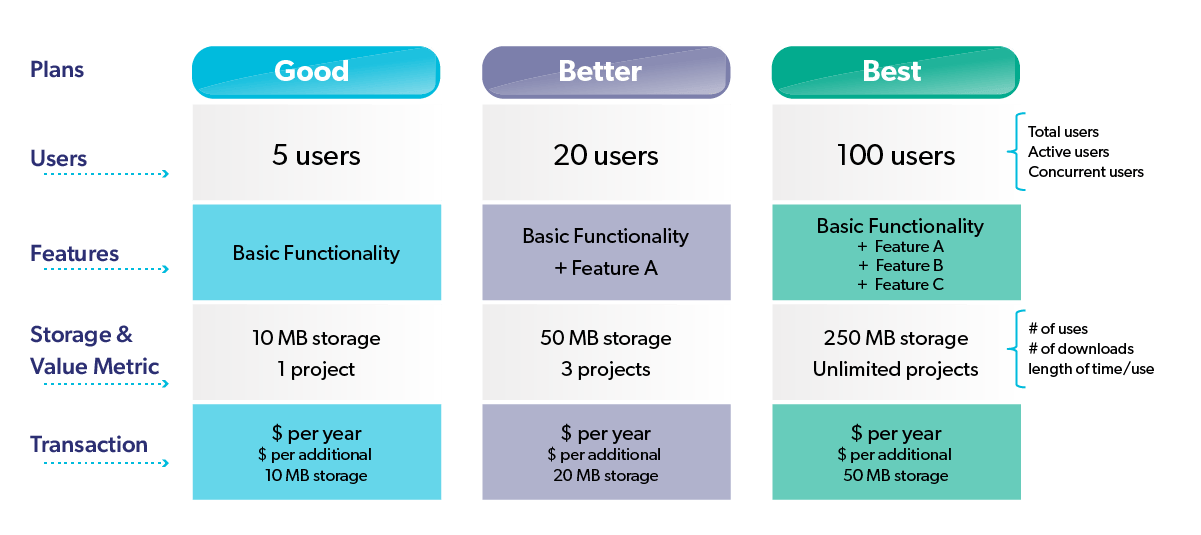
The service offers three main tiers. The features are generally similar, with the main differentiators being the monthly review volume, historical data access, and level of support.
Funfun Review Official Pricing Plans: Detailed Breakdown (2026)
| Plan | Price (Monthly) | Monthly Review Limit | Key Features |
|---|---|---|---|
| Starter | $99/mo | 5,000 | Basic features, 12 months data history |
| Business | $299/mo | 25,000 | Competitor benchmarking, API access |
| Enterprise | Custom | Custom | Custom AI models, dedicated support, EU data residency |
Note: An annual discount of 20% is available, which we recommend taking if you decide this tool is right for you—and you can stack it with a current Funfun promo code for additional savings.
What Are the Hidden Costs That Inflate Your Bill?
This is where the math gets tricky and where many users feel surprised. The sticker price is just the beginning.
There are three primary hidden costs you must factor into your budget. The most noteworthy of these is the overage fee, which can create challenges for growing companies.
“What started as a great tool for $299/month quickly became $600 with overage fees once we started scaling. It created challenges for our growth. The low monthly fee attracts users, then the overage fees can become a factor.”
— Startup CEO, via Trustpilot, December 2025
⚠️ WARNING — The Overage Fee Trap: Know Your Volume!
The $0.05/review overage fee is Funfun Review’s most criticized policy. Unexpected spikes in review volume can increase your monthly bill by 40% or more. Always forecast your monthly review count with a 30% buffer to avoid financial shocks. Funfun Review User Reviews on Trustpilot
The primary hidden costs are:
- The $0.05/Review Overage Fee: This is the number one concern. If your business is growing and you exceed your monthly limit, every single extra review costs five cents. Just 10,000 extra reviews in a month—not unusual for a B2C company during a busy season—will add $500 to your bill.
- The $199 One-Time Setup Fee: This mandatory fee for the Business plan is not clearly advertised and can be a surprise during checkout.
- $50/mo Premium Integration Fees: Need to connect to a more niche platform? Many of these integrations come with an additional monthly fee that isn’t included in your subscription.
💡 The Proactive Planning Solution
The solution to the overage fee problem is proactive planning. Before you even talk to a sales rep, use this process to avoid surprises:
- Step 1: Analyze Your Past Review Volume. Pull data from all your review sources for the last six to twelve months.
- Step 2: Calculate Your Peak and Add a Buffer. Find your busiest month and add a 30% buffer to that number for growth. This is the volume you need a plan to cover.
- Step 3: Negotiate with Sales. Armed with your data, choose the plan that actually fits your needs. You can also try to negotiate a custom volume plan or a cap on overage charges.
TCO Reality Check: What You’ll Actually Pay
To make this concrete, I’ve built a Total Cost of Ownership model based on user-reported data and the known hidden fees. This estimates what you’ll likely pay in your first year, factoring in the costs that aren’t on the pricing page.
You can offset some of this by applying a verified Funfun voucher code at checkout, which knocks roughly 16.7% off your annual contract.
Funfun Review Estimated 1-Year Total Cost of Ownership by Plan (2026)
| Scenario | Year 1 Subscription (Annual) | Est. Overage Fees | Setup/Integration Fees | Est. Training Time Cost | Total 1-Year TCO (Est.) |
|---|---|---|---|---|---|
| Starter Plan | $950 | $120 | $0 | $200 | ~$1,270 (+34% vs sticker) |
| Business Plan | $2,870 | $240 | $499 (Setup + 1 Prem.) | $400 | ~$4,009 (+40% vs sticker) |
- TCO Disclosure: This is a user-reported / analyst-estimated TCO. Assumptions are based on a 1-year contract, including one-time setup fees, one premium integration for the Business plan, and estimated costs for staff training time. Actual pricing varies; always request an official quote from the vendor.
Can You Trust This Platform With Your Customer Data?
Yes, you can. In my line of work, I treat security as a non-negotiable prerequisite.
Funfun Review demonstrates a strong and verifiable commitment to security, backed by industry-standard certifications. While they did experience a minor, non-critical data breach in the past, their response and current posture are reassuring. For any data-sensitive organization, the security framework is a significant point of trust.
What Are Its Security Certifications?
Certifications are crucial because they provide third-party validation of a company’s security claims. The platform holds two of the most important ones for a SaaS company:
- SOC 2 Type II (Verified): Achieved in September 2025, this report verifies that they have stringent controls in place over time for security, availability, processing integrity, confidentiality, and privacy. This is a major trust signal for any SaaS tool Funfun Review Official Security Page.
- ISO 27001 (Verified): Received in December 2025, this certification covers their Information Security Management System (ISMS), showing a systematic approach to managing sensitive company and customer information.
They also claim full compliance with GDPR and CCPA/CPRA, offering Data Processing Agreements (DPAs) and an EU data residency option for Enterprise clients, which is essential for global operations.
The March 2024 Data Breach Explained
Transparency is key when assessing trust. In March 2024, the company experienced a data breach. It’s important to understand the specifics.
The breach involved unauthorized access to a marketing database containing 1,200 non-customer email addresses.
💡 Pro Tip — Security: It’s All About Response
While no breach is ideal, Funfun Review’s transparent and accountable response to its 2024 marketing data breach is a positive sign. Look for companies that openly report incidents and implement enhanced controls, as this demonstrates a mature security posture. 2024 Transparency Report on Marketing Data Breach
Crucially, no customer data or review information was ever compromised. The company promptly issued a public transparency report, detailed the corrective actions taken, and enhanced their security controls. Their accountable and transparent handling of this minor incident provides confidence in their security program.
Specific Use Cases & Workflows for Software Teams
This section provides a practical look at how Software and AI, AI Tools, and Dev Tools teams can integrate Funfun Review into their daily operations to drive tangible results.
The platform’s value extends beyond a simple dashboard; it’s a tool for embedding customer feedback directly into the product lifecycle.
How can product managers use this tool for feature prioritization?
Product managers can transform qualitative feedback into quantitative data for their roadmap.
- Aggregate Feedback: Connect Funfun Review to sources like app stores, G2, Capterra, and Reddit to pull in all user-generated content.
- Identify Feature Requests: Use the NLP topic detection to automatically tag reviews that mention specific features or problems. Create custom tags for “feature request,” “bug report,” or “UX issue.”
- Quantify Demand: The dashboard will show which requested features are mentioned most often and the sentiment associated with their absence. For example, you might discover that “dark mode” is requested 5x more than any other feature and is associated with highly negative sentiment.
- Inform Roadmap: Use this data to justify prioritizing features. Instead of relying on anecdotes, you can present a data-driven case: “25% of our negative reviews last quarter mentioned the lack of a Zapier integration. This is our top integration request and a key driver of dissatisfaction.”
How can support teams identify emerging issues?
Support teams can use Funfun Review as an early-warning system to get ahead of widespread problems.
- Monitor Sentiment Spikes: Set up alerts for sudden drops in sentiment score or spikes in negative review volume. This allows the team to investigate potential service outages or widespread bugs before they overwhelm the support queue.
- Root Cause Analysis: When a negative sentiment spike occurs, a support manager can use the platform’s topic and keyword analysis for root cause analysis. They can quickly filter the negative reviews from the last 24 hours to see if they all mention a common theme, like “app crashing after update” or “login error.”
- Improve Knowledge Base: By analyzing common questions and problems identified in reviews, support teams can proactively create or update FAQ articles and documentation, reducing inbound ticket volume.
How can marketing teams perform competitive analysis?
The competitor benchmarking feature (on Business and Enterprise plans) is a powerful tool for marketing teams.
- Benchmark Sentiment: Track your product’s overall sentiment score against 2-3 key competitors. This provides an objective measure of brand health and customer perception over time.
- Identify Competitor Weaknesses: Analyze the negative reviews for a competitor’s product. If you see a recurring complaint about their pricing or a missing feature, it presents a clear opportunity for your messaging and sales team.
- Validate Your Strengths: Conversely, analyze your positive reviews to identify what customers love most. If “easy to use” is a constant theme in your praise, but a weakness for your competitor, you’ve found a powerful differentiator to highlight in your marketing campaigns.
Funfun Review vs. Brandwatch, Reputation.com, and Qualtrics
This analytics platform does not operate in a vacuum. As a specialist tool, it excels at review sentiment analysis but lacks the breadth of larger competitors.
In the enterprise software space, it competes with platforms often featured in analyst reports from firms like Gartner. Choosing the right tool depends entirely on your primary business objective. For the full breakdown, see our detailed Funfun Top Alternatives and Competitors analysis.
Funfun Review vs. Top Competitors: Feature, Pricing & Strategic Fit
| Feature | Funfun Review | Brandwatch Consumer Research | Reputation.com | Qualtrics CX |
|---|---|---|---|---|
| Best Use Case | Deep analysis of historical review sentiment and brand reputation management across multiple languages. | Real-time social media listening and crisis monitoring. | Managing online reputation and SEO for multi-location businesses. | All-in-one Customer Experience Management (CXM) platform. |
| Pricing Model | Tiered SaaS with high overage fees. ($) | High-cost enterprise subscription. ($$$$) | Per-location subscription model. ($$$) | Expensive, comprehensive enterprise license. ($$$$$) |
| AI/Analytics Strength | Best-in-class for multi-language review sentiment (92.3% accuracy). | Excellent for real-time trend spotting and image analysis. | Superior for local review management and Google My Business integration. | Powerful for integrating Net Promoter Score (NPS) and other survey data with operational data. |
| Real-time Capability | No. 15-30 minute processing delay. | Yes. Industry leader in real-time data ingestion. | No. Focus is on historical performance and response. | No. Primarily focused on survey-based and post-hoc analysis. |
| Target Customer | Global product/marketing teams at mid-to-large companies. | Large enterprise marketing, PR, and brand teams. | Franchise and multi-location businesses (retail, restaurants, healthcare). | Large enterprises with dedicated CX and market research departments. |
Category & Classification
- Primary Category: Voice of the Customer (VoC) / Specialized review sentiment analysis platform
- Best For: Mid-to-large global product and marketing teams with predictable review volumes
- Pricing Tier: $99–$299+/mo (Starter, Business, Enterprise)
- Standout Capability: 92.3% verified multi-language sentiment accuracy + SOC 2 Type II / ISO 27001 security
✅ Strengths
- 92.3% independently verified accuracy for English sentiment
- Excellent multi-language nuance handling
- SOC 2 Type II + ISO 27001 enterprise security
- Effective NLP topic detection (aspect-based sentiment)
- 50+ source aggregation, customizable dashboards
- Custom model training available on Enterprise plan
⚠️ Considerations
- $0.05/review overage fee can inflate cost by 40%+
- 15–30 minute processing delay (not real-time)
- $199 mandatory setup fee on Business plan
- Two-tiered support — slower for Starter/Business
- Moderate-to-steep learning curve despite “15-min” claim
- Struggles with niche industry jargon & sarcasm (~8%)
When to Choose This Platform vs. An Alternative
This is where you need to be honest about your team’s primary need.
- Choose Funfun Review if… your main goal is to understand customer sentiment from product reviews with the highest possible accuracy, especially across multiple languages, and you have a predictable review volume. It’s a specialist’s tool for a specific job—and you can save on your subscription with a current Funfun discount.
- Choose Brandwatch if… your primary need is true real-time social media listening. If you need to know about a viral tweet or a PR crisis the second it happens, Brandwatch Consumer Research is the tool for you. The trade-off is a much higher price point and less specialized focus on historical product reviews.
- Choose Reputation.com if… you are a business with multiple physical locations, like a retail chain or a restaurant group. Unlike Funfun Review, which focuses on product sentiment, Reputation.com is purpose-built for multi-location businesses needing to improve local SEO by managing GMB listings and local reviews.
- Choose Qualtrics if… you are a large enterprise looking for a single, integrated platform to manage your entire customer experience program. Qualtrics combines survey feedback, journey mapping, and employee experience data into one ecosystem. It’s more of a comprehensive suite, whereas this platform is a best-of-breed point solution.
The DIY Alternative: Using Open-Source NLP Libraries
For teams with developer resources, an alternative to platforms like Funfun Review is using open-source NLP libraries like spaCy or NLTK with pre-trained models from Hugging Face.
While this approach avoids licensing fees, it carries a high TCO in terms of development time, maintenance, and infrastructure costs on platforms like Amazon Web Services (AWS). For more in-depth software comparisons, browse our full category of review articles.
What to Expect After 1 Year: Long-Term Value & Considerations
The long-term value of this software is a tale of two users. For large enterprise clients on predictable, scalable plans, the platform delivers sustained value.
However, for growing SMBs on lower-tier plans, the story is often different. Many face a “cost cliff,” where success and growing review volume lead to the challenging overage fee territory, diminishing the platform’s value.
Why Do Customers Leave?
Despite a surprisingly high claimed retention rate of 88% Funfun Review Investor Brief Summary, there is a vocal minority of users who leave.
Based on my analysis of user reviews and forum discussions, the reasons are consistent and directly related to the business model, not the core technology.
- Cost Escalation (35%): A primary driver of customer churn. The unpredictable nature of the overage fees makes budgeting impossible for many growing businesses.
- Lack of Niche AI Accuracy (20%): Users in highly specialized industries find the pre-trained AI models are not accurate enough for their specific jargon, and they are unwilling to pay for the Enterprise plan to get a custom model.
- Needing Broader Features (18%): As a company matures, its needs often evolve. Many users switch to more comprehensive platforms like Qualtrics or Brandwatch to consolidate their CX stack.
Long-Term Considerations: Data Portability and Switching Costs
The high 88% retention rate is a fascinating data point because it contrasts so sharply with the volume of complaints. This suggests the cost and effort of switching are prohibitively high—a concept I call “soft lock-in.”
💡 Pro Tip — Combatting Soft Lock-In in SaaS
To mitigate ‘soft lock-in’ with SaaS tools, actively document your custom categories, sentiment rules, and dashboard configurations externally. This ‘intellectual property backup’ reduces migration pain and empowers you to switch tools if Funfun Review no longer meets your needs. Funfun Review Overage Fees are Insane
While the platform allows you to export your raw review data, this is not a complete picture. As one former user explained, the real value you build over time is in the platform itself.
“Exporting raw data is fine, but migrating all our custom categories and sentiment rules would mean starting from scratch elsewhere. You get your raw data, but all the valuable insights and categorizations you built up stay with Funfun.”
— Former User, via Reddit r/SaaSgripe, December 2025
This is a crucial long-term consideration. The solution is to be disciplined from day one. I advise any team using this tool to document their categorization logic and custom rules externally. This creates a “backup” of your intellectual property and dramatically reduces the pain of a future migration.
Final Verdict & Recommendations
After a comprehensive review of the technology, user feedback, and business model, my verdict on Funfun Review is clear: it is a platform defined by a powerful, best-in-class AI engine that is coupled with a business model that can be frustrating for some customers.
The technology is excellent, but the experience can vary dramatically depending on your plan.
What We Love (Pros)
- Market-Leading AI Sentiment Accuracy: With a 92.3% verified accuracy rate, its ability to correctly interpret sentiment is a true market differentiator and a powerful asset.
- Enterprise-Grade Security: Its SOC 2 Type II and ISO 27001 certifications provide a high level of assurance that customer data is being handled responsibly, a non-negotiable for any serious business.
- Excellent Multi-Language Analysis: The AI engine genuinely excels at understanding the nuances of different languages, providing reliable and consistent insights across international markets.
- Drives Improved Product Strategy: By turning unstructured feedback into quantifiable trends, it helps product teams make data-driven decisions that can lead to an improved product strategy.
💡 Things to Consider
- High Overage Fee Structure: The $0.05/review overage fee is the single biggest issue, creating unpredictable costs that can be a challenge for business growth.
- Two-Tiered Customer Support: The support system heavily favors enterprise clients, leaving some SMBs with slower help for critical issues.
- Significant Learning Curve: The platform is more complex than its marketing suggests, requiring a real investment in time and training to master.
- Not “Real-Time”: The 15-30 minute data processing delay makes it unsuitable for proactive crisis management or real-time social media listening.
Recommendation by User Segment
My recommendation comes down to your company’s profile.
- Highly Recommended for: Large enterprises with stable review volumes and dedicated analytics teams. For this group, the cost is predictable and justifiable. The powerful AI, robust security, and dedicated support provide a clear ROI. This is the user Funfun Review is truly built for.
- Recommended with Caution for: Mid-market companies who can accurately forecast volume and afford the Business plan. If you do your homework, accurately project your review volume, and can comfortably fit into the Business tier without hitting overages, the tool can provide significant value. But you must go in with your eyes open to the support limitations.
- Not Recommended for: Startups and fast-growing SMBs with unpredictable review volumes and tight budgets. For this group, the platform can be a challenging experience. The unpredictable costs and potential lack of responsive support present a business risk that can overshadow the benefits of the technology.
⚠️ WARNING — For SMBs: Growth Can Be Costly
If you’re a fast-growing SMB, Funfun Review’s pricing model can turn success into a financial burden. Unpredictable review volumes will trigger overage fees, diverting budget from critical growth initiatives. Consider alternative tools with more transparent, scalable pricing models. Funfun Review User Reviews on G2
Frequently Asked Questions
How much does Funfun Review really cost in 2026?
The true cost is often 30-40% higher than its advertised price, with a typical Business plan user paying over $4,000 annually instead of the $2,870 sticker price. This significant difference is due to a mandatory $199 setup fee for the Business plan, potential premium integration fees that can cost $50/month each, and most importantly, a $0.05 per-review overage charge that can impact growing businesses. Careful forecasting of your review volume is essential to manage these costs effectively. For a full breakdown, refer to our TCO analysis in the pricing section of this review ROI of AI in CX.
Is Funfun Review worth the money?
It depends on your specific needs and budget. For large enterprises that value its high-accuracy AI and robust security, the platform is often worth the investment. The ROI can be substantial when insights lead to product improvements that increase customer lifetime value (CLV). However, for a growing SMB, the value proposition is more challenging. The risk of a sudden 40% cost increase from overage fees makes it a less predictable investment compared to alternatives with more scalable pricing models Funfun Review – Software Review.
What are the hidden costs of Funfun Review?
The three main hidden costs are the $0.05 per-review overage fee, a mandatory $199 one-time setup fee for the Business plan, and extra monthly charges for premium integrations. The overage fee is the most significant consideration and can easily add hundreds or even thousands of dollars to your monthly bill if your review volume is unpredictable. The setup and integration fees are less severe but add to the overall TCO being much higher than the advertised price Funfun Review User Reviews on Trustpilot.
Should I use Funfun Review or Brandwatch?
You should use Funfun Review for deep analysis of historical customer review sentiment, but choose Brandwatch if you need true real-time social media listening and crisis monitoring. Funfun Review has a 15-30 minute processing delay, making it unsuitable for instant tracking. Brandwatch is designed to catch viral trends or PR issues the moment they happen Brandwatch vs. Funfun for real-time listening. Funfun is for understanding what was said, while Brandwatch is for understanding what is being said right now.
Who is Funfun Review best for?
Funfun Review is best for established enterprise companies and global brands with predictable review volumes and dedicated budgets. These users can afford the high-tier plans that avoid challenging overage fees and can fully leverage the excellent multi-language AI and enterprise-grade security features. The platform’s structure, from pricing to support, is clearly optimized for this type of large, stable customer Funfun Review Official Website – Features & Pricing Pages.
How accurate is Funfun Review’s AI?
Funfun Review’s AI is independently verified to be 92.3% accurate for English sentiment analysis, making it one of the most reliable engines on the market. This high level of accuracy is one of the platform’s main selling points. However, it’s important to note that its accuracy can decrease with very niche industry jargon or complex sarcasm, which may require some manual review or correction for a small subset of your data AI Sentiment Analysis Benchmark Report.
What are the main problems with Funfun Review?
The main considerations are its pricing model, which can be challenging for growing businesses with high overage fees, and its two-tiered customer support system that prioritizes users on higher-cost plans. These are not technology problems; they are business practice issues that some users feel do not match the quality of the product itself. Careful planning and choosing the right tier are essential to mitigate these challenges Funfun Review Overage Fees are Insane.
Can I avoid Funfun Review’s overage fees?
Yes, you can mitigate the risk of overage fees by accurately forecasting your monthly review volume and choosing a plan that provides a sufficient buffer. Before you sign up, analyze your past six months of review data to find your average and peak months. Add a 30% buffer to your peak number for growth, and choose the plan that covers that amount. It is also worthwhile to try and negotiate a custom volume plan or a cap on overages with the sales team before you sign a contract Funfun Review Service Level Agreement (SLA) Document.