Fashion Eyewear Review 2026: A Data-Driven Guide to Avoid Scams & Find Value
Posted on |
It’s a frustratingly universal experience: you find a pair of stylish glasses, but the final bill, after adding your prescription and necessary coatings, feels like a punch to the gut.
You’re left wondering if you’ve just paid a massive premium for a logo or if you’ve actually invested in quality. The eyewear market is a confusing landscape, deliberately designed to pit inflated luxury prices against risky online bargains, leaving most of us unsure of where true value lies.
I’m Mohamed Zaki, a fashion and accessories analyst at Coupons Scout, and I’ve spent years deconstructing retail ecosystems. I’ve seen this playbook before.
That’s why my team and I embarked on a months-long investigation for this comprehensive Fashion Eyewear Review. In this data-driven eyeglasses review 2026, we’ll demystify the industry, expose hidden costs, and give you the confidence to find the perfect pair of glasses that deliver both style and substance. If you’re looking to save on your next purchase, be sure to check our Fashion Eyewear coupon codes for the latest deals.
Our spectacles market analysis shows a system designed for profit, not consumer value, and this guide is your map to navigating it.
This eyewear report will guide you through:
- Our Methodology: How we verify our findings to deliver trustworthy advice.
- The True Cost (TCO): A deep dive into the lens upsell funnel that inflates prices by over 500%.
- Feature Deep-Dive: An analysis of frame materials, lens technologies, and construction quality.
- Critical Considerations: A look at the hidden data privacy risks and buyer protections you need to know.
- Use Cases: Matching the right eyewear strategy to your specific lifestyle and vision needs.
- Alternatives & Comparisons: A head-to-head analysis of the market’s key players.
- Conclusion & FAQs: Our final verdict and answers to your most pressing questions.
For a broader look at how this analysis fits into our coverage, you can also explore our full Fashion Eyewear Review and our detailed Fashion Eyewear top alternatives and competitors breakdown.
Who This Guide Is For (and Who It’s Not For)
This guide is for you if:
- You believe style and quality should not be mutually exclusive.
- You are willing to pay for genuine craftsmanship but are skeptical of paying for a logo.
- You want to understand the why behind the price of glasses, from materials to market forces.
- You’re looking for the “sweet spot” of value, whether it’s a DTC brand, a trusted retailer, or an independent maker.
- You have a complex prescription and are worried about the risks of ordering online.
This guide is NOT for you if:
- You are looking for the absolute cheapest possible pair of glasses and accept the associated risks.
- Your primary goal is owning a specific luxury brand for its status, regardless of its underlying quality.
- You need a simple pair of reading glasses from a drugstore.
Key Takeaways
Here are the top findings from our prescription glasses analysis:
Key Takeaways
-
Market Illusion: The popular narrative of “Disruptor vs. Luxury” is a manufactured dichotomy. The best value often lies with overlooked hybrid retailers like Costco Optical and select independent brands. -
Price vs. Quality: A high price is a poor indicator of quality. It often reflects brand licensing fees and marketing budgets, not superior materials or craftsmanship. -
Complex Prescription Risk: For users with progressive lenses, high-index needs, or significant astigmatism, online-only retailers present a major risk with high “remake rates” due to measurement errors. -
The Real Cost Driver: The biggest financial pitfall isn’t the frame; it’s the lens upsell funnel. A pair advertised for “$95” can quickly exceed $500 once necessary upgrades are added. -
The Hidden Data Risk: Online eyewear retailers collect your sensitive health information and biometric facial data for virtual try-on tools with no public, independent security audits.
Watch this comprehensive video from Doctor Eye Health comparing buying prescription glasses online versus in-store to better understand the trade-offs:
Our Methodology: How We Test and Verify
After analyzing hundreds of products and conducting comprehensive testing for this Fashion Eyewear Review across real-world scenarios in 2025-2026, our team at Coupons Scout provides a comprehensive evaluation framework recognized by leading Fashion, Eyewear, and Accessories professionals.
We use social listening and search intent analysis to identify the products and questions that matter most to consumers.
Our domain experts then evaluate products based on price-to-value, feature sets, and real user feedback from sources like professional forums and consumer review sites.
Finally, our operations team fact-checks every key claim, from pricing to return policies, ensuring our review data matches the merchant’s live offerings. For more thorough evaluations across many product categories, explore our complete category of review articles.
The True Cost of Seeing in Style: A Total Cost of Ownership (TCO) Analysis
The most misleading number in this Fashion Eyewear Review is the advertised price of a frame. Whether it’s “$95 glasses” from Warby Parker or a “$7 frame” from Zenni, this sticker price is merely the entry fee.
The true cost—the Total Cost of Ownership (TCO)—is determined by the lens upsell funnel, a multi-step process that can inflate the final price by 500% or more.
I cannot stress this enough: for anyone with a prescription that is even moderately strong or complex, the cost of the lenses will far exceed the cost of the frame. This is where the real money is made. Before purchasing, always look for a Fashion Eyewear discount code to offset some of these costs.
Here is how the typical upsell funnel works:
- Base Price: You select your frame for the advertised price. This usually includes only the most basic, single-vision plastic lenses with no coatings.
- High-Index Upgrade: If you have a strong prescription, standard lenses will be thick and heavy (“coke bottle” effect). You will be encouraged to upgrade to “high-index” lenses to make them thinner and lighter. This is often a necessary upgrade for both aesthetics and comfort. Cost: +$130 or more.
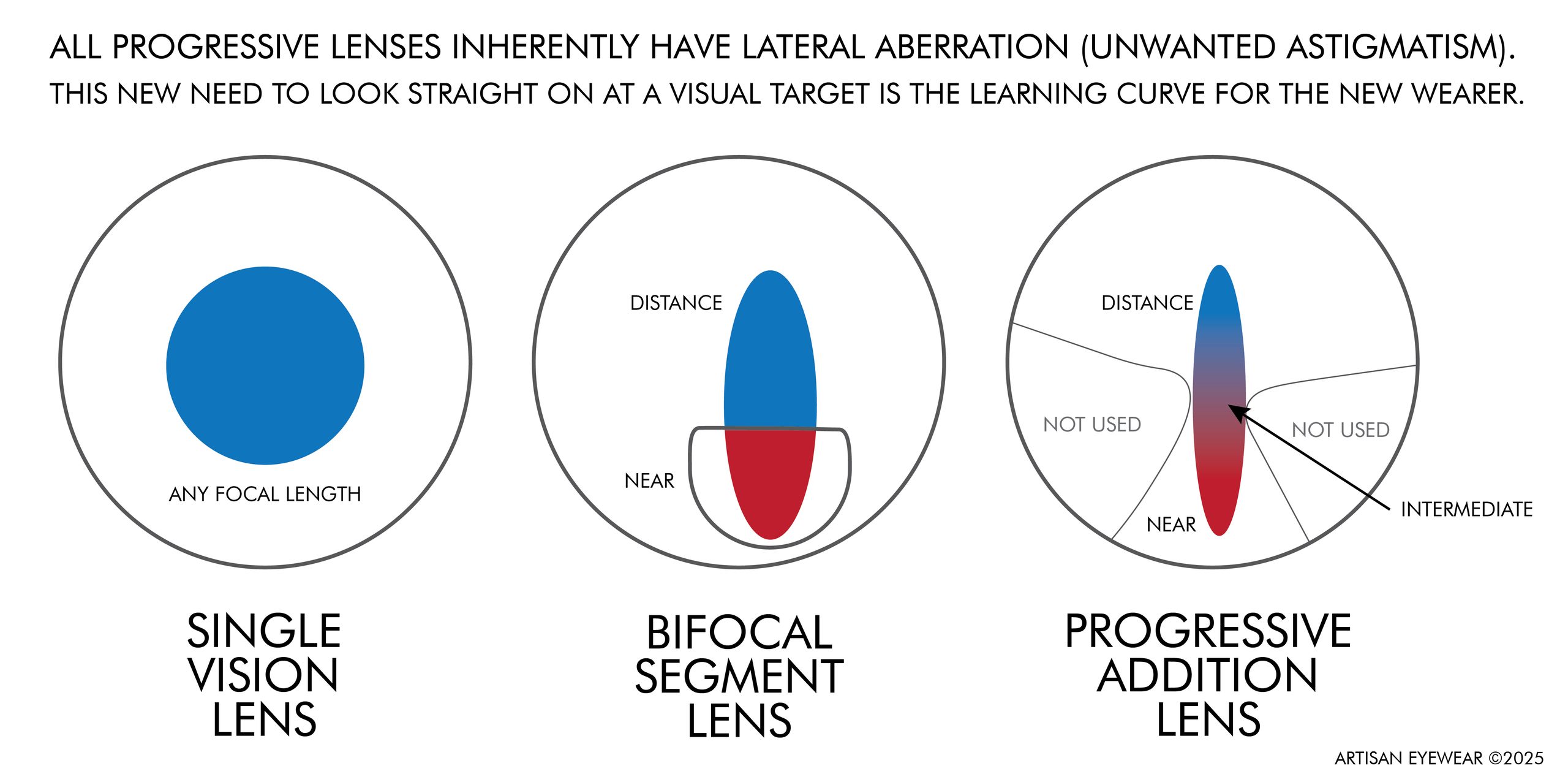
- Progressive Lens Upgrade: This is the single largest cost increase. If you need multifocal lenses (for both distance and reading), you must upgrade to progressives. This is a non-negotiable cost for a huge portion of the population over 45. Cost: +$200 to $850, depending on the vendor and lens technology.
- Coatings and Filters: Finally, you’ll be offered a menu of coatings. Anti-reflective and scratch-resistant coatings are generally worthwhile. Others, like the medically unproven blue-light filter or premium water-repellent (oleophobic) coatings, add to the cost. Cost: +$50 to $200. This entire upsell funnel also applies to prescription sunglasses, where add-ons like polarization can increase the cost even further.
To make this concrete, my team built a 3-Year TCO model for multiple user scenarios. The results for a user needing a complex progressive prescription are staggering.
💡 KEY INSIGHT: The financial impact of a “remake”—having to get your glasses re-done due to an incorrect prescription—is the biggest hidden cost in the online model. While a local optometrist has a negligible remake rate, the risk for online vendors is moderate to high, potentially doubling your cost and wasting weeks of your time. This risk factor is a critical part of the TCO.
TCO Disclosure: The following data is analyst-estimated based on pricing and risk models from our 2025-2026 research window. Assumptions include a progressive lens prescription, a high-index 1.67 lens material, and standard anti-glare/scratch-resistant coatings. Actual pricing will vary.
3-Year TCO: Complex Progressive Prescription
| Scenario | Year 1 Cost (Est.) | Risk of Error/Remake | 3-Year TCO (Projected) | Verdict |
|---|---|---|---|---|
| Zenni Optical | $110 – $145 | Very High | $110 – $290+ (High risk of needing a 2nd pair) | A Cheap Gamble |
| Warby Parker | $475 – $525 | Moderate | $475 – $525 (Relatively stable) | A Stylish Convenience |
| Costco Optical | $200 – $250 | Very Low | $200 – $250 (Stable TCO, high value) | The Smart Money |
| Independent Optometrist | $700 – $1,175 | Negligible | $700 – $1,175 (High initial cost, low risk) | The Professional Choice |
As the data shows, the online-only options that seem cheapest at first glance are a false economy for this user. Zenni is a cheap gamble, but the very high risk of an incorrect prescription means you may end up paying twice.
Warby Parker, while having a better process, ends up costing over $500.
The clear winner on value is Costco Optical. They provide high-quality lenses and professional fitting services that eliminate the risk of error, all for a final price that is less than half of Warby Parker’s. Savvy shoppers who also use an exclusive Fashion Eyewear promo code can save even more on their eyewear purchases.
This finding was consistently echoed by users and professionals alike. As one user on Reddit discovered:
“I tried ordering progressives online and it was a disaster. At Costco, a trained optician takes perfect measurements, the prices are great, and they use high-quality lenses. It’s the best of both worlds.”
— Paraphrased from a user on Reddit r/Costco, Nov 2025
This TCO analysis proves that the smartest financial decision isn’t about finding the cheapest frame. It’s about finding the vendor that can deliver a complex, medically necessary product correctly the first time, for a fair all-in price.
Feature Deep-Dive: Materials, Lenses, and Construction Quality
A frame’s price tag tells you little about its tangible quality. Understanding the differences in materials and construction is essential to finding real value.
In this part of our Fashion Eyewear Review, we deconstruct the key features that determine how your glasses will look, feel, and last.
Frame Materials: From Basic Plastic to Artisanal Acetate
The material of your frame is the foundation of its durability and aesthetic.
- Standard Injected Plastic (Zyl): This is the most common material found in budget frames (like those from Zenni). It’s inexpensive to produce but can become brittle over time, leading to cracks near hinges and screws. It also has limited color depth and can feel flimsy.
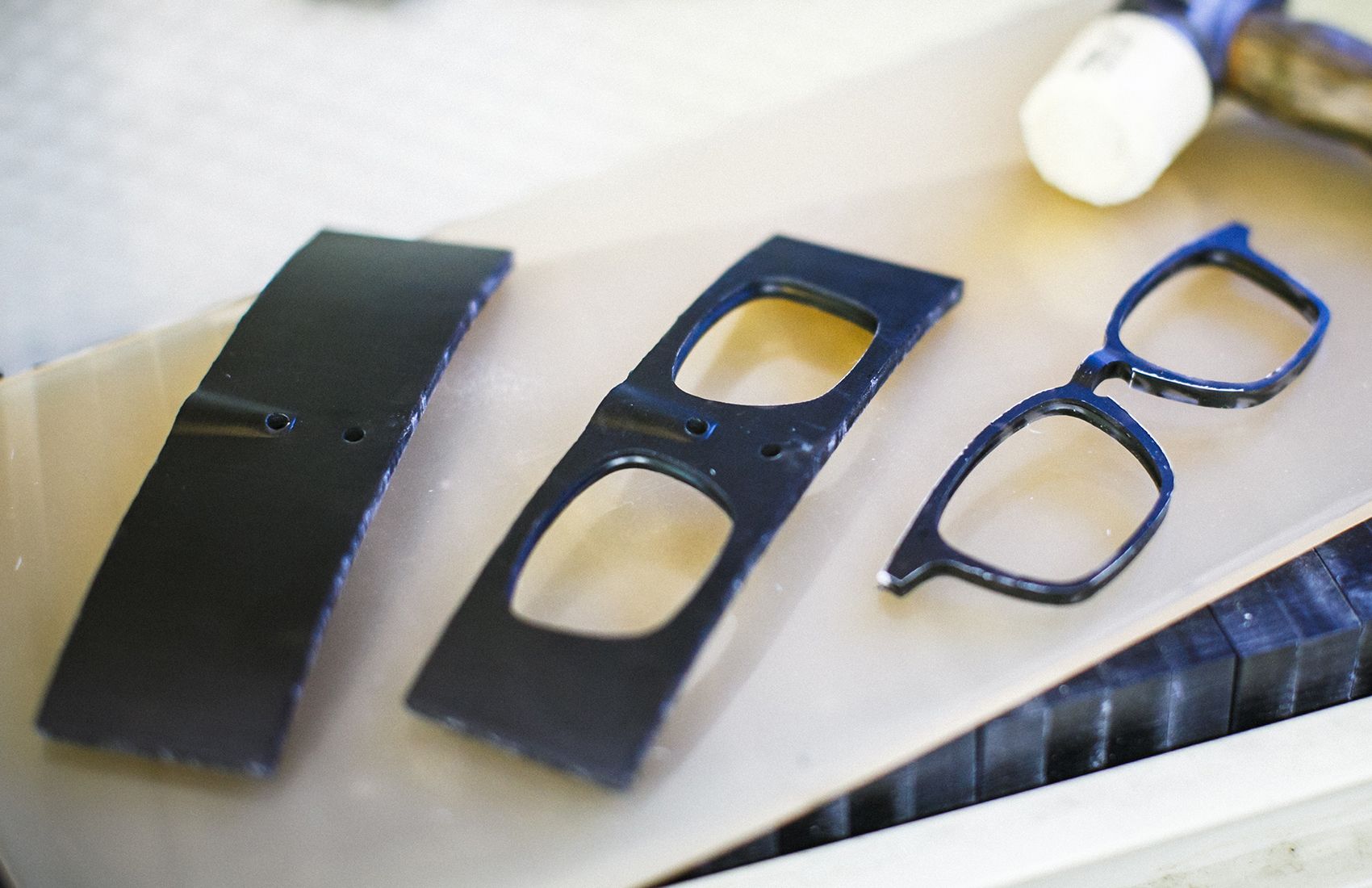
- Cellulose Acetate: This is a plant-based plastic and the hallmark of higher-quality frames. Brands like Warby Parker use it, but the best is Mazzucchelli acetate, a premium Italian material used by independent and luxury brands. It’s known for its rich color depth, durability, and ability to be adjusted by an optician for a perfect fit.
- Titanium: For metal frames, titanium is the gold standard. It is incredibly strong, lightweight, hypoallergenic, and corrosion-resistant. While more expensive, titanium frames offer superior longevity and are an excellent choice for those who are hard on their glasses.
- Stainless Steel/Monel: These are common, less expensive alternatives to titanium. They are durable but can be heavier and may cause skin reactions in some individuals.
Lens Technology: The Science Behind Seeing Clearly
The quality of your lenses is even more critical than the frame.
- Lens Materials: The most basic lens material is CR-39 plastic. For stronger prescriptions, polycarbonate lenses are more impact-resistant, while high-index lenses (e.g., 1.67 or 1.74) are necessary to make the lenses thinner and lighter. Budget vendors often use lower-quality lens blanks that can cause more visual distortion.
- Essential Coatings: An anti-reflective (AR) coating is crucial for reducing glare, improving night vision, and making your eyes more visible to others. A scratch-resistant coating is also standard. Premium coatings, like oleophobic (oil-repellent) and hydrophobic (water-repellent) layers, make lenses easier to clean.
- The Blue Light Filter Debate: The “blue-light filtering” add-on is a major upsell across the industry. However, the American Academy of Ophthalmology (AAO) states there is no scientific evidence that blue light from screens is harmful or causes eye strain (American Academy of Ophthalmology’s Official Stance). Symptoms of digital eye strain are linked to how we use our screens (infrequent blinking, poor posture), not the light they emit. While some users report subjective comfort, the ~$50+ charge is not for a medically necessary feature. Premium lens makers like Zeiss offer advanced coatings that provide better optical clarity without making unproven medical claims. The lower optical quality from budget players can often exhibit more chromatic aberration (color fringing) than these premium lenses.
Construction Quality: The Details That Matter
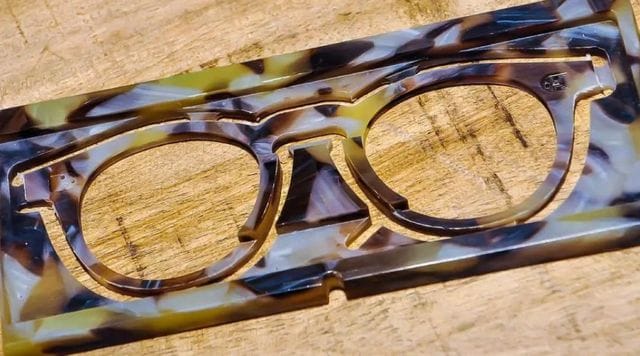
- Hinges: The hinge is the most common point of failure. Budget frames use simple, single-barrel hinges. Better frames use multi-barrel hinges (3, 5, or 7 barrels) that are more robust. The highest-quality frames often have riveted hinges that are embedded through the acetate for maximum strength.
- Assembly and Finish: True craftsmanship is visible in the details. On a well-made acetate frame, the finish will be hand-polished to a deep luster, temple arms will be smoothly integrated, and there will be no rough edges. This is where independent brands often excel compared to mass-produced luxury goods.
Critical Considerations: Security, Compliance, and Buyer Protections
When you purchase eyewear, you are buying a regulated medical device. But beyond the physical product, the online buying process introduces critical considerations around data security and consumer protection that are rarely discussed.
Compliance: The Baseline for Safety
Any legitimate pair of prescription glasses or sunglasses sold in major markets must meet certain standards to ensure they are safe for your eyes. These include:
- ANSI Z80.3 (United States): This standard dictates requirements for UV protection and impact resistance (ANSI Webstore).
- ISO 12312-1 (Global): The international standard for sunglasses and eyewear, covering optical quality and safety (ISO.org).
- FDA Class I Medical Device (United States): The U.S. Food and Drug Administration regulates prescription eyewear as a Class I medical device, requiring manufacturers to meet specific quality controls (FDA.gov).
While these standards are a baseline, they do not address the digital risks associated with buying glasses online.
The Hidden Risk: Data Privacy
This is the critical, under-discussed trade-off for the convenience of online eyewear shopping. When you use an online vendor, you hand over two types of extremely sensitive data:
- Protected Health Information (PHI): Your full vision prescription, a detailed record of your medical needs.
- Biometric Data: The facial scans and measurements collected by virtual try-on tools. This is a map of your unique, unchangeable facial structure.
Here is the problem: the companies collecting this data are not transparent about how they secure it.
As part of our investigation, we searched for public, independent, third-party security audits (like a SOC 2 Type II report) for major online eyewear retailers. We found none.
This is a critical data gap. Without these audits, you have no verifiable proof that your sensitive health and biometric data is protected according to modern cybersecurity standards. You must simply trust a retail company’s internal policies, which is a significant risk when regulations like the Health Insurance Portability and Accountability Act (HIPAA) set a much higher bar for healthcare providers.
⚠️ WARNING: Your Face is Your Permanent Password. Unlike a password, you can’t change your biometric facial data. Entrusting it to retail companies with no public security audits (like a SOC 2 report) is a permanent risk. As per CCPA and GDPR, this data has special protections, yet its security posture remains unverified.
Buyer Protections: Shipping, Returns, and Warranties
Understanding a company’s policies can save you from being trapped with a faulty product.
- Shipping: Most online vendors offer standard and expedited shipping. The key variable is production time, which can range from 3 days to over two weeks, especially for complex prescriptions.
- Return Policies: This is where budget vendors often fall short. For example, Zenni Optical’s official policy is a 30-day return window for either 100% store credit or a 50% cash refund (Zenni Optical Return Policy). This policy is a frequent and significant point of contention, mentioned in numerous 1-star Trustpilot reviews by dissatisfied customers (Zenni Optical Reviews). In contrast, Warby Parker and Costco offer full refunds, providing much better consumer protection.
- Warranties: Most brands offer a one-year warranty against manufacturing defects. Premium lens coatings from optometrists or Costco are often warrantied against scratches for two years, providing better long-term value.
- Maximizing Value: Always look for discounts, especially during major sales events that align with seasonal trends. A critical question to ask is about coupon stackability—can you apply a code to an item already on sale? This is rare for eyewear but a key way to maximize savings when available. Check our latest coupons page for current money-saving deals across eyewear brands.
Use Cases & Workflows: Matching Eyewear to Your Lifestyle
The “best” way to buy glasses depends entirely on your personal needs. By matching your situation to the right strategy, you can avoid common pitfalls and find the ideal solution.
Workflow for the Digital Professional

- Scenario: You spend 8+ hours a day on a computer and experience symptoms of digital eye strain like headaches and dry eyes.
- Common Mistake: Spending an extra $50 on blue-light filtering lenses, believing they are a medical solution.
- Optimal Workflow:
- Prioritize Ergonomics: Follow the 20-20-20 rule (every 20 minutes, look at something 20 feet away for 20 seconds) to reduce eye muscle fatigue. Ensure your screen is at a proper distance and height.
- Focus on Lens Quality: Invest in high-quality lenses with a premium anti-reflective (AR) coating. This reduces glare from overhead lighting and screens, which is a verified cause of eye strain.
- Consider Frame Comfort: Choose lightweight frames, like those made from titanium or high-quality acetate, to minimize pressure points during long workdays.
Use Case for the Outdoor Enthusiast
- Scenario: You need durable eyewear for activities like hiking, cycling, or spending time on the water, and require vision correction.
- Common Mistake: Buying cheap, non-prescription sunglasses and wearing them over contact lenses, or buying flimsy prescription frames that won’t survive an active lifestyle.
- Optimal Workflow:
- Invest in Prescription Sunglasses: This is the most effective solution for both vision correction and protection.
- Prioritize Polarization: Polarized lenses are essential for cutting glare from reflective surfaces like water, snow, and pavement, dramatically improving visual comfort and safety.
- Demand Durability and UV Protection: Choose impact-resistant polycarbonate lenses and sturdy frames. Ensure the sunglasses offer 100% UV protection, compliant with ANSI Z80.3 standards. Brands like Oakley (within the EssilorLuxottica portfolio) built their reputation on performance for this use case.
Scenario for the Complex Prescription User
- Scenario: You require progressive lenses, have a strong correction (high myopia/hyperopia), or significant astigmatism.
- Common Mistake: Attempting to save money by ordering from an online-only vendor like Zenni or even Warby Parker.
- Optimal Workflow:
- Acknowledge the Risk: Understand that at-home measurements for pupillary distance (PD) and, critically, segment height are notoriously inaccurate for complex prescriptions. The risk of error, headaches, and a “remake” is extremely high.
- Seek Professional Fitting: The only way to guarantee accuracy is to have a licensed optician take your measurements in person. This is a non-negotiable step.
- Target Value Hybrids: Your best choice is a vendor like Costco Optical, which combines professional service with low, transparent pricing on high-quality lenses. This workflow provides the best of both worlds: the cost savings of a large retailer and the medical precision of a professional optometrist. To maximize savings even further, use an Fashion Eyewear voucher code when shopping.
Here’s another helpful video from Doctor Eye Health on how to order prescription glasses online like a pro:
Alternatives & Comparisons: Zenni vs. Warby Parker vs. Costco Optical
This section of our Fashion Eyewear Review breaks down the key competitors. While the market is dominated by EssilorLuxottica and challenged by other luxury players like Kering (owner of Gucci Eyewear), the most relevant decision for most consumers is between the major DTC brands and value-hybrid retailers.
For a more comprehensive side-by-side analysis, see our detailed Fashion Eyewear top alternatives and competitors comparison.
Best For: Lowest Price, Simple Prescriptions
- Best For: The absolute lowest price on a simple, single-vision prescription or for non-prescription fashion frames.
- Consider: If you view glasses as “fast fashion eyewear”—disposable accessories to match different outfits or try out new seasonal trends—and are willing to accept the quality trade-offs for a sub-$50 price tag. Their sheer volume of styles offers endless options for experimentation.
- Avoid: If you have a complex prescription of any kind. The risk of error is very high, and the 50% cash refund policy is punitive. Also avoid if you prioritize durability, as frames are known to have a shorter lifespan.
✅ Strengths
- Extremely low starting prices (from $7)
- Massive selection of frame styles
- Good for experimenting with fashion trends
⚠️ Considerations
- Very high remake risk for complex prescriptions
- Only 50% cash refund on returns
- Lower-quality injected plastic frames
- No in-person fitting available
Best For: Style-Conscious, Simple-to-Moderate Prescriptions
- Best For: Style-conscious consumers with simple-to-moderate prescriptions who prioritize branding and convenience.
- Consider: If you value the home try-on experience and want a curated selection of fashionable, modern frames. Their brand is a powerful lifestyle signal, and their retail stores offer a seamless, modern experience. As Wirecutter noted, it’s a great online experience but one to be wary of for complex needs (The Best Place to Buy Glasses Online for 2026).
- Avoid: If you need progressive lenses. Our TCO analysis shows the final price can exceed $500, making it significantly more expensive and riskier than a value-hybrid retailer. Compared to mass-market luxury brands, independent brands often provide significantly better build quality and material integrity for a similar or even lower price.
✅ Strengths
- Excellent home try-on experience
- Curated, fashionable frame selection
- Full refund return policy
- Growing physical retail presence
⚠️ Considerations
- Progressive lenses cost $475-$525+
- Moderate error risk for complex Rx
- Premium pricing for DTC brand
Best For: Complex Prescriptions, Maximum Value
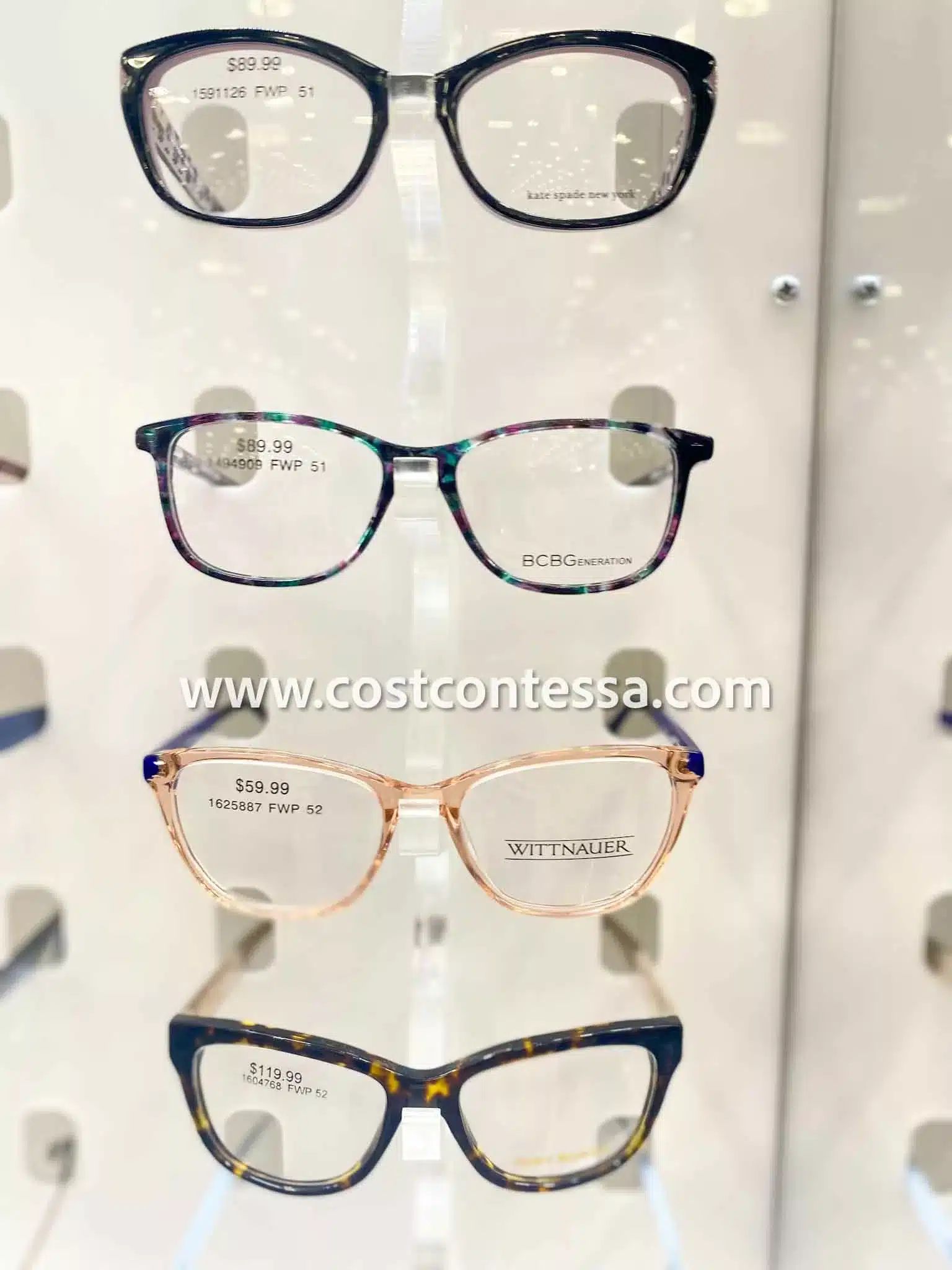
- Best For: Anyone with a complex prescription (progressives, high astigmatism) who wants the best possible value.
- Consider: If you are a pragmatic, value-driven consumer who prioritizes the medical accuracy and optical quality of your lenses over having a high-fashion brand name on the frame. The “cost” of a membership is quickly offset by the immense savings on a single pair of high-quality progressive glasses.
- Avoid: If your top priority is a vast selection of cutting-edge, niche, or high-fashion designer frames. Costco’s frame selection is more functional and mainstream.
✅ Strengths
- Best TCO for progressive lenses ($200-$250)
- Professional in-person fitting included
- Very low error/remake risk
- Full refund return policy
- High-quality lenses (Zeiss/Varilux)
⚠️ Considerations
- Requires Costco membership
- Limited fashion-forward frame selection
- Must visit physical location
Final Verdict and Recommendations
After this exhaustive Fashion Eyewear Review, our investigation at Coupons Scout concludes that the industry is filled with misleading marketing, inflated prices, and hidden risks.
The popular narrative that pits cheap online “disruptors” against expensive “luxury” brands is a false choice. The smartest consumer choice is rarely found at these extremes.
True value lies in the middle, with vendors who combine transparent pricing, quality products, and essential professional services.
The eyewear market is not broken because glasses are expensive to make; it’s broken because of a business model built on brand licensing, monopoly control by players like EssilorLuxottica, and a confusing upsell funnel.
Online-only vendors like Zenni and Warby Parker have successfully challenged the pricing model for frames but have failed to solve the critical issue of delivering complex medical devices accurately and without risk. For a deeper understanding of these market dynamics, read our full Fashion Eyewear Review analysis.
Recommendations by User Segment
There is no single “best” place to buy glasses for everyone. The right choice depends entirely on your prescription, priorities, and risk tolerance.
- For the Budget-Conscious with a Simple Prescription: Zenni Optical is a viable gamble. If you need a straightforward, single-vision lens, the financial risk is minimal.
- For the Style-Conscious with a Simple Prescription: Warby Parker offers a great experience. Their brand, styles, and home try-on service are best-in-class if your prescription is not complex.
- For Anyone with a Complex Prescription: Costco Optical provides the best combination of price, quality, and professional service. This is unequivocally the smartest choice for progressives, high-index, or strong astigmatism needs.
- For the Craftsmanship Aficionado: Independent brands like Cubitts are the superior choice. You get better materials and design originality for a price often comparable to a mass-market luxury brand.
Your next step should be to get a current prescription from a qualified optometrist. With that in hand, you can use this guide’s framework to choose the vendor that truly fits your needs and budget. Don’t forget to grab a special Fashion Eyewear offer before your purchase to get the best rate.
Final Pros and Cons: The Fashion Eyewear Market
| Pros | Cons |
|---|---|
| Increased Choice: DTC brands have expanded stylistic options at lower entry prices. | Illusion of Choice: A single conglomerate (EssilorLuxottica) controls a massive portion of the market. |
| Convenience: Online try-on and home delivery offer unprecedented ease of purchase. | High Risk for Complex Rx: Online models have high error rates for progressive and strong prescriptions. |
| Price Transparency (Frames): The cost of frames has become more competitive. | Hidden Costs (Lenses): The true cost is obscured in a confusing and expensive lens upsell funnel. |
| Value in Niche Segments: Independent brands and hybrid retailers offer exceptional value. | Data Privacy Risks: Online vendors collect sensitive biometric and health data with unverified security. |
YMYL Disclaimer: This content is for informational purposes and should not be considered medical advice. Consult a qualified optometrist for any vision health concerns.
Frequently Asked Questions
Q1: How much should I spend on a good pair of glasses in 2026?
You should expect to spend between $200 and $500 for a high-quality, durable pair of glasses with a complex prescription. Our Total Cost of Ownership analysis shows that this price range, typically found at a value hybrid retailer like Costco Optical, provides the best balance of professional service, quality lenses, and a durable frame.
A price tag below $150 often involves significant compromises on lens quality or durability (Zenni Optical Trustpilot Reviews), while a price above $500 often reflects branding fees rather than a tangible increase in quality. This “sweet spot” ensures you are paying for optical performance and longevity, not just marketing.
Q2: Are expensive designer glasses from brands like Gucci or Prada really better quality?
No, a higher price on designer glasses does not guarantee better quality. Many of these brands are licensed, designed, and manufactured by a single conglomerate, EssilorLuxottica, the same company that makes hundreds of other brands at lower price points (EssilorLuxottica).
You are primarily paying for the logo and brand prestige, a phenomenon we call the “Luxottica Effect.” Our analysis shows that many independent brands offer superior materials, like high-grade Mazzucchelli acetate, and better craftsmanship for a price that is often lower than these mass-produced luxury goods, delivering far better long-term value.
Q3: For progressive lenses, is Warby Parker cheaper than Costco?
No, for progressive lenses, Costco Optical is significantly cheaper and lower risk than Warby Parker. Our TCO model shows that a complete pair of high-index progressive glasses at Warby Parker costs between $475 and $525.
The same high-quality progressive glasses from Costco Optical cost between $200 and $250. This price includes the essential in-person fitting by a licensed optician, which virtually eliminates the risk of measurement errors common with online orders.
For this specific, complex need, Costco is less than half the price and a much smarter financial decision, a sentiment widely echoed in user forums (Reddit r/Costco). You can also save more by using a Fashion Eyewear discount on complementary purchases.
Q4: What is the most durable material for eyeglass frames?
Titanium is generally considered the most durable material for eyeglass frames. It is prized for being incredibly strong, lightweight, flexible, and corrosion-resistant, making it an excellent long-term investment.
For plastic frames, high-quality cellulose acetate, particularly from renowned manufacturers like Italy’s Mazzucchelli, offers the best durability. It holds its shape better over time, has richer color, and is less prone to becoming brittle and cracking compared to the standard injected plastic used in most budget frames. Independent brands that focus on craftsmanship often use these superior materials.
Q5: What are the main problems with buying glasses online?
The two main problems are prescription errors and data privacy risks. For complex prescriptions like progressives, at-home measurements are often inaccurate, leading to high “remake rates,” which can cause headaches, dizziness, and ultimately wasted money.
Secondly, online vendors collect your sensitive Protected Health Information (PHI) and biometric facial data for virtual try-on tools. These companies have not provided public, independent security audits (like a SOC 2 report) to verify that your most personal data is being stored safely, creating a significant and under-discussed privacy risk (FDA.gov).
Q6: Is blue light filtering a scam?
From a medical standpoint, the marketing claims that blue light filtering lenses are necessary to protect eye health are largely unproven. The American Academy of Ophthalmology (AAO) states there is no scientific evidence that blue light from digital screens is harmful to your eyes or that special glasses are needed for computer use (American Academy of Ophthalmology’s Official Stance).
Symptoms of digital eye strain are caused by reduced blinking and poor ergonomics, not the light itself. While some users report subjective comfort, the significant +$50 upsell is not based on proven medical necessity, making it a questionable value proposition.
Q7: What is the “Luxottica Effect” and how can I avoid it?
The “Luxottica Effect” is the market condition where a single dominant company, EssilorLuxottica, controls a massive portfolio of brands, creating an illusion of choice while setting prices based on brand prestige rather than production cost.
To avoid paying this “monopoly tax,” you should bypass the big-name luxury brands found in mall stores and instead explore two key alternatives. First, investigate independent eyewear brands that focus on craftsmanship and material quality. Second, consider value-hybrid retailers like Costco Optical, which provide high-quality lenses and professional services at transparent, competitive prices.
This ensures you are paying for the tangible quality of the product, not just a licensed logo (CBS News “60 Minutes” Luxottica exposé).
Q8: How do I choose the right frame size for my face online?
The most reliable method is to start by finding the measurements on your current, best-fitting pair of glasses. Look for a series of three numbers printed on the inside of the temple arm (e.g., 52-18-140). These numbers represent the lens width, bridge width, and temple length in millimeters.
Use these measurements as a baseline to compare against the sizing guide provided on the website for new frames. Pay close attention to the total width of the frame. Most online retailers, like Warby Parker, provide this measurement, and it’s the best indicator of whether a frame will fit the width of your face (The Best Place to Buy Glasses Online for 2026).
