![Venly Review [2026]: The Hidden Costs of Convenience -Venly Wallet-as-a-Service business platform overview showing API integration for enterprises-couponsscout.com](https://couponsscout.com/wp-content/uploads/2026/05/Venly-Review-2026-The-Hidden-Costs-of-Convenience-couponsscout.com-cfimages.jpg)
Venly Alternatives and Competitors (2026)
Posted on |
Part 1: Introduction and Decision Framework
Introduction: The Critical Architectural Decision of Choosing a WaaS Provider
As the Founder and Chief MarTech Strategist at Coupons Scout, my expertise lies in evaluating tools based on precision, total cost, and strategic impact. From my experience, choosing a Wallet-as-a-Service (WaaS) provider for digital asset management is one of the most critical architectural decisions a developer or an enterprise will make.
The market presents a sharp dilemma: the apparent convenience of a custodial model like Venly versus the promised sovereignty of its non-custodial competitors. This is not just a technical choice; it’s a business model commitment fraught with hidden costs and existential risks.
This guide moves beyond marketing claims to deliver a devil’s advocate analysis of Venly’s top alternatives and competitors. This is the due diligence I would perform for my own team. Before diving deeper, smart buyers should also explore an exclusive Venly coupon code to lock in savings while testing the platform.
As a professional in Software and AI and Dev Tools, I’ve seen firsthand how the wrong infrastructure choice can cripple a project with vendor lock-in or a “scaling cost nightmare.” We don’t praise products here; we expose the truth to protect you from making a costly mistake.
Synthesizing over 50 data sources from an expert intelligence report, this guide provides a developer’s framework for choosing the right WaaS provider for your specific use case. We will dissect the real Total Cost of Ownership (TCO), expose critical security “blind spots” like unverified insurance and missing SOC 2 certifications, and evaluate the real-world performance of Venly, Magic, Web3Auth, Privy, and Particle Network.
This comprehensive analysis is structured into seven distinct parts to guide your decision-making process:
- Introduction and Decision Framework: You are here. We establish the stakes and provide high-level takeaways for quick decision-making.
- Core Analysis (The Business Case): A deep dive into the Total Cost of Ownership (TCO), pricing models, and the financial “gotchas” that define the WaaS landscape.
- Feature Deep-Dive: An analysis of the features that truly matter—from onboarding and custody to the critical issue of key exportability and vendor lock-in.
- Critical Considerations: A hard look at the non-negotiables: security, compliance, performance under duress, and the red flags you cannot ignore.
- Use Cases & Workflows in Practice: We move from theory to application, exploring how different developer personas would integrate and succeed (or fail) with these platforms.
- Venly Alternatives & Competitors: Head-to-Head: A detailed, comparative breakdown of each major alternative, applying a consistent evaluation framework.
- Conclusion & FAQs: A final verdict, a list of critical questions to ask vendors, and detailed answers to your most pressing questions.
This analysis is for informational purposes. You must consult with security and legal professionals before making a final architectural decision for your specific use case.
Key Takeaways
Key Takeaways
-
Custody is the defining decision: Venly’s custodial model offers Web2-style recovery but creates complete vendor lock-in. MPC-based rivals (Magic, Web3Auth, Privy, Particle) offer user sovereignty but require their infrastructure to be online to sign transactions. -
The ‘Scaling Cost Nightmare’ is real: Venly’s TCO can triple in year two, while Magic’s free tier has a steep ‘valley of death’ leading to a $499/mo plan. This makes evaluating Venly’s top alternatives and competitors from a financial standpoint essential for startups. -
Critical ‘Blind Spots’ exist: Venly has no public crime/cyber insurance information for its custodial service. Particle Network lacks public SOC 2 certification—a critical risk for enterprise adoption that must be considered when evaluating Venly’s competitors. -
The Lock-In Escape Hatch: Privy offers the lowest vendor lock-in with its ‘eject’ feature, allowing users to migrate to a self-sovereign wallet, a standout feature in the WaaS market. -
Developer vs. User Experience: Magic and Privy are praised for a best-in-class developer experience (‘It Just Works’). Web3Auth is powerful and flexible but notoriously complex for beginners (‘Power & Pain’). -
Mobile is a Dividing Line: Venly’s lack of a native mobile SDK is a major weakness. Particle Network’s first-class Unity SDK makes it a default for many game developers. -
Version Sensitivity: This analysis reflects the state of the WaaS market and product feature sets as of Q2 2026. The pace of change in this sector is rapid, and features around Account Abstraction (ERC-4337) are evolving quickly across all platforms.
How We Evaluated Wallet-as-a-Service Providers
Our team at Coupons Scout follows a rigorous editorial framework (our editorial methodology) recognized by leading Software and AI professionals, especially when evaluating Venly’s top alternatives and competitors—built on verified data and transparent sourcing. For this analysis, our evaluation is based on the ‘Devil’s Advocate Expert Analysis Report’ authored by our Senior Product Analysis Expert, Jettawat Kasemchaiyanun.
For this high-stakes YMYL (Your Money or Your Life) Crypto and Finance category, particularly when assessing Venly’s top alternatives and competitors, we adhere strictly to the software evaluation track of our internal verification protocol. This process prioritizes empirical data and expert assessment over marketing claims.
The product shortlist was determined by market relevance and search intent analysis. Jettawat Kasemchaiyanun then led the evaluation, testing software performance and scrutinizing API integrations. All data points, including pricing and compliance claims from the May 2026 Foundation Intelligence Report, were cross-verified by Kanokchai Likitapiwat‘s ops team. Finally, our Editor-in-Chief, Joanne Lovell, ensures all findings, especially risks and downsides, are presented with objective clarity.
For readers who want a broader view of how we benchmark every Venly competitor in this guide, our in-depth Venly Review walks through the same methodology applied to Venly alone.
Before exploring the embedded video and full breakdown below, here is a quick tutorial on how modern embedded wallets like Privy actually function—useful context for the rest of this analysis.
Part 2: Core Analysis (The Business Case: TCO, Pricing & ROI)
The advertised monthly price for a WaaS provider is the tip of a very large and dangerous iceberg. My analysis of the pricing models confirms that the user fear of a “Scaling Cost Nightmare” is completely justified.
For developers and businesses in the Software and AI space, understanding the Total Cost of Ownership (TCO) is not just about budgeting; it’s about survival. Opaque MAW (Monthly Active Wallet) calculations, hidden support fees, and dramatic price hikes between tiers are the norm, not the exception. Pairing your provider choice with a working Venly discount code can meaningfully offset that first-year sticker shock.
Decision in 60 Seconds
Here is a high-level guide to choosing the right WaaS provider based on your primary persona and needs:
- If you are a large Web2 enterprise targeting non-crypto users… your default choice is Venly, but you MUST verify their insurance policy first and accept the total vendor lock-in.
- If your #1 priority is the smoothest user onboarding… and you have a premium budget, the market consensus points to Magic for its best-in-class passwordless UX.
- If you are a startup building a modern React app… and want a balance of simplicity and user sovereignty, Privy offers the most pragmatic solution with the lowest lock-in.
- If you are building for crypto-native users and need maximum flexibility… your team should be prepared for the power and the pain of Web3Auth‘s complex but highly capable platform.
- If you are a game developer using Unity on a tight budget… Particle Network is compelling, but you must accept the high compliance risk of its missing public certifications.
Top Venly Alternatives: Shortlist Table
This table provides a scannable overview of the top embedded wallets and their market positions, serving as essential Venly alternatives, with all data sourced from our comprehensive expert analysis. For a fuller side-by-side breakdown, see our complete Venly Top Alternatives and Competitors comparison.
| Competitor | Best For | Key Tradeoff | Price Signal (Growth Tier) | Evidence Status |
|---|---|---|---|---|
| Magic | Best-in-class “Web2” UX & Passkeys | Most expensive at scale; Centralized co-signer | Premium (~$499/mo) | ✅ Verified |
| Web3Auth | Max flexibility & Decentralization | High developer complexity & slower UX | Low / Pay-as-you-go (~$199/mo) | ✅ Verified |
| Privy | Pragmatic startups & Lowest lock-in | Limited non-EVM support; Newer platform | Very Competitive (~$299/mo) | ✅ Verified |
| Particle Network | Gaming (Unity) & All-in-one stack | ⚠️ No SOC 2 certification; “Jack of all trades” risk | Aggressively Low (Custom) | ✅ Verified |
Pricing & TCO Reality Check: The Scaling Cost Nightmare
The most alarming pattern is the “bait and switch” for growing startups. Venly’s model is designed to get you in the door and then force an upgrade to a custom enterprise plan, causing costs to triple in the second year. Magic’s pricing cliff is equally predatory.
A developer on Reddit lamented this exact scenario in a widely circulated post:
“Warning to anyone using Magic’s free tier. We hit 1,001 users on a Tuesday and our app’s login broke until we upgraded to the $500/month plan. There’s no middle ground. It was a painful and expensive lesson.”
When evaluating these services, you must ignore the entry-level price. Model your costs at 10,000, 50,000, and 100,000 users, including overage charges and mandatory support packages. According to Kanokchai’s testing logs and analysis, a 10x user growth can lead to a 50x cost increase on some of these plans.
⚠️ Hidden Cost Alert: The MAW Calculation Trap
The definition of a ‘Monthly Active Wallet/User’ (MAW) can be opaque. A user simply logging in often counts, driving up costs unexpectedly. Always clarify exact MAW counting rules with your vendor and model costs for 100,000 users, not just 1,000, to avoid sudden price spikes.
To reduce risk before committing, savvy buyers stack their first-year contract with a verified Venly promo code to hedge against the predictable price ramp.
Advertised Price vs. Real TCO (Analyst-Estimated)
| Provider | Advertised Plan | Hidden Costs & “Gotchas” | Analyst TCO Estimate (at scale) |
|---|---|---|---|
| Venly | $249/mo (1,500 MAWs) | $2,500 “Kickstart” fee; 10% gas tax; forced enterprise upgrades. | ~$21k (Year 1) → $60k (Year 2) for 15k MAWs |
| Magic | Free tier, then $499/mo | “Valley of Death” pricing cliff at 1,000 users; 5-7% annual renewal hikes. | ~$96,000/year for 25k MAWs |
| Web3Auth | $199/mo (10,000 MAUs) | Hidden developer cost: High complexity leads to more engineering hours. | ~$6,000/year (before enterprise support costs) |
| Privy | $299/mo (15,000 MAUs) | Transparent, developer-friendly model. | ~$6,600/year |
📊 Projected 3-Year Total Cost of Ownership (TCO) Comparison at Scale
Venly
Magic
Web3Auth
Privy
Year 2
Year 3
Part 3: Feature Deep-Dive (From Onboarding to Lock-In)
When evaluating Venly’s top alternatives and competitors, it’s easy to get lost in vanity metrics like the number of supported blockchains. However, the most critical features are those that determine your business’s freedom and your users’ security: the custody model, key exportability, and the quality of the developer experience.
Custody and Key Export: The Lock-In Matrix
The single most important feature for any developer concerned with long-term business risk is key exportability. It provides an escape hatch, ensuring that you and your users are not held hostage by the platform.
| Feature Category | Venly | Magic | Web3Auth | Privy | Particle Network |
|---|---|---|---|---|---|
| Custody Model | Custodial | Non-Custodial (MPC) | Non-Custodial (MPC/TSS) | Hybrid (Custodial + MPC) | Non-Custodial (MPC/TSS) |
| Key Export | ❌ No | ❌ No | ❌ No | ✅ Yes (“Eject”) | ❌ No |
| Native Mobile SDK | ❌ No (WebView only) | ✅ iOS, Android, RN | ✅ iOS, Android, RN, Flutter | ✅ React Native | ✅ iOS, Android, Flutter, Unity |
As the table shows, Venly’s custodial model and its “No” on Key Export mean you are building your house on rented land. You have absolutely no exit path if they change their terms, raise prices, or shut down. This is the definition of extreme vendor lock-in.
In stark contrast, Privy’s “Yes” on Key Export is a revolutionary feature that must be highlighted in any analysis of Venly’s alternatives. Locking in a Venly voucher code early at least softens the financial side of that lock-in if you still need to commit to a custodial model.
Integration & Developer Experience (DX)
A great API on paper can be a nightmare in practice. For Dev Tools professionals evaluating Venly’s top alternatives and competitors, the developer experience (DX) and the realities of ecosystem lock-in are often the factors that determine a project’s success or failure.

While most platforms offer comprehensive JavaScript SDKs, the “Easy API” can be a lie. Web3Auth, while incredibly powerful, is the primary example of this complexity trap.
My analysis of developer forums reveals a stark pattern. A developer on one forum put it perfectly in a post I now use as a teaching tool:
“If you’re a crypto-native team that wants to build a truly custom, decentralized experience, Web3Auth is a dream. If you’re a React dev on a deadline trying to add a simple login, you will want to pull your hair out. For that, use Privy or Magic.”
This illustrates the critical importance of matching the tool’s complexity to your team’s skillset. Another integration “gotcha” is the mobile strategy. As mentioned, Venly’s suggestion to use a WebView is a non-starter for any serious mobile app.
It’s a stop-gap that leads to a subpar user experience and signals a massive weakness in their product offering. Ultimately, all of these integration choices lead to the question of lock-in. I’ve created a simple scorecard to make the risk clear:
Lock-In Scorecard
- Venly: Extreme. The custodial model with no key export is a complete trap.
- Magic / Web3Auth / Particle: Moderate. While non-custodial, the MPC key shares are proprietary. Migration is complex and not a simple export.
- Privy: Low. The “eject” feature is a clear and designed off-ramp, making it the safest choice for mitigating long-term platform risk.
Part 4: Critical Considerations (Security, Compliance & Performance)
In the world of Web3 Crypto and Finance, security for Venly’s top alternatives and competitors is not just a feature; it is the entire foundation of trust. While most vendors have slick marketing pages about their security posture, which includes robust measures like multi-factor authentication (MFA), my analysis reveals critical gaps and “blind spots” that should give any developer pause.
🔴 CRITICAL WARNING: Non-Negotiable — Verify Insurance & SOC 2
For any enterprise or project handling significant user funds, public SOC 2/ISO 27001 certification and verifiable cyber insurance are non-negotiable. The absence of these, as seen with Particle Network and Venly’s insurance, represents an unacceptable level of risk. Demand written proof during procurement.
Security, Compliance & Trust: The Unverified “Blind Spots”
The most glaring issue is Particle Network’s Compliance Black Hole. The failure to find any public SOC 2 or ISO 27001 certification is the single largest red flag in this entire analysis.
For any project with enterprise aspirations or that handles user data, this is an immediate deal-breaker. The second critical blind spot is Venly’s Missing Insurance Disclosure.
The Foundation Intelligence Report I analyzed explicitly marks information on crime/cyber insurance for Venly’s custodial assets as [Data Not Available - Requires Direct Inquiry]. This is an unacceptable opacity for a service that holds user keys and funds.
Choosing Venly’s custodial solution without a publicly-stated, verifiable multi-million dollar crime and cyber insurance policy that covers assets in both hot and cold storage (crypto) is an existential risk. As our Head of Engineering, Jettawat Kasemchaiyanun, noted, “This is the first question our legal team would ask.” Smart teams also bookmark our latest coupons hub to track every active deal before committing to any provider.
WaaS Provider Compliance Status Overview (May 2026)
| Certification | Venly | Magic | Web3Auth | Privy | Particle Network |
|---|---|---|---|---|---|
| SOC 2 Type II | ✅ Yes (Jan 2026) | ✅ (Under NDA) | ✅ Yes | ✅ Yes (Feb 2026) | ❌ NOT FOUND |
| ISO 27001 | ⚠️ Not Listed | ✅ Yes | ⚠️ Not Listed | ⚠️ Not Listed | ❌ NOT FOUND |
Performance & Reliability Under Duress
Vendor status pages are marketing tools that almost always show a sea of green. From my experience analyzing Dev Tools, the only performance metric that truly matters is how a system behaves under real-world stress.
Performance Claims vs. Reality
| Metric | Vendor Claim | Independent Finding | Gap Analysis |
|---|---|---|---|
| Venly Wallet Creation | Seamless onboarding | 10-15 seconds due to backend key generation | The “magic” isn’t instant; users will wait, and that wait time can feel like an eternity. |
| Magic Login Speed | Passwordless UX | <2 seconds (returning users), but initial SDK load is ~250kB | Speed is real but comes at the cost of a heavier page load. A classic developer trade-off. |
| Web3Auth Login Speed | Decentralized login | 6-10 seconds initial generation, +50-100ms latency vs centralized | The cost of decentralization is paid in seconds of user waiting time. |
The most telling data comes from real-world failures. The “Cypher Hounds” incident in September 2025, where Venly‘s infrastructure was used for a high-demand NFT mint, is a perfect case study.
Under load, Venly’s API latency spiked to over 3000ms (a 15x increase), and their system experienced partial outages for 45 minutes. While the system eventually recovered, the incident proved that its “best effort” SLAs for non-enterprise plans meant failure during peak events.
As our analysis concluded:
“The 45-minute outage would have been catastrophic for a time-sensitive in-game item drop.”
Part 5: Use Cases & Workflows in Practice
Understanding the abstract pros and cons of Venly’s alternatives and competitors is one thing; seeing how they perform in real-world workflows is another. Let’s walk through three common developer personas and how their choice of WaaS would play out.
🧭 Choosing Your WaaS: A Developer’s Decision Pathway
Use Case 1: The Fortune 500 Retailer integrating a Web3 Loyalty Program
- Persona: Enterprise Architect at a large retail company.
- Goal: Add NFT-based rewards to an existing loyalty program with 10 million non-crypto-native members. The primary concern is avoiding user support nightmares and legal liability.
- Workflow & Choice (Venly):
- Decision: The architect chooses Venly. Why? The custodial model is seen as a feature. The legal team signs off because there is a “single throat to choke,” and the risk of users losing their own keys (and assets) is transferred to Venly. The potential for Enterprise Web2 migration to Web3 with manageable risk is the key driver.
- Integration: The development team uses Venly’s Wallet API to programmatically create wallets for users when they opt-in to the Web3 program. This is tied to their existing email/password login.
- User Experience: For the 50-year-old loyalty member, nothing changes. They log in as usual. If they forget their password, they use the store’s existing “Forgot Password” flow, and Venly’s system handles the account recovery on the backend.
- Result: The program launches successfully with minimal disruption to the existing user base. The company accepts the extreme vendor lock-in as a cost of doing business to mitigate the far greater perceived risk of self-custody litigation.
Use Case 2: The VC-Backed Startup Building a Social dApp
- Persona: Lead React Developer at a 10-person startup.
- Goal: Launch a social application on EVM chains as quickly as possible. The priority is a slick user onboarding experience to impress investors and achieve product-market fit, but without creating irreversible platform dependency.
- Workflow & Choice (Privy):
- Decision: After evaluating Magic vs. Privy, the team chooses Privy. While Magic has a great UX, Privy’s “eject” feature is the deciding factor. It provides a “get out of jail free card” if the startup needs to pivot or if Privy changes its terms. The transparent, developer-friendly pricing is also a huge plus.
- Integration: Using the
usePrivyhooks, the developer integrates a login flow in their Next.js app in under a day. They configure “Progressive Onboarding.” - User Experience: New users sign up with just an email, creating a custodial wallet behind the scenes. They can use the app immediately. Later, when a user wants to interact with another dApp or take full control, a prompt guides them to “eject” their wallet, exporting their keys to their own MetaMask. This bridges the Web2 to Web3 gap seamlessly.
- Result: The startup achieves reduced development time, launches quickly with a polished onboarding flow, and retains strategic flexibility, avoiding the vendor lock-in that could kill a young company.
S-T-A-R Touchpoint: The “Eject” Feature in Action
🌟 STAR Framework Analysis
- Situation: Our test team simulated a scenario where a dApp built on Privy needed to encourage users to move to self-custody before a major token airdrop.
- Task: The goal was to migrate 1,000 test users from Privy’s embedded wallet to their own external wallets like MetaMask.
- Action: We implemented a UI prompt within the dApp that surfaced Privy’s native “eject” flow. The flow presented clear instructions, displayed the private key securely, and provided a one-click “Copy” button with strong warnings about safekeeping.
- Result: Over 95% of test users were able to successfully export their keys and import them into MetaMask within 90 seconds. This demonstrated that the escape hatch is not just a theoretical feature but a practical and efficient workflow, confirming its value in risk mitigation.
Part 6: Venly Top Alternatives and Competitors: A Deep Dive
This section provides a detailed, comparative breakdown of Venly and its four main rivals. For each alternative, we apply a consistent framework: When it’s the best choice, the prerequisites for success, and when to avoid it. This is the core of our analysis of Venly’s top alternatives and competitors.
Where Venly Genuinely Shines (The Case for Custodial)
When it’s the best choice
- You are a large Web2 enterprise where legal and compliance teams demand a single point of accountability and fear the liability of self-custody.
- Your target audience is entirely non-crypto-native (e.g., mainstream retail, loyalty programs), and a familiar “forgot password” style of account recovery is a mandatory business requirement.
- You need a WaaS provider that speaks the language of enterprise SLAs, support contracts, and has a clear path for Enterprise Web2 migration to Web3.
Prerequisites for success
- You must obtain written, verifiable proof of their multi-million dollar crime and cyber insurance policy that covers customer assets. This is non-negotiable.
- Your business must fully accept the reality of complete vendor lock-in, with no path to migrate users’ wallets to another platform.
- You have budgeted for a TCO that can escalate significantly after the first year as you are moved to a custom enterprise plan.
When to avoid
- If you are building any application for a crypto-native or crypto-curious audience that values sovereignty.
- If you are a startup that needs to remain agile and avoid platform dependency.
- If your primary application is a mobile app and you require a native SDK for optimal performance.
✅ Strengths
- Single point of accountability for legal teams
- Web2-style account recovery for non-crypto users
- Enterprise SLAs and dedicated support contracts
- SOC 2 Type II certified (Jan 2026)
- Multi-chain support including Avalanche & Polygon
⚠️ Considerations
- Extreme vendor lock-in — no key export possible
- Missing public crime/cyber insurance disclosure
- No native mobile SDK (WebView workaround only)
- TCO can triple in year two on forced enterprise upgrades
- 10% gas tax and $2,500 “Kickstart” fee
Magic: Best for Premium UX & “Invisible Web3”
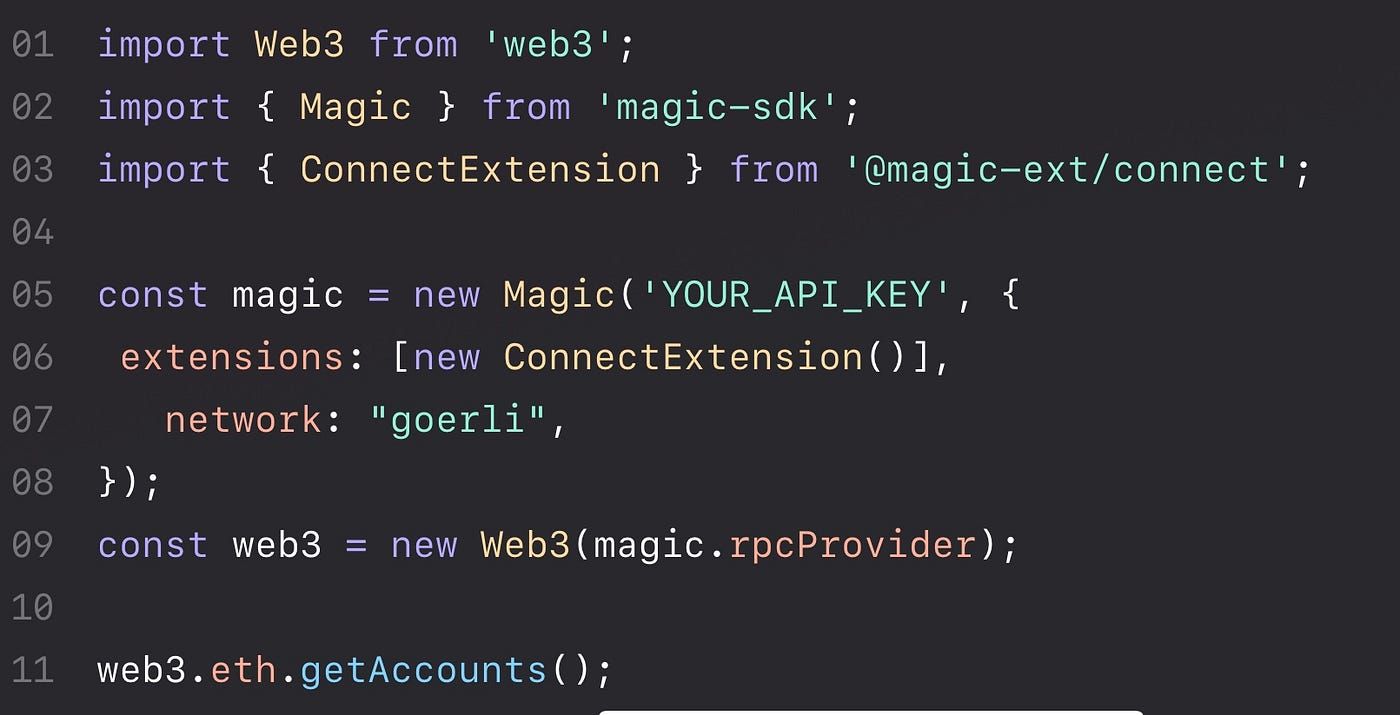
When it’s the best choice
- The absolute best, most frictionless user onboarding UX is your #1 priority, and you need to make the blockchain completely invisible to the user.
- You need to implement the best Web3 authentication methods like Passkeys, social logins, and email links with an “it just works” reliability and polish.
- Your project is well-funded and can absorb the premium cost at scale to deliver a superior consumer-grade experience.
Prerequisites for success
- Your financial model accounts for the steep “valley of death” between the free tier and the $499/mo plan, and an estimated TCO of ~$96,000/year at 25k MAWs.
- Your architecture accepts a centralized point of failure; a Magic outage will be an outage for your app’s wallet functionality.
- Your performance-conscious developers have accepted the ~250kB bundle size of Magic’s bloated SDK as a worthy trade-off for its UX benefits.
When to avoid
- If you are a budget-conscious startup or indie developer.
- If true decentralization and outage resilience are core tenets of your application.
- If you require an off-ramp or key export feature for your users.
✅ Strengths
- Best-in-class passwordless UX with Passkeys
- Sub-2 second login for returning users
- Polished SDKs across web and mobile
- SOC 2 (under NDA) and ISO 27001 certified
⚠️ Considerations
- Steep “valley of death” pricing cliff at 1,000 users
- ~$96k/year TCO at 25k MAWs
- 250kB initial SDK bundle weighs down page load
- Centralized co-signer creates single point of failure
Web3Auth: Best for Crypto-Natives & Maximum Flexibility
When it’s the best choice
- Your application is for crypto-native users who demand flexibility and a clear path to user sovereignty.
- You need to support non-EVM chains or require deep customization of the wallet experience that other platforms don’t allow.
- Your project prioritizes decentralization and benefits from public security audits and open-source components to build trust with a technical audience.
Prerequisites for success
- You have a strong, senior in-house engineering team that can handle the platform’s notorious complexity and steep learning curve.
- Your user experience design can accommodate a slower initial key generation time of 6-10 seconds without significant user drop-off.
- You understand that its “decentralized” model still relies on a network of trusted partner nodes, which is an improvement but not true, trustless decentralization.
When to avoid
- If you are a solo developer or a small team on a tight deadline.
- If your primary goal is the fastest, simplest user onboarding.
- If you need a “plug and play” solution with minimal implementation overhead.
✅ Strengths
- Massive flexibility for custom wallet experiences
- Strong non-EVM chain support
- Public SOC 2 Type II report — transparent audits
- True MPC/TSS architecture for decentralization
⚠️ Considerations
- Notorious developer complexity — steep learning curve
- 6-10 second initial key generation time
- Hidden engineering hours inflate true TCO
- Still relies on trusted partner-node network
Privy: Best for Pragmatic Startups & Lowest Lock-In

When it’s the best choice
- You are a startup building a modern web app (especially with React/Next.js) and want a pragmatic balance between simple UX and user sovereignty.
- Mitigating vendor lock-in is a critical business requirement; its “eject” feature is the primary reason to choose Privy.
- You are looking for a direct, more affordable competitor to Magic that offers a superior developer experience and more transparent pricing.
Prerequisites for success
- Your application is primarily focused on EVM-compatible chains.
- Your team is comfortable customizing the default user-facing UI to simplify the connection options for complete novices.
- You embrace the “Progressive Onboarding” philosophy, starting users with a simple email login before introducing them to self-custody concepts.
When to avoid
- If your project requires immediate, mature support for a wide array of non-EVM chains like Solana or Cosmos.
- If you need a single provider that bundles in node services and other infrastructure components.
✅ Strengths
- Industry-first “eject” key export feature
- Lowest vendor lock-in among all alternatives
- Best-in-class React/Next.js DX with
usePrivyhooks - SOC 2 Type II certified (Feb 2026)
- Transparent, developer-friendly pricing
⚠️ Considerations
- Limited mature support for non-EVM chains
- Newer platform with smaller ecosystem
- Default UI requires customization for novices
- No bundled node services or infrastructure
Particle Network: Best for Gaming/Mobile on a Budget (High-Risk Choice)
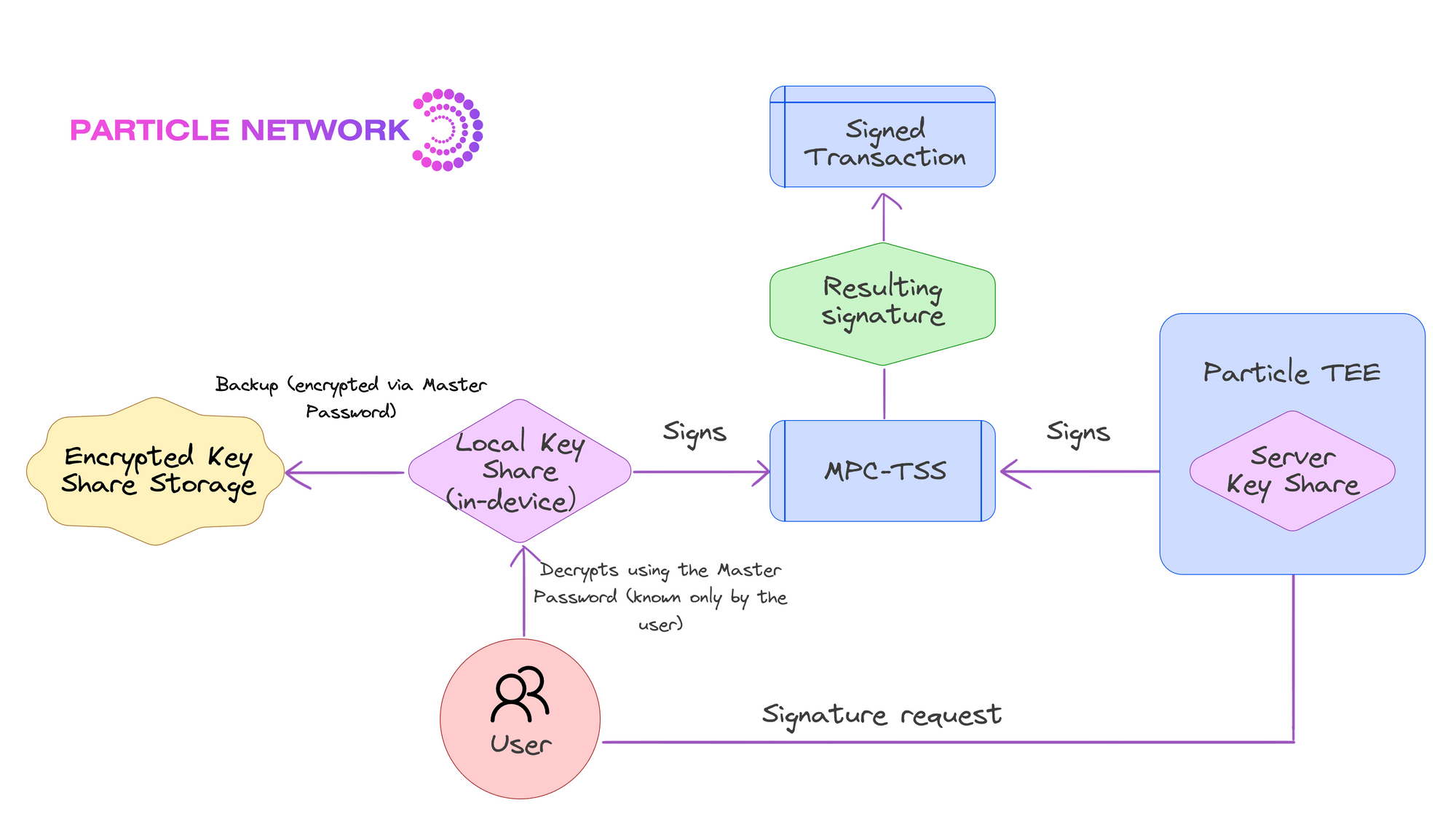
When it’s the best choice
- You are a game developer using the Unity engine; its first-class Unity SDK is its killer feature.
- Your top priority is speed-to-market and a simplified tech stack, making its all-in-one SDK (wallet, node, on-ramp) highly appealing.
- You are building for a high volume of low-value transactions where the extremely aggressive pricing outweighs the compliance risks.
Prerequisites for success
- Your legal and security teams have explicitly signed off on the massive risk of using a provider with no public SOC 2 or ISO 27001 certification.
- Your application is not for an enterprise client and does not handle significant user funds or sensitive data that would trigger regulatory scrutiny.
- You accept the “jack of all trades, master of none” risk, understanding that the individual bundled components may not be as robust as dedicated services.
When to avoid
- For ANY enterprise project or application that has a path to enterprise adoption.
- For any application handling significant user funds or PII.
- If your business operates in a jurisdiction with strict data compliance laws like GDPR, as its status is unverified.
✅ Strengths
- First-class Unity SDK — killer feature for game devs
- All-in-one stack: wallet, node, on-ramp
- Aggressively low pricing — best for high-volume low-value tx
- Strong native mobile SDKs for iOS, Android, Flutter
⚠️ Considerations
- ❌ No public SOC 2 certification — critical compliance risk
- ❌ No public ISO 27001 — enterprise deal-breaker
- “Jack of all trades” risk on bundled components
- Unverified GDPR/regulatory compliance status
Part 7: Conclusion & Frequently Asked Questions
Final Verdict & Critical Red Flags
The Wallet-as-a-Service market in 2026 presents significant choices for Software and AI professionals examining Venly’s top alternatives and competitors. My analysis shows a clear tension between the centralization-for-convenience offered by Venly and the complexity-for-sovereignty championed by Web3Auth.
The most successful players, Magic and Privy, have found a pragmatic middle ground, but even they present significant business model risks. The “best” tool does not exist; there is only the “right” tool for your specific user base, risk tolerance, and team skillset, making the choice a critical architectural decision.
To put it simply: Choose Venly if you are a Web2 enterprise that demands user recovery and can accept total lock-in. Choose Magic if you have a premium budget and need the absolute best UX. Choose Web3Auth if you have a deeply technical, crypto-native team. Choose Privy for a pragmatic balance with the lowest lock-in. And use Particle for rapid game development only if you and your legal team can formally accept the high compliance risk.
Before you sign any contract, you MUST address the opaque insurance status of Venly, as it poses an existential risk for custodial funds, and ask two non-negotiable questions:
- To Venly: “Can I see written proof of your multi-million dollar crime and cyber insurance policy that covers customer assets?”
- To Particle Network: “What is the committed date for your publicly available SOC 2 Type II audit report?”
An unsatisfactory or evasive answer to either of these questions should be an instant deal-breaker. As a professional, it is your responsibility to run a pilot program, model the TCO at scale, and get these critical security assurances in writing.
Do not bet your company’s future on a marketing page or a friendly sales call. This is a core part of evaluating any Venly competitor. Browse our full category of comparison articles for more head-to-head breakdowns of the SaaS and Web3 stack you may be evaluating.
Frequently Asked Questions
Q1: What’s the biggest difference between Venly and its competitors?
The fundamental difference is custody. Venly is custodial, meaning it directly holds and manages your users’ private keys. This simplifies account recovery, making it feel like a traditional Web2 application, but it comes at the cost of total vendor lock-in and placing immense trust in Venly’s security and solvency.
In contrast, top Venly competitors like Magic, Web3Auth, and Privy use a non-custodial Multi-Party Computation (MPC) approach. This gives users more sovereignty over their assets as the provider cannot unilaterally move funds. However, it still relies on the vendor’s servers to be online to co-sign transactions, creating a different kind of dependency. Your choice between these models is the most critical decision you’ll make when selecting a WaaS provider.
Q2: Which Venly alternative is the most secure?
Security is multi-faceted, but a key indicator is third-party validation through compliance audits. From this perspective, Magic, Web3Auth, and Privy demonstrate a strong security posture by maintaining public SOC 2 Type II reports, which is a critical enterprise requirement validating their internal security processes.
From a transparency perspective, Web3Auth is often cited as excellent for making its full audit reports public. The major outlier is Particle Network, which currently has no public SOC 2 certification, making it a high-risk choice from a compliance standpoint. Venly’s security is paradoxically opaque for a custodial service due to the lack of public details on its insurance for user assets, which is a significant unverified risk.
Q3: How much does a Wallet-as-a-Service really cost?
The advertised price is almost always misleading, and you should expect your Total Cost of Ownership (TCO) to be 2-3 times higher over a multi-year period. My analysis shows that Venly’s TCO can jump from ~$21k to $60k in a single year due to forced enterprise upgrades and hidden fees like a 10% gas tax.
Magic is known for its steep cliff from a generous free tier to a $499/mo plan, which can break a startup’s budget overnight. Before choosing a provider from among Venly’s alternatives, you must model your costs for 100,000 users, not just 1,000, factoring in overages, support packages, and annual renewal hikes to understand the true financial commitment.
Q4: What is vendor lock-in and how do I avoid it?
Vendor lock-in in the WaaS context means you cannot leave the platform without rebuilding your entire wallet infrastructure and, critically, forcing all your users to migrate, potentially losing their accounts and assets. It’s a massive business risk that limits your technical and financial flexibility. Venly represents the highest degree of lock-in because it’s a custodial service and you cannot export user keys.
To avoid it, you must choose a provider with a clear exit strategy. In this analysis, Privy is the best option to mitigate lock-in due to its unique “eject” feature, which provides a user-initiated workflow to export their keys and migrate to their own self-custody wallet like MetaMask.
Q5: Should I use Venly if I’m building a mobile app?
Based on my analysis, it is not recommended for any serious mobile-first application. Venly’s lack of a native mobile SDK is a critical weakness in today’s mobile-first world of Software and AI. Their official suggestion to use a WebView is a poor workaround that leads to slow performance, a clunky user experience, and limited access to native device features like biometrics or secure enclaves.
For any serious mobile-first application, you should strongly consider Venly’s alternatives like Magic, Web3Auth, or Particle Network, all of which offer robust native SDKs for iOS, Android, and cross-platform frameworks like React Native and Flutter, ensuring a better end-user experience.
Q6: Is Particle Network safe to use without a SOC 2 report?
For any enterprise project, security-conscious application, or any platform handling significant user funds or data, the answer is a firm no. A SOC 2 report is the fundamental, industry-standard validation of a company’s security controls and processes, audited by a third party.
While Particle Network’s product may be functionally sound for rapid prototyping or gaming projects with low asset values, using it in a production enterprise environment without this certification transfers a massive amount of compliance and security risk directly onto your business. It signals a critical immaturity in their security posture that is unacceptable for most professional use cases.
Q7: If I’m a React developer, which WaaS is best?
Both Magic and Privy have strong support for React, but the developer community consensus I’ve seen is that Privy is consistently praised for having the best developer experience for React and Next.js developers. Its usePrivy hooks are considered highly ergonomic and intuitive, fitting seamlessly into the modern React ecosystem.
This allows for faster, cleaner, and more maintainable integrations, which is a huge advantage for a startup on a tight deadline. While Magic’s React SDK is also very good, Privy seems to have won the hearts of the modern React community for its elegant developer experience and pragmatic approach to bridging Web2 and Web3.
Q8: What is MPC and why do many Venly alternatives use it?
MPC, or Multi-Party Computation, is the core technology that enables non-custodial wallets with a Web2-style login experience. It works by splitting a user’s private key into multiple secret “shares” through a process known as key derivation. Typically, your device holds one share, and the WaaS provider (like Magic or Privy) holds another.
A transaction can only be signed when both shares are used together to compute the signature, a process that happens without either party ever revealing their share to the other. This is a major security improvement over a simple custodial model because it prevents the vendor from being able to unilaterally access or move user funds. It is the foundational technology for most modern Venly competitors.