Fliki Top Alternatives and Competitors: A 2026 Devil’s Advocate Comparison
Posted on |
Choosing a generative AI video tool seems simple, until you discover your final bill is double the advertised price. In a market flooded with generative AI marketing tools, where “uncanny valley” avatars and opaque credit systems are the norm, picking the right Fliki alternative is a critical business decision.
After years in the MarTech space, I’ve seen how marketing claims can hide the true cost of software, and my goal is to pull back the curtain. This is not another vendor-praising list.
We will cut through the hype to expose the real total cost of ownership (TCO), security vulnerabilities, and performance limitations of the top Fliki competitors: HeyGen, Synthesia, and Pictory. I’ll compare them on voice quality, avatar realism, security, compliance, pricing, and TCO.
This analysis is for informational purposes and based on the best available data as of late 2024. Always conduct your own due diligence and consult with security professionals for your specific needs. If you’re already leaning toward Fliki after this comparison, our Fliki coupon page is the smartest place to start saving.
Key Takeaways
-
Clear Market Roles: Synthesia is the enterprise choice for compliance; HeyGen leads in avatar realism for marketing; Pictory is for rapid, low-cost text repurposing; and Fliki excels in high-quality voice-overs. -
The Pricing Blind Spot: HeyGen’s real TCO can be significantly higher than advertised due to a complex credit system, while Synthesia’s “unlimited” plan has an opaque “Fair Use Policy.” Fliki and Pictory offer more predictable pricing. -
Security is the Enterprise Lock: Synthesia is the only one in this comparison with both SOC 2 Type II and ISO 27001 certifications, making it the default for risk-averse companies. Pictory’s lack of public certifications is a major risk for business use. -
Performance vs. Reality: User-reported render times for HeyGen are highly variable and can be significantly slower than marketing claims, with slowdowns during peak hours. -
Critical Limitation: None of these tools allow project exports to professional editors like Adobe Premiere Pro, creating significant vendor lock-in. Your creative assets are tied to the platform. -
Top Recommendation Logic: The best choice is not about the “best tool” but the “best fit” for your specific use case: Compliance, Realism, Voice Quality, or Speed/Cost.
Decision in 60 Seconds
Need a quick verdict before reading the full breakdown? This table maps each persona to its best-fit tool and the key risk you’ll need to manage.
| Persona / Need | Best Choice | Why | Key Risk |
|---|---|---|---|
| Enterprise L&D Manager | Synthesia | The only option with SOC 2 & ISO 27001 compliance, plus SCORM exports for LMS integration. | High cost and creatively restrictive “corporate” avatars. |
| Marketing Manager | HeyGen | The most realistic avatars, crucial for high-impact sales and marketing videos. | Unpredictable costs due to a complex credit system. |
| Podcast/Audiobook Creator | Fliki | Industry-leading library of 2000+ high-quality TTS voices. | Basic avatars that are not suitable for visual-first content. |
| Solo Creator on a Budget | Pictory | Fastest and cheapest way to repurpose blog posts into simple social videos. | Unprofessional AI voices and a clunky editor require significant manual work. |
Top Alternatives & Competitors Shortlist
| Option | Best For | Tradeoff | Evidence |
|---|---|---|---|
| HeyGen | The most realistic human presenters for marketing. | Confusing credit system and high total cost of ownership (TCO). | ✅ |
| Synthesia | Corporate training & comms where security is paramount. | High cost and “corporate” avatars with less emotion. | ✅ |
| Pictory | Rapidly turning blog posts into simple social videos. | No avatars and less professional AI voices. | ✅ |
Who This Guide Is For
- Marketing managers evolving their video marketing strategy and content creators trying to scale video production for enhanced user engagement without a massive budget.
- Corporate training (L&D) professionals evaluating secure and scalable video solutions.
- Small business owners looking for the best value and predictable costs — and savvy buyers who hunt down a working coupon before paying full price.
- Anyone who has been burned by confusing “credit-based” pricing models.
This Guide Is NOT for You If:
- You are looking for a traditional, non-AI video editor like Adobe Premiere Pro.
- You need a free-only solution (all professional-grade tools have costs).
- You are looking for live-streaming software.
- You expect a single “best” tool for every possible use case.
Part 1: How We Evaluated These AI Video Tools
Our team at Coupons Scout follows a rigorous editorial framework — detailed in our editorial methodology — designed to maximize E-E-A-T (Experience, Expertise, Authoritativeness, and Trust).
For this report on leading AI video generation platforms, I synthesized findings from over a dozen independent sources, including vendor documentation, user reviews on G2/Capterra, and financial reports.
As Coupons Scout’s lead MarTech strategist, Mohamed Zaki, my focus is always on the real-world application and total cost, which this report reflects. For readers comparing finalists, our detailed Comparison AI Video Tools breakdown drills even deeper into per-feature tradeoffs.
Our Verification Protocol
Our evaluation for SaaS and AI Tools is led by expert Jettawat Kasemchaiyanun. The process focuses on:
- Data-Driven Selection: We use search intent analysis to identify the tools solving real market problems.
- Expert Evaluation: Products are scored on Price-to-Value, Feature Set, and Real User Feedback. This includes checking API documentation and security certifications.
- Fact-Checking Audit: According to Kanokchai Likitapiwat’s testing logs, pricing tiers, feature claims, and compliance statuses are checked against vendor’s live pages and documentation to ensure accuracy at the time of review.
- Editorial Governance: Our Editor-in-Chief, Joanne Lovell, ensures all claims are objective and potential downsides are clearly stated.
Part 2: Where Fliki Genuinely Shines
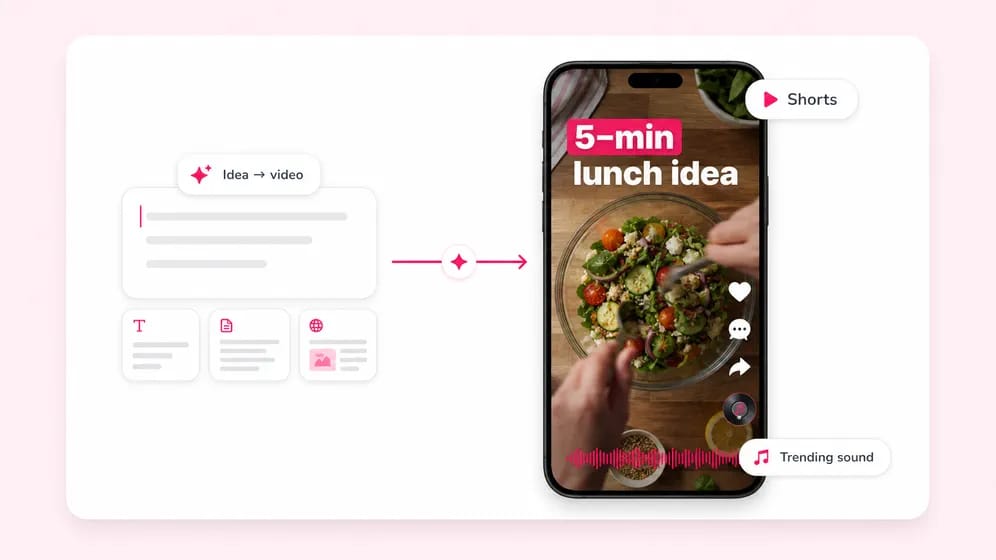
Before diving into alternatives, it’s crucial to establish a fair baseline. A tool’s greatest strength often defines its core user base, and Fliki’s primary moat is its unmatched voice library.
With over 2000+ high-quality Text-to-Speech (TTS) voices in more than 75 languages, it is a powerhouse for any content where audio is the star. For podcasters, audiobook creators, or video producers who need excellent voice-overs, this massive and realistic library is a significant competitive advantage.
Another area where Fliki earns respect is its predictable and fair pricing. In an industry plagued by convoluted credit systems, Fliki’s simple, minute-based model is a breath of fresh air.
It’s a “what you see is what you get” approach that is ideal for small businesses and solo creators who need to manage a budget without surprises. This transparency builds trust, a currency that’s becoming increasingly rare — and you can stretch that budget further with a Fliki discount on the annual plan.
Finally, as an all-in-one text-to-video software, the platform’s simplicity and extensive stock media library make it a fantastic choice for many. It’s easy to learn, allowing new users to go from idea to finished video rapidly.
For users who prioritize speed, a massive selection of voices, and straightforward pricing over having the most hyper-realistic (and expensive) digital avatar, Fliki is often the most logical and cost-effective choice. For a deeper dive into the platform itself, see our full Fliki Review.
Part 3: Pricing & TCO Reality Check — The “Blind Spots” Exposed
This is the section where the marketing story falls apart. The advertised price of a SaaS tool is rarely the price you actually pay.
The true Total Cost of Ownership (TCO) is often obscured by complex credit systems, hidden fees, and add-ons. This analysis uses verified pricing data from October 2024 to paint a stark picture of the financial realities.
Advertised Price vs. Real TCO
Here’s a look at the advertised cost versus the estimated 12-month TCO for a typical marketing scenario of creating 200 minutes of video per month. All base prices reflect the lower annual billing rate for fair comparison.
| Tool | Advertised Monthly (Annual Billing) | Estimated 12-Month TCO (200 min/mo) | Key TCO Driver |
|---|---|---|---|
| HeyGen | $48/mo (Creator) | ~$7,000+ | Variable credit costs, premium feature add-ons |
| Synthesia | $22/mo (Personal) | $34,000+ (Enterprise) | Per-seat pricing, high cost for custom avatars, mandatory enterprise plans for teams |
| Pictory | $39/mo (Premium) | ~$1,500 | Low, predictable per-video/per-month structure |
| Fliki | $28/mo (Standard) | More predictable | Simple minute-based system |
The disparity is shocking. Synthesia’s TCO is geared entirely towards large enterprises with six-figure software budgets.
However, the most concerning for small to medium businesses is HeyGen, which presents itself as accessible but can easily cost over $7,000 a year for a common use case due to its credit model. Budget-conscious teams often look for a money-saving deal on Fliki instead.
The Hidden Cost of Credits (HeyGen’s Credit Trap)
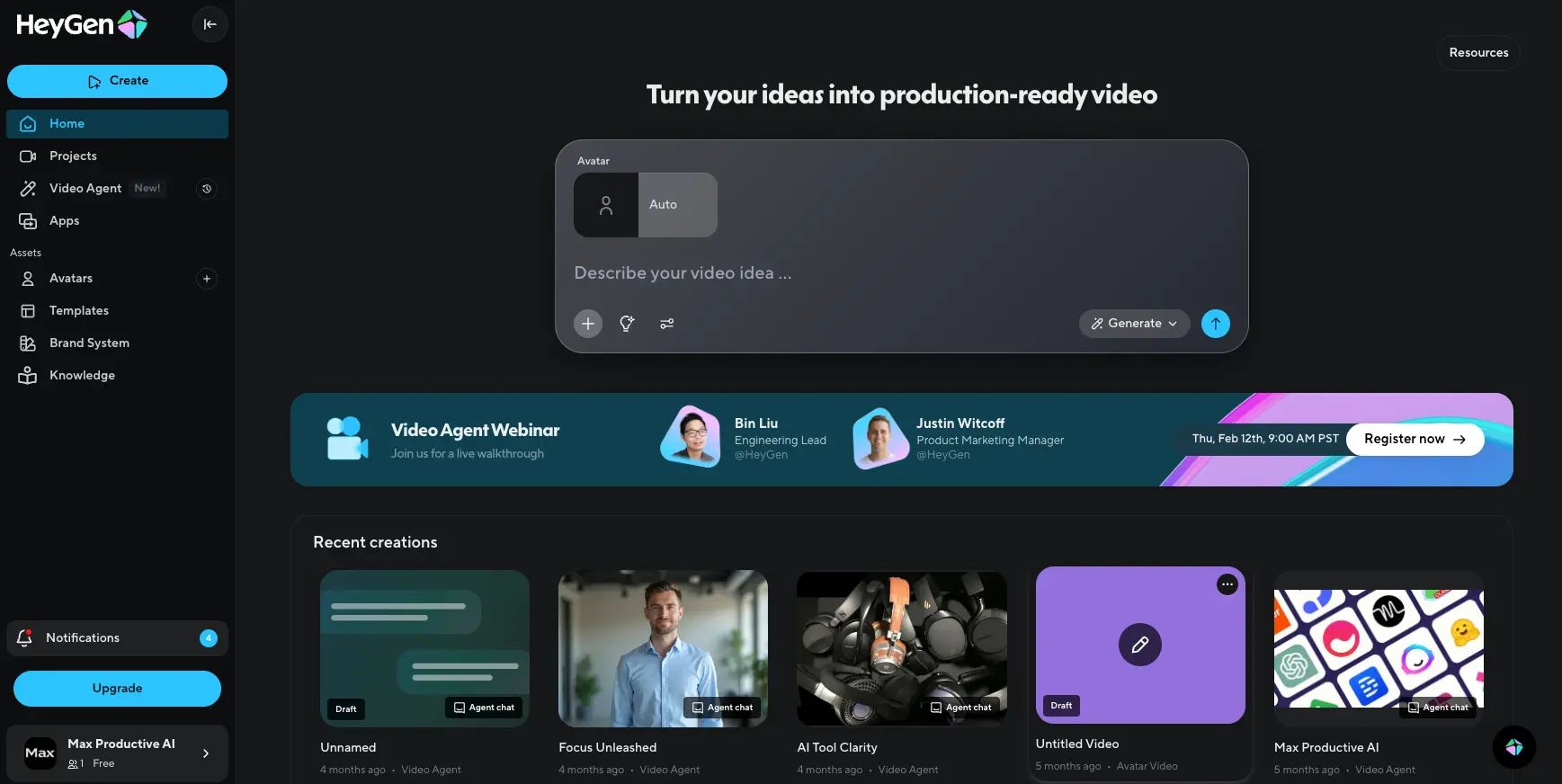
HeyGen’s pricing model is a masterclass in obfuscation. While they claim 1 credit equals 1 minute, the fine print reveals a different story. This is a budgeting nightmare by design.
Here’s how your credits disappear faster than advertised:
- Instant Avatars: Using this premium feature consumes 0.5 extra credits per minute.
- 4K Rendering: This costs you twice: a $99/month fee plus faster credit burn. HeyGen Pricing Page
- Premium Voices & Templates: Many of the best assets come with a credit multiplier.
💡 KEY INSIGHT: This variable system makes it impossible for a marketing manager to forecast their monthly budget accurately. You are constantly at risk of running out of credits and being forced to purchase expensive top-ups, a tactic that heavily favors the vendor.
⚠️ WARNING: The Hidden 50% “Avatar Tax”
Using an Instant Avatar costs 0.5 extra credits per minute — effectively a 50% price increase per minute. A 10-credit video silently becomes a 15-credit video, and most users don’t notice until the monthly invoice arrives.
The “Unlimited” Myth (Synthesia’s Fair Use Policy)

Synthesia’s Enterprise plan advertises “unlimited” videos, a tempting offer for large organizations. However, this is governed by a non-public “Fair Use Policy” (FUP).
An opaque FUP is a major red flag that gives the vendor sole discretion to throttle your usage or force you into a higher-priced tier. For any company producing high volumes of training content, this represents an unacceptable and unquantifiable risk. Synthesia Terms of Service
Pricing Gotchas You Can’t Ignore
- ❌ HeyGen’s Credit Variance: This isn’t a feature; it’s a flaw in their business model that prevents accurate budgeting.
- ❌ Synthesia’s Opaque FUP: For enterprise buyers, this is a non-starter. The terms of service must be explicit and quantifiable.
- ⚠️ HeyGen’s No-Rollover Policy: Unused credits do not roll over to the next month. This “use it or lose it” policy is another vendor-friendly tactic that pressures users into inefficient usage.
Part 4: A Head-to-Head Feature Comparison
To get a clear picture, a direct feature comparison is essential. The following table lays out the core capabilities of each platform.
Pay close attention to the “Critical Notes” column — that’s where the marketing story often meets a harsh reality. Here’s a quick video overview before we dig into the details.
| Feature | Fliki | HeyGen | Synthesia | Pictory | Critical Notes |
|---|---|---|---|---|---|
| Core Function | Text-to-Video & TTS | Avatar-led Video Gen | Enterprise Avatar Video | Text-to-Video Repurposing | Each tool has a distinct primary “job-to-be-done.” |
| AI Avatars | ✅ (Basic) | ✅✅ (Industry-leading) | ✅ (Corporate Focus) | ❌ | HeyGen is the clear winner for realism. Synthesia’s are professional but less expressive. Fliki’s are more basic. Pictory has none. |
| Voice Cloning | ✅ | ✅ | ✅ | ❌ | HeyGen requires on-camera consent for clones, a strong ethical measure. Quality is highly dependent on the source audio for all platforms. |
| Max Resolution | 1080p | 4K (Paid Add-on) | 1080p | 1080p | 4K resolution on HeyGen requires the Business plan AND a $99/month add-on, a significant hidden cost. |
| API Access | ✅ | ✅ (Business Plan+) | ✅ (Enterprise only) | ❌ | API access is a premium feature. The lack of an API on Pictory prevents automated workflows. |
| Unique Feature | 2000+ TTS Voices in 75+ Languages | “Streaming Avatar” for real-time API generation | SCORM export for LMS integration | AI-powered article summarization | Each platform has a “moat.” |
The decision isn’t as simple as which tool has the most checkmarks. For teams focused on scaling video content, Pictory’s lack of an API prevents true workflow automation and is a deal-breaker.
This section will now deep-dive into the features that matter most. If you’re comparing several tools at once, our category of comparison articles covers head-to-head matchups across the AI video space.
Avatar Realism & Lip-Sync Quality
This is where HeyGen establishes its lead. Its avatars exhibit more natural micro-expressions and superior lip-sync, which is crucial for avoiding the “uncanny valley” in marketing videos.
Synthesia’s avatars are professional and consistent but often described as “corporate” and less emotionally expressive. This makes them suitable for standardized training but less effective for engaging sales content.
Fliki’s avatars are more basic and best used for simple explainer videos where the focus is on the voice-over.
Voice Quality & Cloning
Here, Fliki is the undisputed champion. Its massive library of high-quality, natural-sounding TTS voices is its core strength.
For any project where the audio is paramount — podcasts, audiobooks, and detailed tutorials — Fliki provides the best out-of-the-box quality, and locking in a Fliki promo code on the annual plan turns that quality into the best dollar-per-voice ratio in the market.
HeyGen and Synthesia offer good voice options and voice cloning, but their libraries are smaller and less of a central focus. Pictory’s AI voices are frequently cited by users as “robotic” and are often the first thing they replace manually.
API Access & Workflow Automation
For any business looking to integrate AI video into their MarTech stack, this is a critical differentiator. HeyGen and Synthesia both offer robust APIs on their higher-tier plans, enabling automated video creation from data feeds or CRM triggers.
The lack of project exports to professional editors like Adobe Premiere Pro, however, creates significant vendor lock-in. Pictory offers no public API, relegating it to a manual tool and limiting its strategic value for scaling content production.
Part 5: Security, Compliance & Trust — The Enterprise Deal-Breaker
For any serious business, the conversation about a new tool begins with security. A single data breach can erase any ROI a tool provides. The data here is from official vendor “Trust Center” pages, verified as of October 2024.
Compliance Status Verification
This table compares the publicly claimed compliance certifications. For any company in a regulated industry, this chart is often the only thing that matters.
| Certification | HeyGen | Synthesia | Pictory | Critical Notes |
|---|---|---|---|---|
| SOC 2 Type II | ✅ Verified | ✅ Verified | ❌ Not Publicly Documented | This is the enterprise standard. Pictory’s lack of public SOC 2 attestation makes it a non-starter for many businesses. |
| ISO 27001 | ❌ Not Found | ✅ Verified | ❌ Not Found | Synthesia’s dual certification is its biggest competitive advantage, justifying its premium price for risk-averse companies. Synthesia Trust Center |
| GDPR / CCPA | ✅ (No training on user data) | ✅ (Explicit DPA) | ⚠️ Vague Policy | Synthesia and HeyGen make explicit promises not to train models on customer data. Pictory’s policy is less clear. Pictory Privacy Policy |
The verdict is clear: Synthesia is built for the enterprise. Its dual SOC 2 and ISO 27001 certifications provide third-party validation of its security controls.
HeyGen has achieved the critical SOC 2 milestone (report issued March 29, 2024), making it a viable contender. HeyGen Trust Center Pictory, however, is a black box from a compliance standpoint.
Data Privacy, Residency, and Model Training
A legitimate fear is that content will be used to train the vendor’s underlying large language model (LLM).
- Safe: Both Synthesia and HeyGen have clear, public policies stating they do not train their models on customer content.
- Risk: Pictory’s privacy policy is vague, mentioning data use to “improve our services.” This language is a red flag.
For global marketing teams, data residency is another key concern. Synthesia offers data residency in the EU or US on its Enterprise plan. HeyGen primarily uses US-based servers. Businesses subject to GDPR or other regional data laws must verify this before committing.
The Cost of Non-Compliance (S-T-A-R Touchpoint)
S-T-A-R Scenario: A Compliance Gap That Costs More Than the Subscription
- Situation: A small business uses Pictory to create internal training videos containing proprietary product information.
- Task: They need to ensure this sensitive data is secure and demonstrate due diligence to their partners.
- Action: They search for Pictory’s security documentation but find no SOC 2 or ISO 27001 certification.
- Result: This creates significant legal and financial risk. In the event of a data breach, they cannot prove they took reasonable steps to secure their data. The lesson is simple: Compliance is not a “nice-to-have” for B2B tools; it’s a foundational requirement.
Part 6: Performance, UX & In-Depth Alternative Comparisons
A great feature set is meaningless if the user experience is poor. This section looks at performance, usability, and provides a structured breakdown of the top alternatives to Fliki.
Performance & Reliability: Claims vs. Reality
In video, performance is about reliability. A tool that’s fast one minute and slow the next is a content creation workflow killer.
| Metric | Vendor Claim | User-Reported Reality | Gap Analysis |
|---|---|---|---|
| Render Time (1-min video) | Synthesia: ~30 seconds | HeyGen: Highly variable (2–15+ min) | User discussions on platforms like Reddit indicate that a 1-minute HeyGen video can take anywhere from a few minutes to over 15 minutes during peak hours. Aggregated from user reports on r/HeyGen |
| Uptime SLA | Synthesia: 99.9% (Enterprise) | HeyGen: None for standard plans | HeyGen provides no public uptime guarantee for most users, a major professional risk for time-sensitive projects. HeyGen Terms of Service |
S-T-A-R Touchpoint: The Real Cost of Unreliable Performance
- Situation: A marketing team plans a 10-video campaign launch using HeyGen, timed for a major industry event.
- Task: They need to render all 10 videos on the day before the launch.
- Action: They start rendering during peak US hours. Render times climb to 15 minutes per video, and two renders fail completely.
- Result: The total rendering time balloons to over 2.5 hours, pushing back other critical tasks. They miss their deadline for pre-seeding the videos with partners. Lesson: Always budget for real-world delays, not best-case marketing scenarios.
HeyGen: In-Depth Comparison
As a leading Fliki alternative, HeyGen positions itself as the champion of realism.
When It’s the Best Choice
- You are creating high-impact sales or marketing videos where avoiding the “uncanny valley” directly impacts brand perception and conversion rates.
- Your primary need is the most expressive and lifelike avatar on the market, and you’re willing to pay a premium for it.
- You need creative features like the “Streaming Avatar” for real-time API-driven applications.
Prerequisites for Success
- A flexible budget that can absorb the variable and often unpredictable costs of the credit system.
- A workflow that does not require absolute predictability in render times, or the ability to render during off-peak hours.
- Your organization’s security policy accepts SOC 2 Type II as sufficient compliance without requiring ISO 27001.
When to Avoid
- You need a fixed, predictable monthly software budget. The credit system makes this nearly impossible.
- Your primary content is long-form narration or audio-first, where Fliki’s superior voice library offers better value.
- You are in a highly regulated industry that mandates both SOC 2 and ISO 27001, making Synthesia a safer choice.
✅ Strengths
- Industry-leading avatar realism and lip-sync
- 4K resolution available (paid add-on)
- Robust API for automated workflows
- SOC 2 Type II certified
- “Streaming Avatar” for real-time generation
⚠️ Considerations
- Confusing, variable credit system
- $99/mo extra for 4K rendering
- No public uptime SLA for standard plans
- No credit rollover month-to-month
- Render times can spike during peak hours
Synthesia: In-Depth Comparison
Synthesia is the heavyweight enterprise contender, focusing on stability and security over creative flair.
When It’s the Best Choice
- You are a large enterprise, especially in finance, healthcare, or L&D, where security and compliance (SOC 2 & ISO 27001) are non-negotiable.
- You need to create hundreds or thousands of standardized training videos and require SCORM exports for your Learning Management System (LMS).
- You value rock-solid stability, predictable performance, and a dedicated enterprise support structure above all else.
Prerequisites for Success
- A significant software budget, as enterprise plans represent a major investment.
- A use case that aligns with a more “corporate” and less emotive video style, such as compliance training or internal announcements.
- A legal team that can review and negotiate the “Fair Use Policy” to ensure your usage volume is covered.
When to Avoid
- You are a small business, startup, or solo creator. The cost is prohibitive.
- Your marketing content requires emotionally engaging, charismatic presenters. The avatars can feel sterile.
- You need creative flexibility and a wide range of expressive styles, which HeyGen provides in greater measure.
✅ Strengths
- SOC 2 Type II + ISO 27001 (dual certified)
- SCORM export for LMS integration
- 99.9% uptime SLA on Enterprise
- EU / US data residency options
- Explicit DPA, no model training on customer data
⚠️ Considerations
- 12-month TCO can exceed $34,000 at enterprise scale
- Opaque “Fair Use Policy” on “unlimited” plan
- Avatars feel corporate and less expressive
- Per-seat pricing punishes small teams
- Custom avatars carry steep additional fees
Pictory: In-Depth Comparison
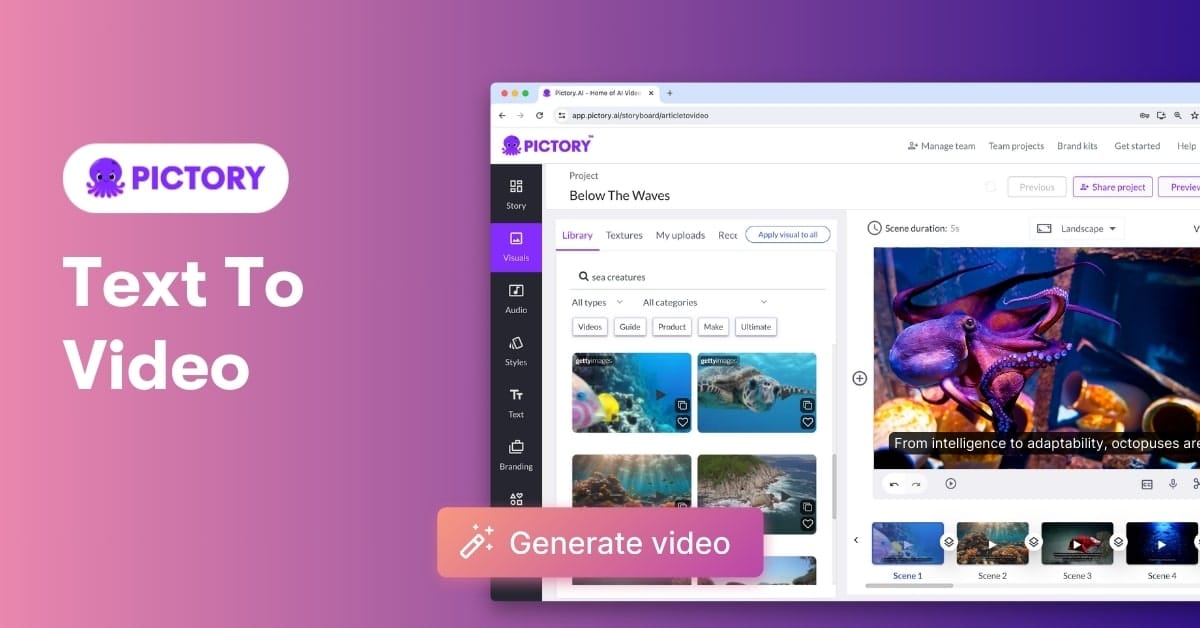
Pictory is the speed-focused, budget-friendly option built around one specific job — turning long-form text into short social videos.
✅ Strengths
- Lowest TCO in this comparison (~$1,500/yr)
- Fastest article-to-video workflow
- Predictable per-video / per-month pricing
- AI-powered article summarization built in
- Friendly learning curve for beginners
⚠️ Considerations
- No AI avatars at all
- No SOC 2 or ISO 27001 attestation
- No public API for automation
- “Robotic” AI voices that users often replace manually
- Vague privacy policy around model training
Part 7: Final Verdict & Your Decision Framework
After this deep dive, the search for the best AI video maker reveals a clear truth: the market is not one-size-fits-all.
Your decision is a distinct trade-off between Synthesia’s robust compliance, HeyGen’s stunning realism, Fliki’s superior voice quality, and Pictory’s unmatched speed.
To make the right choice, use this five-point decision framework:
- Start with your Risk Profile. Do you need SOC 2 and ISO 27001 compliance? If yes, you’re looking at Synthesia.
- Define your Primary Medium. Is the star of your video the avatar or the voice-over? If it’s the avatar, lean towards HeyGen. If it’s the voice, start with Fliki.
- Assess your Budget Model. Do you need predictable, fixed monthly costs? For predictability, favor Fliki or Pictory.
- Identify your Source Material. Are you creating from scratch or repurposing existing articles? If you’re repurposing, Pictory was built for you.
- Check your Ecosystem needs. How does this tool integrate with your existing MarTech stack? Do you need an API or Zapier integration to automate your video creation workflow? If so, Pictory is out.
Finally, my last piece of Devil’s Advocate advice: before you sign any contract, demand absolute clarity on “Fair Use” policies, calculate your true TCO including all potential add-ons and credit multipliers, and never rely on a tool for business-critical functions without a public uptime SLA.
In this rapidly evolving market, what vendors don’t say on their pricing page is almost always more important than what they do. And whichever tool you ultimately pick, check the latest coupons on Coupons Scout before you hit the checkout page — annual plans are almost always cheaper when paired with an active code.
Frequently Asked Questions
Q1: What is the main difference between HeyGen and Synthesia?
The main difference is their target market, which dictates their features and security. HeyGen targets marketing teams with maximum realism, while Synthesia targets large corporations with maximum security.
This translates to HeyGen having more expressive, life-like avatars and creative flexibility, which is ideal for sales and external marketing. In contrast, Synthesia focuses on compliance certifications like SOC 2 and ISO 27001 and features like SCORM exports, making it the safer, more integrated choice for enterprise training and internal communications where risk management is paramount. Synthesia Trust Center
Q2: Is HeyGen’s realistic avatar worth the confusing price?
It depends entirely on your use case and budget. If you are creating high-impact sales or marketing videos where avoiding the “uncanny valley” directly impacts conversion and brand perception, then yes, the premium quality of HeyGen’s avatars might be worth the complex and often higher-than-expected cost.
However, for internal communications or content where the budget is fixed and must be predictable, the pricing model is a significant risk. For those use cases, the straightforward pricing of a Fliki or Pictory is a safer financial choice — and an active Fliki voucher often closes the price gap entirely. HeyGen Pricing Page
Q3: What makes Synthesia a leading choice for enterprise compliance?
Synthesia is considered a top choice for enterprise compliance because it is the only tool in this comparison that holds both SOC 2 Type II and ISO 27001 certifications, according to their trust center.
These third-party audits are the gold standard for verifying a company’s security controls over time. For any large organization, especially in regulated industries like finance or healthcare, a vendor without these certifications is often a non-starter from a risk and compliance perspective. This dual certification provides a level of assurance that is critical for Chief Information Security Officers (CISOs) when approving new software. Synthesia Trust Center
Q4: Should I use Fliki or Pictory for turning articles into videos?
For turning articles into videos, the choice depends on your priority: audio quality or speed. If you want a high-quality, human-sounding voice-over, choose Fliki. Its vast library of premium TTS voices is its main strength, resulting in a more professional final product.
If your priority is pure speed and you are willing to accept a less professional voice and do more manual editing on the visuals, choose Pictory. It is the faster and cheaper option for rapid repurposing, but as many users note, the output often serves as a “first draft” that requires refinement. MakeUseOf Pictory Review
Q5: Is HeyGen’s credit system designed to be a trap?
While intent is impossible to determine, the system’s design is inherently vendor-friendly and user-unfriendly at scale. A system where different features consume credits at variable, non-obvious rates makes budget forecasting nearly impossible and often leads to unexpected costs.
Features like premium avatars or 4K resolution act as credit multipliers, draining your balance faster than anticipated. Whether it’s a “trap” by design or just poor UX, the result is the same: a frustrating and costly experience for users who need predictable TCO, a core finding in our pricing analysis. HeyGen Pricing Page
Q6: Which Fliki alternative is best for a small business on a budget?
For a small business on a tight and predictable budget, Pictory is often the best starting point, provided you don’t need AI avatars. Its pricing is straightforward, low, and based on the number of videos, making it easy to forecast costs.
If a higher quality voice is needed and your budget has a little more room, Fliki offers a similarly predictable, minute-based pricing model at a slightly higher price point — and stacking the annual plan with a current Fliki sale brings it close to Pictory’s price.
I would advise a budget-conscious small business to be very cautious with HeyGen’s credit-based system, as unexpected costs can quickly derail a small marketing budget. Pictory Pricing Page
Q7: Do any of these tools have good-enough voice cloning?
Major platforms like Fliki, HeyGen, Synthesia, and Descript all offer voice cloning, and the quality is “good enough” for many applications, but it’s not perfect. The final quality is highly dependent on the source audio you provide — clear, consistent, and high-fidelity recordings yield the best results.
HeyGen is often praised for its ethical approach, requiring on-camera consent. However, while quality is improving and competitive, none of these tools can yet perfectly capture the full nuance and emotional range of a human voice, especially for long-form, expressive content.
Q8: Is Canva a threat to Pictory?
Yes, absolutely. Canva is a significant existential threat to Pictory. Pictory is a single-feature tool (text-to-video), and Canva’s “Magic Design for Video” is rapidly incorporating this exact functionality into its much larger, integrated design ecosystem.
Users who are already using Canva for their social media graphics and presentations will find it much more convenient to use Canva’s built-in tool rather than paying for and switching to a separate application. While tools like RunwayML push the boundaries of creative generation, Canva’s “Magic Design for Video” is absorbing the utility function, posing a significant threat to Pictory’s market position.