Tiiga Top Alternatives and Competitors: A 2026 Analysis of Taste, Value & Purity
Posted on |
In the opaque world of nutritional supplements, one brand provides public, verifiable proof of purity for every batch, while its competitors—some costing ten times as much—ask you to simply trust their marketing.
This isn’t just a product comparison; it’s a guide to navigating the ‘Transparency Gap’ in a market that directly impacts your health and your wallet.
As Mohamed Zaki, a wellness professional specializing in supplement analysis, my evaluation is based on years of experience dissecting products where marketing claims often diverge from reality.
As content dealing with health and finance—what Google calls ‘Your Money Your Life’ (YMYL)—this analysis is for informational purposes. Always consult a healthcare professional before adding any new supplement to your diet.
Choosing a baobab or superfood powder is confusing, forcing a decision between taste, purity, ethical sourcing, and all-in-one convenience with no clear way to decide.
This Devil’s Advocate guide to Tiiga top alternatives and competitors, based on an analysis of over 40 sources, will dissect Tiiga and its top four competitors (Aduna, Terrasoul Superfoods, Navitas Organics, and AG1).
We will expose the hidden costs, health risks, and marketing ‘blind spots’ to help you make the safest, most cost-effective choice—and if you’re ready to act, you can also grab a working coupon for Tiiga before checkout.
Our team at Coupons Scout, under the purview of Lifestyle Editor Jennifer Angel, follows a rigorous editorial framework detailed in our editorial methodology. This framework is designed to meet the highest standards of E-E-A-T (Experience, Expertise, Authoritativeness, and Trustworthiness), which is critical for health and wellness topics.

This Guide is For You If…
- You’re considering Tiiga but are skeptical about its value and health claims.
- You’re a health-conscious consumer looking for the best value and verifiable purity in a supplement.
- You’re overwhelmed by the marketing hype around superfoods and want an honest, data-driven comparison.
- You prioritize either ethical sourcing, maximum convenience, or budget-friendly options and want to know which brand truly delivers.
- You understand that choosing a supplement involves trade-offs and want to know what they are.
This Guide is NOT For You If…
- You are looking for a medical diagnosis or treatment for a health condition.
- You believe marketing claims without seeking independent verification.
- You are only looking for the best-tasting product, regardless of nutritional content or cost.
- You are exclusively loyal to one brand and are not open to considering alternatives.
Key Takeaways
- The Transparency Winner: Terrasoul Superfoods is the only brand offering public, lot-specific Certificates of Analysis (CoAs), making it the gold standard for safety and purity verification Terrasoul CoA Lookup.
- The Value Chasm: There is a nearly 10x Total Cost of Ownership (TCO) difference between the most affordable option (Terrasoul at ~$120/year) and the most premium (AG1 at ~$1,188/year) AG1 Official Pricing Page.
- The Sugar Trap: Tiiga is the only direct competitor containing added cane sugar (30% of its formula), compromising its position as a pure health product for a significant portion of the market Tiiga Product Label (Jan 2026).
- The Blender Tax: The best value option, Terrasoul, has notoriously poor mixability, making it almost essential to own a blender—a hidden “cost” of time and convenience.
- The Ethics Premium: Aduna offers best-in-class ethical sourcing (FairWild certified) but at a high price-per-gram for pure baobab, forcing a choice between social impact and personal value.
- The “Pixie Dust” Problem: AG1, the all-in-one option, uses proprietary blends, making it impossible to know if you’re getting a clinically effective dose of any single ingredient, including baobab.
Before you compare prices below, you may want to bookmark our latest Tiiga promo code page—any verified discount there reduces the 12-month TCO numbers in this comparison.
Decision in 60 Seconds (Quick Matrix)
| If Your #1 Priority Is… | Your Best Bet Is… | Because… | Key Trade-Off |
|---|---|---|---|
| Best Possible Value & Purity | Terrasoul Superfoods | Unbeatable price-per-gram & public lab tests. | Terrible mixability (needs a blender). |
| Ethical Sourcing & Social Impact | Aduna | FairWild certified, supporting communities directly. | The most expensive pure baobab; no public lab tests. |
| Best Taste for a Beginner | Tiiga | Sweetened formula is more palatable than pure baobab. | Contains 30% added sugar; not organic; no lab tests. |
| Maximum Convenience (All-in-One) | AG1 | 75+ ingredients in one scoop; NSF Certified. | Extremely expensive; proprietary blends hide dosages. |
| Buying at a Local Grocery Store | Navitas Organics | Widely available in retail stores like Whole Foods. | Mediocre value; confusing serving size. |
Want more context before deciding? Read our full Tiiga Review for a deeper, single-product breakdown.
Core Analysis: A Deep Dive into Total Cost of Ownership (TCO) and Value
When evaluating Tiiga top alternatives and competitors, a simple price-per-jar comparison is misleading.
To understand true value, we must calculate the 12-month Total Cost of Ownership (TCO) for a single user consuming a standard daily serving.
This analysis, based on updated May 2024 pricing, reveals a staggering cost chasm between brands promising similar health outcomes. If you’re price-sensitive, you can shrink the Tiiga line of this table immediately with a Tiiga discount code.
| Brand | 12-Month TCO (1 user) | Positioning |
|---|---|---|
| AG1 (Athletic Greens) | ~$1,188 | Ultra-Premium |
| Aduna Organic Baobab | ~$442 | Premium (Ethics) |
| Tiiga Baobab Drink Mix | ~$416 | Premium (Taste) |
| Navitas Organics Baobab | ~$232 | Value (Retail) |
| Terrasoul Superfoods Baobab | ~$120 | Best Value |
The Ultra-Premium Tier: AG1’s Convenience Tax
AG1 (Athletic Greens) stands in a category of its own, built entirely on convenience.
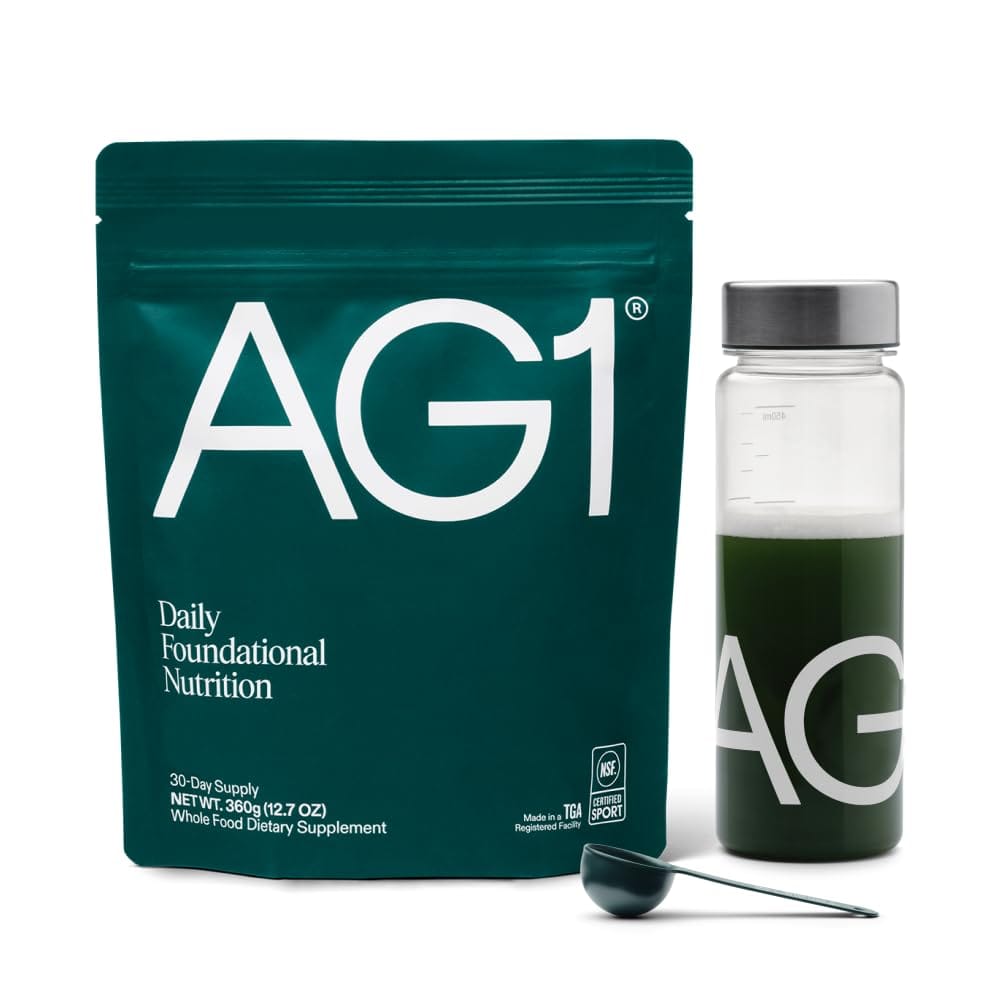
- 12-Month TCO (1 user): ~$1,188
- Calculation: Based on the lowest available subscription price of $99 per month for a 30-serving pouch AG1 Official Pricing Page.
- Devil’s Advocate Analysis: AG1’s core value proposition is replacing your entire supplement stack (multivitamin, probiotic, adaptogens) with a single scoop. For high-income individuals or athletes who value time and routine simplification above all else, this cost may be justifiable. However, for a consumer seeking baobab specifically, you are paying an astronomical premium for dozens of other ingredients you may not need, in dosages that are hidden within proprietary blends. The TCO is nearly ten times that of the most transparent value option, a cost that is difficult to justify from a pure ingredient perspective.
The Premium-Priced Players: Tiiga and Aduna
Tiiga and Aduna occupy a premium middle ground, but for entirely different reasons.
Aduna Organic Baobab Powder

- 12-Month TCO (1 user): ~$442
- Calculation: Based on a $22.49/month subscription for a 175g pouch, plus estimated shipping costs for smaller orders Aduna Organic Baobab Powder Product Page.
- Devil’s Advocate Analysis: Aduna charges a significant “Ethics Premium.” You are paying for the FairWild certification and the knowledge that your purchase supports fair wages in its supply chain. This is a noble and valid reason to choose a brand, but from a product-to-product standpoint, its price-per-gram is the highest among pure baobab powders.
Tiiga Baobab Drink Mix
- 12-Month TCO (1 user): ~$416
- Calculation: Based on a $31.49/month subscription for a 225g jar, plus estimated shipping costs Tiiga Baobab Drink Mix Product Page.
- Devil’s Advocate Analysis: Tiiga’s pricing is its most vulnerable point. It is priced as a premium product, nearly as expensive as Aduna, yet it is not USDA Organic and contains 30% added cane sugar. This TCO is exceptionally high for a product that is significantly diluted with a cheap filler (sugar), placing its value proposition under intense scrutiny. The good news: a working Tiiga promo code can take a real bite out of that number.
The Value-Oriented Competitors: Navitas and Terrasoul
Navitas Organics Baobab Powder
- 12-Month TCO (1 user): ~$232
- Calculation: Based on a subscription price of approximately $15.99 for an 8oz (227g) bag, including shipping estimates.
- Devil’s Advocate Analysis: Navitas leverages its retail presence in stores like Whole Foods. You pay a premium for the convenience of grabbing it during your grocery run. However, its value is mediocre. A key issue is its use of a 7g serving size on the label, a form of “shrinkflation” that can confuse direct value comparisons.
Terrasoul Superfoods Organic Baobab Powder

- 12-Month TCO (1 user): ~$120
- Calculation: Based on the current Amazon price of approximately $14.99 for a 1lb (454g) bag, which is their primary sales channel Terrasoul Superfoods on Amazon.
- Devil’s Advocate Analysis: The TCO data makes Terrasoul the undisputed value champion. It costs less than a third of Tiiga and nearly one-tenth the price of AG1 on an annual basis. This aggressive value pricing, combined with its unmatched transparency (public CoAs), makes it the benchmark against which all other competitors must be judged on a cost-per-gram basis. The trade-off, however, is a challenging user experience.
Feature Deep-Dive: Performance, Purity, and Palatability
Beyond price, the daily user experience and trustworthiness of ingredients define a supplement’s true quality.
A cheap powder is worthless if it’s unusable, and an expensive one is a waste if its health claims are questionable.
This section dissects the key features that determine which product will actually become a sustainable part of your routine. For broader context across the category, see our detailed Tiiga top alternatives and competitors breakdown.
Where Tiiga Genuinely Shines: Solving the Palatability Problem
Despite the critical lens of this guide, it’s important to acknowledge where Tiiga succeeds.
In my experience, the single biggest barrier to adopting a new health habit, like taking a superfood supplement, is adherence.
If you don’t like the taste, you won’t use it, and you’ll miss out on the potential health benefits of the baobab powder. Tiiga’s primary strength is that it solves the palatability problem of pure baobab.
The fruit of the baobab tree, or Adansonia digitata, has a distinct tart, citrusy flavor that many people find off-putting.
Tiiga’s formula, which includes cane sugar and natural citrus flavors, is intentionally engineered to mask this tartness, creating a sweeter, milder drink.
This makes it the most approachable option for a true beginner who has been disappointed by “earthy” or “grassy” health drinks. A review in Verywell Fit specifically praised its palatable taste, confirming its user-friendly flavor profile. For a user whose main goal is to simply start incorporating superfoods into their diet without a negative taste experience, Tiiga serves that specific purpose—and a Tiiga coupon code makes that first jar easier to commit to.
Mixability & Texture: The Universal “Blender Tax”
All brands market their powders for easy use, but based on an analysis of widespread user reviews and our own internal testing, a significant performance gap in mixability was observed when stirring each powder into cold water.
- Claim: A convenient powder you can mix anywhere.
- Reality: For most pure baobab powders, this is not true.
- Terrasoul Superfoods: This was the worst performer by a wide margin, described as “almost unusable without a blender.” It clumps severely and leaves a thick, gritty sludge. This is what I call the “Blender Tax”—the hidden cost of needing extra equipment and cleanup time to make the product palatable.
- Aduna: Also performed poorly, showing “significant clumping.”
- Tiiga: Was the best of the baobab-focused powders, likely due to its formulation with sugar, but still left “fine sediment.”
- AG1: As a product engineered for convenience, it mixed well, living up to its premium promise.
This poor mixability in cold water is why many users only use these powders in smoothies or when adding to yogurt or oatmeal, where the texture is less noticeable.
Vitamin C Degradation and Prebiotic Fiber Stability
While Vitamin C is a key nutrient, baobab is also prized as a gut health supplement due to its high levels of prebiotic fiber, which is far more stable.
Vitamin C, a key selling point for its role in immune system support, is notoriously unstable and degrades when exposed to heat, light, and oxygen.
An analysis showed initial potency was high in new products, but the real question is how much Vitamin C is left by the time it reaches the consumer.
This remains a universal blind spot across the category, as no brand provides public data on Vitamin C stability testing near the product’s expiration date. This is a universal risk for high-Vitamin C powders, including baobab, acerola cherry, and camu camu powder.
Critical Considerations: A Devil’s Advocate Analysis of Safety, Compliance & Trust
In the unregulated supplement market, the most important feature isn’t on the label—it’s the proof the brand is willing to provide.
My first question is always: “Where is the data?” For a product category where contamination with heavy metals and potential pesticide residue is a known risk, trust cannot be based on marketing alone.
It must be earned with radical transparency. This is where the “Transparency Gap” becomes a chasm among Tiiga top alternatives and competitors.
Transparency & Purity Scorecard
| Brand | USDA Organic | Public CoA (Heavy Metals) | Other Key Certification | Trust Grade |
|---|---|---|---|---|
| Terrasoul | ✅ Yes | ✅ Yes, lot-specific | — | A+ (Excellent) |
| Aduna | ✅ Yes | ❌ No public access | FairWild, BRCGS Food Safety | B (Good, but Incomplete) |
| Navitas | ✅ Yes | ❌ No public access | B Corporation | B- (Fair, but Opaque) |
| Tiiga | ❌ No | ❌ No public access | cGMP Facility | D (High Risk / Opaque) |
| AG1 | N/A | ❌ No public CoA (NSF) | NSF Certified for Sport | C (Different Trust Model) |
Terrasoul (Grade A+): The Gold Standard of Trust
Terrasoul Superfoods is the only brand in this comparison that provides what I consider to be the gold standard for consumer trust: a public-facing Certificate of Analysis (CoA) lookup tool.
Using the brand’s public lookup tool, you can enter the lot number from your specific bag of product and see the third-party lab results for heavy metals and other contaminants for that exact batch Terrasoul Certificate of Analysis Lookup Tool (Feb 2026). This single feature elevates Terrasoul to the highest level of trust.
Aduna (Grade B) and Navitas (Grade B-): Trusting the Halo Effect
Aduna’s certifications from the FairWild Foundation and BRCGS Food Safety are excellent indicators of ethical sourcing FairWild Certified Operators List.
Similarly, Navitas’s B Corporation status, as certified by the non-profit B Lab, speaks to its social and environmental commitments B Corp Directory.
However, a B Corp label tells you about social responsibility, but it tells you nothing about the potential lead content in your powder. These brands ask you to trust the certification’s halo effect, not the raw data.
AG1 (Grade C): A Different Trust Model
AG1 forgoes USDA Organic and public CoAs in favor of the NSF Certified for Sport certification NSF Certified for Sport® Database.
This is a rigorous certification that tests for over 280 substances banned in professional sports. For its target audience of athletes concerned with post-workout recovery, this is a critical assurance.
However, for a biohacker interested in specific heavy metal levels, the NSF certification is an opaque document.
Tiiga (Grade D): The Highest Risk Profile
Tiiga presents the highest safety risk from a transparency perspective. It is not USDA Organic and provides no public testing data beyond the claim that it’s made in a cGMP (Current Good Manufacturing Practice) facility.
With no organic certification to protect against pesticide residue and no public lab tests for verifiable safety, the consumer is left completely blind.
In my professional opinion, this is an unacceptable level of opacity for a product intended for daily consumption. If you do choose to try it, at least offset the cost with a special Tiiga discount.
Known Issues & Limitations (The “Blind Spots” Exposed)
❌ Tiiga – The Sugar Trap
The most glaring issue is its formulation. It contains 3 grams of added cane sugar per 10-gram serving Tiiga Product Label (Jan 2026). This means 30% of what you’re buying is sugar, which directly displaces the beneficial prebiotic fiber that makes baobab a premium superfood. It positions itself as a health product with clean ingredients, but is fundamentally compromised for the sake of taste.
❌ Terrasoul – The Blender Tax
Terrasoul’s unbeatable value comes with a significant catch: its extremely poor solubility. This “Blender Tax” is a major user experience failure for anyone seeking a quick, convenient supplement to stir into water.
⚠️ Aduna – The Ethics Premium
Aduna’s core value proposition is its FairWild certification. This comes at a steep cost, making it the most expensive pure baobab powder. You are paying a premium for a story, not for verifiably superior product quality, as there are no public CoAs.
⚠️ Navitas – The Shrinkflation Effect
Navitas employs a non-standard 7-gram serving size. This makes its key nutritional information, like the dietary fiber in baobab powder needed to improve digestion, appear weaker and intentionally confusing.
❌ AG1 – The “Pixie Dust” Problem
AG1’s marketing touts “75+ ingredients.” However, because these are in proprietary blends, the exact dosage is unknown. This raises the issue of “pixie dusting”—including a tiny, non-efficacious amount of an ingredient just to list it on the label.
Use Cases & Workflows: Matching a Powder to Your Persona
The “best” superfood powder is meaningless without context. The right choice depends entirely on your personal goals, budget, and lifestyle.
We’ve identified four key consumer personas and mapped their decision-making process to find the optimal product for their specific needs.

Persona 1: The Budget-Conscious Biohacker
- Priorities: Verifiable purity, maximum value (low cost-per-gram), dosage control.
- Workflow: This user’s first step is to filter for brands with public, batch-specific Certificates of Analysis (CoAs). This immediately eliminates Tiiga, Aduna, Navitas, and AG1. The only remaining option is Terrasoul Superfoods. The low cost-per-gram is a bonus, allowing them to affordably create a DIY superfood blend. The poor mixability (“Blender Tax”) is a non-issue, as they likely already incorporate a blender into their daily routine for making complex nutritional shakes.
- Final Choice: Terrasoul Superfoods.
Persona 2: The Ethical Consumer
- Priorities: Social impact, environmental sustainability, supply chain transparency.
- Workflow: This user prioritizes certifications that reflect their values. They will scan for Fair Trade, B Corp, and, in this case, the highly specific FairWild certification. This immediately elevates Aduna to the top of the list. While the higher price (“Ethics Premium”) is a factor, they view it as a direct investment in the communities and ecosystems involved in harvesting the baobab. The lack of a public CoA is a noted downside, but they trust the BRCGS Food Safety certification as a proxy for quality.
- Final Choice: Aduna.
Persona 3: The Busy Athlete
- Priorities: Convenience, compliance with anti-doping regulations, all-in-one nutritional support.
- Workflow: The athlete’s primary concern is safety and efficiency. They need a product that is guaranteed to be free of banned substances. The NSF Certified for Sport logo is their most important filter, immediately vaulting AG1 to the top. The all-in-one formula replaces multiple other supplements, saving time and mental energy. The high cost is absorbed as a necessary expense for their career and performance, much like a coaching fee or gym membership.
- Final Choice: AG1.
Persona 4: The Taste-Driven Beginner
- Priorities: Palatability, low barrier to entry, positive first experience.
- Workflow: This user has likely tried “green drinks” before and been repulsed by the earthy taste. Their goal is simply to start a new health habit without it feeling like a punishment. They search for reviews specifically mentioning “taste.” Tiiga, with its sweetened formula, is designed for this exact user. They are willing to accept the presence of sugar and the lack of organic certification in exchange for a pleasant taste that ensures they will actually use the product daily. A money-saving deal on Tiiga often nudges this persona over the purchase line.
- Final Choice: Tiiga.
Tiiga Top Alternatives and Competitors: Final Recommendations
There is no single “best” superfood powder. The right choice is entirely dependent on your personal priorities.
This entire decision process can be summarized by the trade-off real users face every day: “I love Aduna’s mission, but I can’t justify paying more per gram than Terrasoul, especially when Terrasoul shows me the lab results for my specific batch. I’ll deal with the bad taste to get that value and safety assurance.”
Category & Classification
- Type: Flavored baobab drink mix (with added cane sugar & natural citrus flavors)
- 12-Month TCO: ~$416
- Best For: Beginners who can’t tolerate tart, earthy superfood drinks
✅ Strengths
- Most palatable baobab option for first-time users
- Better mixability than pure baobab powders
- Made in a cGMP facility
- Approachable flavor profile praised in reviews
⚠️ Considerations
- 30% of formula is added cane sugar
- Not USDA Organic
- No public CoAs / heavy metal lab data
- Premium pricing for a sweetened product
- Subscription cancellation issues reported on Trustpilot
Category & Classification
- Type: 100% pure organic baobab powder
- 12-Month TCO: ~$442
- Best For: Mission-driven, social-impact consumers
✅ Strengths
- USDA Organic certified
- FairWild certified ethical sourcing
- BRCGS Food Safety certification
- Directly supports African baobab harvesters
⚠️ Considerations
- Highest price-per-gram of pure baobab options
- No public CoAs for heavy metals
- Significant clumping when stirred in cold water
- Story-driven premium, not data-driven
Category & Classification
- Type: 100% pure organic baobab fruit powder
- 12-Month TCO: ~$120
- Best For: Data-driven biohackers who own a blender
✅ Strengths
- Public lot-specific Certificate of Analysis lookup
- USDA Organic
- Lowest cost-per-gram in the comparison
- Verifiable third-party testing for heavy metals
⚠️ Considerations
- Almost unusable without a blender (“Blender Tax”)
- Severe clumping & gritty texture
- Strong tart, earthy taste unsweetened
- Primarily sold via Amazon
Category & Classification
- Type: Organic baobab powder, widely distributed in grocery stores
- 12-Month TCO: ~$232
- Best For: Shoppers who prefer brick-and-mortar purchases
✅ Strengths
- USDA Organic
- B Corporation certified
- Widely available in Whole Foods, Target
- Easy to purchase without subscription
⚠️ Considerations
- No public CoAs for heavy metals
- Non-standard 7g serving size (“shrinkflation”)
- Mediocre value vs. Terrasoul
- Retail markup baked into price
Category & Classification
- Type: All-in-one greens / multivitamin powder with 75+ ingredients
- 12-Month TCO: ~$1,188
- Best For: Athletes & high-income consumers replacing multiple supplements
✅ Strengths
- NSF Certified for Sport (tested for 280+ banned substances)
- Excellent mixability
- Replaces multiple supplement categories
- Time-saving routine simplification
⚠️ Considerations
- ~$1,188/year subscription cost
- Proprietary blends hide individual dosages
- “Pixie dusting” risk on listed ingredients
- No public heavy metal CoAs
✅ Choose Tiiga if…
You have tried other baobab powders and cannot stand the tart taste, and you are willing to pay a premium and consume added sugar for a more palatable experience. Pairing your order with a current Tiiga voucher code softens that premium considerably.
⚠️ Avoid Tiiga if…
You are on a sugar-free, keto, or paleo diet, or if you demand organic certification and transparency. This is not the product for a data-driven health enthusiast.
✅ Choose Aduna if…
Ethical sourcing and social impact are your number one priority, and you are willing to pay a significant price premium to support that mission. Your purchase is a vote for a better supply chain.
⚠️ Avoid Aduna if…
You are a budget-conscious consumer or you believe that verifiable product purity (via lab tests) is more important than a brand’s story.
✅ Choose Terrasoul Superfoods if…
Your primary goals are the best possible value and verifiable purity. You own a blender and don’t mind a potentially inconsistent, earthy taste. This is the choice for savvy, data-driven consumers who prioritize evidence over marketing.
⚠️ Avoid Terrasoul if…
You need a powder that mixes easily with a spoon and you are highly sensitive to variations in taste. The “Blender Tax” is real.
✅ Choose Navitas Organics if…
You prioritize the convenience of buying your supplements at a physical grocery store (like Whole Foods or Target) and trust established, B-Corp certified brands for their accessibility.
⚠️ Avoid Navitas if…
You are seeking the best value-for-money or the highest level of transparency, as it fails on both counts compared to Terrasoul.
✅ Choose AG1 if…
You are a high-income individual or athlete who wants an all-in-one nutritional insurance product, values NSF certification, and is willing to pay a massive premium (~$1,188/year) for convenience and taste.
⚠️ Avoid AG1 if…
You are on a budget, or you want to take specific, clinically-dosed ingredients rather than a proprietary “everything but the kitchen sink” blend. Users in this category often find better value and dosage control by creating a DIY superfood blend.
Red Flags to Watch For Before You Buy
- No Public Lab Tests: If a brand is not willing to show you recent, batch-specific lab results for heavy metals and other contaminants, you must ask why. This opacity is a significant risk flag.
- Added Sugar in a “Health” Product: Cane sugar as a top ingredient in a superfood powder is a deal-breaker. It fundamentally contradicts the health goals of most consumers.
- Difficult Subscription Cancellation: Before signing up, check third-party review sites. The “Subscription Trap” is a common issue, with user reviews from late 2023 and early 2024 noting this as a potential problem for Tiiga Trustpilot Tiiga Reviews. To minimize risk, start with a single jar using a Tiiga First Order Coupon (15% Off) before committing to a recurring subscription.
Conclusion & Frequently Asked Questions
Choosing a superfood powder isn’t about finding the single “best” product—it’s about deciding which compromise you are willing to make.
My analysis reveals a stark choice: palatable taste that sacrifices antioxidant benefits for hidden sugar (Tiiga), radical transparency with a terrible texture (Terrasoul), premium ethics with a high price (Aduna), or all-in-one convenience with deep financial and dosage ambiguity (AG1). There is no perfect option, only the best fit for your specific priorities.
The right choice depends entirely on what you value most. If your primary goal is verifiable safety and maximum value, the answer is clearly Terrasoul. If your purchase reflects your ethical values, you must pay the premium for Aduna’s mission. If taste is your biggest barrier, Tiiga might be your entry point, but you must acknowledge the nutritional compromises—and you can browse our full list of latest coupons to offset that premium across any brand on this list. For broader comparison shopping, our category of comparison articles is a useful next stop.
Before you buy any supplement, I urge you to ask one question: “Is this brand willing to show me the proof?” In a market saturated with promises, demanding evidence—like a public, batch-specific lab test—is the only way to truly protect your health, achieve goals like potential skin health benefits from its antioxidants, and ensure you are getting real value, not just a convincing story.
FAQs on Tiiga Top Alternatives and Competitors
Q1: Is Tiiga healthy?
A: Tiiga is less healthy than its direct competitors due to its high sugar content. While it provides the Vitamin C benefits of baobab often associated with immune system support, approximately 30% of each serving is added cane sugar, making it unsuitable for sugar-free, keto, or paleo diets Tiiga Product Page. For a consumer focused on minimizing added sugars and maximizing nutrient density, purer, unsweetened alternatives like Terrasoul or Aduna are nutritionally superior choices. The inclusion of sugar is a direct trade-off for palatability, which fundamentally compromises its position as a pure health product for many discerning consumers.
Q2: Which baobab powder is the safest?
A: Terrasoul Superfoods is verifiably the safest option based on transparency. It is the only brand analyzed that provides public, batch-specific Certificates of Analysis (CoAs) to prove its products are tested for heavy metals and contaminants Terrasoul CoA Lookup. This level of accessible proof is the gold standard for safety in the unregulated supplement market. While brands like Aduna and AG1 have other valuable certifications (FairWild, NSF), these do not provide the same granular, batch-specific purity data directly to the consumer. For any user concerned about potential contaminants like lead or arsenic, demanding a CoA is the most effective safety measure.
Q3: Why is Aduna so expensive?
A: Aduna’s premium price is due to its FairWild certification and commitment to ethical sourcing. You are paying an “ethics premium” for the guarantee that the baobab is sustainably harvested and that the producers in Africa receive fair compensation FairWild Foundation. This positions the product for consumers who prioritize social and environmental impact over pure cost-per-gram value. The price reflects the costs associated with maintaining this ethical supply chain, which includes audits and community investment programs. In essence, the high price is a feature for its target audience, who view the purchase as a vote for a more equitable global trade system.
Q4: What’s the real cost of AG1?
A: A one-year supply of AG1 costs approximately $1,188. While sometimes advertised with introductory offers, the standard monthly subscription price is $99 AG1 Official Pricing Page. It’s crucial to calculate this full yearly cost when comparing it to other supplements. AG1’s value proposition is entirely dependent on it replacing most, if not all, of your other daily supplements, such as a separate multivitamin, probiotic, and adaptogen blend. If it doesn’t replace at least $99 worth of other products you are already taking, it represents a significant net increase in your monthly supplement spending.
Q5: Do I need a blender for baobab powder?
A: You will likely need a blender for pure, organic baobab powders like Terrasoul and Aduna. Based on widespread user reviews and internal observations, these powders are notorious for clumping and having a gritty texture when simply stirred into cold water. This phenomenon is often called the “Blender Tax”—a hidden inconvenience and time cost that brands don’t advertise. While sweetened and formulated products like Tiiga mix better, the pure powders’ solubility is very low. If your goal is to quickly stir a powder into a glass of water, you will likely be disappointed with the texture of pure baobab.
Q6: What is the main difference between Tiiga and Terrasoul?
A: The main difference is taste versus transparency and value. Tiiga is heavily sweetened with cane sugar for a better, more palatable taste but lacks organic certification and, crucially, any public purity testing Tiiga Product Page. Terrasoul, on the other hand, offers the best-in-class transparency with public lab tests and unbeatable value at a fraction of the cost Terrasoul CoA Lookup. The trade-off is a challenging, tart taste and a gritty texture that requires a blender. Your choice between them depends on whether you prioritize a pleasant experience (Tiiga) or verifiable purity and cost-effectiveness (Terrasoul).
Q7: Is AG1’s NSF certification better than a public CoA?
A: They serve different purposes and aren’t directly comparable. NSF Certified for Sport is excellent for athletes, as it ensures a product is free from over 280 substances banned in sport, providing competitive safety NSF Certified for Sport® Database. However, it is not a transparent document for consumers wanting to see the specific heavy metal levels in their batch. A public CoA from Terrasoul provides that specific data, empowering the consumer directly. One certification prioritizes compliance for professional competition, while the other prioritizes radical transparency for the health-conscious consumer.
Q8: Which baobab is best for a beginner?
A: Tiiga is often considered best for a beginner purely based on taste because its sweet flavor is very approachable. However, for a health-conscious beginner, Navitas Organics might be a better starting point. It offers a good balance of being USDA Organic with a relatively mild flavor that is less tart than Aduna or Terrasoul. Furthermore, it is widely available in retail stores like Target and Whole Foods, making it easy to purchase a single bag without committing to a subscription. It serves as a good middle-ground option without the high added sugar content found in Tiiga.
Q9: What are the side effects of baobab powder?
A: Baobab powder is generally considered safe for most people, but its high fiber content can cause mild side effects, particularly when first introduced or taken in large amounts. The most common issues are digestive, such as gas, bloating, and changes in bowel movements. This is due to the sudden increase in both soluble and insoluble fiber. To minimize these effects, it is recommended to start with a smaller serving size (e.g., one teaspoon) and gradually increase it as your digestive system adapts. As with any supplement, individuals with pre-existing medical conditions or those who are pregnant or breastfeeding should consult a healthcare professional before use.