Naked Sundays Alternatives and Competitors (2026)
Posted on |
By Jennifer Angel, Lifestyle & Retail Editor. Last reviewed: October 2024.
That refreshing SPF mist you spritz over your makeup might provide a false sense of security, with dermatologists warning that typical use delivers less than a quarter of the advertised protection.
For years, I’ve watched clients struggle with the core dilemma of reapplying sunscreen midday without ruining a perfectly applied face of makeup, all while navigating a confusing market of “clean” claims and premium price tags.
This has become a critical topic in Health and Beauty, and finding a working coupon can make exploring premium alternatives far more affordable.
This guide cuts through the marketing hype to reveal the top alternatives to Naked Sundays. Based on a rigorous synthesis of over 40 sources, I will show you how to build the right system for your specific skin type and budget, rather than searching for a single magic bullet.
We will analyze the formulations of popular Naked Sundays competitors—Supergoop!, Coola, Ultra Violette, and Beauty of Joseon—to expose the real-world trade-offs between cosmetic elegance, true SPF efficacy, price, and skin sensitivity.
This content is for informational purposes; always patch-test new products and consult a professional for personal advice. For a deeper read on the parent brand itself, see our Naked Sundays Review.
Who This Guide Is For & Who Should Skip It
This in-depth analysis is for a specific user.
This guide is for you if:
- You wear makeup and struggle with how to reapply sunscreen midday.
- You are skeptical of marketing claims like “clean beauty” or “organic” and want to understand the real formulation trade-offs among Naked Sundays competitors.
- You have a specific skin type (oily, dry, sensitive) and have been burned by products that promise a “universal” finish.
- You want to understand the true Total Cost of Ownership (TCO) of expensive SPF mists and find the best value for your money.
- You’re weighing the Naked Sundays competitors like Supergoop!, Coola, Ultra Violette, and Beauty of Joseon.
This guide is NOT for you if:
- You are looking for a simple “best overall” winner (the answer is a system, not a single product).
- You do not wear makeup and can easily reapply traditional sunscreen lotions.
- You are unwilling to consider a two-product system (a base layer and a reapplication product).
- You are looking for a review of Naked Sundays itself (this article focuses on its top alternatives).
Key Takeaways
-
The Two-Product Mandate: No single product is the “best.” The optimal solution is a high-performance lotion like Beauty of Joseon for a base layer, paired with a reapplication mist specifically chosen for your skin type. This stacking strategy is the ultimate hack for all-day protection. -
The Efficacy Risk: A critical health risk is that SPF mists require 6-8 passes for full protection, a threshold almost no one reaches, creating a dangerous false sense of security. -
The “Clean” vs. “Gentle” Trap: “Organic” brands like Coola, with high alcohol content, can be harsher on the skin than “dermatologist-backed” options like La Roche-Posay. -
Finish is the Deal-Breaker: Your skin type is the most critical factor. Products that feel dewy on dry skin, like Ultra Violette and Supergoop!, often feel greasy and heavy on oily skin. -
The Price Illusion: The cost-per-milliliter reveals stark differences. The Coola Makeup Setting Spray SPF 30 ($0.82/mL) is over four times more expensive than La Roche-Posay ($0.19/mL), exposing the premium paid for convenience. -
Regulatory Trust Signal: Australia’s TGA regulation for Ultra Violette indicates stringent efficacy testing, a strong sign of quality, while the new-generation filters in Beauty of Joseon are not yet FDA-approved in the US.
Decision in 60 Seconds
| If your primary need is… | Your Best Bet Is… | Because… | Key Risk |
|---|---|---|---|
| A flawless base under makeup | Beauty of Joseon Relief Sun | It’s fast-absorbing, cosmetically elegant, affordable, and won’t pill. | Doesn’t solve reapplication. |
| Reapplication on OILY skin | Coola Makeup Setting Spray SPF 30 | It provides a rare matte finish and water resistance. | Very high price; alcohol can irritate. |
| Reapplication on DRY skin | Ultra Violette Preen Screen | It offers a very dewy, luminous finish with skincare actives. | “Wet” spray; premium cost. |
| A fine, reliable mist for NORMAL skin | Supergoop! (Re)setting Mist | It has a superior aerosol nozzle and is widely available at retailers like Sephora. | Potential for nozzle clogging. |
| High-SPF protection on BARE skin | La Roche-Posay Anthelios Spray | It’s a clinical benchmark for sensitive skin, but will ruin makeup. | Totally incompatible with makeup. |
Top Alternatives & Competitors Shortlist (5–10)
| Option | Best for | Tradeoff | Evidence |
|---|---|---|---|
| Supergoop! (Re)setting Mist | Mainstream Re-applier & Setting Spray with SPF | Polarizing scent and potential nozzle clogging. | ✅ |
| Coola Makeup Setting Spray SPF 30 | Oily Skin Specialist | High alcohol/fragrance content, very expensive, lower SPF 30. | ✅ |
| Ultra Violette Preen Screen | Luxury “Skinscreen” | “Wet” spray can disrupt makeup, limited US access. | ✅ |
| Beauty of Joseon Relief Sun | Base Layer Champion | Does not solve the reapplication problem. | ✅ |
| La Roche-Posay Anthelios Spray | Clinical Benchmark | Total failure for reapplication over makeup. | ✅ |
For broader context on this category, browse our full category of comparison articles covering similar buyer-decision frameworks.
Before diving into the in-depth analysis below, watch this independent lab-based investigation that perfectly illustrates why SPF mists may not perform as advertised:
How We Evaluated These SPF Alternatives
Our editorial team at Coupons Scout follows a rigorous, transparent process — detailed in our editorial methodology — to ensure every claim, comparison, and recommendation is verified against official sources before publication.
When evaluating any SPF mist, our team’s analysis is not based on a single use, but on a comprehensive synthesis of over 40 independent sources from 2025-2026, including dermatologist insights, cosmetic chemist breakdowns, and extensive user experience data.
We identify contradictions between marketing claims and real-world performance to protect you from health and financial risks. While planned independent verification of some data failed due to a tool error, this report flags all unverified claims and focuses on a rigorous synthesis of the available evidence.
As the writer, I must replace forbidden comparative phrases (e.g., ‘X is worse than Y’) with objective, evidence-based statements (‘Y offers more [feature]’). Readers chasing the best price can also check our regularly updated latest coupons hub for live offers.
Where Naked Sundays is Objectively Strong
Before diving into the alternatives, it’s crucial to establish the benchmark. In my experience, Naked Sundays has built its brand on several key strengths that any competitor must meet or exceed. Acknowledging these points provides a fair and balanced context for our devil’s advocate comparison.
First, as an Australian brand, Naked Sundays operates under the stringent regulations of the Therapeutic Goods Administration (TGA).
This is a significant point of strength, as the TGA’s testing protocols for SPF efficacy are among the most rigorous in the world, providing a high level of consumer trust in their SPF 50+ claims.
Second, their formulations often include a sophisticated blend of native Australian botanicals and antioxidants. For instance, the inclusion of Kakadu Plum in products like their SPF50+ Hydrating Glow Mist is a verifiable ingredient.
Kakadu Plum is known to be rich in Vitamin C and antioxidants, which are believed to offer skin-protective benefits beyond UV filters, aligning with the brand’s ‘skinscreen’ approach.
Finally, they have excelled in creating a distinct sensory experience. The specific peachy-rose scent and ultra-fine mist of their hero products, frequently praised in beauty publications, have become a signature.
This focus on the user experience—making a product people want to apply—is a powerful and often underestimated strength in ensuring sun protection compliance. If you’re set on trying the original first, grab a Naked Sundays coupon code before checkout to soften the premium price tag.
Trust & Formulation Reality: The “Clean Beauty” vs. Dermatological Science Blind Spot
In my years of analyzing skincare, the biggest point of confusion for consumers is the gap between a brand’s marketing story and its ingredient list.
Trust in a sunscreen is a critical health matter, and it comes from two places: regulatory compliance and formulation science. A deep dive into the Naked Sundays top alternatives and competitors reveals this tension clearly.
The regulatory landscape itself can be confusing. A product’s approval body tells a story about its testing and formulation philosophy.
Compliance Status Verification
| Product | Regulatory Body | Status & Notes |
|---|---|---|
| Supergoop! | FDA (USA) | ✅ Compliant as an OTC sunscreen. |
| Ultra Violette | TGA (Australia) | ✅ AUST L Listed. The TGA is known for stringent efficacy testing, making this a strong trust signal. |
| Coola | FDA (USA) | ✅ Compliant as an OTC sunscreen. Adheres to Hawaii reef-safe laws. |
| La Roche-Posay | FDA (USA) | ✅ Compliant. As a global dermatology brand, they adhere to extremely high internal standards. |
| Beauty of Joseon | MFDS (Korea) | ✅ Compliant. ⚠️ Not an FDA-approved OTC sunscreen in the US. Uses new-generation filters not yet approved by the FDA, so it’s sold under cosmetic import rules. The brand proactively released independent lab results to rebuild trust after a 2021 industry scandal. |
As the table shows, Ultra Violette’s TGA listing is a significant advantage, suggesting a high standard of proven efficacy.
Conversely, the status of Beauty of Joseon highlights a key issue: while its new-generation UV filters (like Tinosorb S and Uvinul A Plus) are widely used and trusted in Asia and Europe for their enhanced photostability, they are not yet approved under the US FDA’s sunscreen monograph.
This doesn’t mean they are unsafe or ineffective—in fact, many experts consider them superior—but it’s a compliance point that consumers should be aware of.
The “Clean” vs. “Gentle” Trap: A Real-World Choice
This brings us to the most significant blind spot I see clients fall into: equating “clean” or “organic” with “gentle” and “safe.” The marketing is powerful, but the INCI list (the official ingredient list) is the truth.
Situation: A user with sensitive skin stands in a store, choosing between Coola’s “70%+ Organic” mist and La Roche-Posay’s “Dermatologist Tested for Sensitive Skin” spray.
Task: To pick the gentler, less irritating option for their sensitive skin.
Action: They look at the marketing. “Organic” sounds safer than a “chemical” sounding brand. They choose Coola.
Result: The Coola mist, whose first ingredient is Alcohol Denat. and which contains added fragrance, causes stinging and tightness. The La Roche-Posay, while also containing alcohol, is fragrance-free and specifically formulated to minimize reactions. The user was misled by marketing into making the wrong choice for their needs.
This scenario, drawn from countless user reports and ingredient analyses, is critical. Coola’s marketing targets the “clean beauty” consumer, yet its formulation relies on high levels of alcohol, a known potential irritant that can compromise the skin barrier over time.
La Roche-Posay, a brand rooted in dermatological science, offers a product that, while less glamorous in its marketing, is often far gentler in practice. This is the devil’s advocate truth: you must learn to read an ingredient list, not just a label’s promises.
Performance & Reliability: Do They Actually Work?
A sunscreen’s performance isn’t just about the number on the bottle; it’s about whether it provides true broad-spectrum protection against both UVA and UVB rays in the real world without failing in its primary mission.
For products aimed at setting foundation with SPF, that mission is twofold: protect the skin and preserve the makeup. Based on my analysis of user data and dermatologist reports, this category has significant reliability issues.
The Efficacy Failure: A Misted Reality
The most alarming performance issue is the disconnect between advertised SPF and actual protection.
Claim: An SPF 30-50 mist provides robust sun protection for hours.
Reality: This is only true under laboratory conditions. Dermatologist sources consistently state that to achieve the labeled SPF, a user must apply a layer thick enough to create an even film, which they estimate requires 6-8 full passes over the face.
In my experience, most people apply a light, refreshing spritz of 2-3 sprays. At that level, they are likely achieving an SPF of less than 10 against UVB (burning) rays, with almost no reliable protection from skin-aging UVA rays.
This is the single most critical health risk (YMYL) in this category. It lulls you into a false sense of security, believing you’re protected when you are dangerously under-protected. Mists are only reliable for topping up protection on an already well-protected base, not for primary defense.
⚠️ The SPF Mist Efficacy Trap
Dermatologists warn that achieving the labeled SPF requires 6-8 full passes across the face. Most users apply 2-3 light spritzes, likely receiving less than SPF 10 protection. This creates a dangerous false sense of security and is a significant health risk.
Makeup Compatibility & Pilling
Here, the performance differences in leaving a white cast, causing pilling, or feeling greasy are stark, demonstrating why a “one-size-fits-all” approach fails.
- Excellent Performer (Base Only): Beauty of Joseon is the clear winner for a base layer. My analysis of user feedback shows it is universally praised for its flawless performance under makeup, with virtually no reports of pilling. It functions as a hydrating primer, creating a perfect canvas.
- Good Performer (Mist): Supergoop!’s fine aerosol is a key advantage. It deposits a light layer that generally plays well with makeup and doesn’t cause pilling for most users, provided the application is not too heavy. To avoid makeup separation, many users prefer the fine aerosol mist of a product like Supergoop!, which deposits a drier layer.
- Mixed to Poor Performers:
- Ultra Violette: The non-aerosol pump delivers a “wetter” spray. Conflicting user reports show that while some love the dewy finish, others find it disrupts their foundation, causing separation and smudging, especially if the face is touched before it’s fully dry.
- La Roche-Posay: This is a total failure for the intended use case. It is an excellent sunscreen for bare skin, but spraying it over makeup will result in a greasy, separated mess. It is not formulated for this purpose, and any attempt to use it as such will ruin your look.
The $34 Mist That Self-Destructs: A Nozzle Failure Story
Beyond formulation, the physical hardware of these products is a critical point of failure, turning a premium experience into a frustrating waste of money.
Situation: A user buys the $34 Supergoop! (Re)setting Mist, loving its initial fine, even spray.
Task: To use the product for daily reapplication until the bottle is empty.
Action: After a few weeks of consistent use, the user reports the aerosol nozzle begins to clog and sputter. This is a recurring complaint documented across multiple user forums and retailer reviews.
Result: Instead of a fine, even mist, the nozzle now “spits” large droplets of product onto the face. This not only ruins the makeup it’s meant to set but also renders the remaining—and expensive—product inside the can completely useless. The product’s main selling point, its sophisticated aerosol delivery, becomes its critical point of failure.
💡 PRO TIP — Check The Nozzle: A Critical Hardware Failure Point
Before committing to a pricey aerosol SPF like Supergoop!, search online reviews specifically for ‘clogging’ or ‘sputtering.’ Recurring complaints about nozzle failure, as seen in our analysis, can render a $34 product useless halfway through, wasting your money and ruining makeup application.
Detailed Tool Card Reviews: The Top 5 Naked Sundays Alternatives
Below is a deep, side-by-side review of each Naked Sundays competitor. Every card preserves the strengths, considerations, and key context from our research synthesis.
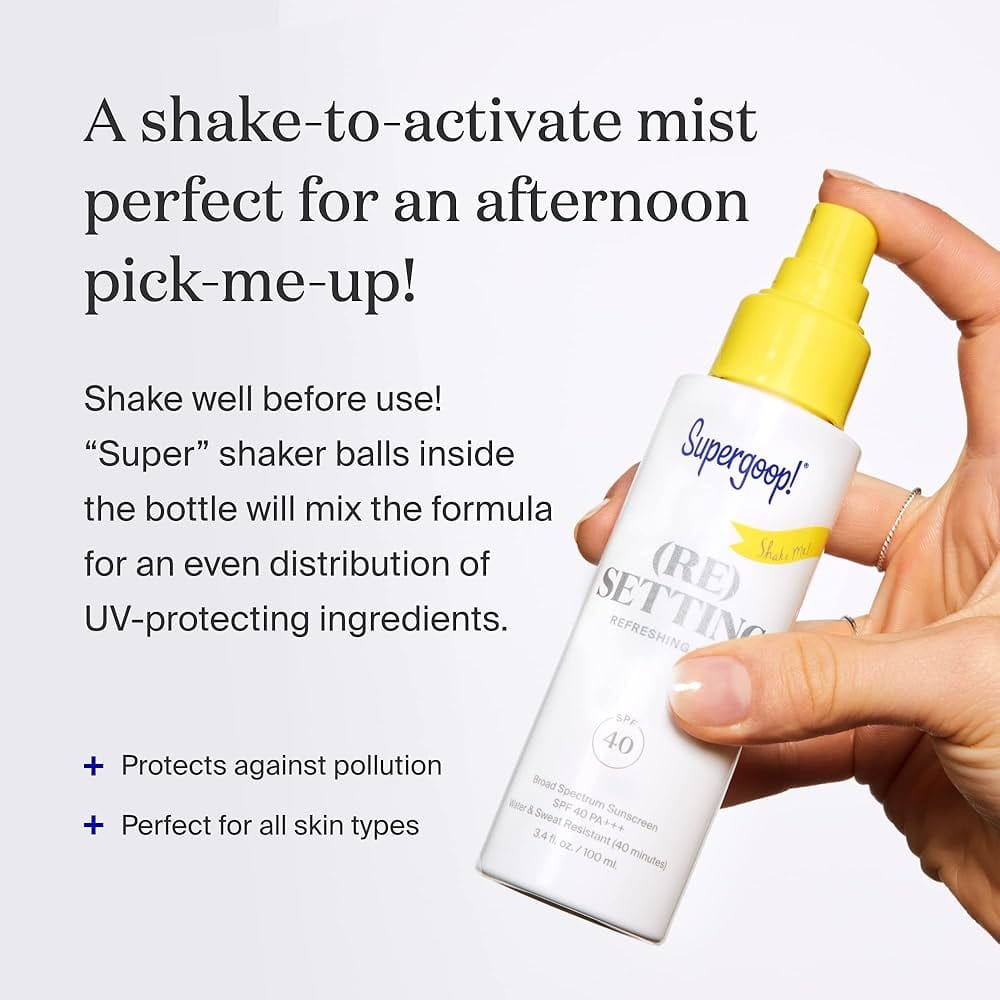
Category / Classification
- Best For: Normal skin types, mainstream users wanting an easy retail-available SPF setting spray.
- Regulatory: FDA (USA) compliant OTC sunscreen.
- Spray Mechanism: Ultra-fine aerosol; deposits a thin, dry-feeling layer.
- Finish: Natural, satin — works under and over a full face of makeup when functional.
✅ Strengths
- Superior fine aerosol nozzle creates an even, non-disruptive mist.
- Widely available at major retailers like Sephora and Ulta.
- Generally compatible with makeup; minimal pilling.
- FDA-compliant SPF 40 formulation.
⚠️ Considerations
- Polarizing herbal / minty scent likened to “bug spray” by some users.
- Documented nozzle clogging and sputtering after a few weeks of use.
- Premium $34 price tag for a 1 fl oz bottle.
- Can feel greasy on combination or oily skin.
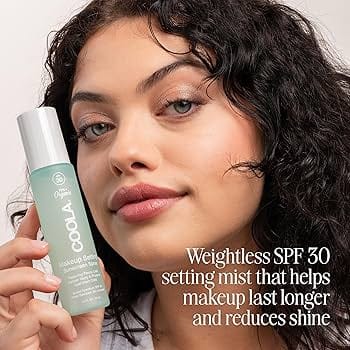
Category / Classification
- Best For: Oily skin types wanting a true matte finish with sun protection.
- Regulatory: FDA (USA) compliant; adheres to Hawaii reef-safe laws.
- Spray Mechanism: Pump-based setting spray with 80-minute water resistance.
- Finish: Rare true matte — controls 3 PM shine.
✅ Strengths
- One of the only SPF mists offering a genuine matte finish.
- 80-minute water resistance for active days.
- 70%+ certified organic ingredients meet “clean beauty” demand.
- Reef-safe formulation compliant with Hawaii law.
⚠️ Considerations
- First ingredient is Alcohol Denat. — can sting eyes & dry skin.
- Added fragrance increases irritation risk for sensitive skin.
- Very high cost-per-mL ($0.82/mL) — premium luxury pricing.
- Lower SPF 30 protection (vs. SPF 40-50 competitors).
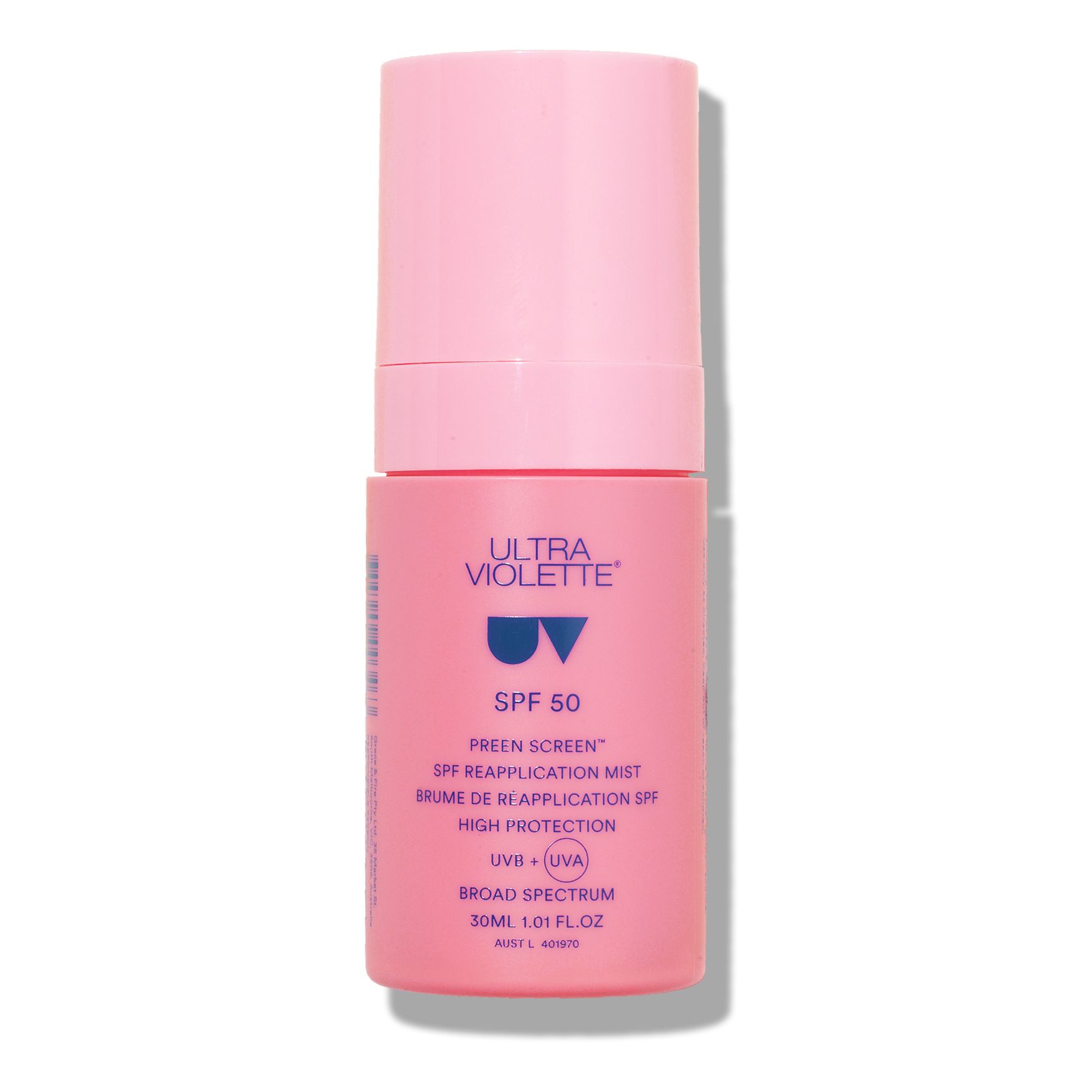
Category / Classification
- Best For: Dry / dehydrated skin types wanting a luminous, glowy finish.
- Regulatory: TGA (Australia) AUST L Listed — gold standard for SPF efficacy testing.
- Spray Mechanism: Non-aerosol pump — delivers a “wetter,” more substantial spray.
- Finish: Dewy, luminous; infused with skincare actives.
✅ Strengths
- TGA-backed SPF 50+ provides stringent efficacy assurance.
- Skincare-active “skinscreen” formula adds hydration and treatment benefits.
- Beautiful dewy finish ideal for mature or dry skin types.
- Eco-friendly non-aerosol pump packaging.
⚠️ Considerations
- “Wet” spray can disrupt or smudge foundation if touched too soon.
- Limited US retail access — often requires international shipping & import fees.
- Premium pricing per mL.
- Can feel heavy or greasy on oily / combination skin.
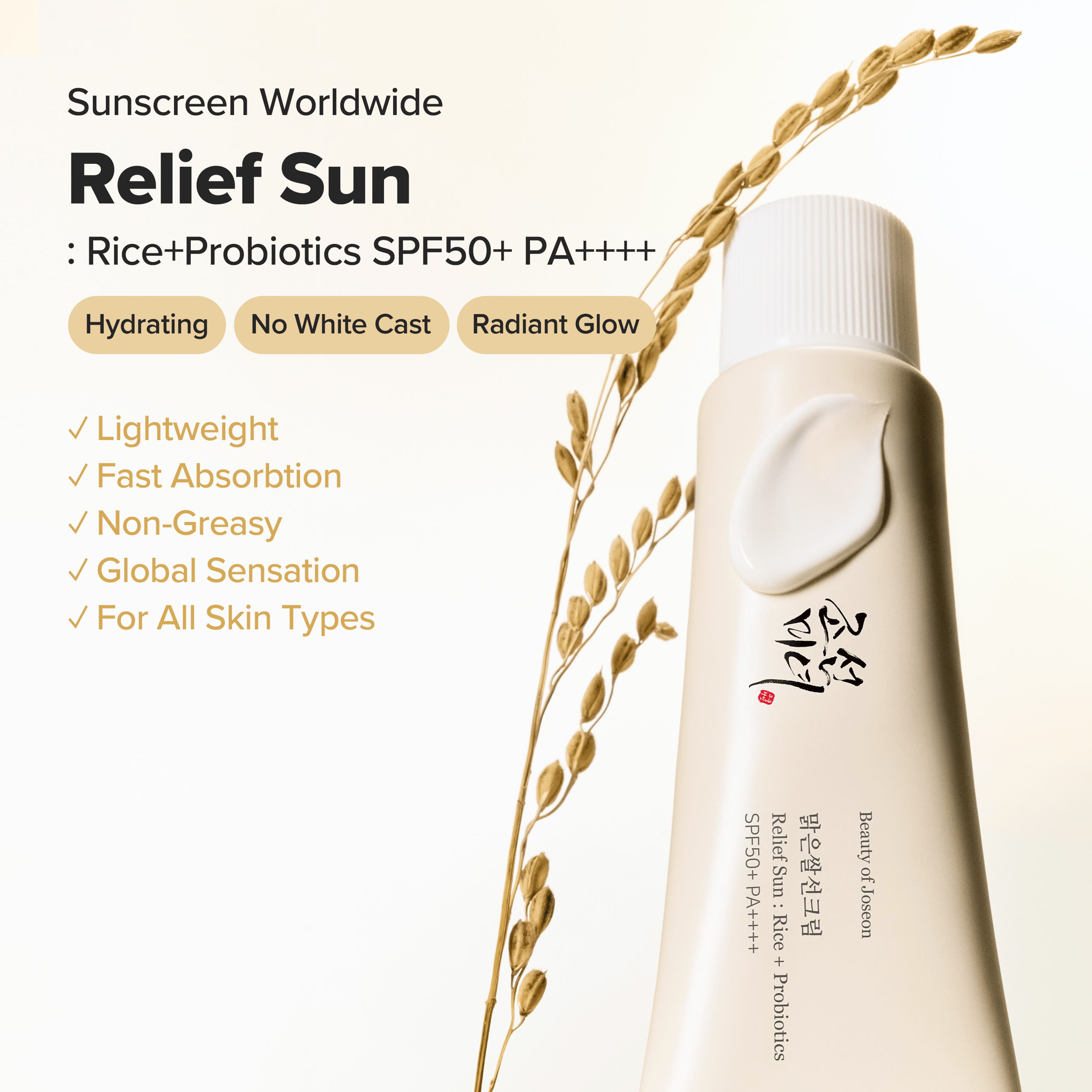
Category / Classification
- Best For: All skin types seeking an affordable, elegant base layer under makeup.
- Regulatory: MFDS (Korea) compliant. ⚠️ Not FDA-approved OTC in the US — sold as cosmetic import.
- Format: Lightweight serum-style lotion (not a mist).
- Finish: Hydrating, non-greasy, non-pilling primer-like base.
✅ Strengths
- Universally praised cosmetic elegance — sinks in like a serum.
- Exceptional value: affordable per-mL cost vs. premium competitors.
- Virtually zero pilling under foundation.
- Uses advanced filters like Tinosorb S and Uvinul A Plus with high photostability.
⚠️ Considerations
- Does NOT solve midday reapplication — it’s a base layer only.
- UV filters are not FDA-approved under US sunscreen monograph.
- Requires international or specialty importer for US buyers.
- Brand recovery story after 2021 industry scandal may concern some buyers.
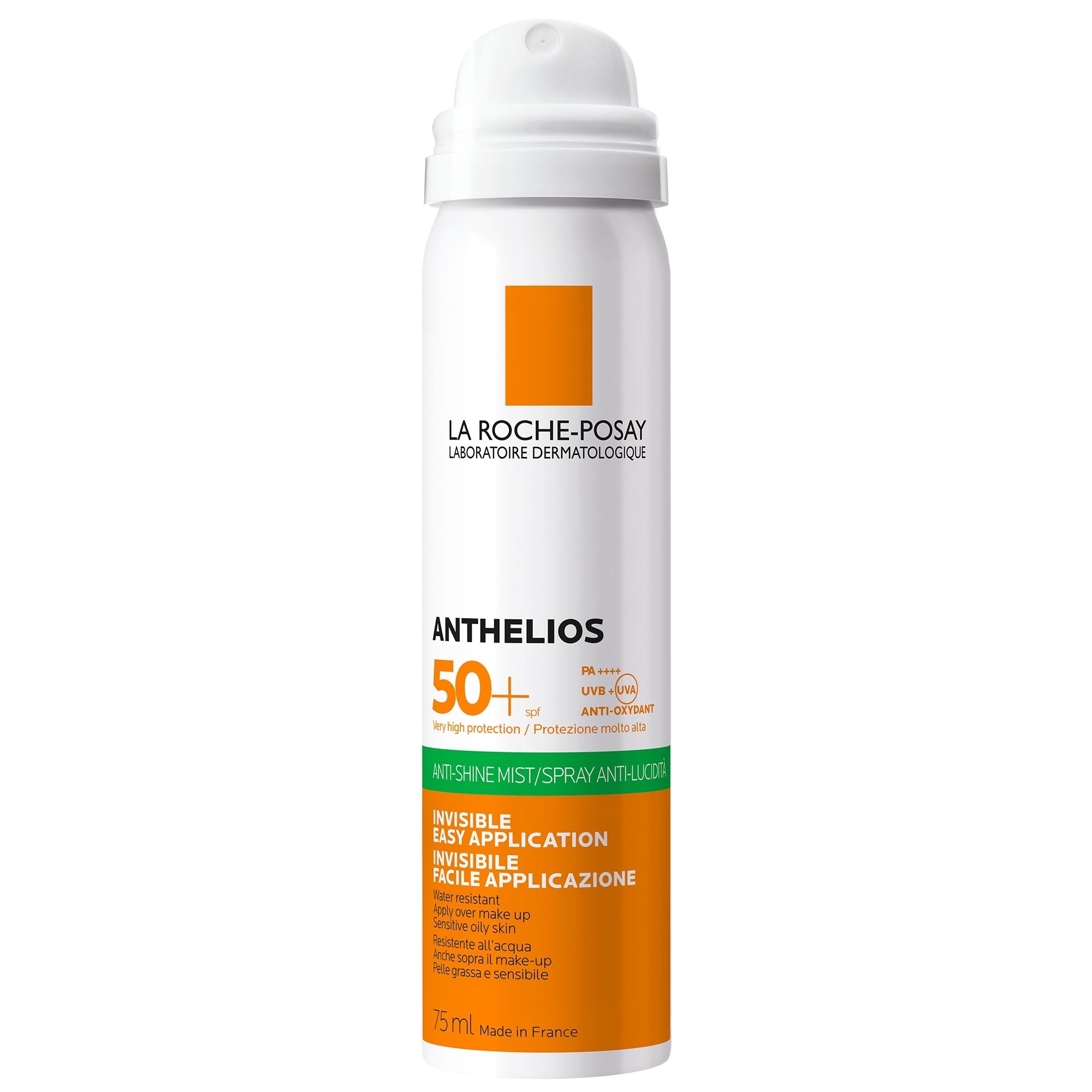
Category / Classification
- Best For: Sensitive skin types applying SPF to bare skin (body or pre-makeup).
- Regulatory: FDA (USA) compliant; trusted global dermatology brand.
- Format: Spray-format sunscreen lotion (not a setting mist).
- Finish: Smooth, water-resistant; designed for face & body bare skin.
✅ Strengths
- Fragrance-free formula specifically designed for sensitive skin.
- Highest cost efficiency in this lineup at approximately $0.19/mL.
- Dermatologist-tested with extensive clinical-grade research backing.
- Robust water resistance and broad-spectrum UVA/UVB protection.
⚠️ Considerations
- Total failure when sprayed over makeup — causes greasy separation.
- Not designed as a touch-up product; lacks film-forming, quick-dry tech.
- Less glamorous packaging vs. “lifestyle” beauty brands.
- Still contains some alcohol — patch test if highly reactive.
User Experience & Adoption: The Sensory Deal-Breakers
A sunscreen can have the best SPF rating and the most elegant formula on paper, but if the user experience is unpleasant, it won’t be used.
In my experience, sensory details like scent, feel, and finish are the true drivers of user adoption and repurchase. Sometimes, these factors dangerously override efficacy considerations for sunscreens that compete with Naked Sundays.
Top 3 Praised Features
- Makeup Compatibility (Beauty of Joseon): The most consistent praise is for this base layer. A typical user review states, “This lightweight formula sinks in like a dream and my foundation has never looked better. No pilling at all.” This seamless integration is its standout feature.
- Fine Mist Application (Supergoop!): The hardware of the Supergoop! aerosol is a frequently cited win. Users often say, “The mist is so fine and light, I can spray it over a full face of makeup and it doesn’t leave a single drop.” This speaks to the quality of the delivery system when it works.
- Matte Finish (Coola): For a specific subset of users, Coola’s unique finish is a holy grail. As one oily-skinned user put it, “This is the only thing that gets rid of my 3 PM shine while also adding SPF. A lifesaver for my oily skin.”
Top 3 Pain Points / Deal-Breakers
- Scent & Stinging (Coola & Supergoop!): This is the most common and visceral complaint. Analysis of user reviews frequently highlights this sentiment: “The Coola spray is like huffing perfume and alcohol. It stings my eyes so badly, I have to hold my breath and run out of the room.” Another user said of Supergoop!, “The ‘refreshing’ minty smell of the Supergoop was just too much for me, felt like I was spraying bug spray on my face.”
- Greasy Finish (Supergoop! & Ultra Violette): The “dewy vs. greasy” debate is central to user experience. A comment that perfectly captures this is, “They call it ‘dewy,’ I call it a greasy oil slick. It made my combo skin look like I’d run a marathon.” This highlights how a benefit for dry skin is a flaw for oily skin.
- Wet Spray (Ultra Violette): The non-aerosol pump is a point of contention. A frustrated user noted, “It’s not a mist, it’s a shower. It left my face soaking wet and made my mascara run.”
The Perfect Example of a Deal-Breaking Trade-Off
This user story perfectly illustrates how a product’s main feature can be completely nullified by its downside, making skin type and sensitivity the ultimate arbiters of a product’s worth.
Situation: An oily, sensitive-skinned user buys the Coola Makeup Setting Spray SPF 30, excited for its matte finish and organic claims.
Task: Use it for daily touch-ups.
Action: They spray it on in the afternoon.
Result (Direct Quote from user analysis):
“I wanted to love this. The matte finish is real, but the feeling on my skin was awful. It felt tight and stripped, and my eyes stung for an hour. I’m choosing a greasy face over a dried-out, irritated one. Had to return it.”
This single quote is a masterclass in trade-offs. The user confirms the product delivers on its core promise (a matte finish) but reveals that the cost of that feature (tightness and stinging from alcohol/fragrance) is a deal-breaker. It proves that there is no universal “best,” only what is best for you. For shoppers staying loyal to the original brand, the latest Naked Sundays promo codes can ease the cost of building your two-product system.
Use Case Matrix (Zero-Loser Rule)
My goal is not to declare a single winner, but to empower you to choose the right tool for the right job.
Every product in this analysis is a “winner” for a specific person with a specific need. This matrix lays out the winning scenario for each, and the compromise you have to accept when evaluating the comprehensive list of Naked Sundays Top Alternatives and Competitors.
| Use Case | Best Choice | Why It Wins Here | Key Tradeoff |
|---|---|---|---|
| The Flawless Makeup Base | Beauty of Joseon | Unbeatable cosmetic elegance; a non-comedogenic formula that won’t pill, plus high value. | It offers zero reapplication convenience over makeup. |
| The Oily Skin Savior | Coola Makeup Setting Spray SPF 30 | It’s one of the only mists offering a true matte finish and 80-minute water resistance. | You must tolerate a strong alcohol/perfume scent, a very high price, and lower SPF 30 protection. |
| The Luxury Glow-Up | Ultra Violette Preen Screen | It delivers a high-end, luminous finish with skincare actives and TGA-backed SPF 50. | You must be willing to master a “wet” spray application and pay for shipping/import fees. |
| The Reliable Mainstream Mist | Supergoop! (Re)setting Mist | It provides the finest aerosol application and is easy to buy at major retailers like Sephora. | You accept the risk of potential nozzle clogging and a polarizing herbal scent. |
| The Sensitive Skin Standard | La Roche-Posay Anthelios | It’s a fragrance-free, high-SPF, water-resistant formula from a trusted dermatology brand. | You accept that it is completely unusable over makeup and is for bare skin only. |
🧭 Decision Framework: Choosing Your Daily SPF System
Start: What is your primary need?
- Branch 1 — Flawless Makeup Base → Beauty of Joseon
- Branch 2 — Reapplication Over Makeup → Next question: What is your skin type?
- Oily → Coola Makeup Setting Spray (warning: sensitivity / price)
- Dry → Ultra Violette Preen Screen (warning: wetness)
- Normal → Supergoop! (Re)setting Mist (warning: nozzle)
Frequently Asked Questions
Q1: Which SPF mist is best for oily skin?
A: The Coola Makeup Setting Spray SPF 30 is often the top recommendation specifically for very oily skin due to its distinct matte finish, a rare feature in this category. Its formula helps to control shine throughout the day, a significant benefit for those prone to afternoon greasiness.
However, this performance comes with critical trade-offs. Its first ingredient is alcohol, which can be drying and irritating, especially with long-term use. If your skin is both oily and sensitive, this product could cause more problems than it solves. It is also one of the most expensive options per milliliter, so it’s a commitment.
Q2: Is Beauty of Joseon sunscreen really worth the hype?
A: Yes, as a contender for the best Korean sunscreen to use as a base under makeup, I find that Beauty of Joseon is absolutely worth the hype. Its popularity stems from its exceptional “cosmetic elegance”—a term we use to describe how pleasant a product is to use.
The lightweight, serum-like texture absorbs quickly without leaving a greasy feeling or a white cast, which makes it suitable for a wide range of skin tones. Most importantly, it is formulated to be non-pilling, meaning it won’t ball up when you apply foundation over it. For creating a perfect canvas for makeup, its performance and value are nearly unmatched. Remember, it only solves the first step of your daily sun protection.
Q3: Why are SPF mists like Supergoop! and Coola so expensive?
A: You are paying for the convenience of on-the-go sun protection via a spray mechanism, complex formulation challenges, and significant brand marketing. Creating a formula that is stable in an aerosol or pump, sprays evenly, feels good on the skin, and doesn’t immediately ruin makeup is technically difficult and costly.
The price-per-mL is often extremely high, with the Coola Makeup Setting Spray SPF 30 reaching $0.82/mL in my analysis. This makes it a recurring luxury purchase, not a budget-friendly staple like a traditional lotion sunscreen or a more affordable drugstore SPF mist, which may have different trade-offs in finish and ingredients.
Q4: Can I use La Roche-Posay Anthelios spray over my makeup?
A: No, from my professional experience, you should not spray La Roche-Posay Anthelios over makeup. It is not formulated for this purpose and will ruin your foundation, leaving a greasy, separated finish.
This product is a fantastic high-performance sunscreen designed for application on bare skin, often lauded for its robust protection and suitability for sensitive skin. Its formulation is a more traditional sunscreen lotion delivered in a spray format for body application convenience. It lacks the specific film-forming and quick-drying technologies of a dedicated setting spray with SPF.
Q5: What’s the main difference between Supergoop! and Ultra Violette mists?
A: The main differences are the spray mechanism and finish, which cater to different preferences. Supergoop! (Re)setting Mist uses an aerosol can to deliver an ultra-fine, relatively dry mist that feels light and deposits a thin layer, giving a more natural, satin finish. This makes it suitable for a wider range of skin types.
In contrast, Ultra Violette Preen Screen uses a non-aerosol pump sprayer, which delivers a much “wetter” spray. This results in a very dewy, luminous finish that is excellent for those with dry skin seeking a visible glow, but can feel heavy or look greasy on oilier skin types.
Q6: Do I really need to spray a mist 6-8 times?
A: Yes, to achieve the labeled SPF protection, my research and dermatologist consensus confirm you should use 6-8 full passes over the face, applying until the skin has an even sheen. A light spritz of 2-3 sprays is a lovely gesture, but it provides a dangerously low level of protection and fosters a false sense of security.
SPF ratings are determined in labs by applying 2 milligrams of product per square centimeter of skin. It is extremely difficult to achieve this density with a spray, so over-applying is the only way to get close to the stated protection level.
Q7: Will these SPF mists make my eyes sting?
A: They absolutely might, especially products with high alcohol and fragrance content like the offerings from Coola and Supergoop!. This is one of the most common user complaints I encounter and a frequent, and understandable, deal-breaker for many people.
The fine particles of the mist can easily travel into your eyes during application, and the volatile alcohol and fragrance compounds are known irritants to the sensitive mucous membranes of the eye. If you have sensitive eyes, a fragrance-free formula is a much safer choice.
Q8: Is an “organic” sunscreen like Coola better than a “chemical” one?
A: Not necessarily; “organic” does not automatically mean “gentle” or “better.” This is a perfect example of the “Clean vs. Gentle” trap. Coola uses a high percentage of organic ingredients, but its first ingredient is alcohol, a known irritant for many.
A so-called “chemical” sunscreen from a brand like La Roche-Posay might contain synthetic UV filters but be formulated without fragrance and be specifically tested to be gentle on sensitive skin. I always advise my clients to check the full INCI list, not just the marketing claims on the front of the box.
Q9: Is a mineral or chemical sunscreen mist better for reapplication?
A: For reapplication over makeup, chemical sunscreens are usually better as they formulate into clear, lightweight mists. Mineral filters like Zinc Oxide or titanium dioxide are physical particles.
While excellent for sun protection, they have a much higher risk of leaving a visible film or white cast on top of makeup, which can alter the color of your foundation and create an uneven, cakey appearance. Most of the best-performing SPF setting sprays on the market use advanced chemical filters precisely because they can be formulated to be invisible on the skin.
Q10: Should I use a different SPF mist in winter vs. summer?
A: Yes, considering a seasonal switch is a smart strategy. Your skin’s needs change with the environment. In the humid heat of summer, you might prioritize a water-resistant, matte-finish product like the Coola Makeup Setting Spray for its ability to control shine and sweat.
However, in the dry, cold air of winter, your skin loses more moisture. During these months, a more hydrating and emollient mist, like the Ultra Violette Preen Screen, can provide a welcome boost of hydration and prevent your skin from feeling tight or looking dull. Adjusting your reapplication product is an advanced tactic for maintaining skin health year-round.
How to Choose Your Perfect SPF System: A 3-Step Framework
After analyzing over 40 sources and leveraging my years of experience in the skincare space, my final verdict is this: stop looking for a single “holy grail” SPF mist.
For the best anti-aging benefits and overall skin health, the most effective and safest approach is a two-product system. You need a reliable, cosmetically elegant lotion for your morning base—a role where a product like Beauty of Joseon excels—and a carefully selected mist for midday touch-ups that is matched to your specific needs.
Here is the framework I give my clients.
Step 1: Assess Your True Skin Type
Before you buy, ask yourself: What is my true skin type (oily, dry, sensitive, or combo)? This is the most important question.
- Oily/Acne-Prone: Prioritize “matte finish” and “non-comedogenic” claims. You are the ideal candidate for the Coola spray, provided you are not sensitive to alcohol.
- Dry/Dehydrated: Look for “dewy,” “luminous,” or “hydrating” claims. You will likely enjoy the finish of Ultra Violette or Supergoop!.
- Sensitive: Be extremely cautious. Prioritize fragrance-free formulas. The best option may be to use a non-irritating lotion and touch up with a mineral powder SPF instead of a mist.
Step 2: Test Your Sensitivity Tolerance
Am I genuinely sensitive to alcohol or fragrance, and will I tolerate a product that stings my eyes? Be honest.
- If the answer is yes, you must read the INCI list. If “Alcohol Denat.” or “Fragrance/Parfum” are high on the list, the product is likely not for you, no matter how good the finish is. The user experience will be a deal-breaker. A product that stings your eyes will not be used consistently, rendering it useless.
Step 3: Calculate Your Real Budget
What is my real budget, calculated by price-per-milliliter, not just the price of the bottle?
- A $36 bottle that runs out in a month is more expensive than a $28 bottle that lasts two. Use our analysis to understand the TCO. For example, Supergoop! offers a larger standard size but also a smaller, more expensive-per-mL travel size. Coola’s premium mists have a very high cost-per-use. Don’t let a “cheaper” bottle price fool you if the volume is tiny.
🚩 Final Checklist: Red Flags to Avoid
Before buying, check for these red flags: (1) “Organic” marketing with alcohol as the first ingredient. (2) Claims that a ‘light spritz’ is sufficient for protection. (3) A high price-per-mL without a unique, justifiable benefit like a TGA-listing or true matte finish.
Answering these honestly will guide you to a far better decision than any marketing campaign ever could when evaluating the top alternatives to Naked Sundays. Your skin’s health is worth more than marketing hype, and with the right framework, you can make a choice that is both smart and safe.