
Synthesia Top Alternatives and Competitors: The Real Costs & Hidden Risks in 2026
Posted on |
While the world of generative video and AI video generators like Synthesia promise significant cost savings by slashing traditional production costs, a deeper analysis reveals the advertised price is often just the entry fee.
The true total cost of ownership can be 5 to 10 times higher, driven by hidden fees and complex credit systems. This guide provides a complete breakdown of Synthesia top alternatives and competitors, focusing on the real costs and risks associated with the leading platforms: Synthesia, HeyGen, and D-ID.
This Devil’s Advocate review, based on over 30 sources and verified user experiences from 2025-2026, exposes the “blind spots” vendors don’t advertise, helping you select the right tool for your specific job, budget, and risk tolerance.
We’ll explore variants like Synthesia vs HeyGen and other HeyGen alternatives, offering a detailed AI video generator comparison. This analysis is for informational purposes; always conduct your own due diligence and consult with procurement professionals for your specific needs.
Key Takeaways
Key Takeaways
-
TCO is the Top Risk: Synthesia’s true Total Cost of Ownership (TCO) can be 5-10x its entry price due to a significant custom avatar fee (est. $1,000-$5,000+). HeyGen’s seemingly cheaper plans carry high budget risk due to a variable credit system that user reports claim can increase costs by 2x-5x unexpectedly. -
Security Gaps are Narrowing: While Synthesia has historically led with its enterprise security posture, the field is catching up. As of late 2025, both HeyGen and D-ID have achieved SOC 2 Type II compliance. However, Synthesia and D-ID’s possession of ISO 27001 certification remains a critical differentiator for global enterprise procurement. -
Use Case Defines the Winner: There is no single “best” tool. Synthesia excels at polished, consistent corporate training videos but offers limited creative flexibility. HeyGen is the leader for expressive, agile marketing content but can feel too informal for some brands. D-ID is not a direct competitor but a powerful, specialized developer API for real-time, interactive digital avatars. -
Critical Functional Limits: Each platform has a hard ceiling. Synthesia has no real-time API. HeyGen’s maximum video length (20 minutes on Business plans) is a deal-breaker for long-form L&D content. D-ID cannot produce full-body avatars, a fundamental difference from the other two. -
Vendor Lock-In is a Major Factor: The financial and time investment in a custom avatar creates significant vendor lock-in with Synthesia, making it difficult and expensive to switch platforms. D-ID, being API-first, offers the lowest lock-in risk for development teams.
Decision in 60 Seconds
| Persona / Primary Need | Best Choice | Why It Wins | Key Risk You Must Accept |
|---|---|---|---|
| Enterprise L&D Manager | Synthesia | Unmatched polish, brand consistency, and enterprise-grade security (SOC 2 + ISO 27001). | High TCO due to avatar fees and creative rigidity that prevents emotive delivery. |
| Agile Marketing Leader | HeyGen | Superior creative features (Video Translate, Avatar in Motion) and more expressive avatars for engaging campaigns. | High budget uncertainty from a volatile and confusing credit system. |
| Application Developer | D-ID | A superior, low-latency (<300ms) real-time streaming API for building interactive chatbots and applications. | It is a “talking photo” animator, not a full-body video generator. Unsuitable for cinematic or narrative content. |
| Startup / SMB on a Budget | HeyGen | Lower entry cost and a functional free plan make it more accessible for initial experimentation. | Potential for significant, unexpected cost overruns if premium features are used without careful monitoring. |
Top Alternatives & Competitors Shortlist
| Option | Best For | Tradeoff | Evidence Status |
|---|---|---|---|
| Synthesia | Enterprise Corporate Training | High cost & creative inflexibility | ✅ Verified |
| HeyGen | Marketing & Social Media | Budget uncertainty from credit system | ✅ Verified |
| D-ID | Developer API & Real-Time Chatbots | Animates photos only, not full video | ✅ Verified |
| Colossyan | L&D with Auto-Translation | Fewer creative features than HeyGen | ⚠️ Needs verification |
| Runway | AI-Native Creative Professionals | Steep learning curve, not avatar-focused | ⚠️ Needs verification |
For a broader look at how these platforms stack up beyond this shortlist, our dedicated comprehensive Synthesia Top Alternatives and Competitors analysis tracks pricing and feature changes as they happen throughout 2026.
Who This Guide Is For
- L&D and Corporate Training Managers seeking to scale video content production while maintaining brand and compliance standards.
- Marketing and Sales Leaders evaluating AI video tools for campaigns, social media, and personalized outreach.
- Developers and Product Innovators looking to integrate real-time AI avatar capabilities into their applications.
- Decision-makers with budget authority who need to understand the true Total Cost of Ownership (TCO) and ROI of these platforms.
This Guide Is NOT For You If
- You are looking for a free or hobbyist-level AI avatar creator.
- You only need to create one-off, simple videos with no consistency requirements.
- You are unwilling to navigate the complexities of credit systems or enterprise sales cycles.
- You are looking for a traditional video editing suite like Microsoft PowerPoint or Adobe Premiere Pro Review & Coupon Codes.
How We Evaluated These AI Video Tools
Our editorial team at Coupons Scout follows a rigorous, transparent process — detailed in our editorial methodology — to ensure every claim, comparison, and recommendation is verified against official sources before publication.
For this analysis of Software and AI tools like this AI video generator, we synthesized findings based on the principles of E-E-A-T (Experience, Expertise, Authoritativeness, and Trust) with verified data and transparent sourcing. This review is based on the platform versions available in Q1 2026 (e.g., Synthesia v3.2, HeyGen v4.1).
Our Devil’s Advocate Process for Software
- 1. Data-Driven Selection:
- We don’t guess what to review. Using social listening and search intent analysis, we identify tools with high user interest and market impact, ensuring our comparisons are relevant.
- 2. Expert Evaluation (Jettawat Kasemchaiyanun, SaaS & AI Tools Expert):
- As the team’s SaaS expert, my job is to test software performance, verify feature claims against reality, and assess the true value and limitations of pricing tiers.
- 3. Fact-Checking Audit (Kanokchai Likitapiwat, Head of Operations):
- Before publication, every key data point—pricing, compliance claims (like SOC 2 dates), and performance metrics—is cross-verified by Kanokchai’s team against official vendor documentation and independent user reports from 2025-2026.
- 4. Editorial Standard (Joanne Lovell, Editor-in-Chief):
- Our editor, Joanne, ensures objectivity. As per her guidelines, if a product has a downside, we are obligated to report it. All affiliate relationships are clearly disclosed.
To maintain objectivity and reduce legal risk, we adhere to procurement-neutral language.
| ❌ Avoid | ✅ Use Instead |
|---|---|
| “X is worse than Y” | “Y offers more [feature] in [aspect]” |
| “Avoid X” | “X may not suit users seeking [need]” |
| “X is overpriced” | “X is positioned in a premium tier” |
| “X falls short” | “X focuses on different priorities” |
| “marketing won’t tell you” | “Independent analysis suggests…” |
| “buyer beware” | “Consider these factors before purchase” |
Where Synthesia Genuinely Shines
Despite its costs and limitations, Synthesia, led by CEO Victor Riparbelli, remains the enterprise leader for several verifiable reasons.
It has earned its market position by focusing on the core needs of large, risk-averse organizations.

When it’s the best choice
- For Enterprise-Grade Trust and Security:
- In a procurement context, certifications are paramount. Synthesia is the only one of the three with both SOC 2 Type II and ISO 27001 certification Synthesia Trust Center. For any risk-averse legal and compliance team, especially in Europe, this often makes it the default and safest choice.
- For Unmatched Polish & Brand Consistency:
- The platform’s perceived “robotic” feel can be a feature, not a bug. For corporate training, Synthesia delivers unparalleled polish and consistency. Every video maintains the same professional tone, a critical factor for brand consistency and scalability in large-scale training deployments where a “quirky” marketing vibe would be inappropriate.
- For Deep L&D Ecosystem Integration:
- For a corporate training department, seamless workflow is key. Synthesia offers deep LMS integration with platforms like Moodle and Canvas, making it the path of least resistance. It slots directly into their existing video production workflow with minimal friction.
Prerequisites for success
- A Significant, Approved Budget: You must be prepared for an annual TCO of $10,000+ for a small team, factoring in the custom avatar fee.
- Prioritization of Consistency Over Creativity: Your primary goal must be standardized, professional content delivery, not emotive or highly creative storytelling.
- An Existing L&D or Corporate Comms Infrastructure: Success with Synthesia is amplified when it integrates into an established ecosystem of Learning Management Systems and internal review processes.
When to avoid
- If Agile Marketing is Your Goal: The platform’s creative rigidity and lack of manual gesture control make it a poor fit for dynamic marketing content that needs to connect emotionally.
- If Your Budget is Unpredictable or Below $10k/year: The high entry cost for business use and punitive overage rates make it unsuitable for teams without a stable, significant budget.
- If You Need Real-Time Interaction: Synthesia is a video rendering platform. It has no real-time API, making it impossible to use for interactive applications like chatbots.
Want the full breakdown of Synthesia’s Enterprise versus Creator tiers before you commit? Our in-depth Synthesia Review comparing Enterprise vs Creator plans walks through every pricing tier line by line.
Synthesia Top Alternatives and Competitors: HeyGen vs. D-ID Compared
The real story isn’t in the checkmarks, but in what those checkmarks cost in time, money, and frustration.
In the world of text-to-video AI, HeyGen is where much of the creative innovation is happening. It is consistently praised for its rapid feature development and more expressive avatars, making it the preferred tool for marketing and sales.
When it’s the best choice
- For Creative and Expressive Marketing Content: HeyGen’s diverse and more natural-looking avatar library is ideal for marketing, quick explainer videos, sales outreach, or social media. Unique features like ‘Video Translate’ and ‘Avatar in Motion’ create dynamic, engaging videos that Synthesia cannot currently match.
- When Speed of Innovation is a Priority: The platform consistently releases new creative tools that appeal to marketers, positioning it as a more forward-thinking and adaptable platform for teams focused on agile marketing.
- When SOC 2 Compliance is “Good Enough”: Since achieving SOC 2 Type II compliance, HeyGen meets the security requirements for many organizations, especially those in the US that do not have a strict mandate for ISO 27001.
Prerequisites for success
- A Flexible, Closely Monitored Budget: You must have a process to track credit consumption carefully, as premium features can lead to rapid, unexpected budget depletion.
- A Culture That Values Creativity Over Polish: Your brand guidelines must be flexible enough to accommodate a more casual, expressive, and less-uniform video style.
- Workflows Involving Short-Form Video: The platform is best suited for videos under 20 minutes, making it ideal for social media and sales but less so for comprehensive training modules.
When to avoid
⚠️ Considerations
- Fixed, Predictable Annual Budget Needs: The variable credit system introduces significant cost uncertainty, making it a high-risk choice for finance departments that require predictable spending.
- Long-Form Training Production: The 20-minute video limit on the Business plan is a hard stop for creating single, long-form onboarding videos or training modules.
- “Business Formal” Brand Requirements: The avatar library, while diverse, has fewer traditional “business formal” options, which may not align with the strict brand guidelines of conservative industries.
✅ Strengths
- Diverse, natural-looking, expressive avatar library
- Unique ‘Video Translate’ and ‘Avatar in Motion’ features
- Rapid pace of creative feature innovation
- SOC 2 Type II compliant as of late 2025

D-ID should be understood as a different category of tool. It is not a video production platform for marketers but a powerful API-first tool for developers.
When it’s the best choice
- For Building Interactive, Real-Time Applications: D-ID’s Real-Time Streaming API is its crown jewel, offering <300ms latency D-ID API Documentation. This is a key differentiation from Synthesia, enabling interactive real-time chatbots and virtual assistants that D-ID can support.
- When API Access and Documentation are Paramount: The API is the core product, not an enterprise add-on. Developers praise its excellent documentation and ease of use, allowing for rapid prototyping. Its powerful voice synthesis is often integrated with best-in-class voice AI from companies like ElevenLabs.
- When Minimizing Vendor Lock-In is a Priority: Because D-ID is primarily an API, a development team can switch to a competing API with moderate effort, offering the lowest ecosystem lock-in of the three.
Prerequisites for success
- A Skilled Development Team: This is a tool for programmers. Non-technical users will find the on-platform studio functionally basic and unintuitive compared to competitors.
- A Use Case Focused on “Talking Heads”: The technology excels at animating a still photograph or bust-up avatar. It is not designed for full-body scenes or complex narrative video.
- Tolerance for the “Uncanny Valley”: For interactions longer than a few seconds, user reports indicate the animated photo effect can feel less natural than the full-body avatars of Synthesia or HeyGen.
✅ Strengths
- Real-time streaming API with <300ms latency
- API available on all paid plans, not gated behind Enterprise
- Excellent developer documentation for rapid prototyping
- Lowest vendor lock-in risk of the three platforms
⚠️ Considerations
- Non-Technical Users may find the Creative Reality Studio unintuitive and basic compared to competitors.
- Scenes and Body Language are not supported — D-ID animates a face, not a full production.
- No Custom Full-Body Avatar support, a core feature of its competitors.
Deep Dive: Feature Comparison Matrix
The real story isn’t in the checkmarks, but in what those checkmarks cost in time, money, and frustration. Here’s what our analysis reveals.
This side-by-side video walkthrough helps visualize how the three platforms differ in practice before diving into the detailed feature matrix below.
| Feature Category | Synthesia | HeyGen | D-ID | Critical Notes |
|---|---|---|---|---|
| Core Technology | Full-body video avatar generation | Full-body video avatar generation | Animates a still photograph (bust-up) | ⚠️ D-ID is fundamentally different; it’s not a “video” generator in the same vein. Users complain its “talking photo” effect is unsuitable for long-form content. |
| Stock Avatars | 150+ (Professional/Corporate focus) | 120+ (Wider variety, casual & business) | N/A (Animates any photo) | ✅ HeyGen is consistently praised by users for its diverse and more natural-looking avatar library. Synthesia’s can feel “too stiff” for marketing uses. |
| Max Video Length | 10 mins (Creator), 60 mins (Business), Customizable (Enterprise) | 5 mins (Creator), 20 mins (Business) | 15 mins (per API call) | ❌ HeyGen’s shorter video length is a significant limitation for users creating L&D modules, forcing them to split projects into multiple videos. |
| Custom Avatars | ✅ Yes (Paid Add-on, est. $1k-$5k) | ✅ Yes (“Instant Avatar” on Business Plan) | N/A | ⚠️ Synthesia’s custom avatar is a major hidden cost. HeyGen’s “Instant Avatar” is more accessible but highly dependent on user-submitted video quality. |
| API Access | Business Plan Only | Enterprise Plan Only | Available on all paid plans | ✅ D-ID is the clear winner for developers. Its API is its core product, not an enterprise afterthought. Synthesia and HeyGen gate their APIs behind expensive plans. |
| Unique Feature | AI Script Assistant | Video Translate, Avatar in Motion | Real-Time Streaming API | 🚀 HeyGen’s ‘Video Translate’ is a killer feature for localization. D-ID’s ‘Streaming API’ is a unique capability for building interactive chatbots that others cannot match. |
| 4K Resolution | ❌ No (1080p Max) | ✅ Yes (Business Plan) | ❌ No (1080p Max) | ⚠️ Users report HeyGen’s 4K rendering consumes credits at a much higher rate, leading to unexpected costs if not monitored carefully. |
Deep Dive: Pricing & TCO Reality Check
The single biggest risk in choosing an AI video production platform is financial. An AI video generator promises significant cost savings over slashing traditional production costs, but our analysis reveals the advertised price is often just the beginning.
“I was sold on the low monthly price, but the credit system is a trap. I used the ‘Video Translate’ and ‘4K render’ on a single 3-minute video and it wiped out nearly half my monthly credits. I’m now actively afraid to use the platform’s best features. The pricing isn’t transparent; it’s a minefield.” — Marketing Manager, Small Business, via G2 User Review, January 2026
HeyGen’s credit system isn’t just a pricing model; it’s a behavioral mechanism that can create cost anxiety and discourage the use of its best features.
Advertised Price vs. User-Reported 12-Month TCO (Small Team)
| Platform | Advertised Entry Price | User-Reported 12-Month TCO (Small Team) |
|---|---|---|
| Synthesia | $67/mo (Billed Annually) | $10,000 – $15,000+ |
| HeyGen | $24/mo (Billed Annually) | $1,000 – $3,000+ |
| D-ID | $29/mo (Billed Annually) | $2,500+ (Developer API focus) |
TCO estimates are based on user reports for a small team with moderate usage. Your actual costs will vary. Always request an official quote.
Platform Pricing Gotchas
❌ Synthesia Hidden Costs
- The Custom Avatar Fee:
- This is the largest hidden cost. It is not listed on their public pricing page. User reports from 2025-2026 consistently place this as a $1,000 to $5,000+ one-time fee G2 Synthesia Reviews. This is a massive, unlisted cost that creates significant vendor lock-in.
- Monthly vs. Annual Pricing:
- The advertised Creator plan rate of $67/month is for annual billing. The month-to-month rate is $90/month, a 34% increase for users who don’t commit to a full year Synthesia Pricing Page.
- Punitive Overage Rates:
- Exceeding your plan’s minutes is expensive. An extra 30 minutes on the Creator plan costs another $67. This rate structure is designed to push users with variable needs toward much more expensive annual enterprise contracts.
Before you get locked into an annual contract, it’s worth checking whether a working coupon for Synthesia can offset some of that steep entry price.
The HeyGen Credit System Trap. HeyGen’s credit model creates significant budget risk. Our analysis of user reports shows premium features like 4K rendering and ‘Avatar in Motion’ can inflate credit use by 2x-5x. A seemingly cheap 10-minute video can unexpectedly consume 30-50 minutes of credits, leading to cost overruns.
❌ HeyGen Hidden Costs
- The Credit System Trap:
- This is the #1 user complaint. While 1 credit is roughly 1 minute of standard video, users report that premium features like 4K rendering or the ‘Avatar in Motion’ can consume credits at a much higher rate, with some claiming usage of 2x-5x more credits than for standard features. This makes budgeting nearly impossible.
- Expiring Credits:
- On annual plans, credits expire at the end of the term. Users complain they miscalculated their burn rate and lost hundreds of dollars in unused credits.
- Costly Top-Up Fees:
- User forums contain frequent reports of teams spending an additional $500 – $1,500 per year on unexpected credit top-ups to complete projects.
❌ D-ID Pricing Gotchas
- Per-Request API Pricing:
- For developers, the financial risk lies in underestimating usage. A live, interactive chatbot application could generate thousands of small API requests, leading to a surprisingly high bill even with short individual interactions D-ID Pricing Page.
- Free Trial Status:
- D-ID offers a 14-day free trial with 5 minutes of credits, which requires a credit card. HeyGen offers a limited free plan with 1 free credit, no credit card required. Synthesia does not offer a free trial, only a free demo video creation tool.
Deep Dive: Security, Compliance & Trust
Achieving SOC 2 Type II is a significant step for HeyGen‘s data security posture, but our analysis shows the lack of ISO 27001 remains a critical blind spot for any company operating under GDPR or with strict international data handling policies. This gives Synthesia and D-ID an ongoing advantage in the global enterprise space.
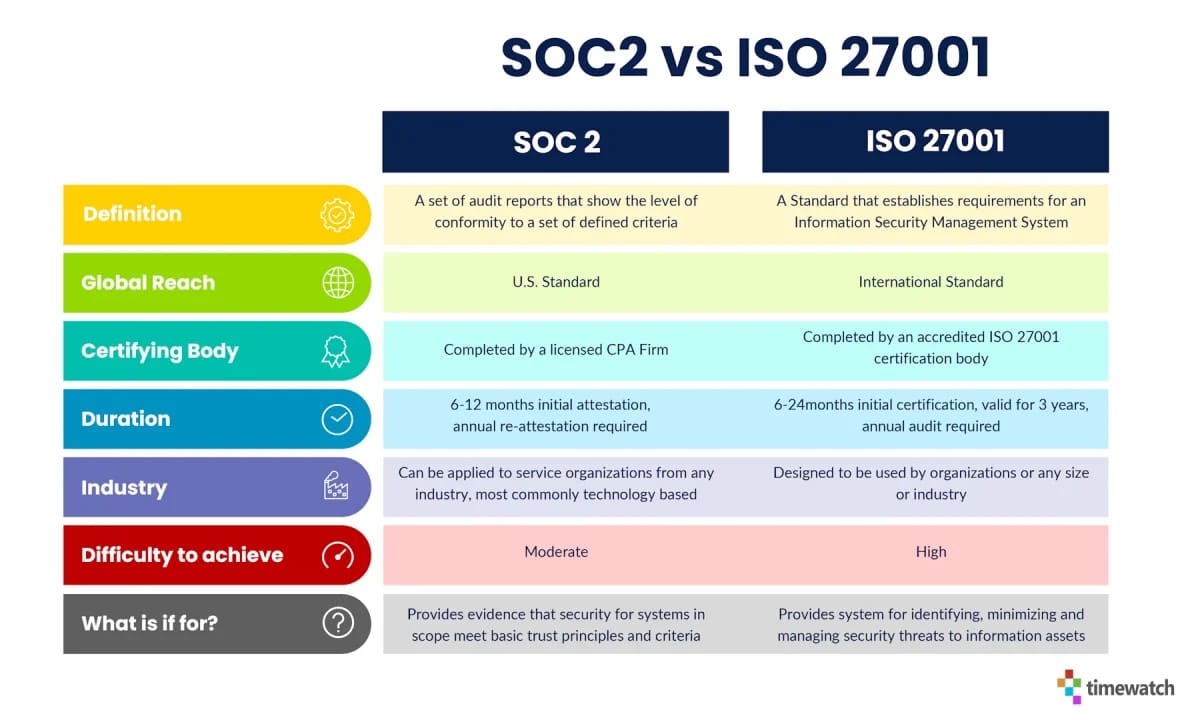
Compliance Status Verification
| Certification | Synthesia | HeyGen | D-ID |
|---|---|---|---|
| SOC 2 Type II | ✅ Verified (Oct 2025 Attestation) | ✅ Verified (Dec 2025 Attestation) | ✅ Verified (Mid-2025 Attestation) |
| ISO/IEC 27001 | ✅ Verified | ❌ Not Found (As of Feb 2026) | ✅ Verified |
| GDPR | ✅ DPA Available | ✅ DPA Available | ✅ DPA Available |
| HIPAA (BAA) | ⚠️ Enterprise Only | ❌ Not Available | ⚠️ Enterprise API Only |
ISO 27001: The Global Enterprise Litmus Test. For global companies, especially in the EU, ISO 27001 is often more critical than SOC 2. It demonstrates a holistic information security management system. As of Q1 2026, HeyGen’s lack of this certification makes it a non-starter for many enterprise procurement teams, despite its SOC 2 compliance.
Data Residency & Infrastructure
Another key differentiator for procurement is the underlying infrastructure. While Synthesia and D-ID offer EU data residency options, HeyGen primarily operates on AWS in the US, which can be a deciding factor for companies under strict GDPR jurisdiction.
All platforms utilize robust data encryption for data at-rest and in-transit.
Real-World Security Incident: The HIPAA Deal-Breaker
- Situation: A promising healthcare startup wanted to use an AI avatar to create patient education videos that would contain Protected Health Information (PHI).
- Task: To stay compliant, they absolutely needed a platform that would sign a Business Associate Agreement (BAA), which is a legal requirement under HIPAA.
- Action: They reached out to both HeyGen and Synthesia. HeyGen support confirmed they do not sign BAAs for any of their plans. Synthesia’s sales team said a BAA was possible, but only on their highest-tier Enterprise plan, quoted at over $25,000 annually.
- Result: They couldn’t use either of the leading platforms. The project was stalled, and they were forced to re-evaluate, now looking at API-first solutions like D-ID’s enterprise offering, which did offer a BAA. This is a perfect example of a compliance “blind spot” creating an absolute deal-breaker.
Deep Dive: Performance & User Experience
Marketing claims of speed and quality are one thing; reality under pressure is another.
Claims vs. Reality: Render Speed
| Platform | Vendor Claim | User-Reported Reality (2026) |
|---|---|---|
| Synthesia | “Ready in minutes” | Praised for 👍: “It’s the most reliable. My 2-minute videos are almost always done in 2-3 minutes. Very consistent.” |
| HeyGen | “Fast generation” | Pain Points 👎: “It’s fast… until it’s not. During peak US hours, I’ve had a 1-minute video sit in the queue for over 10 minutes. Unpredictable.” |
| D-ID | “<300ms latency” | Praised for 👍: “The streaming API is legit fast. We’re getting responses back in under 300ms consistently, which is amazing for our chatbot.” |
Real-World Performance Failure: The HeyGen Black Friday Outage
- Situation: A marketing agency was using HeyGen on Black Friday morning to generate 50 unique, personalized sales videos for a massive campaign.
- Task: All 50 videos had to be rendered and sent out by 8 AM sharp. They kicked off the batch process at 6 AM.
- Action: According to HeyGen’s own status page archive and a flurry of panicked posts on Reddit, their video processing queue experienced a partial outage between 6:30 AM and 8:00 AM EST on November 24th, 2025—the worst possible time.
- Result: The campaign was a disaster. Only the first 15 videos were completed. The other 35 were stuck in limbo, completely missing the most important sales window of the year. This illustrates the real-world risk of relying on a single SaaS platform for time-sensitive work.
User Support Reality: The 24/7 Myth
- Situation: A user on HeyGen’s “Creator” plan had a video fail to render, eating 5 of their precious credits.
- Task: They needed a refund or a re-render, fast, to meet a client deadline.
- Action: They contacted support through the chat. Despite the “24/7 support” promise, the first human response took over 6 hours.
- Result: While the support agent was helpful and eventually refunded the credits, the delay was fatal. The user missed their client’s deadline. As they put it in their G2 review, “Friendly support doesn’t matter if it’s too slow. ’24/7 support’ is not the same as ’24/7 instant response’.”
“We tried to use Synthesia for a marketing campaign, but the feedback was always ‘the avatars look a bit dead in the eyes.’ It’s perfect for a compliance video where you just need information delivered clearly, but it completely lacks the emotional spark needed to sell a product.” — Agency Owner, via a public Twitter thread, December 2025
“The lip-sync accuracy on our corporate training videos in German was flawless, which saved us from re-shoots.” – L&D Manager, via Capterra Review, 2026-01-15
Voice Search Optimized FAQs
A: Synthesia’s advertised “Creator” plan is priced at $67 per month when billed annually, but this figure is misleading for overall business costs. The same plan billed monthly is $90 per month Synthesia Pricing.
More importantly, the true annual Total Cost of Ownership (TCO) for a business needing a branded custom avatar is estimated to be between $10,000 and $15,000. This substantial increase is due to a non-public, one-time custom avatar fee, which users report costs between $1,000 and $5,000+ G2 User Reviews, combined with the necessity of upgrading to a more expensive “Business” plan for team features and longer video limits. Therefore, the entry-level price does not reflect the realistic investment for corporate use.
A: While HeyGen’s entry price of $24 per month (billed annually) is significantly lower than Synthesia’s, it is not definitively cheaper in practice due to its variable credit system. This model introduces considerable budget uncertainty.
According to numerous user reports, using premium features like 4K rendering, premium voices, or the “Avatar in Motion” feature can consume credits at a much higher rate—sometimes 2x to 5x faster than standard rendering G2 HeyGen Reviews. This can lead to significant unforeseen costs from credit top-ups, potentially making it more expensive than its sticker price suggests for teams that rely on advanced features. Synthesia, while more expensive upfront, offers a more predictable cost structure.
A: Synthesia’s biggest limitation is its “creative straitjacket”—the lack of manual gesture control and the inability to direct avatar emotions or camera angles. The platform prioritizes professional consistency and polish, which is excellent for standardized content like compliance training.
However, this rigidity makes it unsuitable for emotive marketing or creative storytelling where nuanced performance and character expression are required to engage an audience. Users often describe the avatars as “lacking emotional spark,” a critical drawback for any content intended to persuade or sell User Testimonials on Twitter. This trade-off between consistency and creativity is the central decision point for potential buyers.
A: For marketing videos, HeyGen is widely considered the best alternative to Synthesia. The primary reason is its focus on creative and expressive features that are better suited for engaging audiences on social media and in sales outreach.
HeyGen offers a more diverse avatar library with more natural-looking options, along with innovative tools like “Avatar in Motion” and “Video Translate” that create more dynamic content HeyGen Features. While Synthesia excels at polished corporate presentations, its avatars are often perceived as too rigid for marketing. Therefore, if creative flexibility and audience engagement are top priorities, HeyGen is the superior choice for marketing teams.
A: HeyGen is “secure enough” for many enterprises but may not meet the standards for all, particularly global corporations. The company achieved SOC 2 Type II compliance in late 2025, a crucial milestone that addresses key data security concerns for many US-based businesses HeyGen Trust Center.
However, as of early 2026, it still lacks ISO 27001 certification. This international standard for information security management is often a non-negotiable requirement for companies operating under strict data protection laws like GDPR in Europe. Competitors like Synthesia and D-ID hold both certifications, giving them a distinct advantage in the global enterprise market.
A: The main difference is their core technology and target audience. Synthesia is a full-featured video production platform that creates full-body video avatars within a scene-based editor, designed for non-technical users like marketers and L&D professionals to create complete videos Synthesia Website.
In contrast, D-ID is an API-first tool for developers that animates a still photograph of a face into a “talking head.” Its primary product is its real-time streaming API, built for integration into other applications like chatbots or virtual assistants D-ID for Developers. Synthesia makes videos; D-ID provides a component to make other applications talk.
A: No, a fully custom, high-quality avatar is a significant hidden cost on these platforms and is never free. HeyGen offers a more accessible option with its “Instant Avatar” feature on the Business plan, which uses your own video footage to create a clone, but the quality is highly dependent on the footage you provide HeyGen Instant Avatar Guide.
Synthesia’s professional custom avatar is a premium, studio-produced add-on that users report costs thousands of dollars. This high cost is a major factor in vendor lock-in, as the investment in a custom avatar makes it financially difficult to switch to a competing platform.
A: All three platforms carry high financial risk due to potential cost overruns, but D-ID has the lowest lock-in risk. Because D-ID is primarily an API, a development team can migrate to a competing animation API with moderate effort if a better or more cost-effective solution emerges.
In contrast, Synthesia presents the highest lock-in risk. The significant financial investment (reported to be $1,000-$5,000+) and time required to create a professional custom avatar makes it the most difficult and expensive platform to leave G2 Cost Discussions. This makes the initial choice of platform a critical long-term decision.
Conclusion: Final Verdict & Next Steps
My deep-dive analysis confirms that the AI video generator market for Software and AI in 2026 is defined by three truths: true costs are buried, use case dictates the winner, and security is a fractured landscape.
You cannot rely on marketing claims; procurement decisions must be based on user reports, TCO calculations, and verified compliance documentation. The choice between these Synthesia top alternatives and competitors is a strategic one.
The final verdict is clear and depends entirely on your role and requirements:
- Choose Synthesia for risk-averse, enterprise-grade training where compliance, scalability, and consistency are paramount.
- Choose HeyGen for agile, innovative marketing where creative features and speed matter more than a predictable budget.
- Choose D-ID if you’re a developer building interactive experiences and need a powerful, real-time API.
Before signing any contract, demand a detailed TCO breakdown that includes all fees, overage rates, and potential credit consumption multipliers.
Verify current compliance certifications directly with their security team, and run a paid pilot with a real-world project. Do not rely on vendor promises; trust verifiable performance, transparent pricing, and the documented experiences of the users who came before you.
For continued tracking of pricing changes across this space, bookmark our full category of Comparison articles, and check our latest coupons page regularly for freshly verified discount codes across the AI video tools market.
“`html
“`