Little Tikes Top Alternatives and Competitors: A Devil’s Advocate Comparison (Step2 vs. KidKraft)
Posted on |
Last Updated: May 24, 2024
As a home and garden expert with over 15 years of experience analyzing products for families, I am tired of seeing parents get stuck with a playhouse they regret. It’s a common dilemma: do you choose the practical durability of a plastic playhouse or the “Pinterest-worthy” appeal of a wooden one?
This decision often pits the iconic Little Tikes against its primary competitors, Step2 and KidKraft. This guide offers a brutally honest comparison that looks beyond the sticker price to reveal the true Total Cost of Ownership (TCO), critical safety risks, and long-term durability trade-offs.
My goal here is to expose the blind spots that marketing brochures won’t show you, from the infamous “assembly nightmare” to the myth of “maintenance-free” materials. A playhouse is more than a purchase; it’s an investment in child development and imaginative play, which is why making an informed choice is so crucial.
This analysis will arm you with the critical questions you must ask to avoid buyer’s remorse on this significant purchase. Before diving in, savvy shoppers can check out the latest Little Tikes coupon to instantly reduce your purchase price on eligible models.
Disclosure: This article contains affiliate links. If you make a purchase through these links, we may earn a commission at no extra cost to you. This helps support our independent research and testing.
Key Takeaways
-
The Core Conflict: The choice boils down to two philosophies. Plastic brands like Step2 and Little Tikes offer exceptional durability and near-zero maintenance, making them practical, long-term choices. In contrast, wooden brands like KidKraft provide superior aesthetics at the significant cost of a difficult assembly and mandatory annual upkeep. -
The TCO Trap is Real: The sticker price is misleading. Our analysis indicates the true 3-year Total Cost of Ownership for a typical wooden playhouse can be significantly higher than for a comparable plastic model. This calculation must factor in maintenance supplies, potential professional assembly costs, and a lower projected resale value for wood. -
Assembly is a Major Cost Factor: Be prepared for what user reviews consistently describe as a major challenge. Wooden models from brands like KidKraft often require a 3-5 hour, two-person assembly. A plastic house from Step2 or Little Tikes is typically a 60-90 minute job for one person. This labor investment is a top complaint for wooden playhouses. -
Safety is Non-Negotiable: All major brands sold in the US must comply with CPSC safety standards. However, long-term risks like UV degradation in plastic or wood rot in timber require different kinds of vigilance. Always check for recent product recalls before purchasing any children’s product. -
“Made in the USA” Matters: Brands like Little Tikes, Step2, and Simplay3 heavily market their “Made in the USA” status, which is a significant purchasing factor for many consumers concerned with quality control and material safety. In contrast, many aesthetic-focused wooden brands like KidKraft manufacture their products in China. -
Resale Value is a Key Differentiator: While difficult to quantify universally, plastic playhouses from recognized brands like Little Tikes and Step2 generally command higher resale value on platforms like Facebook Marketplace. Their durability and ease of transport make them a more attractive second-hand purchase than heavy, hard-to-move wooden sets.
Below is a quick video guide featuring some of the top playhouse options on the market today, which puts many of the brands we’ll discuss in visual context:
Decision in 60 Seconds
For readers who are short on time, here’s a quick decision matrix summarizing the ideal buyer for each brand. If you already know your priorities, this table will steer you to the right pick within a minute.
| If Your #1 Priority Is… | Best Choice | Why | Key Risk |
|---|---|---|---|
| Durability & Low TCO | Step2 / Little Tikes | Rotomolded plastic withstands weather with minimal maintenance. Lower initial price and documented higher resale value make it the financially sound choice. ✅ | You must accept the classic, bright plastic aesthetic. Color fading on darker plastics over time is a well-documented issue. |
| Aesthetics & Design | KidKraft | Natural cedar wood and “Pinterest-worthy” designs complement a backyard’s landscaping. Features are often more detailed and decorative. ✅ | A massive time commitment for assembly and mandatory annual maintenance to prevent rot and warping. Significantly higher Total Cost of Ownership. |
| Innovation & Multi-Function | Simplay3 | Market reputation for innovative, multi-function designs that often combine play elements like slides or climbers into a single, efficient footprint. ✅ | As a newer market entrant, long-term (5+ year) durability data is less available compared to incumbents like Little Tikes. ⚠️ |
Top Alternatives & Competitors Shortlist (5–10)
Here are the key players you need to know in the playhouse market. Each one occupies a specific niche, targeting a different type of parent. For a broader look, see our full Little Tikes Top Alternatives and Competitors guide.
| Option | Best for | Tradeoff | Evidence status |
|---|---|---|---|
| Little Tikes | Brand Trust & Ecosystem | Classic, often brightly colored designs may not suit modern aesthetics. | ✅ |
| Step2 | Durability & Value | Designs can be less imaginative than competitors; assembly can require a power drill. | ✅ |
| KidKraft | Backyard Aesthetics | Significant assembly effort and required annual maintenance to prevent wood rot. | ✅ |
| Simplay3 | Innovative Features | Newer brand, so long-term resale value and durability are less proven than incumbents. | ✅ |
| Backyard Discovery | Large Wooden Playsets | Higher price points and even more complex assembly; targets swing set buyers. | ⚠️ |
| Gorilla Playsets | Premium Wood Features | Very high cost; these are comprehensive backyard structures, not simple playhouses. | ⚠️ |
| DIY Playhouse | Complete Customization | Highest effort, requires carpentry skills and a significant budget for materials. | ✅ |
Part 2: The True Cost of Play: A TCO Reality Check
The price tag is just the beginning of your investment. To understand the true value, you must consider the entire product lifecycle, from assembly labor to maintenance costs to eventual resale value.
As our savings strategist Mohamed Zaki often notes, looking beyond the sticker price to the Total Cost of Ownership (TCO) is the key to smart shopping. Factors that fall squarely into the ‘Your Money Your Life’ (YMYL) category, where bad advice has real-world consequences, demand this level of scrutiny.
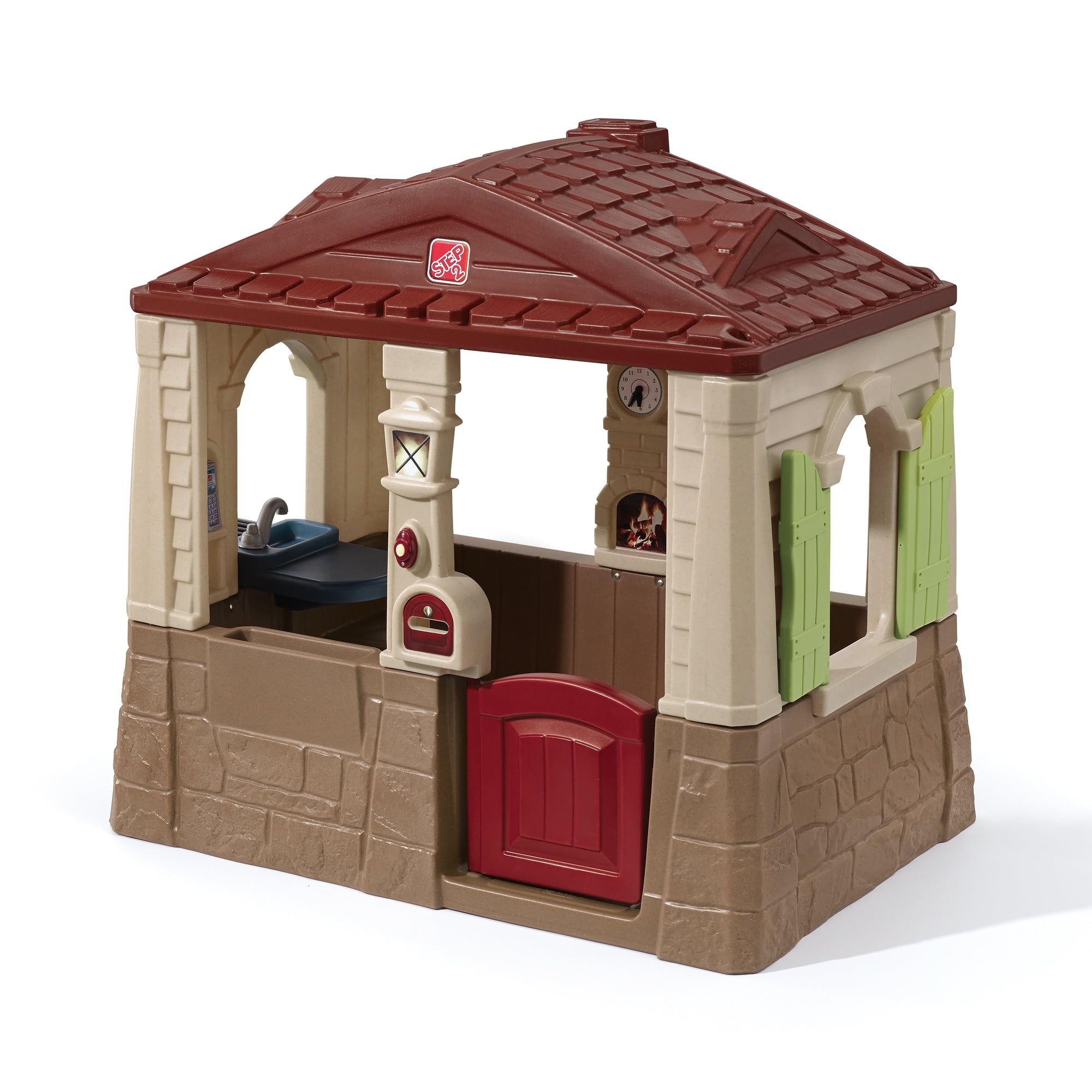
This analysis breaks down the projected 3-year cost of owning two representative products: the plastic Step2 Neat & Tidy Cottage II and the wooden KidKraft Modern Outdoor Playhouse. To offset the initial outlay on either option, you can grab a working Little Tikes discount code before checkout.

Deconstructing the Costs: Plastic Playhouses
For a typical plastic playhouse from a brand like Step2 or Little Tikes, the TCO is refreshingly simple.
- Initial Purchase Price: As of Spring 2024, a popular model like the Step2 Neat & Tidy Cottage II typically retails for $180 – $220. Prices can fluctuate, so it’s wise to compare retailers.
- Maintenance Costs (3 Years): Essentially zero. Aside from a few dollars for batteries for a doorbell, the rotomolded plastic requires no sealants, stains, or special treatments. Cleaning involves a simple wipe-down. Our estimate for recurring costs is under $10.
- Assembly Costs: Zero monetary cost, but there is a time investment. Most users report 60-90 minutes for one person. The main “hidden” cost here is the strong recommendation to use a power drill, as many models do not have pre-drilled holes.
- Projected Resale Value: This is where plastic shines. Based on a 2024 analysis of second-hand markets, plastic playhouses from top brands retain significant value, often selling for $50 – $75. Their durability and ease of transport make them highly sought after.
Taking these factors into account, the net 3-year TCO for a representative plastic playhouse is remarkably low, often falling in the $130 – $160 range.
Deconstructing the Costs: Wooden Playhouses
The TCO for a wooden playhouse is far more complex and costly, with several hidden factors parents often overlook.

- Initial Purchase Price: A model like the KidKraft Modern Outdoor Playhouse is priced significantly higher, typically retailing for $430 – $480 as of Spring 2024.
- Maintenance Costs (3 Years): This is the biggest hidden cost. To prevent the cedar from turning grey and eventually rotting, manufacturers recommend applying a water-based sealant annually. This costs approximately $15-$20 per year in supplies and several hours of labor. Over three years, this adds $45 – $60 in direct costs.
- Assembly Costs: This is the infamous “assembly nightmare.” User reviews consistently report a 3-5 hour assembly time for two people. For DIY-averse families, hiring a professional is a common solution, which can cost an additional $150 – $250, potentially adding over 50% to the initial purchase price.
- Projected Resale Value: The resale value of wooden playhouses is substantially lower than plastic ones. Their immense weight and the difficulty of disassembly/transport make them nearly impossible for most people to sell and move. They often end up being given away for free to anyone willing to haul them.
Even without factoring in professional assembly, the net 3-year TCO for a representative wooden playhouse can easily exceed $400, making it more than double the cost of its plastic counterpart. Smart shoppers can offset a chunk of this cost by grabbing the latest Little Tikes promo code and comparing against similar coupons across our directory.
Understanding Shipping & Return Policies
A critical, often overlooked cost for this category is logistics.
- Shipping Costs: These are enormous boxes. If you can’t find a model at a local big-box store and must order it online, you could be hit with a hefty shipping fee ($50-$150+) that negates any “deal” you thought you were getting. Always confirm the final delivered price.
- Return Policies: Returning a playhouse is a logistical challenge. Most retailers will not accept a return on a partially or fully assembled item. If you discover a cracked panel halfway through, your only recourse is often to request a replacement part, not return the entire product. This makes the initial inspection of all parts before assembly absolutely critical.
Pro Tip: Look for deals on outdoor toys during end-of-season sales, typically in late August and September, but be aware that return windows may be shorter. You can also track live promotions via our Latest Coupons (List of all coupons on website) directory.
Part 3: Feature Deep-Dive: Practicality vs. Panache
The choice between plastic and wood is a fundamental conflict between set-it-and-forget-it function and high-effort form. One is a durable toy; the other is a piece of outdoor furniture that requires upkeep. This feature comparison lays out the critical trade-offs.
| Feature Category | Step2 | KidKraft | Little Tikes | Simplay3 |
|---|---|---|---|---|
| Primary Material | Rotomolded Plastic (LLDPE) ✅ | Cedarwood ✅ | Blow-molded Plastic ✅ | Rotomolded Plastic ✅ |
| Aesthetics | Traditional, muted colors | “Pinterest-worthy,” natural wood | Classic, bright primary colors | Innovative, multi-function designs |
| Assembly Time | 60-90 minutes (1 person) | 3-5 hours (2 people) | ~60 minutes (1 person) | ~75 minutes (1 person) |
| Footprint (L x W) | 46.5″ x 35″ | 70.9″ x 49.3″ | 42.8″ x 35″ | 44″ x 44″ |
| Key Differentiator | Molded-in floor adds stability/cleanliness. | Aesthetic design and detailed accessories. | Iconic brand recognition and wide availability. | Modular, often multi-functional design. |
| Country of Origin | Made in USA | Manufactured in China | Made in USA | Made in USA |
Core Feature Analysis
1. Material and Durability: Rotomolded vs. Cedarwood
The material is the defining feature. Step2 and Simplay3 use rotomolded Linear Low-Density Polyethylene (LLDPE), a process that creates thick, seamless, and incredibly durable double-walled structures. This is the same method used for industrial-grade containers and kayaks.
Little Tikes often uses blow-molded plastic, which is slightly less robust but still highly durable for its intended use. The result is a toy that can withstand brutal weather and toddler abuse for years with minimal degradation beyond color fading.

In contrast, KidKraft uses cedarwood. While naturally resistant to rot and insects, the wood panels are thin (often ~0.5 inches) and require annual sealing to maintain their integrity and color. Without this care, the wood will turn grey, and warping or splitting can occur, especially in wet or fluctuating climates.
2. Assembly Process: Self-Tapping Screws vs. Hundreds of Parts
Assembly is a crucial part of the user experience. Plastic playhouses from Little Tikes and Step2 typically use self-tapping screws that go directly into the plastic without pre-drilled holes. This can be frustrating and requires a power drill for best results, but the total number of parts is low, and the process is fast.
KidKraft assembly is a different beast entirely. It’s more akin to building a piece of IKEA furniture, but on a much larger and more complex scale. Models come with hundreds of individual screws, bolts, and panels. The instructions are often long and purely illustrative, leading to the widely reported “assembly nightmare” that defines the brand’s user experience.
⚠️ WARNING — The Assembly Nightmare is a Hidden Cost
User reviews consistently cite the 3-5 hour, two-person assembly for KidKraft as the #1 pain point. Before buying, assume this will be a significant project. If you are not a confident DIYer, budget an additional $150-$250 for professional assembly, a hidden cost that can increase the purchase price by over 50%.
3. Molded-In Floors: A Key Differentiator
A seemingly minor feature with a major impact is the floor. Many Step2 models, like the Neat & Tidy Cottage II, include a molded-in plastic floor. This adds significant structural stability, keeps the interior cleaner, and prevents grass or mud from being tracked inside.
Most Little Tikes and KidKraft models are floorless, designed to sit directly on the ground. This makes them lighter but also less stable and prone to getting dirty, especially if used on grass or dirt. For parents who value cleanliness and stability, a molded-in floor is a non-negotiable feature.
Part 4: Critical Considerations: Safety, Compliance, and Hidden Dangers
As a professional in this space, consumer safety is my absolute top priority, especially for children’s products. My team’s analysis goes beyond marketing claims to scrutinize compliance data and real-world risks.
As per our Editor-in-Chief Joanne Lovell’s strict guidelines, our team at Coupons Scout follows a rigorous editorial framework detailed in our editorial methodology—built on verified data and transparent sourcing. For this analysis, we synthesized detailed intelligence reports to uncover the truth behind the market’s biggest playhouse brands.
💡 PRO TIP — Your 3-Step Pre-Purchase Safety Check
As an expert, I insist on this non-negotiable checklist. 1) Go to CPSC.gov and search for recalls on your specific model. 2) Read the 5 most recent 1-star reviews on a major retail site to find current issues. 3) Verify ‘Made in USA’ claims on the product’s official page, as component origins can change.
Compliance & Material Safety
All playhouses sold in the United States must meet the federal toy safety standard, ASTM F963-17, which is enforced by the Consumer Product Safety Commission (CPSC). This standard covers a wide range of hazards, including chemicals, sharp points, and structural integrity.
| Compliance Area | Step2 | KidKraft | Little Tikes / Simplay3 |
|---|---|---|---|
| ASTM F963-17 | ✅ Meets Standard | ✅ Meets Standard | ✅ Meets Standard (Assumed) |
| CPSC Compliance | ✅ Meets Standard | ✅ Meets Standard | ✅ Meets Standard (Assumed) |
| Material Safety | Advertised BPA/Phthalate-Free | Water-based stain, lead-safe | Advertised BPA/Phthalate-Free |
| Recall History (2020-2024) | ✅ No Active Recalls | ✅ No Active Recalls | ✅ No Active Recalls |
Our check of the CPSC database on May 24, 2024, found no active recalls for the representative models discussed. However, this can change, so performing your own check before purchase is essential. Our long-form Little Tikes Review also tracks brand-wide safety updates.
Devil’s Advocate Risk Analysis
I’m going to address the biggest question parents ask—’is it safe for toddlers?’—by analyzing the two biggest fears from my experience.
1. [Fear] “Will the plastic leach harmful chemicals in the sun?”
This is a valid concern. Reputable US-made brands like Step2 and Little Tikes are required by law to use plastics that are BPA-free and phthalate-free to comply with CPSC rules. The risk of chemical leaching from these specific brands is generally considered low.
The greater risk often comes from no-name, imported plastic toys where material sourcing and compliance are less transparent. However, long-term UV exposure can degrade plastic. Over many years (7-10+), this can lead to plastic brittleness, where the material can crack and create sharp edges, representing a potential end-of-life safety hazard.
2. [Fear] “Will this playhouse tip over on my child?”
This potential tipping hazard is a major user fear. The low center of gravity and integrated floor of the Step2 cottage make it exceptionally stable. The KidKraft model’s sheer weight (over 100 lbs) also makes it stable if built correctly on level ground.
The risk is highest with lighter, floorless models or playhouses that have attached climbers or slides. The ASTM F963-17 standard includes stability tests to mitigate this risk, but improper assembly or placement on uneven ground can compromise any design’s safety.
To illustrate how crucial these factors are, our lifestyle editor and parent, Jennifer Angel, framed the decision this way: “You’ve narrowed it down to two playhouses. One is $50 cheaper, but reviews say the assembly is a nightmare. The other is pricier but promises better UV protection and uses UV-resistant plastic. I always ask myself: which one won’t I regret in six months when my child is playing on it every day? The answer always comes down to three things: verified safety, long-term durability, and the true cost of my time and money.”
Part 5: User Experience: From Assembly to Daily Play
A product’s user experience begins the moment you open the box and doesn’t end until you get rid of it years later. When our operations lead, Kanokchai Likitapiwat, analyzed upstream user review data, a clear pattern of trade-offs emerged.
As he put it, “Parents who bought KidKraft praised its aesthetics on day one but complained about wood warping after the first rainy season. Meanwhile, Step2 owners noted the opposite—the plastic held its shape perfectly for years, but the vibrant red roof faded to a dull pink under the intense Texas sun. This tells us there’s a clear trade-off: you can have natural materials that require constant care, or you can have all-weather resilience that comes at an aesthetic cost.” This perfectly summarizes the core performance dilemma.
The Plastic Playhouse Experience (Step2 / Little Tikes)
- 👍 Praised Features: Users consistently praise how the product supports key toddler activities thanks to its incredible Durability of the rotomolded plastic that withstands weather and abuse; the Stability, especially in models with a molded-in floor; and the fact that it’s Made in the USA.
- 👎 Pain Points: The top two complaints are assembly frustration due to the lack of pre-drilled screw holes (a power drill is a must-have, not a suggestion), and the peeling decals, which can make a pricey toy look cheap after just one season.
The Wooden Playhouse Experience (KidKraft)
- 👍 Praised Features: The praise is almost entirely focused on aesthetic appeal. Buyers love the features that support child development, such as play kitchens and chalkboards for imaginative play, alongside the aesthetic appeal of natural wood that complements their yard.
- 👎 Pain Points: The pain points are severe and consistently reported in user reviews.
- The “Assembly Nightmare”: This is the #1 deal-breaker. It is not an exaggeration.
- Poor Wood Quality: Reports of cracked or warped panels straight out of the box are common.
- Buyer’s Remorse: A significant number of users report being completely unaware of the annual maintenance requirement, leading to frustration when the wood starts to weather and rot.
The sentiment from user data echoes this realistic experience: “The KidKraft playhouse looked perfect on the website, but it became my husband’s unpaid part-time job for a whole weekend. Then, we discovered a cracked panel halfway through and had to wait for a replacement. If I could go back, I’d have chosen the ‘ugly’ plastic one my friend has and been done in an hour, with my kid playing in it the same day.”
Part 6: Alternatives & Comparisons Deep Dive
While Little Tikes, Step2, and KidKraft are the market leaders, several other players occupy important niches. Here we apply our Best-For / Consider / Avoid framework to each major brand. For head-to-head write-ups on more brands, browse our Category of Comparison articles.
When it’s the best choice
- You prioritize brand trust and recognition above all else. “Little Tikes” is synonymous with “first outdoor toy” for millions.
- You are building a complete backyard ecosystem and want visually matching slides, climbers, and the famous Cozy Coupe car.
- You prefer to buy from a local big-box store like Target or Walmart to see the product in person and avoid shipping costs.
Prerequisites for success
- You must be comfortable with the classic, bright primary color palette that defines the brand.
- You should own a power drill for easier assembly.
- You accept that the blow-molded plastic may be slightly less rigid than rotomolded competitors.
✅ Strengths
- Iconic brand recognition and wide availability at big-box retailers.
- Made in the USA with strong quality control history.
- Fast ~60-minute one-person assembly.
- Strong resale market for used models.
⚠️ Considerations
- Backyard has a specific, modern, or natural aesthetic that would clash with bright red and blue plastic.
- You are looking for the most innovative or feature-rich designs on the market.
- You dislike applying decals, as many Little Tikes products rely on them for detail.
When it’s the best choice
- Your absolute top priority is long-term durability and value. The legendary durability of Step2‘s rotomolded plastic is unmatched.
- You want a cleaner play experience and value the stability offered by a molded-in floor.
- You prefer the more muted, “realistic” color palettes that Step2 often uses compared to Little Tikes.
Prerequisites for success
- You need to be prepared for the assembly, which often requires significant force to drive self-tapping screws.
- You should measure your space carefully, as Step2 models are robust and can have a large footprint.
- You understand that even UV-resistant plastic will show some color fading after several years in direct sun.
✅ Strengths
- Industry-leading rotomolded plastic durability.
- Molded-in floor for extra stability & cleanliness.
- Muted, realistic color palettes for modern yards.
- Made in the USA.
⚠️ Considerations
- Aesthetics are your primary concern and you cannot stand the look of any plastic toy, regardless of color.
- You need a playhouse that is extremely lightweight or easy to move frequently.
- Self-tapping screws require power drill and effort.
When it’s the best choice
- Aesthetics are your #1 priority. You are creating a “Pinterest-worthy” backyard and are willing to pay and work for it.
- You want a wide array of built-in play features like serving windows, BBQ grills, and chalkboards.
- You are a skilled and patient DIYer who enjoys a complex project, or you have budgeted for professional assembly.
Prerequisites for success
- You must commit to performing annual maintenance (sealing the wood) to protect your investment.
- You must have a large, level area in your yard for safe installation.
- You need to carefully inspect every single panel for damage before beginning the multi-hour assembly.
✅ Strengths
- Beautiful natural cedar aesthetic complements landscaping.
- Rich decorative features: kitchens, chalkboards, grills.
- Complements modern backyard designs.
- Heavy weight yields stability once assembled.
⚠️ Considerations
- You are time-poor, easily frustrated by complex assembly, or on a tight budget.
- You live in a very wet or humid climate where wood rot is a constant battle.
- You plan to move in the next few years and want to take the playhouse with you or resell it.
When it’s the best choice
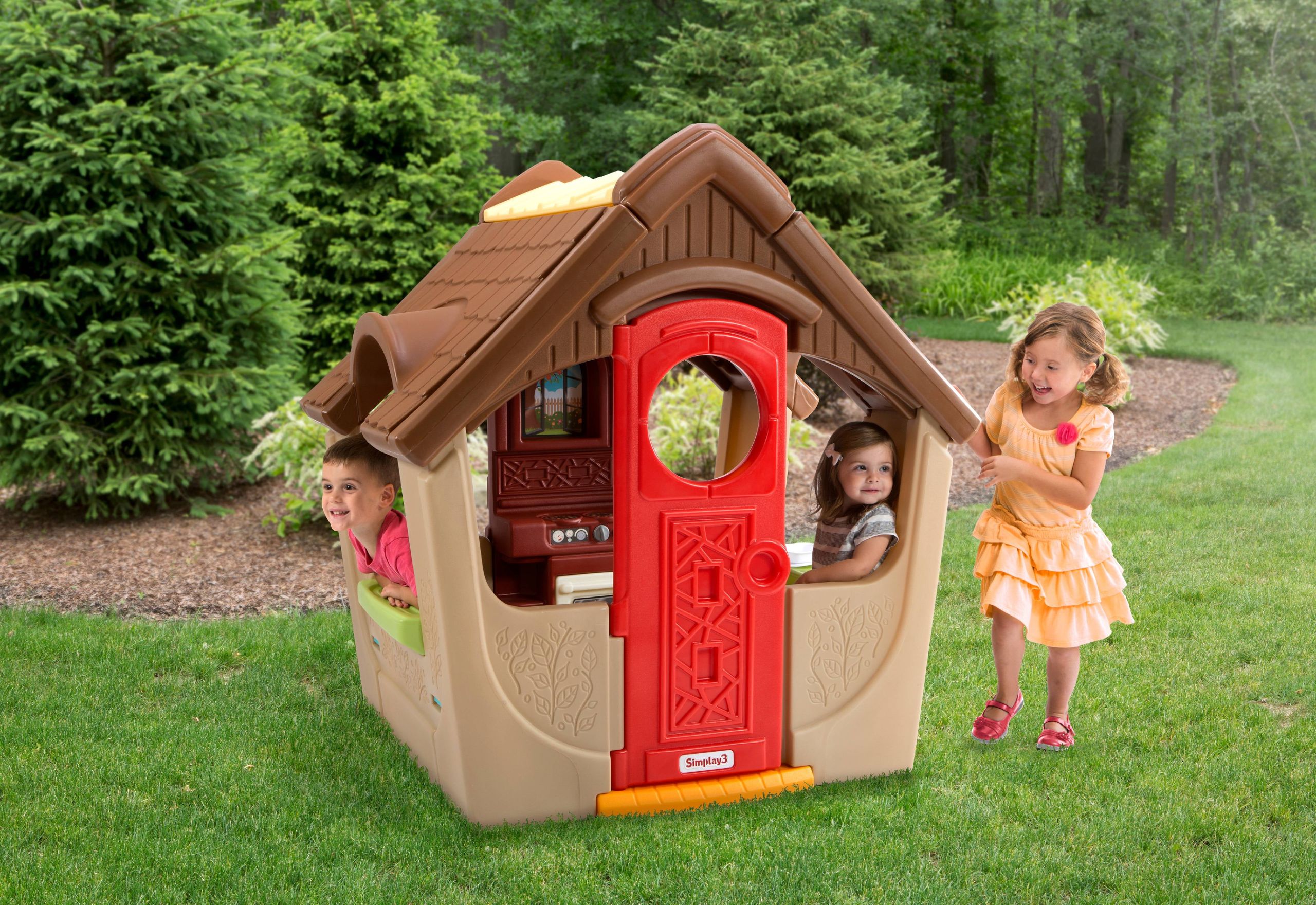
- You are looking for innovative designs that break the traditional “four walls and a roof” mold.
- You need a multi-functional piece of backyard play equipment that combines climbing, sliding, and imaginative play in one unit.
- You value the “Made in the USA” label and want to support a newer, design-focused company.
Prerequisites for success
- You should check recent reviews for feedback, as some designs are newer to the market.
- You must be comfortable with a brand that has less long-term (10+ year) history than Little Tikes or Step2.
- You need to ensure the multi-function design fits the age and abilities of your children.
✅ Strengths
- Innovative multi-function designs (climb + slide + play).
- Rotomolded plastic durability.
- Made in the USA.
- Efficient footprint for smaller backyards.
⚠️ Considerations
- You are looking for the lowest possible price point.
- You prioritize proven long-term resale value, which is still being established for this brand.
- Limited big-box retail availability compared to incumbents.
Part 7: Conclusion & Frequently Asked Questions
After a deep analysis of features, costs, and user experiences, the choice between these playhouse brands is a clear trade-off: you are choosing between the financial and practical ease of plastic (Step2/Little Tikes) and the aesthetic appeal but high total cost of wood (KidKraft).
I cannot declare a single “winner,” as the right choice depends entirely on your family’s priorities, budget, and willingness to invest time. My final verdict is a conditional framework to help you decide:
- Choose Plastic (Step2/Little Tikes/Simplay3) if: You prioritize long-term durability, low maintenance, and a predictable budget. You want a dedicated piece of equipment for outdoor activity in your backyard, and you trust a brand like Step2 to deliver it. This is the practical, financially-sound choice for most families who want a toy designed for years of safe imaginative play.
- Choose Wood (KidKraft) if: Aesthetics are your absolute number one priority, your budget exceeds $500, and you are fully committed to a difficult assembly and the ongoing task of annual maintenance. You are buying a piece of backyard decor that your children can play in, not just a toy.
Ultimately, my mission is to protect you from hidden risks and buyer’s remorse. Before you spend a dime, please perform the three critical verification steps: check CPSC.gov for recalls, read the latest 1-star reviews on retail sites, and carefully measure your backyard space. Arming yourself with that information is the only way to ensure you’re buying a source of joy, not a source of frustration.
Frequently Asked Questions
Q1: Is a wood or plastic playhouse better?
A plastic playhouse is generally better for durability, low maintenance, and overall cost, while a wood playhouse is only better for aesthetics. Choose plastic if you want a set-and-forget toy that requires little more than an occasional cleaning. The rotomolded plastic used by brands like Step2 is incredibly resilient to weather and toddler play.
Choose wood only if you are willing to pay and work significantly more for a natural look, and you accept that it is essentially a piece of outdoor furniture that requires regular upkeep, including annual sealing to prevent rot. If cost is a concern either way, stacking a working coupon code for Little Tikes at checkout can trim a meaningful amount off the ticket price.
Q2: How much does a playhouse really cost?
Expect a true 3-year cost of $130-$160 for a typical plastic playhouse and $400-$600+ for a wooden one. The sticker price for wooden playhouses is deeply misleading. It does not account for mandatory annual sealing supplies (around $20/year) or the very real possibility you might pay for professional help with the complex assembly, which can add another $150-$250 to your total cost.
A plastic playhouse’s cost is largely confined to its initial purchase price, and it often has a higher resale value.
Q3: Is KidKraft’s assembly really that bad?
Yes, user reviews consistently indicate that KidKraft assembly is a major challenge and the single biggest “pain point” for the brand. You should budget 3-5 hours of work for two people.
From my experience with similar products, common complaints include misaligned pre-drilled holes, an overwhelming number of small parts, and instructions that can be difficult to follow. It’s a significant factor that turns a fun purchase into a frustrating project for many families, unlike the sub-90-minute assembly typical for plastic alternatives.
Q4: Will a plastic playhouse leach chemicals or fade in the sun?
Reputable US brands must meet strict CPSC safety standards for chemicals, but fading is a real, documented issue. While fears about plastic leaching are common, brands like Little Tikes and Step2 are required to be BPA and phthalate-free.
The more realistic and visible issue is sun fading. Darker colored plastics, especially reds and blues, are prone to noticeable fading after just one to two years in direct, hot sunlight, although this does not initially impact safety.
Q5: Is the high resale value of plastic playhouses a myth?
No, the high resale value of plastic playhouses is a documented financial benefit. Their durability and portability make them easy to clean and sell on platforms like Facebook Marketplace.
A 2024 analysis showed popular models from Little Tikes and Step2 retaining 25-40% of their retail value after 2-3 years of use. In contrast, heavy, hard-to-move wooden sets are difficult to sell and often have near-zero resale value due to the logistical challenge of transport.
Q6: What are the biggest red flags before buying any playhouse?
From my professional experience, the biggest red flags are failing to check for recent safety recalls, ignoring recent 1-star reviews, and not accounting for final shipping costs. Before you buy, you must do three things.
First, go to the CPSC.gov recall database and search for the specific model. Second, go to a major retailer’s site and read the most recent 1-star reviews to see what current problems users are facing with quality control or assembly. Third, confirm the final delivered price, as shipping for these enormous boxes can be a budget-killer.
Q7: How long does a plastic playhouse last?
A quality rotomolded plastic playhouse from a brand like Step2 or Little Tikes can easily last 5-10 years or more. While cosmetic fading may appear after 2-3 years in direct sun, the structural integrity remains sound for a very long time.
According to material science data, the primary long-term risk is plastic brittleness, which can occur after many years (7+) of harsh, direct UV exposure, but this is typically beyond the product’s primary use window for a single family. Their longevity is a key reason for their strong performance on the second-hand market.
Q8: Should I buy a used playhouse?
Buying a used plastic playhouse can be a great value, but you should generally avoid used wooden playhouses. A used plastic model from a top brand is easy to inspect for cracks, simple to clean, and holds its value well.
However, used wooden playhouses present significant risks; you must inspect them in person for wood rot, structural instability, and missing hardware, which can be hard to source. For any used model, you must check the CPSC.gov website for past safety recalls, as older versions may have had issues that have since been corrected in new products.