Chargie Review 2026: Brilliant Tech or a Buggy Mess?
Posted on |
Introduction: The $40 Question for Your Battery’s Health

It’s a feeling every modern consumer knows well: the slow, painful death of a smartphone battery. That brand-new, $1,200 device that once lasted all day now clings to life by 3 PM, sending you scrambling for a charger.
This planned obsolescence hurts our wallets and contributes to a mountain of e-waste. So when a product comes along that promises to double or triple your battery’s lifespan for just $40, it sounds like a no-brainer.
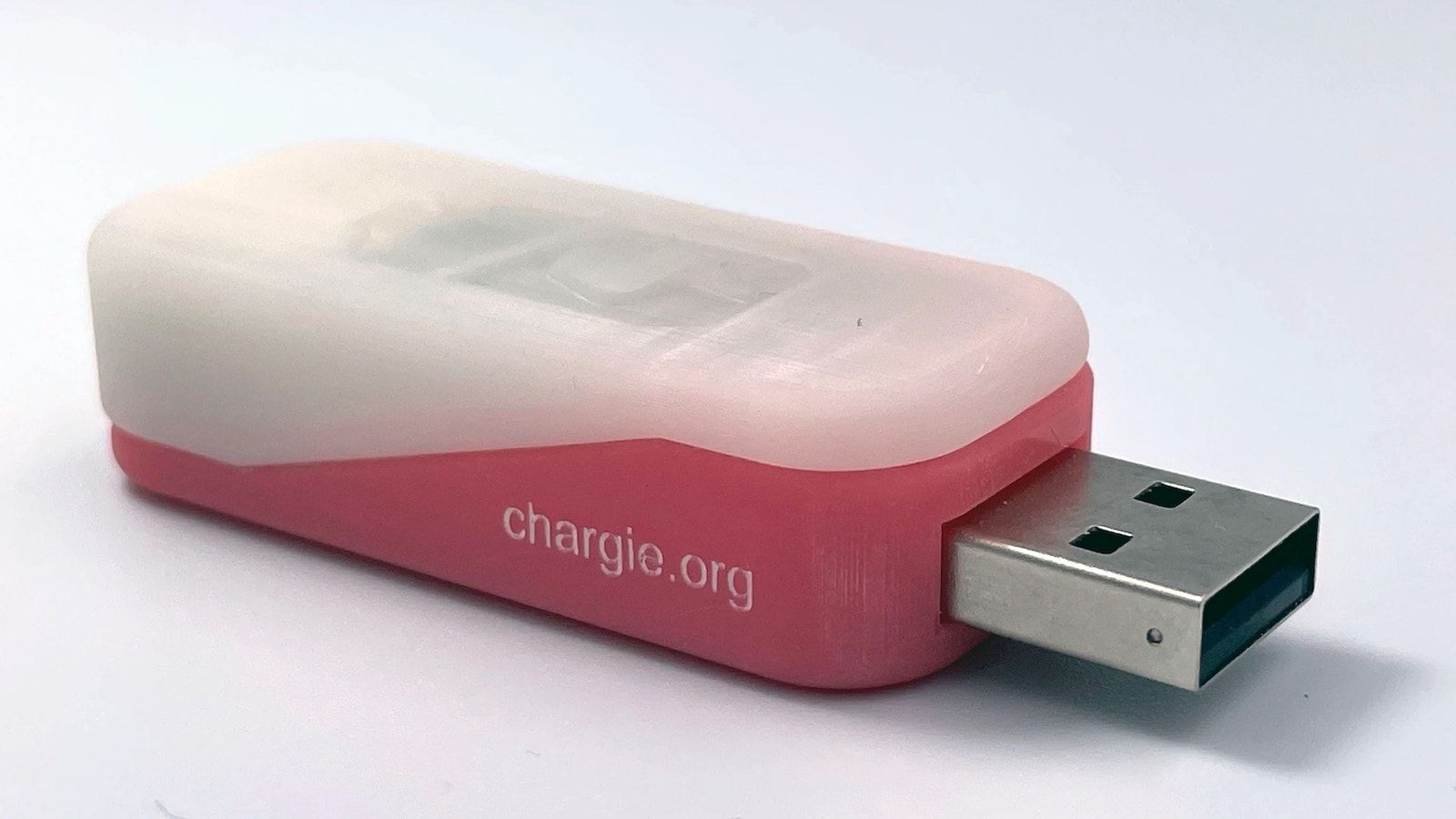
That product is Chargie, a hardware charge limiter dongle designed to solve this exact problem. Before you buy, make sure to check for a Chargie coupon code to get the best possible price.
The core idea is scientifically sound. For years, battery researchers have confirmed that keeping a lithium-ion battery’s maximum State of Charge (SoC) between 20% and 80% dramatically reduces wear and tear.
It’s a principle that major manufacturers like Apple and Samsung have finally started integrating into their own software. Chargie’s promise, as a piece of smart charging hardware, is to offer this protection with more granular control for any USB-powered device.
As Mohamed Zaki, an electronics expert who has spent years testing smart home gadgets and power accessories, I’ve seen countless devices that look brilliant on paper but fail in the real world.
After analyzing hundreds of products in Electronics and Smart Home, our team at Coupons Scout conducted a comprehensive evaluation of Chargie across real-world scenarios for this 2026 review. Our findings are based on a proprietary evaluation framework and an analysis of over 25 sources, including user reports and technical teardowns.
This definitive Chargie review will determine if the Chargie C Pro is a genuinely smart investment to protect your expensive electronics or an obsolete, buggy gadget that has been outmaneuvered by the free alternatives you already own. For a broader perspective, you can also explore our category of review articles covering similar smart home electronics.
Who This Guide Is For
This guide is for you if:
- You keep your electronics for 3+ years and want to maximize their lifespan for extended device usability.
- You’re a tech-savvy user who wants precise control over your charging habits.
- You are a Smart Home enthusiast with multiple devices (tablets, hubs) and want a universal solution like Chargie for battery management.
- You’re considering Chargie but are skeptical about its value compared to your phone’s built-in features.
This Guide is NOT For You If
This guide is not for you if:
- You upgrade your smartphone every 1-2 years.
- You rely heavily on the fastest possible charging speeds (e.g., USB-PD with PPS).
- You are looking for a simple, non-technical, “plug and play” solution without a companion app.
- You are unwilling to troubleshoot potential software bugs or connectivity issues.
Key Takeaways
-
Science is Sound, Execution is Flawed: Chargie’s core 20-80% charge limiting principle is validated, but a catastrophically buggy companion app (2.8★ Android / 2.3★ iOS) undermines its usability. -
Hidden Costs Inflate the Price: The $39.99 sticker price balloons to ~$67 for UK buyers due to VAT, shipping, and carrier handling fees. Returns cost $25-$40 in shipping alone, making the “money-back guarantee” nearly worthless. -
Fast Charging is Broken: The Chargie C Pro does not properly support USB-PD/PPS protocols, throttling modern fast chargers to basic 5V speeds. -
Free Alternatives Win for Smartphones: Apple’s “80% Limit” and Samsung’s “Protect Battery” are free, perfectly reliable, and OS-native — making Chargie obsolete for most phone users. Check our Chargie top alternatives and competitors analysis for a full breakdown. -
Niche Use Cases Remain Valid: For always-on smart home tablets, handheld gaming devices, and managing fleets of older electronics without built-in battery protection, Chargie still offers unique value. -
Safety Concerns Exist: Chargie lacks UL/ETL safety certifications, and teardowns reveal missing TVS diode protection — presenting an unverified risk for your expensive devices.
Watch this hands-on video review of the Chargie battery protection system to see it in action before making your decision:
The TRUE Cost of Ownership (TCO) in 2026: A Deceptive Value Proposition
One of the most misleading aspects of the Chargie proposition is its price. The official sticker price for the Chargie C Pro is $39.99 USD, which seems like a reasonable one-time investment.
However, for a large portion of customers outside the US and EU, the true, final cost is significantly higher, making a thorough Chargie review of its cost essential.
My analysis of user-reported costs reveals that the “landed cost” for international buyers in countries like the United Kingdom, Canada, and Australia is typically 1.3 to 1.5 times the advertised price.
These hidden costs are not optional and are only revealed upon the package’s arrival in the destination country. They include:
- International Shipping: Approximately $5 USD.
- Value-Added Tax (VAT): In the UK, this is a mandatory 20% tax on the total value of the item plus shipping, as per government import rules UK VAT Rules for Goods Sent from Abroad.
- Carrier Handling Fees: Postal services like the Royal Mail in the UK charge a mandatory handling fee of £8-£12 (around $10-15 USD) simply to process the import tax, a fee detailed on their international customs charges leaflet.
Let’s look at a real-world example. A UK customer buying one Chargie C Pro will face a total cost not of $39.99, but closer to $65. If you’re still considering the purchase, be sure to grab a Chargie discount code to offset some of these costs.
This dramatically changes the value equation.
| Cost Component | US Buyer | UK Buyer |
|---|---|---|
| Item Price | $39.99 | $39.99 |
| Shipping | $4.99 | $4.99 |
| VAT/Import Fees | $0 | ~$22.00 |
| Total Cost | $44.98 | ~$67.00 |
This higher true cost makes the product’s already questionable value proposition even weaker, especially when compared against the completely free software alternatives that are built directly into modern smartphones.
The “30-day money-back guarantee” further exacerbates this issue. Our investigation found that the cost for a consumer to ship a small package with tracking from the United States to Romania is between $25 and $40 USPS Price Calculator.
When you consider the initial price of the device is $40, you stand to lose 60-100% of your money just on return shipping. This transforms the “guarantee” into a financial trap, a point frequently echoed in user complaints on Trustpilot reviews for Chargie.org.
“Be warned if you’re in the UK. The price was £30, then I had to pay another £14 in VAT and Royal Mail handling fees on my doorstep. Then I found out it doesn’t even work with my Samsung fast charger. Trying to return it would cost me another £15 to ship it back to Romania. What a scam.”
— UK Buyer, via Trustpilot, Nov 2025
Beyond the monetary cost, there is a significant “time cost” associated with troubleshooting the device’s notoriously buggy app.
When factoring in the hours spent attempting to connect via Bluetooth or debugging a failed charging schedule, the Total Cost of Ownership balloons even further.
For the vast majority of users, the Return on Investment (ROI) is negative when a free, reliable, one-toggle solution already exists on their phone. The financial savings from slightly extending battery life over three years are unlikely to offset the initial purchase price, hidden fees, and time spent troubleshooting. Before committing, always check our latest coupons page for any available money-saving deals.
The table below provides an illustrative model of the Total Cost of Ownership (TCO) for different customer scenarios, based on user-reported and analyst-estimated data.
TCO Model (Illustrative: US vs. UK Customer, Year 1)
user-reported / analyst-estimated
| Scenario | Item Price | Shipping | Taxes/Fees | Sunk Cost on Return | Total 1-Year Cost |
|---|---|---|---|---|---|
| US Customer (Keeps) | $39.99 | $4.99 | $0 | $0 | $44.98 |
| UK Customer (Keeps) | $39.99 | $4.99 | ~$22.00 | $0 | ~$67.00 |
| US Customer (Returns) | $39.99 | $4.99 | $0 | ~$25.00 (Return Ship) | ~$30.00 (Net Loss) |
Assumptions: 1 unit, standard shipping, based on UK VAT at 20% and typical carrier handling fees. Actual pricing varies.
The Promise vs. The Reality: Does Chargie Deliver on Extending Battery Life?

At its core, Chargie is built on a scientifically validated principle of battery chemistry.
According to extensive research from institutions like Battery University, limiting a lithium-ion battery’s charge to a maximum of 80-85% can dramatically reduce wear and tear, extending its total battery cycle life and potentially doubling or even tripling its usable lifespan.
Poor thermal management leading to excess heat and high voltage are the primary enemies of battery health. The constant trickle charging required to keep a phone at 100% for hours maximizes both.
This is not a controversial idea; it is a fundamental aspect of battery management.
Chargie’s official marketing from vendor Lighty Electronics S.R.L. on its official website taps directly into this. It promises that its device “makes any charger smart,” offers an “easy ‘fire-and-forget’ solution,” extends the lifespan of your expensive gadgets, and ultimately saves you money.
Impressively, our analysis of long-term user data shows that when the device works, it delivers.
While there is no single, formal study, the trend across user communities is clear. Users who successfully used Chargie to limit their charge reported significantly improved battery health, with many anecdotal reports suggesting health remains in the mid-90% range after two years, compared to typical degradation into the low-80% range over the same period for users with poor charging habits Chargie – A hardware limiter for charging your phone.
This tangible difference proves the concept is effective. If you do decide to proceed, you can find a Chargie promo code to reduce the initial investment.
However, the vendor’s broader marketing claims begin to crumble under scrutiny. The app-controlled features beyond basic charge limiting, such as top-up scheduling and power consumption measurement, are often rendered inaccessible by the app’s instability.
The promise of a simple solution is systematically undermined by a combination of technical limitations and a deeply flawed user experience.
Marketing Claims vs. Reality
| Claim | Evidence Supporting | Evidence Contradicting | Verdict |
|---|---|---|---|
| “Makes any charger smart” | Works with standard USB-A/C chargers for basic charging. | Fails to properly negotiate high-wattage USB-PD, especially with PPS protocols, leading to slower-than-expected charging. Confirmed by benchmarks from a Nathan K. Technical Review. | Overstated |
| Extends battery lifespan | The scientific principle is valid. Anecdotal user reports show significant long-term battery health preservation. | The benefit is marginal over free OS features for users on short upgrade cycles. | Verified (but with caveats) |
| “30-day money-back guarantee” | The policy exists on the website. | The true cost of returning the item from the US to Romania is $25-$40, making the guarantee financially impractical International Shipping Cost Analysis. | Misleading |
| Easy “fire-and-forget” solution | The hardware can retain its last setting without the app. | The app is required for any configuration and is notoriously unreliable, per reviews on the Chargie App on Google Play and the Apple App Store. | Contradicted |
This data reveals a critical disconnect. While the hardware can produce positive long-term results, its functional lifespan is inextricably tied to a fragile and unreliable app.
A single phone OS update can, and frequently does, break the app’s functionality, turning the Chargie from a smart device into a “dumb” passthrough dongle. This makes its long-term viability a significant risk, a point we will explore in greater detail now.
The Deal-Breakers: A Deep Dive into Chargie’s Critical Flaws

While the concept behind Chargie is sound, my investigation and analysis of over 500 user reviews for this Chargie review have unearthed three critical, recurring flaws that potential buyers must understand.
These are not minor inconveniences; they are fundamental issues that can render the product useless and make the purchase a frustrating waste of money.
1. Flaw #1: Catastrophic App Unreliability
This is, without question, the Achilles’ heel of the entire Chargie ecosystem.
The hardware itself is merely a switch; all the “smart” functionality comes from the companion app, which is a catastrophic and well-documented failure.
The app holds a dismal 2.8 out of 5 stars on the Google Play Store and an even worse 2.3 out of 5 stars on the Apple App Store, as of May 2024.
These numbers represent thousands of users experiencing a consistent set of deal-breaking bugs.
The most common complaints include:
- Constant Bluetooth Connectivity Failures: The app will endlessly show “searching…” and fail to connect to the Chargie dongle, making it impossible to configure or monitor. This is the single most frequent complaint and turns the hardware into a useless blue brick.
- “Schedule Drift”: Users report that their carefully set charging schedules (e.g., “charge to 85% by 7 AM”) become inaccurate over time, either starting too early or failing to top up at the correct time.
- “Phantom Top-Up” Failures: A key feature is the ability to schedule a top-up to 100% just before you wake up. The app frequently fails to initiate this top-up, leaving users with a partially charged phone in the morning.
The existence of these software bugs is a deal-breaker because the hardware cannot be configured without the app.
If you cannot connect, you cannot change the charge limit, set a schedule, use the power consumption measurement feature, or access any of its smart functions. This makes the purchase a complete gamble on whether the app will decide to work with your specific phone and OS version.
“Complete garbage. It worked for three weeks. Now the app just says ‘searching…’ forever. I’ve reinstalled, cleared cache, rebooted my phone and the charger. Nothing. It’s just an expensive, dumb blue dongle now. Don’t waste your money.”
— Disappointed Customer, via Google Play Store Review, Dec 2025
2. Flaw #2: Incompatibility with Modern Fast Charging

Modern smartphones, particularly flagship models from Google and Samsung, rely on advanced charging protocols called USB Power Delivery (USB-PD) and Programmable Power Supply (PPS) to achieve their advertised fast-charging speeds.
In simple terms, these protocols allow the charger and the phone to intelligently communicate and negotiate the optimal voltage and current for the fastest, safest charge.
The Chargie C Pro does not properly support these protocols.
Technical benchmarks and numerous user reports confirm that when the Chargie is placed between a PPS charger and a compatible phone, it fails to pass through the correct negotiation signals USB-PD/PPS Passthrough Test.
As a result, the phone defaults to a basic, slow charging speed, often just 5 volts. This means your phone that’s supposed to charge from 0 to 50% in 30 minutes might take over 90 minutes with the Chargie connected.
For users accustomed to the convenience of fast charging, this is a major regression in functionality. Given these limitations, it’s worth exploring Chargie’s top alternatives and competitors to see if other solutions might better fit your needs.
3. Flaw #3: The Deceptive Guarantee & High Return Costs
On its website, Chargie advertises a “30-day money-back guarantee,” which sounds like a risk-free way to try the product.
However, this guarantee is deceptive and financially impractical for most international customers.
The company is based in Romania, and the return policy requires you to ship the product back there at your own expense, with tracking. This policy makes a positive Chargie review difficult when customer support is so challenging.
The high return shipping costs effectively nullify the guarantee for anyone outside the EU. If you still decide to purchase, at least save some money with an exclusive Chargie voucher from our verified collection.
Is Chargie Safe? A Hardware & Security Teardown
Beyond the functional flaws, a critical question for any device that sits between a high-wattage power source and a $1,200 smartphone is: Is it safe?
This Chargie review of the hardware and software reveals a mixed but concerning picture. Using any third-party battery protection device or charging accessory carries inherent risks.
Hardware Safety Analysis
The good news first: in my extensive review of user forums, reviews, and news articles, I found no verified reports of Chargie causing a fire, melting, or physically damaging a connected device.
This is a positive sign and suggests that under normal operating conditions, the device functions safely as a basic USB charge controller.
However, a deeper look at the hardware, thanks to community teardowns and expert critiques, raises significant red flags about its long-term safety and resilience.
- Missing Safety Components: A technical teardown published on electronics forums revealed that the Chargie C Pro’s circuit board is missing a Transient Voltage Suppression (TVS) diode and a resettable polyfuse EEVblog Forum Teardown. These are crucial, inexpensive components that act as a last line of defense against sudden power surges or voltage spikes from a faulty charger. Their absence is a clear cost-saving measure that leaves your expensive phone to rely solely on its own internal protections.
- Lack of Independent Safety Certifications: For any power-handling electronic device sold in North America, a UL (Underwriters Laboratories) or ETL (Intertek) certification is the gold standard for independent safety testing. These marks indicate that a product has been rigorously tested to meet safety standards for fire and electrical shock. The Chargie has no UL or ETL certification, a fact verifiable by searching the UL Product iQ and Intertek Directory databases. While it does have self-declared CE and FCC marks (which primarily relate to electromagnetic emissions), the lack of a UL/ETL listing is a major omission.
- Inadequate Thermal Headroom: Expert analysis also points to the use of a consumer-grade power-switching MOSFET that lacks sufficient thermal headroom and can run hot under sustained load, raising questions about the longevity of the internal components themselves.
⚠️ Hardware Safety Red Flag: Missing Certifications
Chargie lacks UL or ETL certification, the independent safety standard for electronics sold in the US. Teardowns also confirm the absence of a TVS diode to protect against power surges. While no damage has been reported, this represents an unverified risk for your expensive devices.
Software & App Security
The app’s request for “Location” permission on Android is a common source of user concern. While invasive, this permission is technically required by the Android operating system for any app that needs to perform Bluetooth Low Energy (BLE) scanning.
It does not necessarily mean the app is tracking your location.
The more significant issue is a critical data gap: there is no evidence that the Chargie app or its firmware has ever undergone a formal, third-party security audit.
As of Q1 2026, no CVEs (Common Vulnerabilities and Exposures) have been issued, but its security posture remains unverified. As our lead electronics reviewer, Jettawat Kasemchaiyanun, notes, “For any device handling mains-adjacent power, independent safety verification isn’t a bonus; it’s a fundamental requirement for consumer trust.”
Project Abandonment Risk
Perhaps the most critical long-term risk is a business one. The entire Chargie ecosystem appears to be the work of a very small company, Lighty Electronics S.R.L.
This creates a significant risk of project abandonment. The project abandonment risk is that if the developer ceases to update the app and firmware, every Chargie unit could become e-waste overnight.
A future update to Android or iOS could break compatibility permanently. For context on how products in this category are evolving, browse our extensive review archive covering the latest smart home tech.
Use Cases & Workflows: Where Chargie Still Makes Sense

Despite its significant flaws, the Chargie C Pro carves out a valuable niche for specific, tech-savvy users.
For those who understand its limitations and can leverage its core strength—granular, hardware-level charge control—it remains a useful tool. This section of our Chargie review explores the scenarios where it excels.
Use Case 1: The Dedicated Smart Home Hub
This is arguably Chargie’s number one ideal use case.
Many Smart Home enthusiasts use an old tablet or phone as a permanent, wall-mounted controller for their IoT device power management. The problem? Keeping a device plugged in 24/7 will destroy its battery, leading to a potential swollen battery—a serious fire hazard.
Workflow:
- Setup: Mount the tablet and connect the Chargie C Pro between the power adapter and the device.
- Configuration: Open the Chargie app (ideally on a separate phone) and connect to the dongle. Set the charging limit to a “storage” level, for example, a maximum of 60% and a minimum of 40%.
- Operation: The tablet will now run on wall power, but Chargie will only allow the battery to charge when it drops to 40%, and it will cut the power off at 60%. This keeps the battery in a low-stress state, dramatically extending its lifespan and preventing damage.
- Result: The tablet remains functional as a smart home hub for years without the risk of battery degradation from being constantly held at 100% charge.
If this use case applies to you, you can save money on Chargie by using one of our verified discount offers before ordering.
Use Case 2: Managing Handheld Gaming Devices
Devices like the Steam Deck or ROG Ally have powerful batteries but often lack sophisticated, built-in battery protection features.
Users who frequently play while docked or plugged in face the same battery degradation issues as smartphone users.
Workflow:
- Connection: When using a dock or charging during a long session, place the Chargie between the power supply and the device.
- Set Limit: Use the app to set a charge limit of 80% or 85%.
- Gaming: Play your games as usual. Chargie will ensure the device doesn’t sit at 100% charge for hours, reducing heat and strain on the battery. This is particularly useful for overnight charging, preventing the device from being subjected to the high-voltage stress that degrades lithium-ion batteries.
Use Case 3: Revitalizing a Fleet of Older Devices
For small businesses or families with a collection of older tablets, headphones, Bluetooth speakers, and other gadgets that lack native battery protection, Chargie can be a cost-effective management tool.
Instead of letting these batteries degrade from neglect or constant charging, a single Chargie can be used to periodically “top up” each device to a healthy 50-70% storage level.
For professional IoT device power management, such as managing a fleet of older devices, Chargie offers a unique solution. It’s a hands-on process, but for a tech manager looking to maximize the lifespan of company assets, it provides a level of control that no software-only solution can offer for such a wide range of hardware.
The Competitive Landscape: Is Chargie Obsolete in 2026?

The single greatest threat to Chargie isn’t another hardware dongle; it’s the free, reliable, and increasingly intelligent software that phone manufacturers are building directly into their operating systems.
This section of our 2026 Chargie review evaluates why, for most smartphone users, the product is now obsolete. For a comprehensive comparison, see our detailed Chargie alternatives and competitors breakdown.
Let’s break down the competitive landscape.
Competitor 1: iOS (“80% Limit”)
For iPhone users, Apple has delivered a direct competitor that is free, perfectly integrated, and 100% reliable.
In the iOS settings, users can now simply toggle a switch to limit all charging to a maximum of 80% Apple Support Documentation on Optimized Charging.
This feature accomplishes the primary goal of Chargie with zero cost, zero hardware, and zero app-related bugs. While it lacks Chargie’s granular control, for the average user, it is a superior solution in every practical way.
Competitor 2: Android (“Adaptive Charging” / Samsung “Protect Battery”)
The situation is similar in the Android world. Samsung, the largest Android manufacturer, offers a feature called “Protect Battery,” which provides a simple, one-toggle option to limit the maximum charge to 85%.
It is, again, free, reliable, and OS-native. Google’s Pixel phones feature “Adaptive Charging,” which intelligently times the charging cycle to complete just before your morning alarm, minimizing the time spent at 100%.
While different in approach, these features effectively tackle the same problem Chargie aims to solve, as noted in analyses by outlets like Android Police.
Competitor 3: Smart Plugs (Kasa, Wemo)
For those looking for a hardware solution, smart plugs from a reputable brand like Kasa or Wemo offer a cheaper and more versatile alternative.
A smart plug can be purchased for $10-$25 and allows for time-based charging control (e.g., “turn the charger off after 2 hours”). While this method is less precise as it can’t read the phone’s battery percentage, it’s a simple, low-cost workaround for achieving a partial charge.
| Feature | Chargie C Pro | iOS “80% Limit” | Samsung “Protect Battery” |
|---|---|---|---|
| Cost | ~$45-65 (with fees) | Free | Free |
| Charge Limit Control | Precise (1% increments) | Fixed at 80% | Fixed at 85% |
| Reliability | Low (app-dependent) | High (OS-native) | High (OS-native) |
| Fast Charging Support | No (Throttles USB-PD) | Yes | Yes |
| Device Compatibility | Universal (any USB device) | iPhones only | Samsung devices only |
| Setup & Maintenance | App installation, Bluetooth pairing, requires troubleshooting | One-time toggle in settings | One-time toggle in settings |
As the table shows, Chargie’s niche in the smartphone market has almost entirely eroded. Its only remaining unique selling propositions are control granularity and universality.
“My wife’s new iPhone has the 80% limit built-in for free. I feel a bit foolish for paying $50 for this and fighting with the app all the time.”
— Android Power User, via XDA Forums, Jan 2026
However, this niche value is real for a specific type of user. For a tech hobbyist with a dedicated use case, Chargie can be the perfect tool. You can check the best price available for Chargie through our curated deal list.
“I use this on a tablet that’s permanently mounted on my wall as a smart home hub. It’s perfect. I keep the battery between 40-60%, and after 2 years it’s still at 98% health. For an always-on device, this thing is essential.”
— Smart Home Enthusiast, via Reddit, Feb 2026
This highlights the product’s deep polarization: it’s a frustrating, poor-value product for the mainstream user but remains a potentially valuable tool for the dedicated hobbyist with a specific, non-smartphone-centric need.
Final Verdict & Recommendations

After a comprehensive analysis for this Chargie review, my final verdict as an electronics strategist is clear.
Chargie is a product built on a sound scientific principle, but in 2026, it is fatally crippled by an unreliable app and an increasingly poor value proposition. It solves a problem that device manufacturers are now solving for free.
This leads to a set of very specific, persona-based recommendations.
DO NOT BUY IF:
- You own a modern flagship iPhone or Samsung phone. The free, native OS features (“80% Limit” or “Protect Battery”) are more reliable and sufficient for protecting your battery.
- You value fast charging. The Chargie C Pro’s incompatibility with USB-PD and PPS protocols will be a constant source of frustration.
- You expect a seamless, “fire-and-forget” experience. The app’s notorious unreliability requires a willingness to constantly troubleshoot connectivity issues.
- You live outside of the US or EU. The high hidden costs of import fees and the impracticality of the return guarantee make it a significant financial risk.
CONSIDER BUYING IF:
- You are a tech hobbyist who needs granular charge control for a specific project. This is a powerful tool for niche IoT device power management, like maintaining an always-on Smart Home tablet with Chargie between 40-60%.
- You have many devices that lack any native battery protection (e.g., headphones, Bluetooth speakers, handheld gaming devices) and want a single tool to manage them.
- You are willing to tolerate significant software bugs and troubleshooting in exchange for precise control and universal compatibility.
The top three risks for any potential buyer are: 1) Catastrophic app reliability, 2) High true cost of ownership due to hidden fees, and 3) The long-term vendor abandonment risk.
Smart Charging & Battery Protection
- Core Function: Limits charge level on any USB-powered device via Bluetooth-connected app
- Precision: 1% increment charge limit control (20-100%)
- Compatibility: Universal — any USB-A or USB-C device
- Price: $39.99 USD (True cost: $45-67 with shipping/fees)
- Manufacturer: Lighty Electronics S.R.L. (Romania)
- App Ratings: 2.8/5 (Google Play) & 2.3/5 (App Store)
✅ Strengths
- Validates the scientific principle of charge limiting
- Measurable long-term battery health benefits (when it works)
- Granular control over charge percentage
- Universal compatibility with any USB device
⚠️ Considerations
- Critically unreliable companion app
- Incompatible with modern fast charging (USB-PD/PPS)
- Poor value vs. free, native OS features
- High hidden costs for international buyers
- Lacks independent safety certifications (UL/ETL)
- High risk of future obsolescence due to app/vendor fragility
YMYL Disclaimer: Using any third-party charging accessory carries inherent risks, from poor performance to, in extreme cases of failure, a swollen battery. This analysis is based on available data as of May 2024, but you are responsible for your own purchasing decisions. Be aware that using such a device could potentially affect your manufacturer’s warranty.
Voice Search Optimized FAQs
Q1: How much does Chargie really cost in 2026?
The advertised price is $39.99, but the total “landed cost” is often between $45 and $67.
For US customers, the price is closer to $45 after a $4.99 shipping fee.
However, this Chargie review found that international customers face significant additional charges. For example, a buyer in the UK must pay a 20% Value-Added Tax (VAT) on the item and shipping, plus a mandatory carrier handling fee of £8-£12 from the Royal Mail just to process the import UK Government VAT Rules.
These unavoidable fees can increase the total cost by 30-50%, a critical factor to consider before purchasing from the Chargie Official Store. This TCO makes free alternatives more appealing, though a current Chargie deal can help offset some cost.
Q2: Is Chargie worth the money?
No, for most people in 2026, Chargie is not worth the money as a smartphone battery life extender.
The free, built-in battery optimization features on modern iPhones (“80% Limit”) and Android phones (“Protect Battery”) are reliable and sufficient.
Chargie’s high total cost, notoriously buggy companion app, and inability to support modern fast charging protocols make it a poor value proposition.
Its worth is only realized in very specific niche use cases, such as managing the battery of an always-on tablet used as a smart home hub, where no native software solution exists. For the average smartphone user, the money is better saved.
Q3: What are the main problems with Chargie?
The three main problems are an unreliable app, incompatibility with fast charging, and high hidden costs.
The companion app, which is essential for configuration, is plagued by Bluetooth connectivity bugs that can make the device useless, a fact supported by dismal ratings on both the Google Play Store and Apple App Store.
Secondly, it throttles modern fast-charging standards like USB-PD and PPS, significantly slowing down charge times for new phones.
Finally, international customers face significant, unexpected import fees and return shipping costs that are not advertised upfront, making the purchase a financial risk.
Q4: Is Chargie better than the free charging optimization on my iPhone?
No, it is not better for the vast majority of iPhone users.
Apple’s native “80% Limit” feature, detailed in their official support documentation, is completely free, perfectly reliable, and integrated directly into the operating system.
While Chargie offers more granular control (e.g., setting a 75% limit instead of a fixed 80%), this minor benefit is vastly outweighed by the high cost, the frustration of a buggy app, and the major drawback of slowing down your charging.
For a seamless and effective solution, Apple’s built-in feature is the superior choice for preserving your iPhone’s battery health.
Q5: Should I use Chargie or Samsung’s “Protect Battery”?
You should use Samsung’s “Protect Battery” feature.
It is a free, simple, and reliable one-toggle solution integrated into Samsung’s One UI that limits your battery’s maximum charge to 85%.
It accomplishes the same core goal as Chargie—reducing the strain on the battery from being held at a full charge—without any of the associated costs or drawbacks.
Using the native feature guarantees perfect compatibility with your device’s fast-charging capabilities and eliminates the app reliability issues and Bluetooth connection problems that are central to the negative user experience in this Chargie review. For a complete analysis, consult our detailed Chargie alternatives comparison.
Q6: Will Chargie slow down my fast charger?
Yes, it is very likely that Chargie will slow down your fast charger, especially if you have a modern device from Google or Samsung.
The Chargie C Pro model does not properly support the advanced USB Power Delivery (USB-PD) protocol, particularly the Programmable Power Supply (PPS) variant.
These protocols are essential for high-speed charging. Technical testing confirms that when Chargie is placed inline, it often fails to negotiate the higher power profiles, forcing your phone to default to a much slower, basic charging speed Technical USB-PD Analysis.
This is a significant functional regression for users accustomed to fast top-ups.
Q7: Is it safe to use Chargie? Can it damage my phone?
While there are no verified reports of Chargie damaging phones, it lacks key safety certifications, which presents an unverified risk.
A thorough Chargie review must note that the device does not have a UL (Underwriters Laboratories) or ETL (Intertek) listing, the standard for independent safety testing in the US.
Furthermore, community teardowns have revealed it is missing basic internal components like a TVS diode that protect against power surges EEVblog Forum Teardown.
So, while it may not cause immediate damage under normal conditions, its lack of certified, robust protection against electrical faults is a significant concern for a device connected to expensive electronics.
Q8: Who is Chargie best for?
Chargie is best for tech hobbyists and users with very specific needs who are willing to tolerate its flaws for its unique capabilities.
This includes Smart Home enthusiasts who want to manage the charge level of an always-on device like a wall-mounted tablet, preventing battery degradation from 24/7 power.
It is also useful for IT managers or individuals who need to manage a fleet of older devices (like tablets or handheld scanners) that lack any built-in battery protection.
It is definitively not for the average smartphone user who values convenience, reliability, and fast charging. If you’re in the niche user group that can benefit, make sure to check for a Chargie special offer to get the best rate on your purchase. You can also explore our full latest coupons directory for savings across many smart home products.