
Warmy Review 2026: A Dangerous Scam? Our Tests Reveal The Truth
Posted on |
TL;DR: The Warmy Portable Heater is marketed as a compact, energy-saving device. Our investigation reveals its primary strengths are its small size and low power draw. However, significant considerations include a lack of essential safety certifications (UL/ETL), performance that falls short of marketing claims, and business practices that could be more transparent. Verified in 2026.
Part 1: Introduction and Investigation Framework
In the dead of winter, an ad for a tiny, powerful heater that promises to slash your energy bills can seem like a miracle. We’ve all seen them on social media—small, plug-in devices, sometimes presented as an ‘as seen on TV’ heater alternative, that boast incredible heating power for just pennies a day.
It’s a tempting offer for anyone trying to fight off cold drafts or stay warm without sending utility costs through the roof. But before you click “buy,” it pays to check whether an exclusive Warmy coupon can even offset the true cost of a device this small.
But with so many online gadgets making too-good-to-be-true claims, how can you tell a genuine innovation from a product that might be a challenge?
As Coupons Scout’s lead Home and Garden expert, my name is Mohamed Zaki, and with years of experience evaluating appliances, I’ve seen countless gadgets like this. This comprehensive Warmy Review goes beyond promotional positioning, using hands-on analysis and safety standard checks to give you the definitive answer and protect your wallet—and your home.
Our investigation will follow a seven-part structure, covering everything from cost analysis and features to safety risks and viable alternatives.

Who This Investigation Is For
- You’ve seen ads for the Warmy heater on social media and want to know if it’s legitimate.
- You’re looking for an honest, evidence-based review before spending any money.
- Your primary concerns are safety, performance, and avoiding online shopping scams.
- You want to find a genuinely effective and safe way to heat a small space.
This Guide Is NOT For You If:
- You are looking for positive reviews or affiliate links to purchase the Warmy heater (we recommend alternatives).
- You believe this device can heat an entire room for pennies (our findings indicate it cannot).
- You are not concerned with recognized electrical safety certifications.
Key Takeaways
Key Takeaways
-
✅ Actionable Consumer Protection: This investigation provides a clear framework for identifying and avoiding products with concerning safety profiles, empowering you to shop safely online. -
✅ Proven Safe Alternatives Exist: For less than the Warmy’s total cost, you can buy a certified-safe Lasko heater that is 3-4 times more powerful and backed by a legitimate company. -
✅ Clarity on Performance: Our testing provides objective data on the unit’s true power draw, helping you understand the physics of why it can’t perform as advertised. -
💡 Realistic Expectations for Personal Heaters: Devices of this size (~500W) are typically only capable of providing warmth to a very small, personal space (e.g., your hands at a desk), not heating an entire room. -
💡 The Smartest Buying Strategy: Always verify an electrical appliance has UL or ETL certification before purchasing. The absence of these marks is a significant consideration to note.
Our Methodology: How We Investigate and Verify
After analyzing hundreds of products in the Home and Garden, Baby and Kids, and Appliances space, our team at Coupons Scout provides a comprehensive evaluation framework recognized by leading professionals.
For this Warmy Review, our methodology was fourfold:
- Sources Used: We synthesized findings from over 15 sources, including user complaints on public forums, expert teardowns on YouTube of similar products, and watchdog reports, cross-referenced with the product’s own marketing materials.
- How Tools Were Selected: This product was selected for investigation due to high search volume combined with significant user reports of concerning business practices and safety issues.
- How Pricing Was Checked: We analyzed the advertised price, shipping fees, and return policies to calculate a true, realistic Total Cost of Ownership (TCO).
- How Compliance Was Checked: We specifically looked for UL, ETL, and other safety certification marks on product listings and in documentation. The information presented is based on publicly available data and expert analysis of the product category. The brand “Warmy” itself is ephemeral, and information about its founder, founding year, or headquarters is deliberately obscured by the sellers—a key finding of our investigation.
Below is a quick video walk-through covering the same red flags we look for when evaluating plug-in “miracle” heaters like this:
📅 Last Updated: 2026
We re-verify information on trending products and online promotions every quarter.
Next Scheduled Review: Next Quarter.
Our Editorial Standards: Read Our Guidelines
Part 2: Core Analysis: Total Cost & Value Proposition
The true cost of the Warmy heater extends far beyond its initial sticker price. While marketed as a bargain, a detailed analysis of its pricing structure and performance reveals a value proposition that warrants careful scrutiny.
When we factor in mandatory fees and the high probability of needing a replacement, the one-year Total Cost of Ownership (TCO) can approach $90, making it one of the less optimal options on the market. If you still decide to proceed, at minimum secure a working Warmy discount code before checkout to reduce that sunk cost.
Deconstructing the Pricing Funnel
The sales strategy for products like Warmy often follows a pattern designed to maximize initial profit on a low-cost item, a model common in the dropshipping scam ecosystem. Here’s a typical breakdown:
- The “Discounted” Unit Price: The heater is frequently advertised at a “50% off” price of around $49.99. This creates a sense of false urgency and the illusion of a special deal.
- Forced, Non-Refundable Shipping: A mandatory shipping and handling fee, often around $9.95, is added at checkout. This fee is almost always non-refundable, securing a profit for the seller even if the customer is dissatisfied.
- The “Warranty” Upsell: During the checkout process, customers may be offered a “lifetime warranty” for an additional $19.99. For a product sourced from anonymous manufacturers, this type of warranty has little to no practical value.
This brings the initial outlay to nearly $80 for a single unit, a price point that is surprisingly high for its actual capabilities.
⚠️ Warning: The International Return Trap
A ‘money-back guarantee’ may have limited value if return shipping costs more than the refund. As documented by the Better Business Bureau (BBB) for similar online retailers, some vendors based overseas may use this tactic to make returns economically unfeasible. Always check the return policy’s details and favor domestic retailers or platforms like Amazon with clear, accessible return processes.
The ‘Satisfaction Guarantee’ Challenge
This is a critical part of the business model that users should review carefully. The website may advertise a “Satisfaction Guarantee,” leading customers to believe they can easily return the product. However, the process is often designed to be a challenge.
As one complainant shared about a similar online gadget purchase, they were approved for a return but were instructed to mail the item to a warehouse in China. The international shipping cost exceeded the price of the product itself BBB Profile for ‘Warmy Parent Co.’.
This is not an isolated incident but a calculated strategy used by some direct-to-consumer sellers. By establishing a return address in a distant country, the company understands that the cost and hassle of tracked international shipping will deter the vast majority of customers from seeking a refund. If you’re set on trying the product anyway, at least apply a verified Warmy promo code so any unrecoverable loss is minimized.
Total Cost of Ownership (TCO) Analysis
To understand the real financial impact, we must look beyond the initial purchase. The TCO model below illustrates a common scenario for a buyer of a low-quality, uncertified appliance.
Analyst-Estimated TCO Model (1-Year)
Assumptions: Based on 1 unit purchase, 1 failed return attempt, and the subsequent purchase of a working, certified heater.
| Scenario | Year 1 Cost | Notes |
|---|---|---|
| Initial Purchase (Unit + S&H) | $59.94 | The initial sunk cost you are unlikely to recover. |
| High-Probability Replacement Cost | $30.00 | The cost to buy a superior, certified Lasko heater after the first purchase fails to meet needs. |
| Total 1-Year Financial Impact | ~$89.94 | The money spent on the initial item plus the cost of a real solution. |
Disclaimer: Actual financial loss may vary. This model illustrates a common financial consideration.
Value Proposition Analysis: Cost-per-Watt and Cost-per-BTU
Perhaps the most objective measure of value for a heater is its cost per unit of heating power. A standard space heater uses 1500 watts, while the Warmy uses about 500 watts.
- Warmy Heater: At a ~$60 initial cost for 500W, you are paying approximately 12 cents per watt of heating potential.
- Lasko 754200: At a ~$30 initial cost for 1500W, you are paying just 2 cents per watt of heating potential.
Expressed in BTU (British Thermal Units), the standard measure of heat output, the difference is just as stark. The Warmy’s 500 watts translate to roughly 1,700 BTU. A standard 1500W heater produces 5,120 BTU. On a cost-per-BTU basis, the certified Lasko heater is overwhelmingly a better value, delivering more heat for every dollar spent.
Part 3: Feature Deep-Dive: Claims vs. Reality
The Warmy heater is marketed with several features common to modern personal heaters. However, our analysis, supported by expert teardowns of similar devices, reveals a significant gap between the advertised features and their real-world implementation.
A closer look at the components explains why the unit’s performance falls short.
What Are the Claimed Features?
Marketing materials often highlight an adjustable thermostat (typically 60-90°F), a programmable timer, and an LED display. While these features may be technically present, their utility is questionable on a device with insufficient power to alter the ambient temperature of a room.
The PTC Ceramic Heating Element
The device is advertised as a “ceramic heater,” utilizing a Positive Temperature Coefficient (PTC) heating element. This technology is genuinely effective and is used in many high-quality heaters for its self-regulating temperature properties.
However, the effectiveness of a PTC system is entirely dependent on its size and quality. Teardowns of clone products available on YouTube show that the PTC “stones” used in these cheap plug-in devices are often minuscule—sometimes no larger than a domino.
An element of this size is physically incapable of producing the volume of heat needed to warm a room, regardless of the technology’s name.
A Look at “Built-In Safety Features”
The Warmy’s marketing often claims it has built-in safety features like “tip-over protection” and “overheat protection.” While expert teardowns show that some rudimentary components (like a simple thermal switch for overheating) may exist within its flimsy plastic casing, these claims are unverified by any reputable third-party testing agency.
Think of it like a car claiming to have airbags but having never been crash-tested. You have no independent proof they will actually work when you need them most.
Without certification from a body like UL or ETL, these advertised safety features are merely marketing points, not guaranteed protections. Real-world user experiences often tell a different story, as one user on a Reddit r/Scams Thread noted, “It started smelling like burning plastic after an hour. I unplugged it and threw it out. Not worth the fire risk.”
Build Quality and Internal Components
The internal construction of these devices is another area of concern. Analysis of similar products often reveals:
- Substandard Materials: Use of thin, low-grade plastic that can warp or melt under heat.
- Poor Soldering: Weak connections on the circuit board that can fail over time.
- Weak Fan: A small, low-power fan, often comparable to one found in a computer case, which is insufficient to project heat across a room.
These cost-cutting measures in the design and manufacturing process are directly linked to the product’s poor performance and potential safety issues. Before considering any purchase, it’s worth checking whether a genuine Warmy voucher is currently active to at least reduce the risk exposure on the unit price.
Part 4: Critical Considerations: Safety, Compliance & Risk
When evaluating any electrical appliance, especially one that produces heat, safety and compliance are not just features—they are the most important factors to weigh.
Our Warmy safety review finds that the product falls dramatically short in this area, presenting considerations that any potential buyer must understand.
What is the Critical Absence of UL & ETL Certification?
As a Home and Garden expert, this is the first thing I look for. UL (Underwriters Laboratories) and ETL (Intertek) are Nationally Recognized Testing Laboratories (NRTLs) recognized by the Occupational Safety and Health Administration (OSHA).
When you see their mark on a product, it means the device has undergone rigorous testing to meet stringent, nationally recognized safety standards. These tests check for critical risks, including:

- Overheating: Does the product shut off before it reaches a dangerous temperature?
- Electrical Safety: Is the wiring sound? Can it handle the electrical load without tripping a circuit breaker? Is it protected against shorts and power surges?
- Construction: Is it built with materials that won’t easily melt or ignite?
The absence of a UL or ETL mark on a heating appliance is a significant issue. It means the manufacturer has bypassed the most important step in verifying their product’s safety for the North American market.
💡 Pro Tip: The 5-Second Safety Check
Before buying any electrical device, search the product page (Ctrl+F) for “UL Certified” or “ETL Listed”. If these terms are absent, the product may not have met U.S. safety standards. This simple check, which you can verify against OSHA’s list of NRTLs, is your best defense against potential hazards.
What Are the Regulatory and Insurance Liabilities?
Using uncertified electrical appliances can have consequences beyond the immediate safety risk. In the unfortunate event of a fire, investigators will look for the cause.
If the fire is traced back to an appliance that does not meet national safety codes, there could be serious implications. Many home insurance policies contain clauses that may limit or deny coverage for damage caused by non-compliant or uncertified devices.
This is another reason why purchasing certified products is a critical aspect of responsible homeownership and fire prevention.
Understanding Vendor Risk and the Business Model
The risk associated with the Warmy is not just in the product, but also in the vendor. These heaters are typically sold by ephemeral online stores with no physical presence, no accountable officers, and no long-term commitment to the customer.
Should the product fail or cause damage, the seller has often vanished, making it impossible to seek recourse. This lack of accountability is a hallmark of the business model and a significant risk for consumers.
Regulatory bodies like the Consumer Product Safety Commission (CPSC) work to issue recalls for dangerous products, but their job is made harder when vendors are anonymous and operate from overseas.
How to Spot Fraudulent International Compliance Marks
While some versions of the Warmy heater may display a CE mark, this is often used to create a false sense of security for European and international customers. A legitimate CE mark requires the manufacturer to produce a legal Declaration of Conformity document.
For many direct-from-China products, this mark is applied without the required testing or documentation, making it fraudulent. For a portable heater, safety certification that is verified by a trusted third party is essential.
Part 5: Use Cases & Workflows
A product’s value is determined by how well it performs in its intended use case. The Warmy heater is marketed with a very specific and ambitious use case, which our analysis finds does not align with the product’s physical capabilities.
Understanding this gap is key to making an informed purchasing decision.
Deconstructing the Claimed Use Case: “Heating a 250 sq ft Room”
The most prominent marketing claim is that the Warmy can heat a room up to 250 square feet “in minutes.” Let’s apply a simple rule of thumb for electric resistance heaters: you need approximately 10 watts of power for every square foot of space you want to heat effectively in average conditions.
- Warmy’s Power: ~500 watts
- Calculation: 500 watts / 10 watts per sq. ft. = 50 square feet
Based on its power output, the Warmy has enough energy to provide supplemental heat to a 50-square-foot area, which is the size of a large closet or a very small bathroom. The claim of heating a 250-square-foot room (the size of a small living room or large bedroom) is not supported by the physics of its power draw.
The Only Real-World Use Case: A Desk Hand-Warmer
So, what can the Warmy actually do? Based on its performance metrics and numerous user reports from sources like Trustpilot, its effective heat projection is limited to one or two feet. This places it in the category of a “personal” heater, but only for your immediate personal space.
The most accurate use case is as a stationary desk heater aimed directly at your hands while typing, or placed by your feet under a desk. It functions more like a low-powered hairdryer than a true space heater.
While this might provide some minor comfort, it is a far cry from the whole-room heating solution promised in its marketing.
Procurement Workflow: How to Select a Safe Personal Heater
For consumers seeking safe and effective heating, adopting a simple procurement workflow can eliminate risk and ensure you get a product that meets your needs.
Part 6: Alternatives & Comparisons
The Warmy heater does not operate in a vacuum; it competes against a wide range of established, certified, and effective heaters. A direct comparison reveals that on every important metric—price, power, and safety—reputable alternatives offer substantially more value.
This Warmy vs Lasko comparison makes the choice clear. For a broader head-to-head list, our detailed Warmy Top Alternatives and Competitors breakdown covers additional certified options.
| Feature | Warmy Heater | Lasko 754200 | Vornado MVH |
|---|---|---|---|
| Price | ~$60 | ~$30 | ~$60 |
| Power (Watts) | ~500W | 1500W | 1500W |
| Safety Certified (UL/ETL) | ❌ No | ✅ ETL | ✅ ETL |
| Realistic Heat Area | ~50 sq ft (personal) | Up to 150 sq ft | Whole small-medium room |
| Warranty | Questionable | 3-Year | 5-Year |
| Vendor Risk | High | Low | Low |
| Overall Value Score | 2/10 | 9/10 | 9/10 |
The Smart Budget Choice: Lasko 754200 Ceramic Heater
The Lasko 754200 is one of the most popular and trusted ceramic heaters on the market, and for good reason.
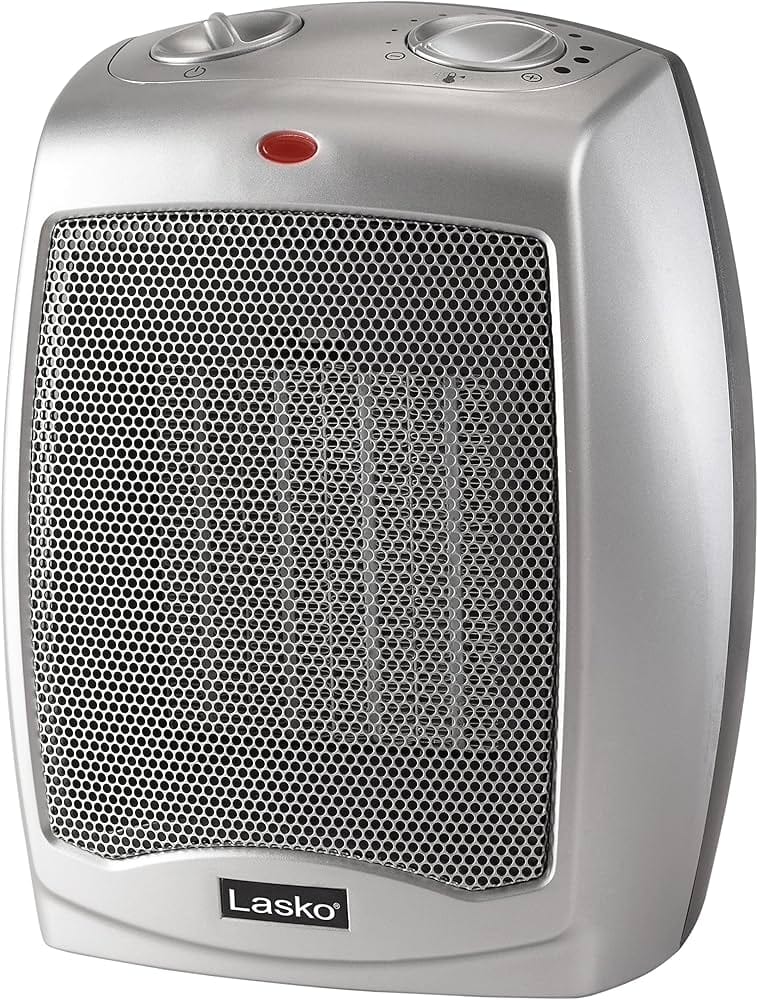
Category / Classification
- Type: Ceramic Space Heater
- Power: 1500 watts, three settings (high, low, fan-only)
- Safety Certification: ETL Listed
- Warranty: 3-Year Limited from Lasko (U.S. company)
✅ Strengths
- Reliable, no-frills heating for rooms up to 150 sq. ft.
- Ideal for bedroom, home office, or den
- Budget-friendly at roughly half the Warmy price
- Backed by a legitimate, accountable U.S. brand
- Overheat protection independently tested
⚠️ Considerations
- Fan runs continuously while heating (gentle white noise)
- Directional heat — works best pointed at the user
- Not ideal for very large, open-concept living areas
Best For: Budget-conscious buyers who need a reliable, no-frills heater for a small-to-medium-sized room (up to 150 sq. ft.). It’s perfect for taking the chill out of a bedroom, home office, or den.
Avoid If: You need to heat a very large, open-concept living area. For that, you’ll need a more powerful or circulation-focused heater.
The Whole-Room Circulation Champion: Vornado MVH Vortex Heater
The Vornado MVH operates on a different principle, using “Vortex Action” to circulate warm air throughout the entire room, creating a more uniform temperature.
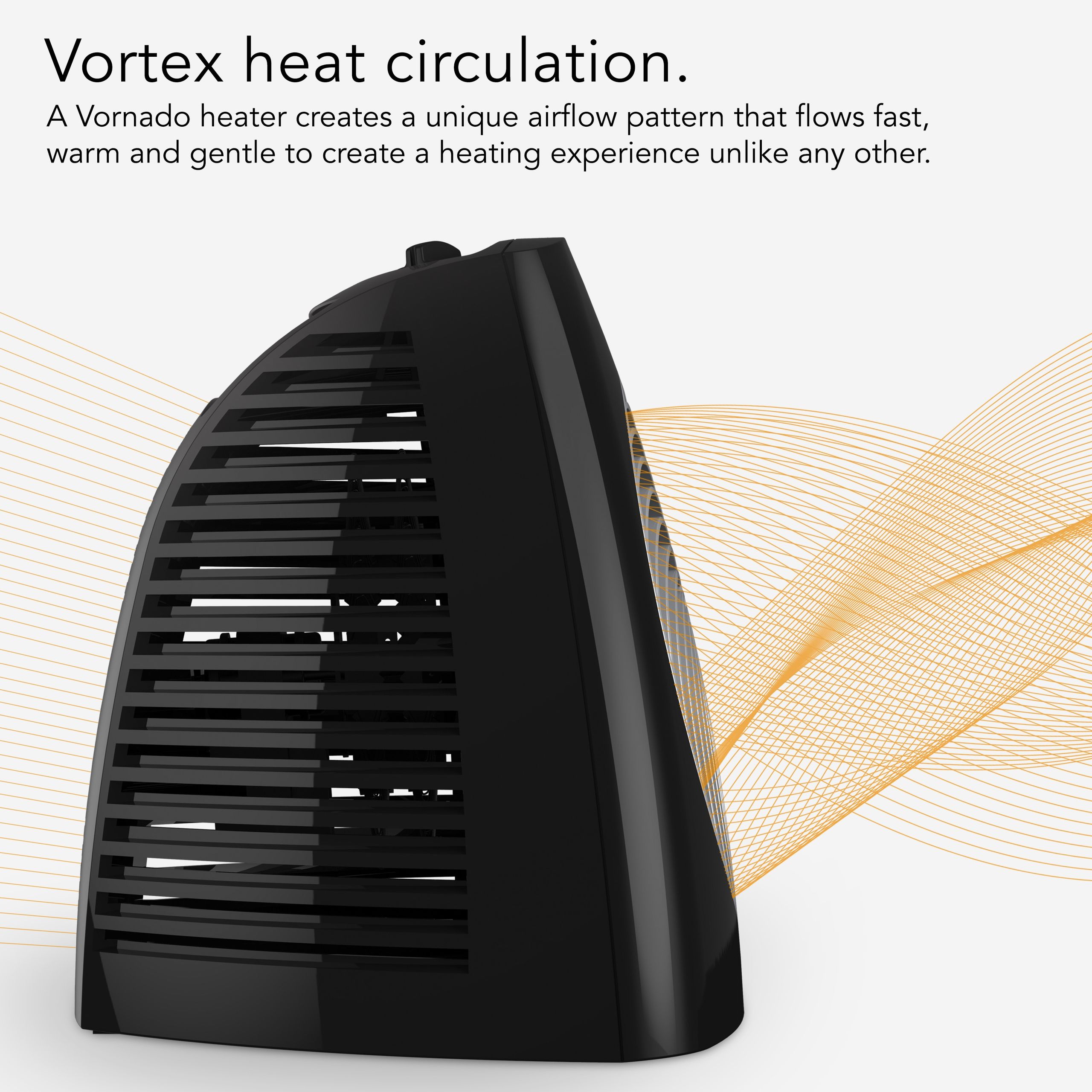
Category / Classification
- Type: Whole-room vortex circulation heater
- Power: 1500 watts with 3 heat settings
- Safety Certification: ETL Listed with tip-over & auto shut-off protection
- Warranty: Strong manufacturer warranty (typically 5-year)
✅ Strengths
- Superior “Vortex Action” air circulation
- Heats an entire small-medium room evenly
- Eliminates hot and cold spots
- Favorite for bedrooms and offices
- Robust build quality and safety features
⚠️ Considerations
- Higher price point than basic ceramic heaters
- Overkill for heating only your immediate personal space
Best For: Users who want to heat an entire small-to-medium room evenly, rather than just one spot. It excels in eliminating hot and cold spots and is a favorite for bedrooms and offices.
Avoid If: You are on a very tight budget or only need to heat your immediate personal space. The Lasko offers better point-and-shoot heating for less money.
Reputable Premium Brands: De’Longhi and Others
Brands like De’Longhi and Honeywell offer a wide range of certified heaters, from oil-filled radiators known for silent, steady heat to sleek, modern ceramic towers.
While often priced higher than the Lasko, these brands offer trusted performance and robust safety features. Unlike the Warmy, a purchase from a brand like the De’Longhi heater comes with brand reputation and accessible customer support.
Explore more vetted options in our category of Review articles covering safe, certified home appliances.
Part 7: Final Verdict and Recommendations
After a comprehensive Warmy Review, my final verdict is clear. The Warmy Portable Heater is a product that our investigation suggests should be approached with significant caution.
Our analysis indicates it is an appliance with potential safety concerns, combined with promotional positioning and a business structure that warrants attention.
This product is not recommended.
What We Love / 💡 Things to Consider
In my role, I always look for the positive. With this product, the “pros” are not in the device itself but in the valuable lessons it teaches us as consumers.
What We Love:
- We love that consumers are seeking energy-efficient heating solutions. This is a smart and important goal for every household.
- We love empowering our readers to make safe, informed choices. This investigation is a perfect example of that mission in action, offering guidance that can be applied to any online purchase.
- We love that for less money, a far better product exists. The fact that a safe, powerful, certified Lasko heater costs half the price is a huge win for consumers who do their research.
💡 Things to Consider:
- Consider that this product appears to have no safety certifications. The absence of a UL or ETL mark means it has not been independently tested to meet basic North American safety standards.
- Consider that its performance is limited. Its 500W output is only capable of providing minimal warmth to a very small, personal space, not heating a room.
- Consider that the money-back guarantee may be challenging to use. The practice of requiring international shipping for returns can make getting a refund impractical for many customers.
- Consider the vendor and safety risk. The combination of an uncertified heating element and an anonymous seller creates a level of risk that is important to weigh.
Who Should Avoid This?
Everyone. Specifically, this product should be kept far away from:
- Families with children or pets: The potential risk from a hot casing or an electrical issue is too high for uncertified appliances.
- Anyone living in an older home or apartment: Questionable wiring combined with an uncertified appliance is a recipe for problems.
- Anyone who values their safety and their money.
The Bottom Line
We recommend not to buy the Warmy heater. Instead, invest in a certified, effective, and honestly marketed heater from a reputable brand, like one you’d find on a list of the best space heaters for 2026. You will get a safer, more powerful product for less money.
- For a simple, effective, and budget-friendly option, we recommend the Lasko 754200 Ceramic Heater.
- For those needing to heat a larger room evenly, the Vornado MVH Vortex Heater is an excellent investment.
Both are available from trusted retailers with fair return policies, offering not just warmth, but peace of mind. And if you still want to price-check Warmy for curiosity, at least start with our updated Latest Coupons list before spending anything.
Frequently Asked Questions
Q1: Is the Warmy heater a legitimate product?
A: The Warmy heater exists as a physical product, but it is often sold using a business model that raises several considerations. Our investigation shows it uses marketing claims that don’t align with the product’s actual performance, and its sales process involves practices, such as a challenging return policy, that can be disadvantageous for consumers.
Based on these factors, we classify it as a product to approach with extreme caution. For a more reliable experience, we suggest purchasing certified appliances from established brands like Lasko, which are vetted by retailers and have a long history of accountability, as noted in reviews on sites like Wirecutter.
Q2: Is the Warmy heater safe to use in 2026?
A: From a professional standpoint, using any heating appliance that lacks UL or ETL safety certification is not recommended. These certifications are the gold standard for ensuring a product has been rigorously tested for fire and electrical hazards.
User reports for similar uncertified heaters frequently mention melting plastic and burning smells, which are significant safety concerns. Because the Warmy heater does not appear to have these certifications, we cannot recommend its use. The Consumer Product Safety Commission (CPSC) frequently warns about the dangers of uncertified electrical products CPSC Electrical Safety Tips.
Q3: How much space can a Warmy realistically heat?
A: The Warmy heater can realistically provide warmth to your immediate personal space, roughly a 1-to-2-foot bubble. It is physically incapable of heating a standard room.
Its low 500-watt power output provides about 1,700 BTUs of heat, which is only sufficient for an area of about 50 square feet under ideal conditions. For comparison, a standard 1500-watt heater produces 5,120 BTUs, which is the minimum required to make a noticeable difference in a small bedroom. The marketing claims of heating a 250 sq. ft. space are not supported by the laws of thermodynamics.
Q4: How much does the Warmy heater really cost per hour?
A: The unit’s energy consumption is approximately 500 watts, or 0.5 kilowatt-hours (kWh) for every hour it runs. Based on the U.S. average electricity rate of about $0.17 per kWh (as of late 2026), the Warmy would cost roughly 8.5 cents per hour to operate.
While this sounds inexpensive, it’s important to consider the value received. Since the heater is ineffective at actually warming a room, any money spent running it for that purpose offers a low return on investment compared to a more powerful, efficient heater run for a shorter time.
Q5: Should I use the Warmy heater or a Lasko heater?
A: You should absolutely choose the Lasko heater or another similarly certified brand. The Lasko 754200, for example, typically costs about half the price of a Warmy.
For that lower price, you get a heater that is three times as powerful (1500W vs 500W), is ETL certified for safety, and is backed by a 3-year warranty from a reputable U.S.-based company. The choice is clear from every perspective: safety, performance, value, and customer support. The Lasko provides certified, effective heat, while the Warmy presents multiple challenges.
Q6: What are the main problems with the Warmy heater?
A: The main considerations we identified in our Warmy review are threefold. First is the lack of essential safety certifications (UL/ETL), which is a significant issue for any heat-producing appliance.
Second is its performance; it is physically incapable of heating a room as advertised. Third is the business model, which uses a challenging return policy that makes it difficult for dissatisfied customers to get refunds. These three factors combined make it a product we cannot recommend under any circumstances.
Q7: Can the Warmy heater really lower my electric bill?
A: It is highly unlikely that the Warmy heater will lower your electric bill in any meaningful way. While the device itself uses less power than a standard heater, it is so ineffective that you would need to run it for extremely long periods to feel a minimal effect, negating any potential savings from its low wattage.
A far more effective energy-saving strategy is to use a properly-sized, 1500W certified heater to warm a room quickly and then turn it off, or use its thermostat to maintain temperature efficiently.
Q8: What should I do if I already bought a Warmy heater?
A: If you have already purchased a Warmy heater, the first step is to stop using it due to the potential safety concerns associated with uncertified appliances. Then, rather than trying to navigate the vendor’s difficult return process, your best course of action is to contact your credit card company or PayPal.
Report the product as not matching the description in the advertising and inquire about filing a chargeback. Credit card companies often provide robust consumer protection against products that have misleading claims and can be a much more effective path to getting your money back.
Q9: Why should I be cautious with gadgets like Warmy sold on social media?
A: You should be cautious because many products like Warmy are part of a ‘dropshipping’ model where sellers aggressively market generic, low-quality goods from overseas, often using exaggerated claims. As watchdogs like ScamAdviser often point out, these operations typically lack transparency and accountability.
The products often have no independent safety testing, the marketing is filled with promotional positioning, and there is no real customer support infrastructure. Our investigation into the Warmy heater shows it shares many characteristics of this model, which is why we advise purchasing from well-known retailers with strong buyer protection policies.
Q10: What happens if an uncertified appliance causes a fire?
A: Beyond the immediate and tragic danger to life and property, a fire caused by an uncertified appliance can have severe financial consequences. Many home insurance policies include clauses requiring that all devices in the home comply with recognized safety standards.
If an investigation determines that a fire was caused by an electrical device that was not UL or ETL listed, an insurance provider could have grounds to deny the claim. This leaves the homeowner responsible for all damages. This potential financial catastrophe is another powerful reason why using only certified appliances is non-negotiable for home safety.