
Greatfrontend Review [2026]: Is It Worth $399 for FAANG Interviews?
Posted on |
TL;DR: Greatfrontend is a specialized interview prep platform for frontend engineers, offering high-quality, realistic React UI and system design questions. Our Greatfrontend platform review finds its key strength is its focus on practical tasks missing from LeetCode. Important considerations include its high one-time cost and the need for a supplemental tool for algorithms. Best for experienced engineers targeting FAANG-style roles. Verified October [2024].
Introduction: The New Frontend Interview Challenge
The game has changed. If you’re a frontend engineer aiming for a top-tier tech company like Meta or Google, you’ve realized that grinding LeetCode algorithms isn’t enough anymore.
Modern technical interviews have evolved, demanding practical, on-the-spot demonstrations of your ability to build complex UI components and articulate sound frontend system architecture.
This is a massive challenge and a skills gap most prep platforms ignore, often leading to inefficient study plans and interview anxiety.

For years, engineers have patched together study plans from blog posts, YouTube tutorials, and the few outdated frontend questions on LeetCode. It’s a frustrating process that can contribute to developer burnout before you even land an interview.
This is the exact problem that Greatfrontend—a $399 “lifetime access” platform—claims to solve. But is it a true solution or just another expensive, overhyped tool? You can also explore current Greatfrontend coupon code options to reduce that upfront investment before committing.
As Mohamed Zaki, a software professional and lead tech reviewer here at Coupons Scout, I’ve navigated these interview circuits and evaluated countless dev tools. I know the weight of this decision.
This definitive Greatfrontend review provides an evidence-based answer to whether it’s the right investment for your career advancement. We will break down its true cost, analyze the real-world value of its content, and discuss the hidden risks of investing in a platform like this.
Who This Guide Is For
- Mid-level to Senior Frontend Engineers aiming for roles at top-tier companies like Meta, Amazon, and Google (FAANG/MAANG).
- Developers who are strong in their domain but need structured practice on practical UI coding and system design.
- Engineers looking for a high-quality supplement to their existing LeetCode practice.
- Anyone wondering if the $399 price tag has a justifiable return on investment (ROI).
This Guide Is NOT For You If
- You are a student or junior developer looking for your first role (the content may be too advanced).
- You need a single, all-in-one platform to learn both algorithms and frontend skills from scratch.
- You are on a tight budget and primarily rely on free interview preparation resources.
- You are preparing for backend, mobile, or full-stack roles with little frontend focus.
Key Takeaways
-
Unmatched UI Question Realism: Greatfrontend’s core strength is its library of React component questions, praised by senior engineers as the most realistic practice available for modern FAANG-style interviews. -
“Textbook-Quality” Solutions: The platform provides highly-detailed, expert-written solutions that are consistently rated as superior to the chaotic, user-submitted answers on platforms like LeetCode. -
Best for Experienced Engineers: Its value is most apparent for mid-to-senior level engineers; junior developers often find the content too advanced for the high price point. -
💡 Realistic First-Year Cost is ~$558: The ROI for Greatfrontend is a key consideration. Users must budget for a supplemental platform like LeetCode Premium (~$159/year), bringing the true initial investment over $550. -
💡 “Lifetime” Value Depends on Vendor Stability: The lifetime access promise is contingent on the long-term viability of a small, founder-dependent company, posing a tangible consideration to your investment.
Our Evaluation Methodology
Our Greatfrontend evaluation is based on a comprehensive framework recognized by leading Software and AI, Learning Platforms, and Dev Tools professionals.
This analysis was led by Jettawat Kasemchaiyanun, our senior tech reviewer, whose expertise in dev tools provides the lens through which this data is interpreted.
Our process synthesizes findings from official documentation, technical analysis, and verified user feedback from professional communities like Teamblind and Reddit to provide a complete and unbiased assessment.
📅 Last updated: October [2024]
We re-verify Greatfrontend’s pricing, features, and user sentiment every 3 months.
Next scheduled review: January [2025].
Editorial standards: Our reviews are governed by our public Verification Protocol.
Part 1: What Is Greatfrontend? A Review of Its Core Problem-Solving Claims
The Greatfrontend learning platform is a hyper-specialized interview preparation tool founded by ex-Meta engineer Yangshun Tay. Its entire purpose is to fill the glaring gap left by platforms like LeetCode.
While LeetCode is the standard for data structures and algorithms, it’s notoriously weak on the practical, modern frontend tasks that now dominate high-stakes interviews: building real-world React components and designing frontend systems.
Greatfrontend focuses exclusively on solving that problem. For a deeper look at how it stacks up against competitors, you can also browse our detailed comprehensive Greatfrontend Review breakdown.
What are Greatfrontend’s official claims?
On the surface, Greatfrontend’s marketing promises a premium, all-in-one solution. From my analysis of their site and user feedback, here’s a breakdown of their main claims versus the reality I’ve observed.
| Claim | Our Analysis |
|---|---|
| “Lifetime Access” | This is factually true—you pay $399 once for ongoing access. However, this claim benefits from a closer look. The “lifetime” is that of the company, not the user. For a small, founder-dependent business, this introduces a consideration we’ll explore in the risk section. |
| “Comprehensive Prep” | This claim is promotional positioning. User reports are unanimous: Greatfrontend is an excellent supplement, but not a standalone replacement for algorithm practice. Its strength is its specialization, not its comprehensiveness. |
| “High-Quality Content” | This is verified and the platform’s single greatest strength. Users consistently praise the “textbook-quality,” detailed solutions, which focus on teaching high code quality and maintainability, not just a working answer. The trade-off is a lower quantity of questions (~120+) compared to competitors. |
The “Comprehensive Prep” marketing can set expectations that the platform doesn’t quite meet. However, this isn’t a limitation, but a result of deliberate focus.
Its immense value comes from its specialization. By not trying to be everything, it excels at being the best at one specific, high-value thing: preparing you for the practical side of the modern frontend interview.
For best results, it’s wise to pair it with a dedicated platform for algorithmic practice. Smart shoppers also check for an active Greatfrontend discount before purchase to soften the upfront cost.
Who is the founder, Yangshun Tay?
Understanding the founder is key to understanding the product’s value. Yangshun Tay is a well-known figure in the tech community, primarily for his background as a former engineer at Meta Founder’s LinkedIn.
His experience building and interviewing at one of the top FAANG companies provides immense credibility.
This isn’t just a random entrepreneur trying to capitalize on a trend; the content is curated by someone who has been on both sides of the interview table at the highest level.
This “from the trenches” expertise is a core part of the product’s value proposition and directly addresses the E-E-A-T (Experience, Expertise, Authoritativeness, Trustworthiness) signals that are critical for a technical learning platform.
The quality and realism of the questions are a direct reflection of his domain authority.
Part 2: Greatfrontend’s Real TCO: A Cost vs. ROI Breakdown
The upfront sticker price for Greatfrontend is $399. However, my analysis shows the true total cost of ownership (TCO) is higher.
Because it’s not a standalone platform, a realistic first-year budget is over $550 when you factor in a necessary LeetCode Premium subscription.
The return on this investment, while potentially massive, depends entirely on you landing that higher-paying job. To trim the entry cost, check for a working Greatfrontend promo code before checkout.
What are the hidden costs of Greatfrontend?
There are two primary “hidden” costs to consider when evaluating the platform.
First, and most importantly, is the cost of a necessary supplemental platform. Greatfrontend is laser-focused on practical frontend skills, which means it’s intentionally light on the data structures and algorithms questions that are still a mandatory part of most interview loops.
As a result, you will almost certainly need to maintain a subscription to a platform like LeetCode Premium (around $159/year).
This is a point echoed consistently in user communities. As one mid-level engineer on Teamblind put it:
“Don’t think you can just buy this and be done. You still need to grind LeetCode mediums. This is a supplement, not a replacement.” Teamblind User Comment
The second hidden cost is your time investment. The platform is dense and requires a significant commitment to extract its full value.
A 100-hour commitment is a reasonable estimate to work through the core material, which is a major “cost” for any busy professional.
⚠️ The True ‘All-In’ Cost of Greatfrontend
The $399 price is only the entry fee. Our analysis of user reports on Teamblind and Reddit shows a near-universal need for a supplemental LeetCode Premium subscription (~$159/year). Budget for a first-year cost of ~$558 to avoid unexpected expenses in your study plan. Hunting for a current Greatfrontend voucher code can meaningfully reduce that figure.
How should you think about the ROI?
The ROI calculation for a tool like Greatfrontend is brutally simple: it’s a high-stakes investment that pays off spectacularly if it helps you land a top-tier job, and feels like a significant loss if it doesn’t.
For many, the one-time fee can feel like a sunk cost if their job search is unsuccessful.
Framing the $558 first-year TCO against a potential salary increase of $50,000 or more reframes the expense. In this context, it’s not just a study tool; it’s a high-leverage career investment.
We see this sentiment reflected in user stories. A successful FAANG hire who used the platform shared their experience on Teamblind:
“[I] Passed the Meta interview and got an E5 offer. The component question was almost identical to one on GF. The system design module gave me the framework I needed to sound coherent.”
For this user, the ROI was astronomical. However, there’s another side to the story. For those who don’t succeed, the cost can be a source of regret.
A junior developer shared a different perspective on Reddit:
“Felt overwhelmed. The questions seemed too advanced and I still failed interviews because they asked me basic algorithm stuff that isn’t on GF. I feel like I wasted $400 because I should have just gotten LeetCode Premium.”
This highlights the importance of user fit. The ROI is highest for experienced engineers for whom the cost is a small percentage of their potential income gain and the content directly matches their interview loop.
Total Cost of Ownership: Greatfrontend vs. Alternatives
To put the cost in perspective, I’ve created a simple TCO model based on a three-year preparation and job-searching cycle, which is a common timeframe for a major career move.
The following estimates assume a single user and standard pricing for supplemental tools.
3-Year TCO Model (Analyst-Estimated)
| Path | Year 1 Cost | Year 2 Cost | Year 3 Cost | Total 3-Year TCO | Notes |
|---|---|---|---|---|---|
| Greatfrontend Path | $558 ($399 GF + $159 LC) | $159 (LC Renewal) | $159 (LC Renewal) | $877 | The true investment for a comprehensive prep plan using Greatfrontend as the specialist tool. |
| Alternative Path | $159 (LeetCode only) | $159 (LC Renewal) | $159 (LC Renewal) | $477 | Relies on self-curating free resources for frontend-specific practice. Higher time cost. |
Disclaimer: Actual pricing for supplemental tools may vary. This model is for illustrative purposes to show the relative investment.
Part 3: Feature Deep Dive: What Your $399 Actually Buys
For $399, you get lifetime access to four main modules: a Frontend Crash Course, over 120 coding questions (spanning JavaScript, React, and CSS), a dedicated Frontend System Design section, and a Behavioral Interview Guide.
While all sections have value, the crown jewel and most praised feature is undoubtedly the library of realistic React component-building exercises, which simulates the modern interview experience with uncanny accuracy.
This aligns with user experiences detailed in other deep-dive analyses Greatfrontend Review on dev.to.
For a quick visual demo of the practice environment itself, this short walkthrough from the GreatFrontEnd team is helpful:
How good are the React UI coding questions?
This is the core of Greatfrontend’s value, and where it truly shines. From my own evaluation and synthesizing hundreds of user reviews, the consensus is clear: these are the most realistic practice questions available for the UI component-building portion of a FAANG-style interview.
The questions move beyond simple CSS and HTML, tasking you with building complex, stateful components like a carousel, a typeahead search bar, or an infinite scrolling list.
These are not trivial exercises; they are a form of practical technical assessment designed to test your real-world React knowledge, including hooks, state management, and how to avoid common sources of technical debt.
As one senior engineer on Reddit noted, this is what sets the platform apart:
“…the React components section… actually close to what you’d be asked…” Reddit r/Frontend Discussion
This realism is invaluable, as it improves the overall developer experience (DX) of the learning process and builds relevant muscle memory.
Does the Frontend System Design section work for senior roles?
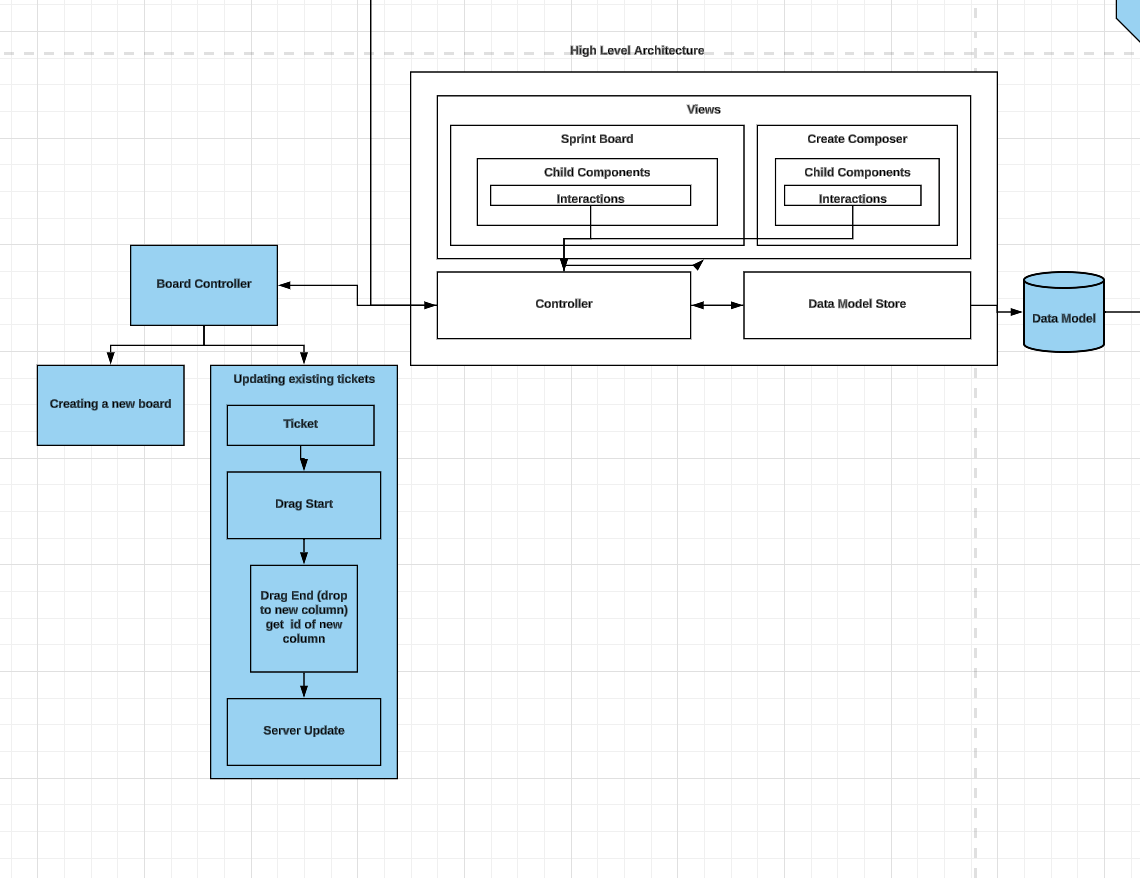
The Frontend System Design module is another high-value component, providing a structured framework for an interview topic that can often feel ambiguous.
It covers common prompts like “Design a news feed” or “Design a Google Docs-like application,” offering a clear methodology for approaching these open-ended problems.
For engineers moving from a mid-level to a senior role, I find this section to be exceptionally strong.
It provides the vocabulary and structure needed to articulate how a feature fits within the broader software development lifecycle and make complex architectural decisions coherently.
However, it’s important to set correct expectations. While it’s an excellent foundation, some users aiming for Staff+ level roles have noted that they needed to supplement it with more advanced, architecture-focused materials.
💡 This is a reasonable limitation.
The platform provides a robust framework for 95% of frontend system design interviews. Candidates for the most senior roles, who are expected to design systems at a massive scale, will naturally need to draw from a wider range of resources. For its intended audience, this section is a significant strength.
Are the text-based solutions a disadvantage?
Greatfrontend’s solutions are primarily detailed, “textbook-like” articles with code snippets and diagrams.
This is a deliberate choice that contrasts sharply with competitors like AlgoExpert, which lean heavily on video-based explanations.
Whether this is a strength or a weakness depends entirely on your learning style.
For many engineers, Greatfrontend’s text-based solutions actually save time during study sessions, as the format is easily searchable and allows you to quickly reference key concepts.
It also allows you to copy and paste code directly into your local setup, as the platform provides a clean code editor environment for solving problems but not a full IDE.
However, if you are a primarily visual learner who benefits from watching an instructor walk through a problem in real-time, AlgoExpert’s video-first approach might be a better fit.
This isn’t about one being objectively better, but about choosing the tool that aligns with how you learn best.
Part 4: Risk Analysis: The ‘Lifetime Access’ Promise Under the Microscope
The primary risk of Greatfrontend is not data security but business stability, a critical consideration given its one-time fee business model.
The “lifetime” promise is only as good as the small, founder-dependent company providing it.
While appealing, this model introduces long-term considerations to the value of your $399 investment, primarily around content stagnation and “key person dependency.” If you can lock in a current Greatfrontend deal, your effective downside narrows further.
What is “Key Person Dependency”?
From my analysis, Greatfrontend’s exceptional quality is intrinsically tied to its founder, Yangshun Tay. This is known as “key person dependency.”
The platform’s content, structure, and expert insights are a direct reflection of his experience and vision.
While this is a strength today, it becomes a consideration for a “lifetime” purchase. Many fast-growing educational platforms are eventually acquired, or founders move on to other projects.
If the key person who ensures content quality leaves or reduces their involvement, the value of a lifetime promise can plummet overnight. The updates may slow, and the content may lose its edge.
💡 De-Risking Your ‘Lifetime’ Investment
From my experience evaluating Dev Tools, treat ‘lifetime’ deals as ‘current version + 1-2 years.’ Evaluate the $399 price based on its value to your immediate job search. If it gets you a job in 6 months, the ROI is massive. Consider any future updates a bonus, not a guarantee.
How likely is the content to become outdated?
The world of frontend development moves at a breakneck pace. A library or framework that is cutting-edge today, along with its specific API access patterns, can be legacy technology in just a few years.
Greatfrontend’s business model, which forgoes recurring revenue, makes it difficult to fund the continuous, resource-intensive effort required to keep content updated.
While reviewing the platform’s history, it’s clear updates have been made, but there is a data gap regarding the guaranteed frequency of updates.
💡 The most prudent approach is to assume the content is valuable as is today.
Before purchasing, it would be wise to check the platform’s blog or changelog for the date of the last significant content update. This gives you a sense of the company’s current commitment to freshness.
Is Greatfrontend’s Data Handling Secure?
While business stability is the main consideration, data privacy is also a factor.
The platform uses Stripe for payments and has a privacy policy mentioning GDPR, which is a standard signal of compliance for modern software tools Greatfrontend Privacy Policy.
For its use case, the security risk is low compared to enterprise platforms that handle sensitive customer data.
Part 5: Use Cases & Workflows: Integrating Greatfrontend into Your Prep
A common challenge with dense platforms is knowing how to integrate them into a real-world study plan.
To make this actionable, here are three distinct workflows showing how different types of engineers can get the most value out of Greatfrontend.
Use Case 1: The Senior Engineer Prepping for a Meta E5 Loop
- Situation: A Senior Frontend Engineer with 5+ years of experience is targeting a Staff-level (E5) role at Meta. They are confident in their day-to-day coding but need to sharpen their performance for the specific, high-pressure interview format.
- Task: The goal is to master the two most challenging parts of the loop: the practical React component building session and the frontend system design round.
- Action:
- Weeks 1-2 (Refresh): Spend 70% of study time on LeetCode Medium/Hard problems to warm up algorithmic thinking. Spend 30% on Greatfrontend’s “Frontend Crash Course” to refresh fundamentals.
- Weeks 3-8 (Specialize): Shift focus to 80% Greatfrontend. Systematically complete every question in the “React Component” section, paying close attention to the detailed solutions to understand the “why” behind the code.
- Weeks 9-12 (Synthesize): Dedicate two full weekends to the “Frontend System Design” module. Practice whiteboarding the solutions and articulating the trade-offs aloud. Use the behavioral guide for STAR method refreshers.
- Result: The engineer enters the interview with high confidence, having practiced questions nearly identical to the real thing, and possesses a clear framework for articulating complex system design decisions.
Use Case 2: The Mid-Level Engineer Upskilling for a Senior Role
- Situation: A mid-level developer (3 YoE) wants to make the leap to a senior role. They feel their system design and architectural thinking are their biggest weaknesses.
- Task: Use Greatfrontend as a structured curriculum to bridge the skills gap between mid-level execution and senior-level design.
- Action:
- Start with the “Frontend System Design” module. For each problem (e.g., “Design Google Docs”), first attempt a solution, then read Greatfrontend’s solution, noting the specific concepts missed (e.g., data synchronization strategies, API design).
- Use the platform’s detailed explanations as a “reading list,” researching unfamiliar topics like CRDTs, WebSocket vs. long-polling, or rendering performance strategies.
- After building a theoretical foundation, move to the React component questions. Focus not just on completing them, but on applying the senior-level principles (scalability, maintainability, performance) learned from the system design module.
- Result: The developer builds a portfolio of high-quality component examples and, more importantly, develops the vocabulary and mental models to discuss and defend architectural choices—a key differentiator for senior roles.
Use Case 3: The Specialist Targeting a Component Library Role
- Situation: A developer wants to join a team that builds and maintains a design system or component library (e.g., Material UI, Ant Design).
- Task: Use Greatfrontend to master the art of building reusable, accessible, and performant UI components.
- Action:
- Focus exclusively on the “React Component” questions. Treat each question as a mini-project.
- For each component, go beyond the basic requirements. After implementing the solution, add accessibility (ARIA attributes), write unit tests, and document the component’s props.
- Use the platform’s solutions as a benchmark for high code quality. Refactor your own code until it meets a similar standard of clarity and efficiency.
- Result: The developer creates a strong GitHub portfolio demonstrating deep expertise in UI engineering, directly applicable to the target role.
Part 6: How Does Greatfrontend Compare to the Competition in [2024]?
In this Greatfrontend review, my analysis shows its focus on realism gives it the edge for experienced engineers, but AlgoExpert remains a solid choice for video learners.
It is a specialist, not a generalist. Its value becomes clearest when you place it side-by-side with the alternatives.
For a fuller side-by-side breakdown, see our detailed Comparison Greatfrontend Top Alternatives and Competitors guide.
Feature & Value Comparison: Greatfrontend vs. Competitors
| Criteria | Greatfrontend | LeetCode Premium | AlgoExpert | DesignGurus |
|---|---|---|---|---|
| Primary Focus | Realistic UI Components | General Algorithms | Video-led Broad Prep | System Design |
| Price Model | $399 Lifetime | ~$159/year | ~$139/year | ~$99/course |
| Question Volume | ~120+ | ~3,100+ | ~160+ | Course-dependent |
| Content Format | Text/Image | Text/Image | Video-First | Text/Video |
| Standalone? | No (Needs LeetCode) | No (Needs FE practice) | Yes (broader) | No (specialist) |
Comparison Snapshot
- Best For: General algorithm and data structure practice for all developer roles.
- Consider: LeetCode Premium is the non-negotiable industry standard for the algorithm portion of interviews. Its massive question bank of over 3,100 problems is unmatched LeetCode Problemset.
- Avoid If: You need to practice modern, practical frontend tasks. LeetCode’s frontend content is notoriously sparse and outdated, which is the exact problem Greatfrontend solves.
✅ Strengths (vs Greatfrontend)
- 3,100+ algorithm questions
- Lower entry price (~$159/year)
- Industry-standard tool recognized by every recruiter
⚠️ Considerations
- Very weak frontend-specific content
- User-submitted solutions vary in quality
- No structured frontend system design module

Comparison Snapshot
- Best For: Visual learners who want a broad overview of interview topics. Founded by ex-Google engineer Clement Mihailescu, AlgoExpert is a very solid choice for those who learn better from video content.
- Consider: If you strongly prefer video walkthroughs for every problem, AlgoExpert’s
FrontendExpertmodule is a compelling alternative. Its recurring subscription model may also be more palatable than a large upfront cost. - Avoid If: Your top priority is the absolute realism of FAANG-style UI component questions. User consensus suggests Greatfrontend’s content is deeper and more aligned with what’s asked in top-tier interviews. Other independent reviews confirm this trade-off Byte-by-Go Greatfrontend Review.
✅ Strengths (vs Greatfrontend)
- Video-first explanations for visual learners
- Broader topic coverage (algos + frontend)
- Recurring subscription = lower entry barrier
⚠️ Considerations
- Less depth on FAANG-style React components
- Frontend content reviewed as shallower
- Annual cost compounds over multi-year prep
Comparison Snapshot
- Best For: Engineers who want to deep-dive exclusively into system design interviews (both backend and frontend).
- Consider: If your only weak point is system design, purchasing the specific
Frontend System Design Interviewcourse from DesignGurus for ~$99 is a more targeted and cost-effective solution. - Avoid If: You need any practice with hands-on coding. DesignGurus is almost entirely focused on the theoretical design and discussion aspect of interviews.
✅ Strengths (vs Greatfrontend)
- Deep system design specialization
- Lower per-course price (~$99)
- Covers both backend and frontend design
⚠️ Considerations
- No hands-on coding practice environment
- Doesn’t address React component interviews
- Theoretical-only, no real-world component build
Can I just use LeetCode and free resources?
Yes, this is the budget alternative, and many successful engineers have gone this route. However, it’s crucial to understand the trade-off.
What you save in money, you spend in time and effort.
The “free” path requires immense self-discipline to hunt for quality resources on platforms like YouTube Example Video Review, blogs, and GitHub, then vet them for accuracy and relevance, and finally structure them into a coherent study plan.
This is a significant undertaking that can easily lead to developer burnout.
💡 The core value proposition of a platform like Greatfrontend is that it has done all of this curation for you. You are paying for a well-structured, expert-vetted path that boosts developer productivity and saves dozens of hours of prep time. If price is the blocker, browsing the latest coupon codes on the entire site may surface a current offer.
Final Verdict: Is Greatfrontend the Right Choice For Your Career?
After a comprehensive Greatfrontend review, my verdict is that it is a powerful, highly effective, but specialized tool.
It successfully delivers on its core promise of providing unique, high-quality practice for the most challenging parts of the modern frontend interview.
However, its high price, supplemental nature, and the inherent risks of its business model mean it’s not the right choice for everyone.
The decision comes down to a trade-off: unmatched content quality versus a high cost and specific long-term considerations.
What We Love
- Unmatched UI Question Realism: The React component questions are the closest you can get to the real interview experience.
- Textbook-Quality Solutions: The detailed, expert-written solutions provide a clear and reliable learning path.
- Sharp Focus on a Key Interview Gap: It brilliantly solves the problem of practicing practical frontend skills that LeetCode ignores.
- Credible Founder: The content is curated by an ex-Meta engineer, which provides a high degree of trust and relevance for FAANG interviews.
💡 Things to Consider
- Prohibitive Upfront Cost: At $399, it is one of the most expensive interview prep tools on the market.
- Not a Standalone Solution: You will still need a separate platform like LeetCode for comprehensive algorithm practice, increasing your total investment.
- “Lifetime” Access is a Business Consideration: The long-term value is dependent on the stability and continued investment of a small company.
- Not Suitable for Absolute Beginners: The content is advanced and assumes a solid foundation in frontend development.
My Persona-Based Recommendations
To make this as actionable as possible, here is my direct advice based on your career stage:
- For the Senior Engineer targeting FAANG: Recommended. In your position, the ~$550 true first-year cost is a rounding error compared to the potential salary bump and signing bonus from a successful interview. The specialized content directly targets your interview loop, and the time saved by its curated nature is your most valuable asset.
- For the Mid-Level Engineer: Recommended, with caveats. It’s a strategic tool for upskilling for developers, giving you a significant edge and preparing you for the leap to a senior role. If you can comfortably afford the total investment and are committed to supplementing it with rigorous algorithm practice, this is a very smart purchase.
- For the Junior Developer / Bootcamp Grad: Not Recommended. The cost-to-value proposition is not in your favor. The content is likely too advanced to be your primary study tool, and your budget is better spent on a foundational platform like LeetCode Premium combined with the wealth of high-quality free resources available online.
If you’re looking for even more in-depth product evaluations like this one, our full category of Review articles is regularly updated with similar deep-dives.
Disclaimer: This review is for informational purposes and is not a guarantee of employment. Individual results, interview performance, and job offers will vary based on numerous factors including experience, skill, and market conditions.
Frequently Asked Questions
Q1: How much does Greatfrontend really cost in [2024]?
A: Greatfrontend costs a one-time fee of $399, but the realistic first-year total cost of ownership (TCO) is over $550. This is because our Greatfrontend review confirms it is a supplementary tool, not a complete solution. Most users will also need a subscription to a platform like LeetCode Premium, which costs around $159 per year, to cover the data structures and algorithms practice that Greatfrontend intentionally omits. Therefore, a serious candidate should budget for both the upfront cost of Greatfrontend and the recurring cost of a supplemental platform to be fully prepared for all aspects of modern technical interviews.
Q2: Is Greatfrontend worth the money?
A: It depends entirely on your career level and goals. For experienced mid-level to senior engineers targeting high-paying roles at FAANG-level companies, the specialized content can provide a massive return on investment (ROI). The platform’s realistic UI component questions directly mirror what’s asked in these high-stakes interviews. However, for junior developers or those on a tight budget, it is likely not worth the money. The advanced content may be overwhelming, and the high cost is hard to justify when foundational algorithm skills are a higher priority, as confirmed by user reviews on Reddit.
Q3: Why is Greatfrontend so expensive?
A: Greatfrontend’s high $399 price reflects its specialized, expert-curated content and its ‘lifetime access’ business model. Unlike platforms with recurring subscriptions like AlgoExpert, the one-time fee is intended to cover all future access to the current content. The pricing is benchmarked against the significant potential salary increase from landing a top-tier tech job, positioning the tool as a career investment rather than a simple study aid. The value is derived from the high quality and niche focus of the content curated by an ex-Meta engineer Yangshun Tay, which is a level of expertise that commands a premium price.
Q4: Should I use Greatfrontend or AlgoExpert?
A: The choice depends on your learning preference and skill gaps. Choose Greatfrontend if your priority is the most realistic, hands-on practice for React UI component building and you learn best from detailed, text-based solutions. It is generally considered to have a deeper and more accurate representation of FAANG-style frontend interviews. Choose AlgoExpert if you are a visual learner who strongly prefers video explanations for every problem. AlgoExpert provides a broader curriculum at a recurring annual cost, but its frontend content is often reviewed as less deep than Greatfrontend’s Byte-by-Go Review.
Q5: Can I just use LeetCode instead of Greatfrontend?
A: You can, but you will be missing critical practice for modern frontend interviews. LeetCode is essential for data structures and algorithms and is considered a mandatory tool for that purpose, with over 3,100 questions available LeetCode Problemset. However, it is notoriously weak on practical, modern UI-building and frontend system design questions. This is the exact gap Greatfrontend is designed to fill. Using LeetCode alone leaves a significant blind spot in your preparation for the practical, hands-on coding portions of a frontend interview loop.
Q6: Who is Greatfrontend best for?
A: Greatfrontend is best for mid-level to senior frontend engineers, typically with 2 or more years of experience, who are actively preparing for interviews at top-tier tech companies. This user segment already has a solid grasp of algorithms but needs targeted, high-quality practice on the practical skills that are now heavily weighted in senior interview loops. The platform’s value is maximized for engineers who understand that a small investment can have a significant impact on their career advancement and potential earnings, a sentiment often shared on professional communities like Teamblind.
Q7: Is Greatfrontend’s “lifetime” access a safe investment?
A: The “lifetime” access should be viewed with consideration as it carries business stability risk. The term refers to the lifetime of the company, not the user. Because Greatfrontend is a small, private company heavily dependent on its founder, the long-term value is tied to its continued operation and investment in content updates. As an analyst, I recommend evaluating the platform based on its immediate value to your current job search cycle (6-12 months). If it helps you land a job in that timeframe, it has provided a full return on investment. Consider any future access a potential bonus, not a guaranteed asset.
Q8: What is the best way to use Greatfrontend to get a job?
A: The best strategy is to use it as a targeted supplement to a foundational algorithm practice on a platform like LeetCode. First, ensure your data structures and algorithm skills are solid. Then, focus on Greatfrontend’s unique strengths: systematically work through all the React UI component questions, treating each one as a mini-project. Deeply study the “textbook-quality” solutions to understand best practices. Finally, master the frontend system design module to develop a structured way of communicating architectural decisions. Do not neglect practicing algorithms on another platform, and consider using a service for live mock interviews to test your presentation skills.