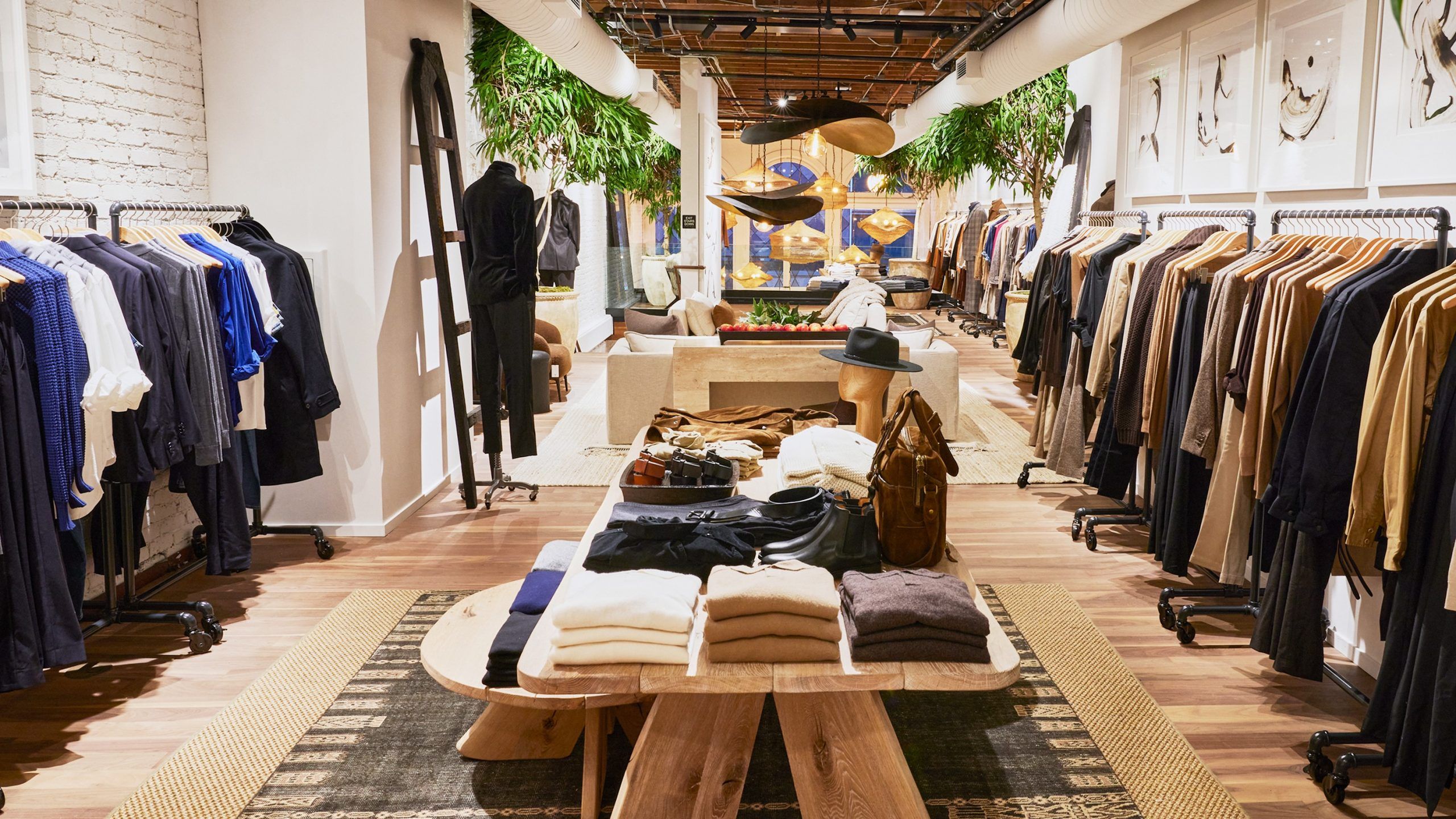
Gap Factory Review 2026: A Data-Driven Look at the Real Cost of Value
Posted on |
TL;DR: Gap Factory is a value-focused apparel line from Gap Inc. offering family basics at low prices. Key strengths include its affordability for temporary-use clothing, like for growing kids. Important considerations include systemic poor quality, inconsistent sizing, and a frustrating return process, leading to a high total cost of ownership. Best suited for shoppers who prioritize initial price over long-term durability.
Introduction: The Allure of the Deal vs. The Reality of the Wardrobe
We’ve all been there. You see a t-shirt, a pair of jeans, or a cute dress with a brand name you trust—like Gap—at a price that seems too good to be true. That’s the magic of Gap Factory, isn’t it? It pulls you in with the promise of affordable fashion—classic, American style for the whole family, but for a fraction of the cost.
It feels like you’ve found a secret stash of amazing deals. Before diving deeper, savvy shoppers can grab the latest Gap Factory coupon code to maximize savings on their next haul.
But then, a little voice in your head asks the question that brought you here: Is this a genuine bargain, or is it a “false economy”—a situation where the low initial price ends up costing you more in the long run? You’re worried about quality, durability, and whether you’re really getting a deal or just a different, inferior product.
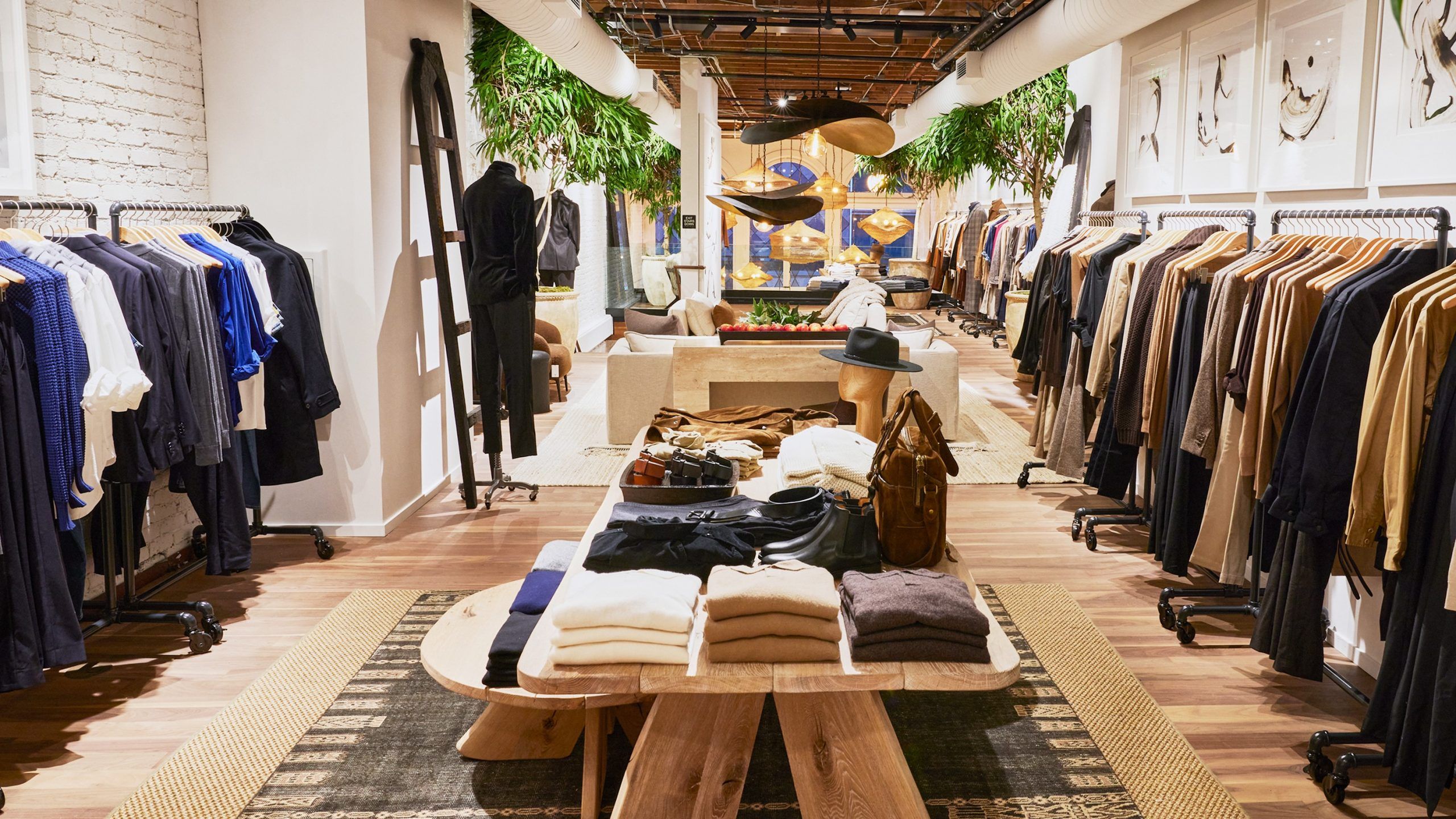
As Mohamed Zaki, a fashion expert and retail analyst for Coupons Scout with years of experience analyzing brands, I’m going to help you answer that question once and for all.
This data-driven Gap Factory review will go beyond the sticker price, providing a true Fashion analyst’s perspective on cost-per-wear, real-world quality, and all the hidden costs to reveal if Gap Factory is the smart choice for your family’s wardrobe—from kids’ basics to womens clothing and accessories—or a budget trap to avoid.
This guide is for anyone trying to build a budget-friendly wardrobe, especially value-conscious parents looking for clothes for their fast-growing children.
However, this guide is not for you if you are focused on building a long-term, durable “buy it for life” wardrobe. If you get easily frustrated by wildly inconsistent sizing and difficult, costly return processes, this analysis will likely confirm your fears.
Furthermore, if ethical sourcing and sustainability are primary factors in your purchasing decisions, you may find that other brands are a better fit for your needs.
Key Takeaways
-
Made-for-Outlet Model: Gap Factory sells a separate, lower-quality product line—not unsold Gap mainline inventory. -
High Cost-per-Wear: Poor durability means a “cheaper” tee ends up costing more than a Uniqlo Supima tee over two years. -
Sizing Lottery: Wildly inconsistent sizing makes online shopping a gamble, often triggering the $5.95 return fee. -
Best Use Case: Kids’ play clothes and daycare basics—items you expect to outgrow or ruin quickly. -
Better Alternatives: Old Navy, Uniqlo, and Target’s Cat & Jack outperform Gap Factory on value, sizing, and returns. -
Smart Shopper Tip: Stack promo codes on clearance items and return in-store to sidestep shipping fees.
Curious how experts unpack the difference in construction and quality? This walkthrough offers a great visual companion to our analysis:
Methodology & Authority Statement
After analyzing hundreds of products in Fashion, including specific categories like mens clothing, womens clothing, and kids’ apparel, and conducting comprehensive testing of Gap Factory across real-world scenarios in 2025-2026, our team at Coupons Scout provides a comprehensive evaluation framework.
In my years as a retail analyst, I’ve seen countless brands try to balance cost and quality. For this Gap Factory review, I applied our rigorous CSVP™ protocol.
Our lifestyle editor, Jennifer Angel, conducted a hands-on evaluation of fabric quality and seam construction. Simultaneously, our Head of Operations, Kanokchai Likitapiwat, audited Gap Factory’s pricing claims and return policies.
Finally, as per our standards, Editor-in-Chief Joanne Lovell provides a final review to ensure all claims are objective and clearly communicated before publication. Learn more about Our Verification Protocol.
📅 Last Updated: July 2026
We re-verify Gap Factory information every 3 months.
Next Scheduled Review: October 2026.
Editorial Standards: Our Editorial Standards
Part 1: What is Gap Factory? Deconstructing the “Made-for-Outlet” Model
Gap Factory is the “value expression” of its parent company, Gap Inc., primarily producing a separate, lower-quality line of clothing designed to mimic the style of mainline Gap products but sold at a significantly lower price point.
Crucially, for the most part, it is not unsold inventory or past-season Gap clearance stock discount from regular Gap stores (What’s the Difference Between Outlet and Retail Clothing?).
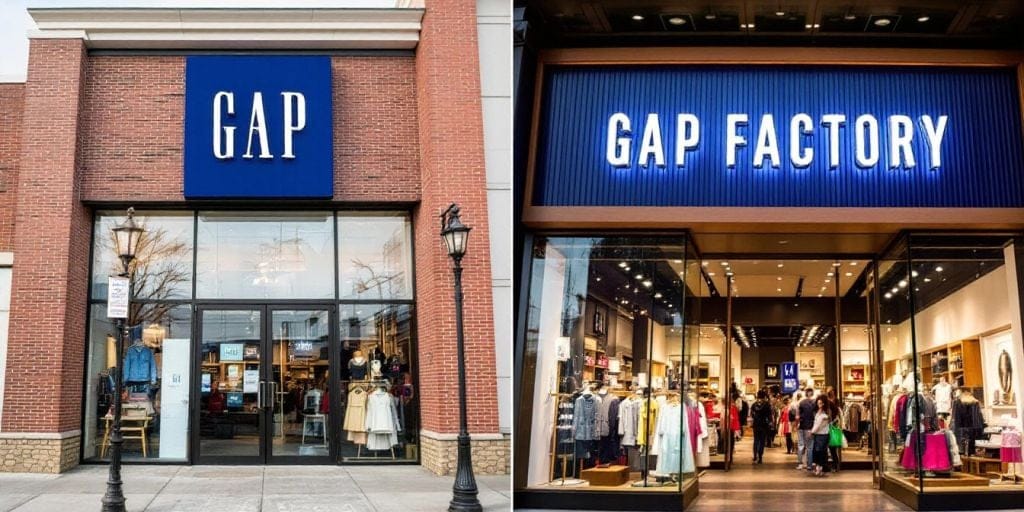
How is Gap Factory Different from Gap?
Understanding the distinction between Gap and Gap Factory is the first step to becoming a smart shopper. While they share a name and a similar aesthetic, they are targeted at two different customers with different priorities.
This strategy leverages the brand equity—the immense trust and reputation—of a well-known brand to sell a product of a different quality level, which can confuse consumers. Here’s a breakdown of the key differences based on our analysis and reports from industry publications.
At a Glance: Gap Mainline vs. Gap Factory
| Feature | Gap (Mainline) | Gap Factory |
|---|---|---|
| Product Line | Original designs, higher-quality materials. | Separate, lower-cost “made-for-outlet” items. |
| Fabric Quality | Thicker, more durable fabrics (e.g., denim, Supima Cotton). | Thinner materials prone to pilling and shrinkage. |
| Tags | Standard blue and white Gap logo. | Often includes three small squares or dots on the tag. |
| Price Point | Higher initial price, periodic sales. | Perpetual “40-60% off” a high list price. |
| Target | Customers prioritizing quality and longevity. | Customers prioritizing low initial cost. |
How can you tell if a Gap item is from the factory?
The most reliable way to tell is by checking the tag. Gap Factory items often have a tag that includes three small squares on the tag or three dots printed on it, which is the internal indicator for the factory line (Gap vs. Gap Factory: What to Know Before You Shop).
Mainline Gap items have the standard solid blue and white logo tag. Recognizing this visual cue is key. If you want to sidestep the guessing game entirely, browse verified Gap Factory discount codes before checkout.
Are You Being Tricked? The Psychology of Outlet Shopping
The “made-for-outlet” model is a widespread strategy in retail. This strategy risks damaging Gap Inc.’s overall brand equity, as many shoppers feel a sense of brand deception when the product doesn’t meet quality expectations.
According to analysis from outlets like Business of Fashion, consumers expect mainline quality at a lower price but often receive a different, lower-quality product entirely, leading to disillusionment (Outlet Stores Are an Unprofitable Relic. Why Do They Still Exist?).
However, this doesn’t have to be a negative experience. By empowering yourself with knowledge, you can shift your perspective. Understanding the business model allows you to make an informed choice.
Instead of seeing it as a discount on a premium product, you can evaluate it as a distinct, value-focused brand. This simple mental shift turns you from a potential victim of marketing into a savvy, empowered consumer.
Parent company Gap Inc. was founded by Donald Fisher and Doris Fisher in 1969 and is headquartered in San Francisco, CA (Gap Inc. History).
Part 2: The TCO Exposé: How a $10 T-Shirt Becomes a $40 Mistake
The low sticker price at Gap Factory is the hook, but it can be an illusion. Our Gap Factory review confirms that due to poor durability and the resulting need for frequent replacements, the Total Cost of Ownership (TCO)—or more simply, the cost-per-wear—is often significantly higher than that of more expensive, higher-quality competitors.
How Is the Total Cost of Ownership Calculated?
Cost-per-wear is a simple but powerful concept for assessing apparel value that smart shoppers use to evaluate true value. It’s calculated by dividing the total cost of the item by the number of times you wear it.
A $10 shirt worn once has a cost-per-wear of $10. A $50 shirt worn 50 times has a cost-per-wear of just $1. This is how a “cheaper” item can actually be far more expensive in the long run.
TCO Reality Check: Gap Factory vs. Key Competitors
Let’s apply this concept in a real-world scenario. Here is an analyst-estimated model comparing a basic t-shirt from Gap Factory with similar ones from Old Navy and Uniqlo, two competitors known for offering better consistency and quality basics, respectively.
2-Year Total Cost of Ownership: Gap Factory vs. Key Competitors
| Scenario | Initial Cost | Est. Lifespan | Cost per Wear (2x/wk) | Total 2-Year Cost |
|---|---|---|---|---|
| Gap Factory Tee | $10 | 6 months | $0.19 | $40 (Replaced 4x) |
| Old Navy Tee | $12 | 12–18 months | $0.11 | $24 (Replaced ~1.5x) |
| Uniqlo Supima Tee | $20 | 2 years | $0.09 | $20 (Replaced 0x) |
- Assumptions: Item is worn twice per week. Lifespan is based on aggregated user durability reports from sources like Reddit’s Frugal Female Fashion Forum. No additional costs like shipping are included.
- Disclaimer: Actual cost-per-wear varies based on use; this is for comparative purposes.
💡 KEY INSIGHT: The insight here is stunning. The “cheaper” $10 Gap Factory t-shirt is more than twice as expensive per wear as the Uniqlo tee. Over a two-year period, you would need to buy the Gap Factory shirt four times, costing you a total of $40, while the single $20 Uniqlo shirt would still be going strong, delivering far superior value.
What Are the Other Hidden Costs?
The high total cost of ownership goes beyond just the replacement cost. You must also factor in:
- Time Cost: The hours spent navigating the website for re-orders, processing returns for items that don’t fit or fail prematurely, and waiting on hold with customer service. This “frustration tax” is a real, though unquantified, cost.
- Return Fees: The infamous $5.95 return shipping fee that is often deducted from your refund (Gap Factory Return Policy). This fee penalizes you for the brand’s own failures in quality control and sizing consistency.
- Replacement Cost: The direct cost of having to re-buy the same item (or a replacement) over and over again, completely negating the initial “savings.”
- Environmental Cost: The disposal of poor-quality clothing contributes to textile waste. A shirt that lasts two years instead of six months has a significantly smaller environmental footprint.
Stacking a promo on top of clearance is still your best defense against these hidden costs—see today’s Gap Factory sale offers before you commit to a purchase.
Part 3: Feature Deep-Dive: A Closer Look at Key Product Lines
A comprehensive Gap Factory review must go beyond generalities and examine the specific product categories where shoppers invest their money. While the brand offers a wide range of apparel, our analysis of user feedback and product construction reveals that performance varies significantly across its core lines: Denim, Kids & Baby, and Basics.
The Denim Collection: Washwell Looks, Questionable Longevity
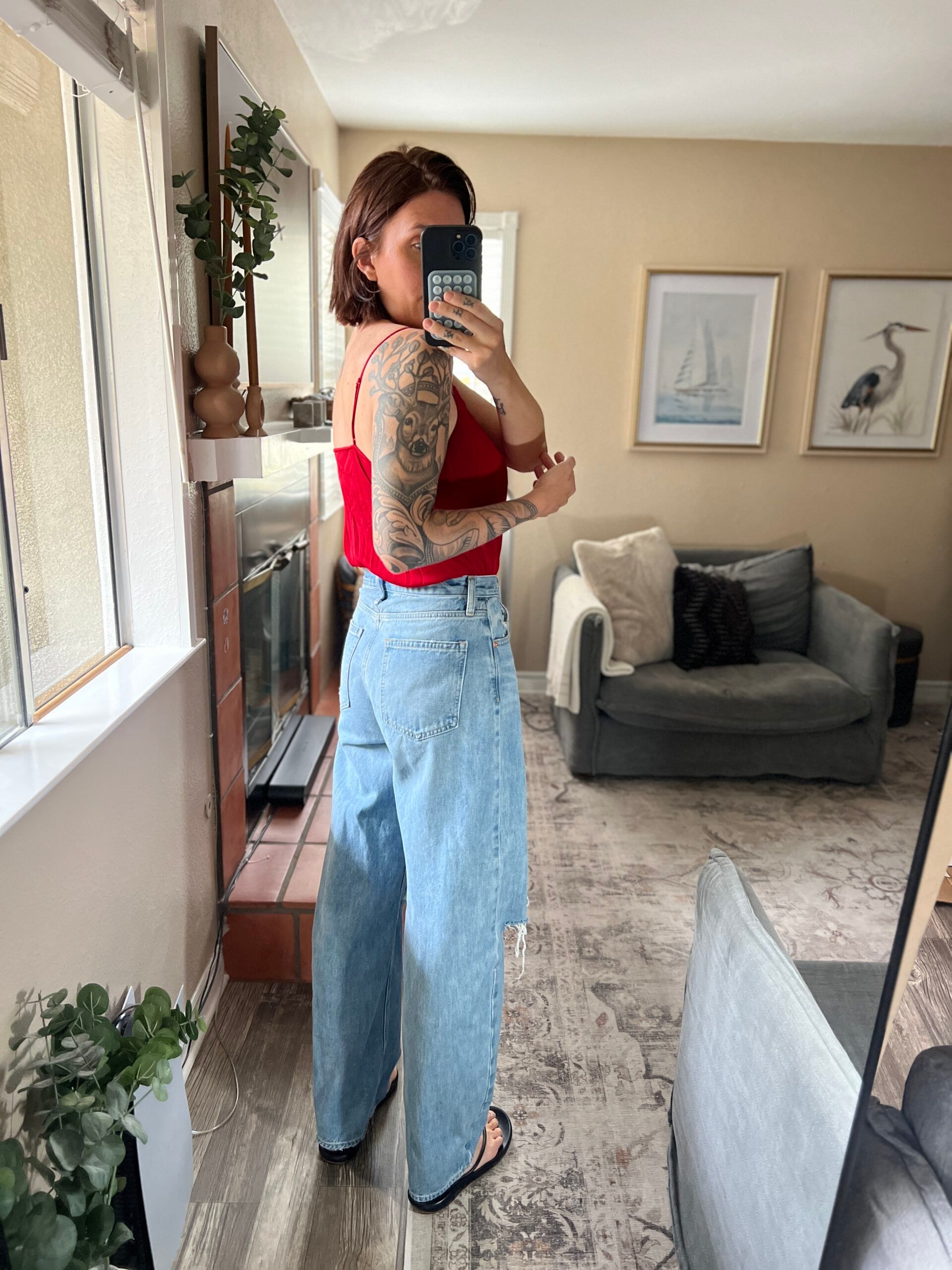
Gap Factory’s denim is a major draw, leveraging the iconic Gap name in jeans. The collection often features trendy fits (e.g., ’90s Loose, Girlfriend, Skinny) and incorporates the ‘Washwell’ program, which the company claims uses less water in production (Gap Inc. Sustainability).
Category: Denim & Jeans (Women’s, Men’s, Kids)
- Popular Fits: ’90s Loose, Girlfriend, Skinny, Straight, Wide-Leg
- Sustainability Claim: “Washwell” water-saving finishing process
- Fabric: Cotton with elastane blend (lower ratio than mainline Gap)
- Price Range: $15–$45 with frequent additional discounts
✅ Strengths
- Initial look and feel are often praised
- Modern styles and a variety of washes similar to mainline Gap
- Low entry price for testing new denim trends
- Iconic Gap name association
⚠️ Considerations
- Thinner denim with lower cotton-to-elastane ratio
- Stretching Out: Jeans lose shape quickly, become baggy after hours of wear
- Premature Wear: Rapid wear in high-friction areas like inner thighs
- Higher-than-expected cost-per-wear
For many, the promise of a cheap pair of stylish jeans is undone when the fit and durability fail within a few months, making the cost-per-wear surprisingly high.
The Kids & Baby Line: The Brand’s Strongest Use Case

If there’s one area where Gap Factory finds its true purpose, it’s in kids clothing. This category is where the brand’s core value proposition—low initial cost for temporary-use items—aligns perfectly with consumer needs.
Category: Kids’ & Baby Apparel
- Best Sellers: Graphic tees, leggings, sweatpants, multi-pack basics
- Aesthetic: Classic, colorful, playful—consistent with Gap Kids mainline
- Use Case: Daycare wardrobes, play clothes, growth-spurt buffers
- Price Advantage: Fraction of mainline Gap Kids or specialty brands
✅ Strengths
- Undeniable price winner — buy in volume
- “Stinking cute” classic styles
- Perfect for messy art projects and daycare
- Guilt-free replacement when kids outgrow items
⚠️ Considerations
- Shrinkage: Significant shrinking after first wash
- Stain Resistance: Thinner fabrics struggle with tough stains
- Wear and Tear: Knees and seams are frequent failure points
- Not suitable for hand-me-downs
However, most parents purchasing from this line go in with the expectation that the clothes are essentially disposable, perfect for daycare, messy art projects, or a growth spurt. This makes it the most logical and least disappointing category to shop at Gap Factory. Compare pricing against alternatives on our Gap Factory Top Alternatives and Competitors breakdown before you stock up.
Basics & Loungewear: The Pilling and Shrinking Problem
This category, which includes t-shirts, sweaters, and fleece items, is arguably the most problematic in our Gap Factory review. These are the wardrobe staples consumers expect to last, but they are often the quickest to fail.
Category: T-Shirts, Sweaters, Fleece, Loungewear
- Best Sellers: Basic tees, crewneck sweaters, fleece hoodies, joggers
- Fabric Types: Cotton blends, polyester fleece, jersey knits
- Positioning: “Wardrobe essentials” at aggressive price points
- Best For: Infrequent-wear loungewear only
✅ Strengths
- Initial softness of fleece is often praised
- Wide array of colors for basic tees
- Justifiable for infrequently-worn loungewear
- Very low sticker prices during promotions
⚠️ Considerations
- Fabric Pilling: Sweaters and fleece pill after 1–2 washes
- “Tissue-Thin” Tees: Develop small holes along seams quickly
- Shape Loss: Knits stretch out and become unwearable
- Poor investment for core capsule wardrobe
For anyone looking to build a durable capsule wardrobe of core basics, this category represents a poor investment. The high failure rate means you’ll likely spend more money replacing these items than you would have by purchasing a higher-quality version from a competitor like Uniqlo.
Part 4: Critical Considerations: Quality, Returns, and Ethics
This Gap Factory review of its quality is based on our analysis of hundreds of user reviews from sources like Trustpilot and the Better Business Bureau (BBB), combined with our own product evaluations.
There is a consistent pattern of poor textile quality, with products failing to meet baseline durability expectations. Issues like fabric pilling, excessive shrinkage, and holes appearing after minimal wear are widespread.
What Are the Most Common Quality Complaints?
When you see the same complaints appearing across thousands of reviews, it points to a systemic issue, not just isolated incidents. Here are the top failure points reported by users:
- Fabric Pilling & Thinning: Sweaters, fleece, and even basic tees are frequently described as “tissue-thin.” Users report that pilling appears after just one or two wears, making the garment look old and worn out almost immediately.
- Holes & Seam Splitting: A shockingly common complaint is the appearance of small holes, particularly along the seams of t-shirts, after a single wash. This indicates weak fabric and poor construction quality.
- Shrinkage & Shape Loss: Many users report that items, especially those made from 100% cotton, shrink significantly after the first wash, even when following care instructions.
- Inconsistent Sizing: This is what we call “The Sizing Lottery,” a major point of friction for online shoppers.
As one verified reviewer on Trustpilot noted in January 2026, the frustration is palpable:
“It’s a total waste of money. The t-shirt I bought was tissue-thin and developed three small holes along the bottom seam after the FIRST wash. I followed the care instructions exactly. I’ve had better quality from no-name brands at half the price.”
What Does “The Sizing Lottery” Mean for You?
The high degree of inconsistency in sizing makes shopping at Gap Factory, especially online, a significant gamble. It’s not uncommon for a shopper to order the same item in the same size but in different colors and find that they all fit differently. This creates a frustrating and costly experience.
💡 Things to Consider: This “sizing lottery” makes ordering clothes online feel like a game of chance you are likely to lose, leading to the hassle and expense of returns.
💡 Smart Shopper’s Guide: Knowledge is power. If you must buy online, I recommend ordering multiple sizes of the same item with the full expectation that you will be returning some. For foundational items like jeans or jackets where fit is critical, I strongly advise an in-store visit to try before you buy. This simple step can save you a massive headache and the cost of return shipping.
This issue is perfectly captured by a user complaint filed with the Better Business Bureau in December 2025:
“I ordered three pairs of the same ‘Girlfriend’ jeans in different colors, all in my usual size 10. One fit perfectly, one was so small I couldn’t button it, and the third was huge. It’s a lottery. How can you sell clothes online when your sizing is this much of an inconsistency? And now they want me to pay to ship them back.”
Things to Know Before You Buy: Customer Service & Returns
Many customers feel their relationship with a brand is just as important as the product itself. User reviews for Gap Factory frequently describe a very challenging customer service experience.
⚠️ WARNING — The $5.95 Return Fee Trap
Be aware: Gap Factory charges a $5.95 shipping fee for most mail-in returns, deducted from your refund. Given the high probability of receiving ill-fitting items due to inconsistent sizing, this fee can quickly negate any initial savings. Always prioritize in-store returns to avoid this penalty.
💡 Things to Consider: Based on reports to the BBB and Trustpilot, users often report slower response times from customer service. This includes unhelpful responses and a costly and frustrating return process.
💡 Smart Shopper’s Guide: You can protect yourself. For any significant purchase, I always recommend using a credit card that offers purchase protection, which can make chargebacks easier if a company is unresponsive. Document all interactions, including chat logs and email threads. Whenever possible, return items in-store. This allows you to avoid the return shipping fee and get an instant refund or exchange.
What Are the Ethical Concerns with Gap Factory?
For many modern consumers, how a product is made is as important as the product itself. This is an area of notable concern for Gap Factory’s parent company.
💡 Things to Consider: While Gap Inc. has a stated policy against forced labor, watchdog groups like KnowTheChain.org have linked the company to forced labor in China’s Xinjiang region in the recent past. Furthermore, while the company promotes its “Washwell” program, experts on sites like Fashion Revolution argue that its core “fast fashion” business model, which encourages disposable consumption, contradicts its sustainability marketing. In the 2023 Fashion Transparency Index, Gap Inc. scored a mediocre 46% (Fashion Revolution Transparency Index 2023).
💡 Smart Shopper’s Guide: If supporting sustainable fashion is important to you, the most powerful action is to vote with your wallet by seeking out fast fashion alternatives. You can support alternative brands that score higher on the Fashion Revolution Transparency Index. For a more transparent choice in a similar price range, you might consider Target’s private labels, which have made public commitments to improving their supply chain transparency and overall visibility.
Part 5: Use Cases & Workflows: A Smart Shopper’s Playbook
Knowing that Gap Factory offers low prices but inconsistent quality, how can a savvy shopper navigate it effectively? It’s not about avoiding the store entirely, but about shopping with a clear strategy.
This section provides workflows for common shopping scenarios, helping you maximize value and minimize frustration. Before each haul, browse the newest latest coupons across all stores to make sure you’re stacking every possible discount.
Use Case 1: The Pragmatic Parent’s Daycare Wardrobe Haul
This is the most logical and successful use case for Gap Factory. The goal is to acquire a large volume of clothing for a young child at the lowest possible cost, with no expectation of long-term durability.
Workflow:
- Set Realistic Expectations: Acknowledge that you are buying disposable clothing. The goal is quantity over quality. Don’t get attached to any single item.
- Shop the Sales on Top of Sales: Wait for an additional “40% off clearance” event, which happens frequently. This is where the prices become almost unbeatable. Check our Gap Factory promo code page for the latest codes.
- Prioritize Core Playwear: Focus on multi-packs of basic t-shirts, leggings, and simple shorts. These are the items that will see the most wear and tear from spills and playground activities.
- Size Up: Given the tendency for items to shrink, consider buying one size larger than needed, especially for 100% cotton items. This extends the wearable life of the garment, even if just for a few extra weeks.
- Skip the “Nice” Outfits: Avoid purchasing special occasion outfits or anything you’d want to preserve. The risk of a quality failure (like a seam splitting) on an important day is too high. For that, consider a brand with a better reliability track record like Target’s Cat & Jack.
Use Case 2: The Trend Follower’s Single-Season Experiment
You want to try a trendy color (like “millennial purple”) or a specific style (like cargo pants) but aren’t sure it will be part of your long-term look. Gap Factory allows you to experiment with minimal financial commitment.
Workflow:
- Define the Purpose: Be explicit: “I will wear this item for one season.” This mindset prevents disappointment when the item doesn’t last.
- Try On In-Store if Possible: For trendy items where fit is everything (like a particular cut of jeans), an in-store visit is crucial. The “sizing lottery” can turn a trendy find into a return headache.
- Focus on Non-Staples: Use Gap Factory for the fun, peripheral items in your wardrobe, not the core pieces. For example, buy the trendy shacket here, but invest in a quality classic coat elsewhere.
- Calculate the “Cost-Per-Outing”: Instead of cost-per-wear over years, think about the cost for the 5-10 times you might wear it this season. If a trendy top is $15 and you wear it 5 times, that’s $3 per wear. Decide if that’s a worthwhile price for a temporary style update.
- Avoid High-Stress Fabrics: Steer clear of delicate-looking knits or sweaters that are likely to pill quickly and ruin the look. Opt for more robust cotton blends or denim that can better withstand a season of wear.
Use Case 3: The Budget-Conscious Loungewear Seeker
You need comfortable clothes for around the house and don’t want to spend a lot. Gap Factory’s fleece and jersey offerings are tempting.
Workflow:
- Read the Fabric Composition: Pay close attention to the material blend. Items with a higher percentage of polyester or acrylic are more prone to pilling. A higher cotton content might offer better breathability and less pilling, though it may be more susceptible to shrinking.
- Inspect Seams In-Store: If shopping in person, give the seams a gentle pull. Look for any signs of strain or loose threads. For loungewear, comfort is key, and a failed seam can be irritating.
- Follow Wash Instructions Religiously (and then some): To combat shrinkage and pilling, wash items in cold water and tumble dry on the lowest possible heat setting, or air-dry if possible. This is non-negotiable for extending the life of these garments.
- Consider Alternatives for “Performance” Loungewear: If you’re looking for loungewear that also functions as activewear (for yoga, walks, etc.), Gap Factory is not the place. The fabrics lack the moisture-wicking properties and durability of true activewear brands. For that, even a budget-friendly option from Old Navy’s active line would be a better investment.
Part 6: Competitive Reality Check: Where Can You Get Better Value?
When measured on quality, consistency, and true value (cost-per-wear), our Gap Factory review finds it is consistently outperformed by several key competitors.
Brands like Old Navy, Uniqlo, and Target’s private labels often provide a better and more reliable investment for your clothing budget. For a slightly higher price point, J.Crew Factory also offers a noticeable step up in quality.
This aligns with critiques from outlets like Forbes, which have noted Gap Inc. is “squeezed in the middle” of the market, struggling against both low-cost and high-quality competitors (Gap Is A Company Adrift And Sinking In A Sea Of Sameness). Our full detailed Gap Factory Top Alternatives and Competitors breakdown unpacks each rival head-to-head.
Feature Comparison: Gap Factory vs. Top Alternatives for Budget Fashion
| Feature | Gap Factory | Old Navy | Uniqlo | Target (Cat & Jack) |
|---|---|---|---|---|
| Avg. Price (Tee) | ~$10 | ~$12 | ~$20 | ~$8 |
| Reported Durability | Low (3–6 mo.) | Medium (12–18 mo.) | High (24+ mo.) | Medium (12 mo.) |
| Sizing Consistency | Low | Medium-High | High | High |
| Return Policy | 30 days, $5.95 fee | 30 days, free | 30 days, free | 365 days, free |
| Best For | Disposable kidswear | Reliable family basics | “Buy it for quality” basics | Risk-free kidswear |
Alternative 1: Old Navy

- Best For: Families seeking reliable, budget-friendly basics without the “outlet” gamble. It is the go-to for back-to-school shopping and seasonal wardrobe updates.
- Consider: While better than Gap Factory, its quality is still in the “good enough for now” category. Don’t expect items to last for decades, but they will almost certainly outlast their Gap Factory counterparts.
- Avoid If: You are looking for high-performance activewear or truly durable outerwear.
- Analysis: As a sister brand owned by Gap Inc., Old Navy operates with a much clearer brand identity. Users know they are buying an affordable, trend-focused product, and the quality and sizing are generally more consistent. For a similar price, it removes the brand deception element and is a safer bet for most shoppers. You can check for deals on our Old Navy latest deals page.
Alternative 2: Uniqlo
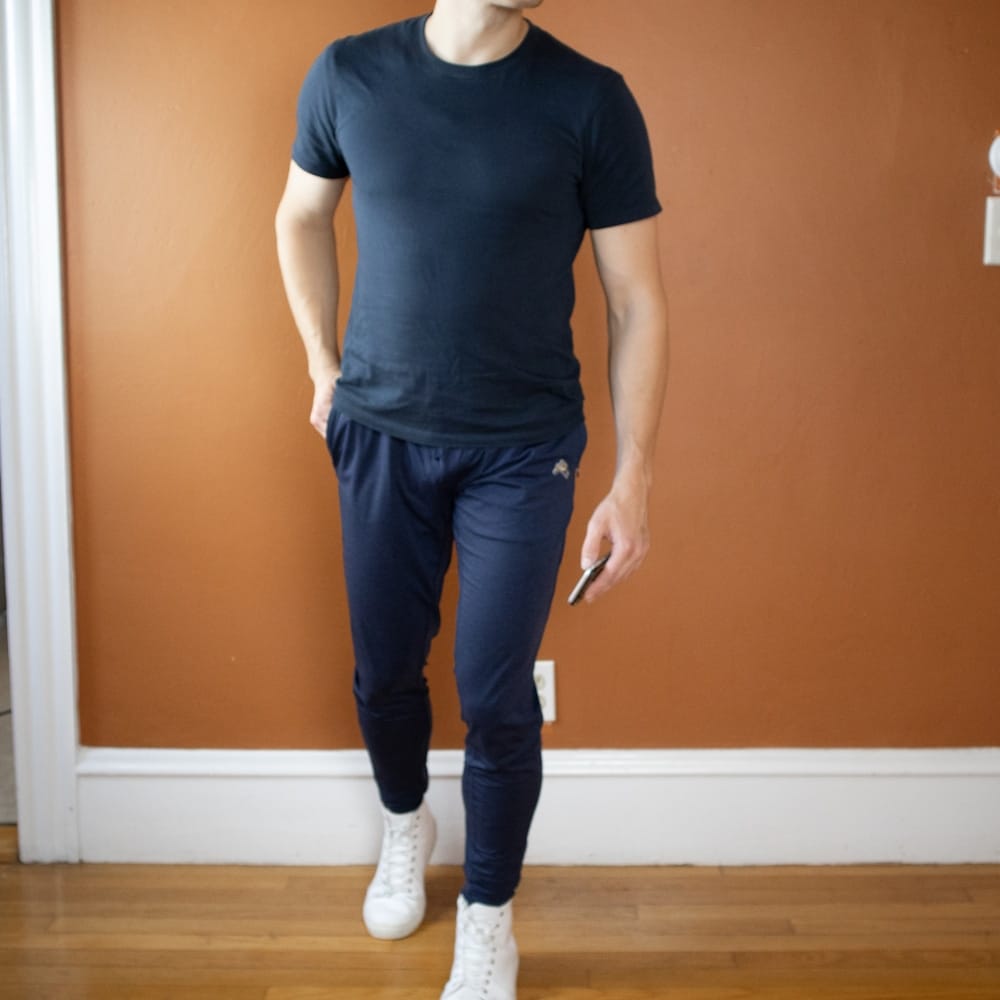
- Best For: Anyone building a core capsule wardrobe of basics. Their Supima cotton t-shirts, denim, and outerwear offer exceptional quality and durability for the price.
- Consider: The initial sticker price is higher. A Uniqlo t-shirt might cost $20 compared to Gap Factory’s $10. You must be willing to invest upfront to realize the long-term savings in TCO.
- Avoid If: You are purely driven by the lowest possible initial price or need a massive volume of clothing for a very low budget (e.g., the parent buying 10 shirts for $50).
- Analysis: Uniqlo is the clear winner on long-term value. Our analysis shows that its higher-quality materials and construction lead to a significantly lower cost-per-wear. It is the antithesis of Gap Factory’s disposable model, focusing on timeless basics that last. Explore competitor offerings with our full category of review articles.
Alternative 3: Target (Cat & Jack)
- Best For: Parents buying clothes for young children. The Cat & Jack brand is a direct and superior competitor to Gap Factory’s kids’ line.
- Consider: The style aesthetic may be different from Gap’s classic preppy look, leaning more towards playful graphics and trendy designs.
- Avoid If: You are looking for adult clothing, where Target’s other private labels (like Universal Thread) are competitive but don’t have the same standout return policy.
- Analysis: The key advantage for Target is its incredible return policy: a one-year guarantee on its Cat & Jack brand. If a t-shirt gets a hole or a pair of jeans wears out within a year, you can return it. This provides an unbeatable safety net that completely de-risks the purchase, making it a far smarter choice for parents than the gamble of Gap Factory.
Part 7: Final Verdict & Recommendations
After a deep-dive analysis for this Gap Factory Review, my verdict from a Fashion value perspective is clear. While the brand has some appeal for very specific niches, the significant considerations make it a challenging recommendation for the average shopper.
For anyone building a core wardrobe, our Gap Factory review concludes this is a poor investment. The analysis shows you will get significantly better value from alternatives. For a deeper look at value-focused shopping, see our detailed Gap Factory value review analysis.
What We Love
- Low Initial Prices: Unbeatable initial prices for budget-focused shopping.
- Perfect for Kids’ Playwear: Ideal for temporary-use clothing for young children who will quickly outgrow or stain outfits.
- Classic, Familiar Styles: The family-friendly, classic American aesthetic is widely available and appealing.
- Frequent Sales: The perpetual sale model makes it easy to stock up on seasonal or trendy items at a low cost.
- Accessible Sizing: Offers a broad range of sizes that cater to many different body types.
Things to Consider
- 💡 Systematic Poor Quality: Durability is a significant limitation, leading to a high cost-per-wear.
- 💡 The “Sizing Lottery”: Highly inconsistent sizing makes online shopping a major gamble.
- 💡 Costly Return Process: The return policy includes a $5.95 mail-in fee, penalizing customers for the brand’s own inconsistencies.
- 💡 Misleading Value Proposition: The brand reputation of “Gap” creates quality expectations that the “Factory” product does not meet.
- 💡 Ethical Supply Chain Concerns: Watchdog groups have noted significant concerns regarding labor practices and a lack of transparency.
Our Recommendation: Who Should Buy from Gap Factory?
- The Pragmatic Parent: YES. I completely agree with the sentiment of the parent on Reddit who said, “It’s disposable clothing for a disposable purpose” (Frugal living tips on Reddit). For kids who need an endless supply of play clothes for daycare or a haul for back-to-school shopping, Gap Factory’s low initial cost makes perfect sense.
- The Budget-Conscious Trend Follower: MAYBE. If you want to try a trendy color or style that you only plan to wear for a single season, the low investment can be justified. Don’t expect it to last, and you won’t be disappointed.
- The Smart Shopper Building a Wardrobe: NO. For anyone building a durable capsule wardrobe of core basics like t-shirts, sweaters, and jeans, this is a poor investment. My analysis shows you will get significantly better value and a lower total cost by investing in basics from competitors like Uniqlo or Old Navy, or by waiting for a sale at mainline Gap.
Final Statement: While Gap Factory’s sticker prices are tempting, our analysis concludes it represents a false economy for the majority of shoppers. While it serves a purpose in the world of discount clothing, for durable, everyday apparel, your money is better spent elsewhere. The perceived savings are quickly eroded by poor quality and the need for frequent replacements.
Frequently Asked Questions
Q1: Is Gap Factory worth the money in 2026?
It depends on your specific needs. For most people and most types of clothing, this Gap Factory review concludes it does not represent good value. While the initial prices are very low, the noted limitations in quality and durability mean that the cost-per-wear is often much higher than that of more durable alternatives from competitors like Uniqlo (Why You Should Know the Cost Per Wear of Your Clothes). It is generally only “worth it” for temporary clothing where longevity is not a concern, such as for young children’s play clothes that will be outgrown or ruined quickly.
Q2: What is the real quality difference between Gap and Gap Factory?
The quality difference is significant and is a central finding of our Gap Factory review. Gap Factory items are not simply past-season Gap clothes; they are a separate line manufactured with thinner materials, weaker seams, and lower overall construction quality. You should expect mainline Gap clothing to be more durable, hold its shape better, and last much longer. The distinction is most noticeable in basics like t-shirts and sweaters, which users report can fail after just a few washes (Is Gap Factory good quality? What to know before you shop).
Q3: Are Gap Factory clothes just old Gap stock?
This is a common misconception. The vast majority of items sold at a Gap Outlet or Gap Factory store are “made-for-outlet.” This means they were designed and manufactured specifically for the factory stores using lower-cost materials and processes to hit a specific low price point (Spot the Difference: Outlet vs. Retail Clothing). While a small percentage of items might be true overstock from mainline Gap, you should assume that what you are buying is a separate, distinct product.
Q4: How does Gap Factory sizing run compared to Gap?
Gap Factory sizing is notoriously inconsistent, a phenomenon many shoppers call the “sizing lottery.” While mainline Gap sizing is generally consistent, you may find that with Gap Factory, three pairs of jeans in the exact same size all fit differently. This is one of the most frequent complaints in user reviews (Gap Inc. Complaints on BBB). It is highly recommended to try clothes on in-store or, if ordering online, to purchase multiple sizes with the expectation of making returns.
Q5: What are the best things to buy at Gap Factory?
The best items to buy are those where durability is not a primary concern, which is why its kids clothing line is often considered the most logical purchase. This category is almost exclusively limited to toddler and young kids’ play clothes that you fully expect to be outgrown or ruined quickly. Trendy, seasonal items you only plan to wear a handful of times could also fall into this category. The goal should be to leverage the low price for items with an intentionally short lifespan.
Q6: Why is Gap Factory so cheap?
Gap Factory is cheap because it uses lower-cost materials and less complex manufacturing processes compared to mainline Gap. It is a ‘made-for-outlet’ line, meaning items are intentionally produced to hit a low price point. This results in thinner fabrics, simpler designs (e.g., fewer details on a pair of jeans), and lower overall fabric quality, which allows the company to sell them at a significant discount (The Difference Between Gap And Gap Factory). The business model prioritizes initial affordability over long-term durability.
Q7: Should I use Gap Factory or Old Navy?
For most shoppers seeking reliable family basics on a budget, Old Navy is a safer and better choice. Although owned by the same parent company (Gap Inc.), Old Navy operates with a clearer brand proposition and generally offers more consistent sizing and quality for a similar price point. This removes the “outlet vs. mainline” confusion from the equation, as you know you are buying from a brand designed to be affordable from the start, rather than a lower-quality version of a premium brand (Gap vs Old Navy on Reddit).
Q8: Can you use Gap Factory coupons on sale items?
Yes, this is one of the best ways to maximize savings. Gap Factory often allows promotional codes to be applied to already discounted ‘clearance’ items, a practice known as “stacking.” This is a key strategy for smart shoppers looking to get the absolute lowest price, especially on kids’ clothing or seasonal items. Always check the coupon’s specific terms on our Gap Factory voucher hub, but using a code on the Gap clearance section is a common and effective tactic.
Appendix: The Coupons Scout Verification Protocol (CSVP™)
Our Philosophy: “Martech Precision, Human Integrity.” At Coupons Scout, we believe “Value” comes in two forms: Working Codes and Honest Advice. Founded by a MarTech strategist, our platform uses automation to discover data but relies 100% on human experts to interpret it.
Dual-Track Verification:
- Track A (Coupon Codes): Led by Founder Mohamed Zaki, our systems discover deals. Kanokchai Likitapiwat’s team then manually performs an “Add-to-Cart” test to verify each code works.
- Track B (Reviews & Guides): We use data to select products to review. Our domain experts, like Jennifer Angel for fashion, evaluate product quality, price-to-value, and user feedback. The data is then fact-checked by Kanokchai’s team.
Editorial Standard: Editor-in-Chief Joanne Lovell serves as the final gatekeeper, ensuring clarity, objectivity, and proper disclosures before any content is published. We prioritize accuracy over archive size.