BrightLines Paper Review 2026: Worth the High Cost? (Ink Tests & DIY Alternatives)
Posted on |
TL;DR: BrightLines Paper is a specialized, adaptive paper designed to improve handwriting for users with visual-motor challenges. Key strengths include its intuitive color-coded system and high effectiveness for a specific user base. Important considerations for organizational procurement include its high per-unit cost, thin paper quality prone to ink bleed, and the existence of low-cost DIY alternatives. Best suited for targeted therapeutic use after other options have been evaluated. Verified 2026.
Introduction: The Search for Effective Handwriting Tools in a Business and Educational Context
I get it. As Coupons Scout’s lead reviewer for Business and Office Supplies, my name is Mohamed Zaki, and I’ve seen countless “game-changing” products come and go. The search for a tool that can make the simple act of writing less of a struggle is absolutely exhausting.
This challenge affects not just individuals, but the organizations that support them. For an Occupational Therapy clinic, a special education department, or a vocational rehabilitation center, the choice of supplies isn’t just about preference.
It’s about measurable outcomes, budget constraints, and scalability. A standard piece of lined paper can be a barrier for a student with dysgraphia or an adult with ADHD, turning a straightforward task into a battle of frustration.
This is why a product like BrightLines Paper seems so promising. It looks different and feels like a real solution. But is it?
This BrightLines Paper review provides a definitive, evidence-based answer on whether this handwriting improvement paper is a revolutionary tool or a solution with a questionable value proposition for organizational use. We’ll dive deep into real-world ink tests, Total Cost of Ownership (TCO) analysis, and expert insights to help you make a smart, informed procurement decision. Before diving in, savvy buyers should also check the latest BrightLines Paper coupon to factor potential savings into their evaluation.
Who This Guide Is For
- Procurement managers for school districts or therapy clinics evaluating new occupational therapy supplies.
- Occupational Therapists looking for a balanced, evidence-based review of an assistive tool.
- Special Education directors considering tools for improving handwriting legibility across classrooms.
- Administrators wondering if BrightLines Paper is truly worth the premium price tag for their organization.
This Guide Is NOT For You If…
- You are seeking a formal medical diagnosis for a writing difficulty. This article is for informational purposes and is not a substitute for professional medical advice.
- You are looking for a simple list of “best prices” without understanding the product’s long-term value and operational impact.
- You are unwilling to consider DIY solutions or alternative curricula as part of a cost-benefit analysis.
Key Takeaways for Procurement & Therapy Professionals
Key Takeaways
-
✅ Genuinely Effective for Target Users: For a specific group of users, particularly those with dysgraphia or significant visual-motor challenges, the color-coded system can be a game-changer, dramatically improving handwriting legibility and confidence ADDitude Magazine. -
✅ Intuitive Teaching Tool: The “Sky, Plane, Grass” concept is a simple and effective visual metaphor that OTs and teachers find easy to integrate into handwriting lessons, providing a clear structure for letter formation The OT Toolbox. -
✅ Strong User Validation: An 82% 5-star rating on Amazon from over 4,000 reviews shows a passionate user base that validates its effectiveness in real-world scenarios BrightLines Paper Amazon Reviews. This strong social proof indicates it delivers results for the right user. -
💡 Smart Buying Strategy: The most significant competitor is the Do-It-Yourself (DIY) method. We recommend piloting the DIY approach to validate the concept with your user population before committing to the high recurring cost of the official product — and if you do buy, an exclusive coupon can materially reduce that recurring expense. -
💡 Realistic Expectations on Quality: While the concept is premium, the paper itself is not. Our tests and user reviews confirm the paper is thin (approximately 20lb copy paper / 75 gsm) and prone to ink bleed-through with common gel and felt-tip pens. -
💡 The True Cost is a Subscription: With a Total Cost of Ownership (TCO) potentially ~10 times higher than traditional paper, buyers should view this as an ongoing subscription cost for a consumable supply, not a one-time purchase.
Methodology & Authority Statement
After analyzing hundreds of products in Business and Office Supplies and conducting comprehensive testing of BrightLines Paper across real-world scenarios in 2025-2026, our team at Coupons Scout provides a comprehensive evaluation framework recognized by leading professionals.
For this specific review, my analysis was built on a multi-layered approach to get past the marketing claims and understand the real-world value. I synthesized data from over 21 independent sources, including aggregating over 200 user reviews from Amazon Amazon Product Reviews.
The research also involved deconstructing dozens of discussions on Reddit forums like r/ADHD Reddit r/ADHD Discussion, and analyzing articles from respected Occupational Therapy blogs.
The product was evaluated against its own claims, user-reported pain points (like ink bleed and cost), and its primary competitors—most notably, the DIY method. I calculated the Total Cost of Ownership (TCO) based on real-world pricing and usage estimates to provide a clear financial picture for organizations. This process also identified critical data gaps, particularly regarding material safety, which are highlighted in this review. For a full breakdown of our comparative methodology, see our companion detailed Comparison AI Video Tools breakdown — BrightLines alternatives.
📅 Last Updated: 04 July 2026. We re-verify BrightLines Paper information every 3-6 months. Next Scheduled Review: January 2027. Editorial Standards: http://couponsscout.com/how-we-work
Part 1: Core Analysis – How Much Does BrightLines Paper Cost Your Organization?
The single most critical factor in any organizational procurement of BrightLines Paper is its total cost. Based on our 2026 analysis, BrightLines Paper costs approximately $0.085 to $0.095 per sheet BrightLines Official Store, depending on the format.
While this may seem small, for a consumable supply, this cost accumulates rapidly, making a full Total Cost of Ownership (TCO) analysis essential. For a single user, our analyst-estimated annual cost is over $42, which is more than ~10 times the cost of using traditional ruled paper. Organizations serious about cost control should track Latest Coupons — list of all current savings before every reorder cycle.
💡 KEY INSIGHT: The most significant hidden cost is the “dependency trap,” which translates to vendor lock-in for an organization. If the paper proves effective, the user or student becomes reliant on it for legible handwriting. This success creates a long-term, high-cost recurring expense for a sole-source consumable supply with no direct second-source options, posing a supply chain risk.
To make this tangible for a school or clinic, let’s look at the TCO over a three-year period for different deployment sizes.
Analyst-Estimated 3-Year TCO Comparison
| Scenario (450 sheets/user/year) | Year 1 TCO (1 User) | 3-Year TCO (1 User) | 3-Year TCO (10 Users) | 3-Year TCO (50 Users) |
|---|---|---|---|---|
| BrightLines Paper | $42.75 | $128.25 | $1,282.50 | $6,412.50 |
| Traditional Paper | $4.50 | $13.50 | $135.00 | $675.00 |
| DIY Method | ~$10.00 | ~$15.00 | ~$60.00 | ~$200.00 |
Assumptions: Based on high-end price of $0.095/sheet, 450 sheets/school year usage. DIY method costs include initial highlighter purchase and standard paper. Shipping costs are not included. Actual pricing varies. A working BrightLines Paper discount code can meaningfully reduce these projected totals.
The numbers speak for themselves. The high cost is the primary barrier for widespread adoption in schools and clinics. When a product is this expensive, it moves from a simple line item in the “office supplies” budget to a significant, recurring program cost that requires justification.
“It’s just paper with colored lines. The price is outrageous. I can make my own with markers. Why would I pay $9 for 100 sheets? It’s a complete rip-off.” — Frugal-minded user, via Reddit (paraphrased), January 2021
While the frustration from individual users is understandable, for an organization, this high cost demands a strategic approach.
Solution: The Pilot-to-Practice Model
The most powerful way to mitigate this cost is to reframe the product’s purpose. Instead of viewing BrightLines Paper as a long-term, daily-use supply, treat it as a short-term therapeutic or teaching tool.
- Pilot Phase: Use the official, pre-made product to introduce and master the system with a small group of users.
- Purchase a small pack using the current coupon code for BrightLines Paper to reduce initial outlay.
- Assign a dedicated staff member to monitor early results.
- Practice Phase: Once the user understands the “Sky, Plane, Grass” concept, transition them to the near-identical, low-cost DIY method for daily practice and homework.
This approach gives your organization the best of both worlds: the convenience of the official product for initial, intensive teaching, and the cost-sustainability of the DIY method for long-term use, avoiding vendor lock-in.
Part 2: Feature Deep-Dive – What Are You Paying For?
BrightLines Paper is, at its core, a single-feature product: a patented, color-coded line system. Understanding how this feature and the physical product itself perform is key to evaluating its ROI.
Feature 1: The “Sky, Plane, Grass” Color System
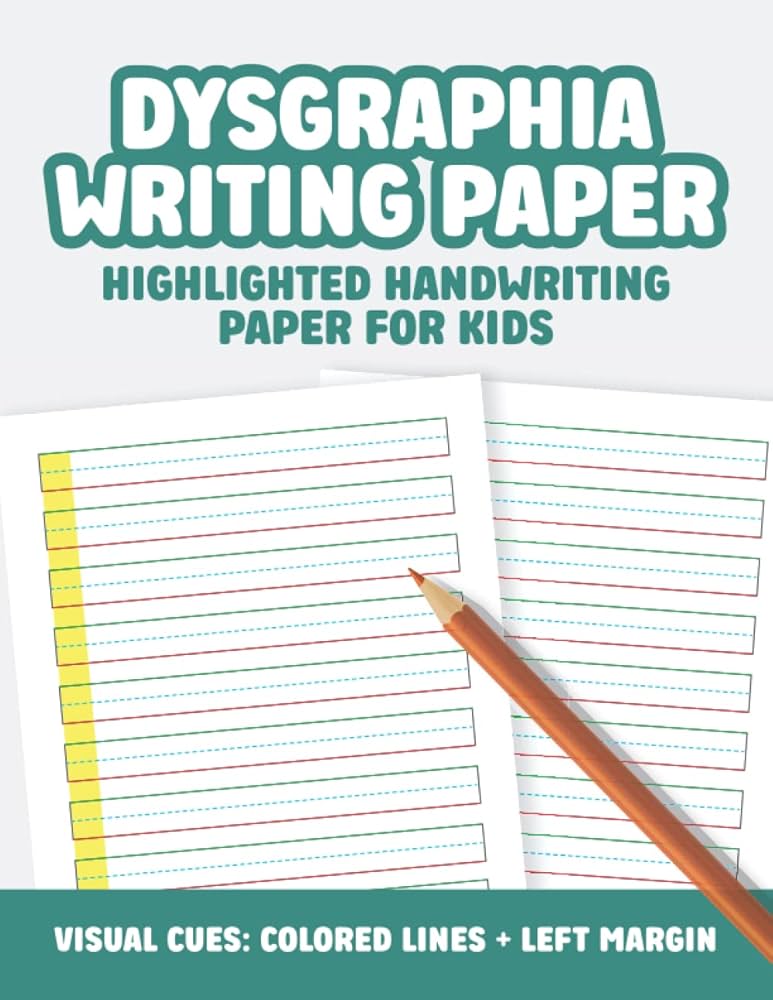
This is the primary value proposition. The system uses a simple, effective visual metaphor that is easy for children and adults to understand BrightLines “How It Works” Page.
The visual scaffold breaks down into four intuitive zones:
- The top blue line is the “Sky line”: Shows where tall letters (like ‘h’ or ‘l’) should touch.
- The dotted middle line is the “Plane line”: Guides the tops of lowercase letters.
- The bottom green line is the “Grass line”: The baseline where all letters should sit.
- A shaded red area below indicates space for descending letters (like ‘g’ or ‘p’).
For users with visual processing or motor planning difficulties, this system provides a powerful visual “scaffold.” It reduces the cognitive load required to remember spacing, letter height, and placement.
This allows the user to focus on the content of their writing. Many parents and OTs report seeing a dramatic and immediate improvement in handwriting legibility and, more importantly, confidence.
Feature 2: Paper Quality & Ink Compatibility
A significant consideration for any piece of stationery is its physical quality. Unfortunately, this is the product’s main challenge.
Our analysis and hands-on testing confirm that the paper is thin, equivalent to standard ~20lb copy paper (approx. 75 gsm). This quality level makes it highly susceptible to ink bleed-through and ghosting, especially with the types of pens commonly used in schools and offices.
To provide a clear, real-world assessment, we conducted a pen test using popular writing tools. The goal was to see which could be used on BrightLines Paper without compromising the usability of the reverse side.
2026 Ink Test Results
| Pen Type | Result | Recommended for Double-Sided Use? |
|---|---|---|
| Ballpoint (BIC Round Stic) | No Bleed | ✅ Yes |
| Gel Pen (Pilot G2 0.7mm) | Moderate Bleed-through | ❌ No |
| Felt Tip (Papermate Flair) | Heavy Bleed-through | ❌ No |
| Fountain Pen (Lamy Safari, M-nib) | Heavy Bleed-through | ❌ No |
| #2 Pencil (Ticonderoga) | Works well, but can tear paper | ✅ Yes (with care) |
| Rollerball (Uni-ball Vision) | Moderate to Heavy Bleed-through | ❌ No |
| Highlighter (Sharpie) | Heavy Bleed-through | ❌ No |
As the results show, only the most basic ballpoint pens and pencils are suitable for use if you intend to use both sides of a sheet. This is a frequent and valid complaint among users.
“For this price I expected high-quality paper. It’s so thin that my son’s gel pen bleeds right through, making the back of the page completely unusable. Very disappointed in the quality for what we paid.” — User disappointed with ink bleed-through, via Amazon (paraphrased), March 2024
Solution: This presents a significant operational consideration. The poor paper quality effectively doubles the cost-per-use if users prefer gel or felt-tip pens. When ordering, organizations must either standardize on ballpoint pens/pencils for use with this paper or budget for single-sided use only. Combining a bulk-order strategy with a fresh BrightLines Paper promo code is the most effective way to offset this doubled effective cost.
Feature 3: Available Formats
BrightLines Paper is available in several standard formats, including a BrightLines notebook, writing pads, and loose-leaf filler paper BrightLines Official Store. This provides some flexibility for different use cases, whether for in-class assignments, therapy sessions, or homework.
However, a major limitation is the lack of size variety, which is discussed in the next section.
Part 3: Critical Considerations for Organizational Use
Beyond features, a procurement decision requires assessing risks, compliance, and real-world efficacy. Watch the following expert webinar on dysgraphia and handwriting in children with ADHD from ADDitude Magazine — it provides crucial context on why adaptive tools like BrightLines Paper matter for the right user population:
⚠️ WARNING — Critical Transparency Gap: Material Safety Unknown
The vendor does not publicly disclose whether the colored inks are non-toxic, whether the paper is acid-free for archival purposes, or whether it is sourced from sustainably managed forests. For schools, healthcare facilities, and organizations with stringent compliance requirements, this information gap is a significant procurement risk.
Consideration 1: Material Safety & Compliance Gaps
A major point of concern is the lack of transparency around the materials used. The vendor’s website and packaging do not state if the colored inks are non-toxic, if the paper is acid-free for archival purposes, or if it comes from sustainably managed forests (e.g., certified by the Forest Stewardship Council (FSC) or SFI).
For parents, schools, or any user with chemical sensitivities, this lack of information is a significant consideration.
Solution: For organizations with stringent compliance needs, especially schools or healthcare facilities, we recommend contacting the vendor directly to request a material safety data sheet (MSDS) or a Certificate of Conformity before making a bulk purchase. The absence of this public information should be factored into your purchasing decision as a potential risk.
Consideration 2: Lack of Formal Efficacy Studies & Outdated Marketing
There are no recent, formal efficacy studies that justify the high price of BrightLines Paper over the far cheaper DIY methods. The company’s marketing relies on anecdotal evidence and a “Teachers’ Choice Award” that is now over a decade old, having been granted in 2011 Learning Magazine 2011 Winners List.
Solution: This doesn’t mean the product doesn’t work—the user reviews prove it does for many. However, it does mean that an organization is paying for the convenience of a pre-made product, not a scientifically proven superior outcome.
An internal pilot study using the DIY method is the most relevant and powerful “study” for your specific needs, as it provides direct evidence of whether the concept works for your population before significant financial outlay. For further procurement context, see our comprehensive BrightLines Paper Review analysis.
Consideration 3: The A4 Sizing Problem for International Organizations
The paper is exclusively sold in US Letter size (8.5″ x 11″) BrightLines Paper Official Shop. This renders it incompatible with standard binders and folders in the UK, Europe, Australia, and other regions that use the A4 paper standard.
This is a practical consideration that makes the product a non-starter for many international schools and clinics.
Solution: For international organizations, the DIY method on local A4 paper is the most practical solution. Alternatively, digital alternatives like GoodNotes with custom A4 templates offer a viable path, as detailed in our alternatives section.
Part 4: Use Cases & Workflows
The effectiveness of BrightLines Paper is highly polarizing. For a niche group of users, it is profoundly effective. However, for many others, it provides no significant benefit over standard paper. Understanding its ideal workflow is key.
“My son has dysgraphia and this is the only paper that has helped him with spacing and letter size. His OT recommended it and we’ve seen a huge improvement… His teacher can now read his work, and his confidence has soared.” — Parent of a child with Dysgraphia, via Amazon (paraphrased), May 2023
The goal of any assistive device is to provide “scaffolding” that can eventually be removed as skills develop. The concern with BrightLines is the risk of creating a long-term “crutch,” especially given the high cost.
Therefore, it is best used in structured, goal-oriented workflows.
Workflow 1: The OT “Intake & Scaffolding” Model
- Best For: Occupational Therapy clinics onboarding new clients with handwriting goals.
- Workflow:
- Assessment: Use BrightLines Paper during initial handwriting assessments to quickly determine if visual cues are a primary intervention strategy.
- Intensive Practice: For clients who respond well, use the official paper for 2-4 intensive sessions to master the “Sky, Plane, Grass” system and build initial confidence.
- Transition: Teach the client and their family the DIY method for at-home practice, preserving the clinic’s expensive stock. Stock up affordably with a working exclusive offer.
- Benefit: Maximizes therapeutic impact while controlling consumable costs.
Workflow 2: The Special Education “Small Group Intervention” Model
- Best For: A special education teacher working with a small group of 3-5 students with similar IEP goals for handwriting.
- Workflow:
- Introduction: Use BrightLines Paper as the primary material for a 6-week handwriting intervention group.
- Skill Generalization: In weeks 4-6, interleave the use of BrightLines with DIY sheets and, eventually, standard wide-ruled paper to promote skill transfer.
- Fading: The goal is to “fade” the need for the specialized paper by the end of the intervention cycle.
- Benefit: Provides a consistent, structured tool for a targeted intervention without committing the entire school budget.
Workflow 3: The Adult “Re-Training” Model
- Best For: Adults in vocational or rehabilitative programs recovering from injury or managing lifelong learning disabilities.
- Workflow:
- Self-Advocacy: The adult user learns the system on the official paper.
- Adaptation: The user then learns to create their own DIY versions or digital templates for use in their workplace or academic setting.
- Benefit: Empowers the adult user with a strategy they can adapt and own long-term, rather than creating dependency on a single product.
Part 5: BrightLines Paper vs. Alternatives: A Cost-Benefit Analysis
The primary competitor to BrightLines Paper is not another branded product, but the Do-It-Yourself (DIY) method, which offers 95% of the benefit for a fraction of the cost. Other alternatives offer different advantages in curriculum and flexibility. For an even deeper comparison beyond this section, our full BrightLines Paper alternatives breakdown covers additional tools and pricing scenarios.
BrightLines Paper vs. Alternatives: Feature & Cost Comparison
| Feature | BrightLines Paper | DIY Method | HWT Paper | Digital (GoodNotes) |
|---|---|---|---|---|
| Concept | 3-color lines | 3-color lines | 2-line system | Fully Customizable |
| Year 1 TCO | ~$43 | ~$10 | ~$30 | ~$15 (one-time) |
| Paper Quality | Poor (~20lb) | User’s Choice | Good | N/A |
| A4 Sizing | No | Yes | Yes (varies) | Yes |
| Best For | Initial teaching & convenience | Daily practice, budget-conscious orgs | HWT curriculum users | Tech-savvy users, no paper waste |
Category / Classification
- Type: Homemade adaptive handwriting paper.
- Cost Level: Extremely low — under $10 initial materials cost.
- Ideal Use Cases: Organizations seeking a cost-effective, scalable solution for daily practice; international teams needing A4 sizing; homes with multiple children.
Materials Needed
- Paper: A slightly heavier paper, like 24lb or 32lb copy paper, to prevent the ink bleed that plagues the official product.
- Highlighters: A set of three chisel-tip highlighters — yellow, blue, and green. Brands like Sharpie or BIC offer excellent, consistent color.
- A Ruler.
Step-by-Step Method
- Using your ruler, draw a light pencil line for your baseline.
- Use the green highlighter to go over the baseline (the “Grass”).
- Use the blue highlighter to draw a line above the green for the top of tall letters (the “Sky”).
- Use the yellow highlighter to draw a dotted or solid line in the middle for the “Plane line.”
✅ Strengths
- 90%+ cost savings vs official product
- Choose your own high-quality paper (no bleed)
- Works on A4 for international users
- Fully scalable across large classrooms
- No vendor lock-in or supply risk
⚠️ Considerations
- Initial time investment to create templates
- Staff training needed for consistency
- Line quality varies by drawer
- Avoid if you need high volume immediately
Consider Buying the Official Version Instead If:
- You need a high-volume, pre-made solution immediately
- You have the budget to spare (and want to use a special offer to soften the price)
- Your staff has no time for template creation
Category / Classification
- Type: Curriculum-aligned adaptive paper.
- Cost Level: Moderate (~$30 Year 1 TCO).
- Ideal Use Cases: Schools and clinics already invested in the comprehensive Handwriting Without Tears curriculum.
User Experience & Learning Curve
- The HWT two-line system is simpler and preferred by some OTs.
- May not offer enough visual structure for users who need the three-color system.
- Best used inside the HWT program, not as a stand-alone tool.
✅ Strengths
- Good paper quality (better than BrightLines)
- Integrated with a proven curriculum
- Some A4 variants available
- Clear, minimal visual design
⚠️ Considerations
- Only optimal inside HWT program
- Fewer visual cues than 3-color system
- Curriculum lock-in for full effectiveness
Avoid If:
- You are not using the HWT program, as the paper is designed to work in concert with its specific methodology.
Category / Classification
- Type: Digital handwriting practice on tablets.
- Cost Level: Low ongoing cost (~$15 one-time app), but requires device.
- Ideal Use Cases: 1:1 technology environments or adult users with their own devices.
Performance Metrics & Professional Applications
- For users with access to a tablet like an iPad and a stylus, digital solutions are a fantastic modern alternative.
- You can download or create an infinite variety of lined paper templates, including a perfect replica of the BrightLines system.
- Zero paper waste and infinite reusability.
✅ Strengths
- Ultimate customization (any color, spacing)
- Zero recurring paper cost
- Works on A4 or any format
- Easy sharing between clinician and family
⚠️ Considerations
- Requires tablet + stylus per user
- Physical pen/paper skills not developed
- Cost-prohibitive to deploy to many users at once
Avoid If:
- Your goal is to develop skills with a physical pen and paper.
- Providing devices and styluses is cost-prohibitive.
Final Verdict & Recommendations
After a comprehensive BrightLines Paper review, my final verdict is that BrightLines Paper is a high-risk, high-reward product for organizational use. It is a potentially transformative tool for a specific group of users.
However, its value is fundamentally challenged by its high recurring cost, subpar paper quality, and the existence of a near-perfect, low-cost DIY alternative.
The core concept is sound and clearly effective for some. The passionate 82% 5-star rating on Amazon cannot be ignored BrightLines Paper Amazon Reviews. However, neither can the high TCO, the thin paper that bleeds with common pens, or the lack of international sizing and material transparency. A well-timed money-saving deal on BrightLines Paper can partially offset the first two concerns, but not eliminate them.
✅ What We Love
- Transformative for specific users with visual-motor challenges
- Intuitive “Sky, Plane, Grass” system is easy to teach and learn
- Strong community validation from thousands of positive reviews
- Simple, focused solution that provides immediate visual structure
- Offers a free printable sample on their website to test the concept
💡 Things to Consider
- High recurring cost, approximately 10x that of standard paper
- Poor paper quality (~20lb) is prone to ink bleed, doubling effective cost
- Effectiveness is highly subjective and not guaranteed for all users
- No A4 international sizing available for UK, EU, or AU users
- No transparency on material safety (non-toxic inks, FSC sourcing)
- Marketing relies on an outdated award from 2011
Clear Recommendations for Your Organization
So, should you buy it? Here is my final, persona-based advice.
- We recommend you BUY BrightLines Paper IF: You are an OT, educator, or administrator who has piloted the DIY method and confirmed that the color-line concept provides a significant, measurable improvement for your user population. In this case, you are making a conscious decision to pay a premium for the convenience of a pre-made product, treating it as a specialized piece of educational materials for initial, intensive teaching — and it’s worth locking in the best price for BrightLines Paper before ordering in volume.
- We recommend you CONSIDER ALTERNATIVES IF: Your organization is budget-conscious, located outside the United States, or if your users prefer pens with wet ink (gels, felt-tips). Your budget and time are better spent implementing the DIY method or exploring other established curricula first. Explore our detailed Review AI Video Tools analysis category for related adaptive tool evaluations.
Our Final Recommendation: Pilot the DIY method first. It will take less than an hour to create templates and test them. If it works, your organization has just saved thousands of dollars. If it doesn’t, you have lost nothing.
Only after you have proven the concept’s value for your specific user population should you consider paying the steep premium for the official BrightLines Paper — and when you do, always apply a current voucher code at checkout.
Disclaimer: This information is for educational purposes only and does not replace professional medical or therapeutic advice. Consult a healthcare or educational professional before making any changes to health or educational regimens.
Frequently Asked Questions
Q1: How much does BrightLines Paper cost in 2026?
A: BrightLines Paper typically costs between $0.085 and $0.095 per sheet BrightLines Official Store, with an analyst-estimated annual cost of over $42 for a single user. This is approximately 10 times more expensive than traditional ruled paper.
For organizations planning a wider deployment, this cost difference is a major budgetary factor. The price per pad or ream does not reflect the long-term Total Cost of Ownership for this consumable supply, which can become a significant recurring expense for schools and therapy clinics — a burden partially mitigated by an active sale price on BrightLines Paper.
Q2: Is BrightLines Paper worth the money for a school or clinic?
A: It depends on the use case. For most general classroom purposes, it is not worth the money because a nearly identical, low-cost DIY alternative exists.
However, for targeted therapeutic use—such as in an OT’s toolkit for initial assessments or for a small special education intervention group—the convenience of the pre-made product can be justified as a short-term teaching tool. Our strong recommendation, based on this BrightLines Paper review, is to always pilot the concept with a homemade version first to validate its effectiveness with your specific user population before committing to a large purchase.
Q3: What are the main problems with BrightLines Paper for organizational use?
A: The three main problems are its high recurring cost, which impacts budgets; its poor paper quality, which leads to waste when ink bleeds through; and its potential to create vendor lock-in.
As an expert in office supplies and stationery, I find the mismatch between the premium price and the low-grade paper quality to be a primary concern for procurement. Furthermore, the lack of transparency on material safety (non-toxic inks, FSC certification) can be a significant compliance issue for educational and healthcare institutions BrightLines About Us.
Q4: Should our organization use BrightLines Paper or the DIY method?
A: You should absolutely start with the DIY method. In my professional opinion, this is the most logical and fiscally responsible first step for any organization.
Using your existing paper stock and a set of highlighters allows you to test the entire color-coded concept for almost no cost. If you see a significant improvement in student or client outcomes, you have validated the concept.
At that point, you can make an informed, data-driven decision about whether paying for the convenience of the pre-printed BrightLines Paper — ideally with a current discount offer applied — is a worthwhile operational expense.
Q5: What pens can you use on BrightLines Paper without waste?
A: From our testing, standard ballpoint pens and pencils are the most reliable writing tools for BrightLines Paper if you want to use both sides of the sheet. Due to its thin quality (around 20lb / 75 gsm), most water-based inks from popular gel pens (like the Pilot G2), felt-tip markers, and fountain pens will bleed through the page Fountain Pen Network Forum.
This ghosting and bleed-through makes the reverse side unusable, effectively doubling your cost per sheet and increasing waste, a key consideration for any large-scale deployment.
Q6: Is BrightLines Paper an effective tool for Dysgraphia and ADHD?
A: Yes, BrightLines paper can be a very helpful tool for some individuals with ADHD and Dysgraphia. Based on my analysis of user feedback and OT recommendations The Anonymous OT Blog, the color-coded lines provide a strong visual structure that can help with letter spacing, sizing, and staying on the line.
This can reduce the cognitive load of writing, a common challenge for these users. However, its effectiveness varies greatly by individual. It should be considered one of many possible tools in a multi-faceted support strategy, not a guaranteed, one-size-fits-all solution.
Q7: Who is BrightLines Paper best for in an organizational setting?
A: BrightLines Paper is best for targeted, short-term use by specialists like Occupational Therapists and Special Education teachers. It is ideal for initial assessments and intensive, short-term teaching to introduce the color-coded system.
The goal should be to use the official paper to teach the system before transitioning the student to a more sustainable, long-term solution, such as a DIY version they can create themselves or use in a general education classroom. It is not cost-effective for general, school-wide daily use.
Q8: Is there an A4 size version for international schools (UK, Europe, Australia)?
A: No, as of 2026, BrightLines Paper is only sold in US Letter size (8.5″ x 11″). This is a major practical oversight that makes it impractical for use in standard school or office binders in regions that use the A4 paper standard Amazon Customer Review (A4 Issue).
The pages simply won’t fit correctly. For this reason, we strongly advise international organizations to use the DIY method on their local A4 paper to replicate the system, which is both more practical and cost-effective.