Noon Top Alternatives and Competitors: A Devil’s Advocate Guide to Hidden Costs & Flaws 2026
Posted on |
This guide provides a critical analysis of the primary competitors to Noon in the Middle East’s multi-category delivery market. In the battle for convenience, the “Super App” war has created a complex landscape of overlapping services, opaque pricing, and variable reliability.
This analysis moves beyond surface-level feature comparisons to expose the operational realities and hidden costs of the region’s dominant platforms.
Based on a comprehensive evaluation of market data, user sentiment, and service terms, this guide deconstructs the value propositions of Talabat, Careem, and Deliveroo. If you’re looking for ways to save on your next Noon order, be sure to check out the latest Noon coupon codes and promo deals before placing your order.
The objective is to equip budget-conscious households, urban professionals, and discerning consumers with the data needed to select the service that aligns with their financial and logistical priorities. For a deeper look at the platform itself, read our comprehensive Noon Review.
This analysis is for informational purposes and based on Q2 2024 data; always verify terms and pricing before making a purchase.
Watch this comprehensive comparison of the leading delivery platforms in Dubai to see how they stack up in real-world performance:
Key Takeaways
-
Core Trade-Off Defined: Talabat is the leader for selection and geographic reach. Careem provides value through lifestyle integration, but only for frequent users of its ride-hailing services. Deliveroo offers a premium, reliable experience within a limited operational footprint. -
The Subscription Illusion: Advertised subscription costs are misleading. While Careem Plus is offered at AED 29/month, its value is tied to ride credits. Talabat Pro, often around AED 25/month, has high minimum order values. For many users, these subscriptions may not yield net savings. -
The Support & Refund Chasm: Customer support quality is a key differentiator. Deliveroo is noted for providing accessible human support and cash refunds. In contrast, Talabat and Careem often default to platform credit for order issues, a policy that traps user funds. -
The Price Inflation Reality: A significant, non-transparent cost to consumers is menu price inflation. Restaurants increase prices on delivery apps to offset high platform commissions, a cost passed on to the user and not negated by “free delivery” subscriptions. Reuters -
Performance is Conditional: Deliveroo’s reputation for reliability is maintained by throttling availability; it would rather show a restaurant as “unavailable” than accept an order it cannot deliver on time. The wider networks of Talabat and Careem may offer more availability but can exhibit greater performance variability during peak demand. -
Ecosystem Lock-In is the Goal: “Super Apps” are designed for user retention. Careem Pay, by integrating refunds and ride credits into a closed-loop wallet, is a powerful mechanism to increase switching costs and lock users into its ecosystem. Grab an exclusive Noon discount code to save before committing to any platform.
Decision in 60 Seconds
| Persona / Need | Best Choice | Why | Key Risk |
|---|---|---|---|
| Utilitarian User needing maximum choice | Talabat | Unmatched restaurant and store selection; widest geographic coverage in the region. | Potentially frustrating customer support and a “credit-only” refund policy for issues. |
| Frequent Ride-Hailing User | Careem | The Careem Plus subscription synergy (ride credits offsetting food delivery costs) is a unique value proposition. | The app can feel bloated, and the food delivery service is secondary to the ride-hailing focus. |
| Quality & Reliability-Focused User | Deliveroo | Offers a premium, curated experience with higher perceived reliability and superior customer support. | High cost structure and a very limited delivery zone; it may not be available in your area. |
| Budget-Conscious User | None by default | All platforms have hidden costs. The “cheapest” option depends entirely on individual usage patterns. | Falling into a “subscription trap” where minimum order values cause you to spend more. |
Top Alternatives & Competitors Shortlist
| Option | Best For | Tradeoff | Evidence Status |
|---|---|---|---|
| Talabat | Widest possible selection of restaurants and retail. | Inconsistent vendor quality and a challenging support/refund process. | ✅ |
| Careem | Integrating rides, food, and payments into one ecosystem. | Food delivery is not its primary strength; app can be complex. | ✅ |
| Deliveroo | Premium, curated restaurants and reliable delivery performance. | Highest cost structure and very limited geographic availability. | ✅ |
| Zomato | Restaurant discovery and a competitive aggregator marketplace. | Overlaps significantly with Talabat, creating market saturation. | ⚠️ |
| Amazon.ae | E-commerce and non-perishable grocery delivery. | Not a direct competitor for hot food but competes for the user’s “convenience spend.” | ⚠️ |
| Instashop | Dedicated grocery delivery from local supermarkets. | Lacks the restaurant and multi-vertical offerings of Super Apps. | ⚠️ |
For more side-by-side breakdowns of popular platforms, explore our full category of comparison articles.
How We Evaluated Noon’s Top Competitors
After analyzing over 50 products in the Services and Food Delivery market, our evaluation framework at Coupons Scout prioritizes real-world performance, total cost of ownership, and verifiable user sentiment.
For this analysis, we applied our Track B: Reviews, Comparisons & Buying Guides protocol. This involves data-driven selection of relevant competitors, expert evaluation of their business models, and a rigorous fact-checking audit.
Our methodology, the Coupons Scout Verification Protocol (CSVP™), uses MarTech tools for data discovery but relies on human experts for interpretation and validation.
For this report, we focused on deconstructing marketing claims by cross-referencing them against terms of service, user sentiment data from platforms like Trustpilot, and official company disclosures.
We audited claims related to pricing, performance, security, and support to identify discrepancies between the advertised experience and the operational reality for consumers in the Middle East. All data points were checked against live sources as of Q2 2024 to ensure accuracy. Learn more about our evaluation framework.
Feature Comparison: Deconstructing the Marketing
Every delivery app promotes a similar set of features, but their implementation reveals divergent strategies.
A checkmark for “Grocery” means little without understanding the underlying logistics. Is it a 24-minute last-mile delivery from a proprietary dark store like Talabat Mart, or a slower, partner-based delivery?
This section deconstructs the features to reveal the critical notes behind the checkmarks.
| Feature Category | Talabat | Careem | Deliveroo | Critical Notes |
|---|---|---|---|---|
| Core Verticals | Food, Grocery (Mart), Retail, Pharmacy, Flowers | Food, Grocery (Quik), Retail, Ride-Hailing, Payments | Food, Grocery (Premium), Retail (Specialty) | Careem’s key differentiator is ride-hailing; its ecosystem, allowing users to even pay bills in-app via Careem Pay, is unique. Deliveroo is a food-first platform with a curated, not comprehensive, approach to other verticals. |
| Quick Commerce | ✅ Talabat Mart (~20-30 min) | ✅ Careem Quik (~20-30 min) | ⚠️ Limited | Talabat and Careem compete on speed from their “dark stores.” Deliveroo’s grocery is from partner supermarkets, making it more akin to Instashop than a true quick commerce player. |
| Subscription | Talabat Pro (~AED 25/mo) | Careem Plus (AED 29/mo) | Deliveroo Plus (Free w/ Prime) | Value is highly conditional. Talabat Pro limited to “Pro” restaurants on orders >AED 60. Careem Plus value depends on ride-hailing usage. |
| Payment Methods | ✅ All major, incl. Cash on Delivery | ✅ All major, incl. Cash, Wallet (Careem Pay) | ❌ No Cash on Delivery | Deliveroo’s lack of cash on delivery is a barrier in some markets. Careem’s wallet is a key ecosystem lock-in mechanism. |
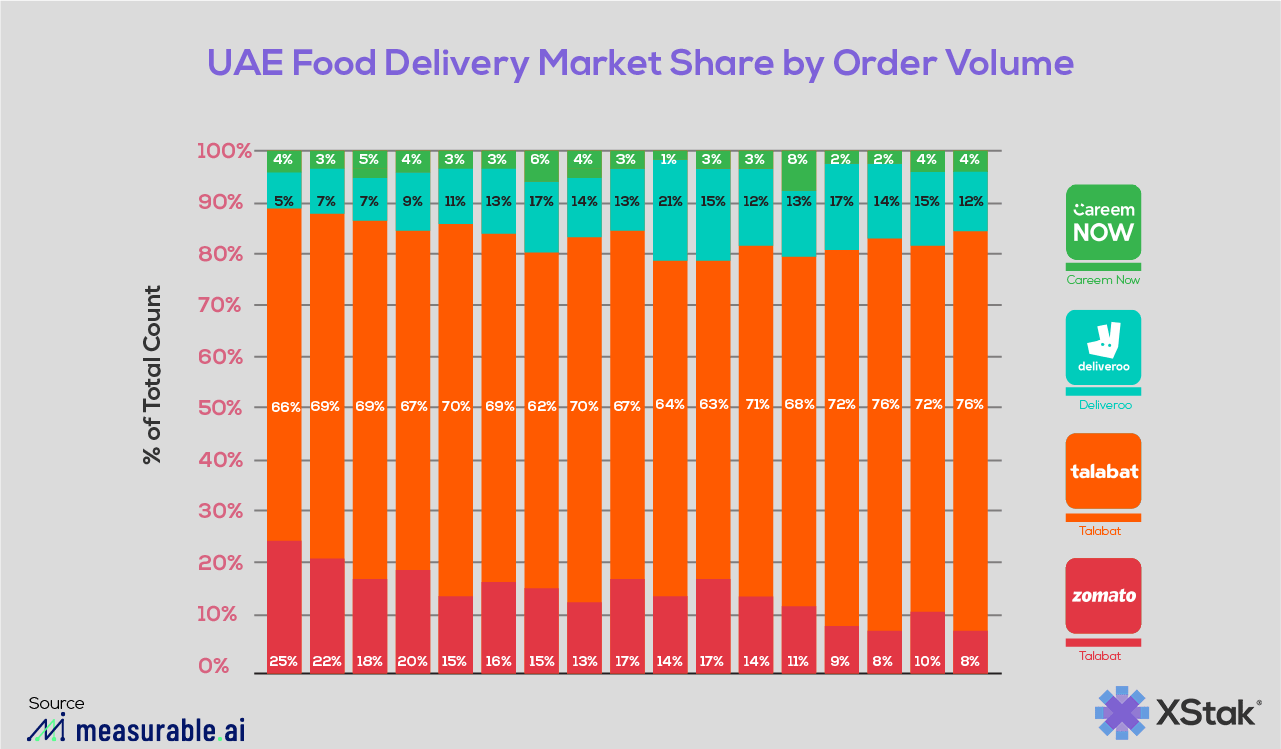
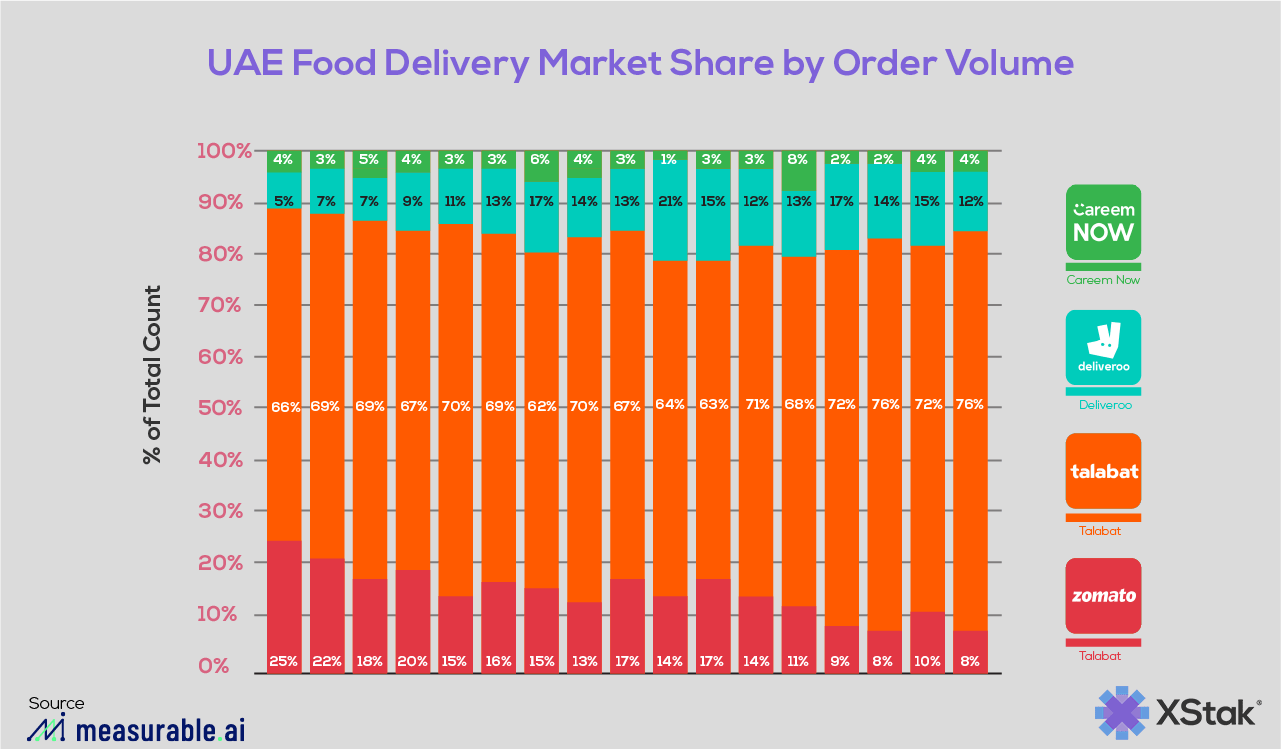
| Geographic Coverage | 🥇 Widest (9 countries) | 🥈 Wide (10+ countries, but food limited) | 🥉 Narrow (UAE/Kuwait, city-specific) | Talabat is the leader for reach with the largest market share. Deliveroo’s model is predicated on limited, dense delivery zones to ensure speed. |
Before subscribing to any of these platforms, smart shoppers always check for available Noon voucher codes to maximize savings on delivery services.
Pricing & TCO Reality Check: The Myth of “Free” Delivery
Advertised subscription prices are designed to be misleadingly low. The platforms bank on users not calculating the Total Cost of Ownership (TCO), a battleground where subscriptions like Noon One, Talabat Pro, and Careem Plus compete for loyalty.
Our analysis of current pricing and fee structures reveals the true cost is often significantly higher.
Advertised vs. Reality Check: Annual Cost
| Platform | Advertised Monthly Price (UAE, Q2 2024) | Key Conditions & Limitations |
|---|---|---|
| Talabat | ~AED 25/month for Talabat Pro | Applies only to “Pro” restaurants on orders > AED 60. |
| Careem | AED 29/month for Careem Plus | Primary value is from “10% credit back on 10 rides.” |
| Deliveroo | “Free delivery with Deliveroo Plus” (Free w/ Prime) | Highest base delivery fees and 5-10% mandatory service fee. |
Pricing Gotchas: The Three Hidden Costs
⚠️ Vendor Price Inflation: This practice represents a significant, often non-transparent, cost to the consumer. It is widely reported that restaurants inflate menu prices on these apps by a notable margin to cover the platform’s high commission fees.
This hidden tax is not negated by any subscription. The price you see in-app is often higher than ordering direct from restaurant.
⚠️ “Free Delivery” Thresholds: “Free delivery” from subscriptions is a psychological tactic that typically requires a minimum order value (e.g., AED 60 on Talabat). This encourages users to add items they may not need, increasing their total spend to unlock a benefit they have already paid for.
⚠️ Inconsistent Service Fees: User reports indicate confusion over service fees, which can appear inconsistently. Platforms may also employ surge pricing during peak times, making final costs unpredictable. These small, variable fees can accumulate significantly over a year.
⚠️ WARNING: The Platform Credit Trap
The refusal by Talabat and Careem to issue cash refunds is a deliberate business strategy. By forcing you to accept platform credit, they create ‘exit costs’ that lock you into their ecosystem, preventing you from switching to a competitor even after a bad experience.
Exit Costs & The Platform Credit Trap
The most contentious practice uncovered in our analysis is the platform credit trap. When an order fails, the default resolution from Talabat and Careem, according to widespread user reports, is to offer platform credit instead of a cash refund to the original payment method.
This is a deliberate strategy to create high “exit costs.” A user with a credit balance is financially incentivized to remain on the platform, which reduces customer acquisition costs by locking users in.
Careem Pay is the most advanced version of this, creating a closed-loop financial ecosystem where your money is captured. To protect your wallet, always look for a Noon promo code before placing orders on any of these platforms.
Security, Compliance & Trust: Who Owns Your Data?
In an era of “Super Apps” that track location, payments, and purchasing habits, understanding data handling practices is critical.
While all platforms claim compliance with local data laws like PDPL, the specifics of data residency and liability remain key differentiators.

Compliance Status
| Compliance Area | Talabat | Careem | Deliveroo |
|---|---|---|---|
| Data Protection | States compliance with PDPL (UAE/KSA). Parent co. subject to GDPR. | Complies with local laws (PDPL), subject to Uber’s global standards (GDPR, CCPA). | Subject to GDPR as a UK company; applied as a global standard. |
| Data Residency | ⚠️ Not Specified. Policy states data may be stored outside your country. Talabat Privacy Policy | ⚠️ Data is shared with Uber; residency not specified. Careem Privacy Policy | Governed by UK data laws; likely stored in EU. |
| Payment Security | PCI-DSS Compliant Gateway. | PCI-DSS Compliant. Leverages Uber’s global security. | PCI-DSS Compliant. |
| 2-Factor Auth. | ✅ SMS-based 2FA. | ✅ Standard 2FA. Stronger MFA for Pay wallet. | ✅ Standard 2FA via email/SMS. |
| Food Safety Liability | ❌ Liability on Restaurant. | ❌ Liability on Restaurant. | ⚠️ Shared Responsibility. Audits its “Editions” dark kitchens. |
As part of the global conglomerate Delivery Hero, Talabat’s data policies are likely influenced by international standards, yet they remain vague about where specific user data is stored.
Careem’s privacy notice explicitly states data is shared with its parent company, Uber, and its affiliates—a critical privacy trade-off.
The most overlooked risk is food safety liability. For mass-market aggregators Talabat and Careem, the liability for food quality and safety rests almost entirely on the restaurant.
Deliveroo, with its shared responsibility model and direct audits of its “Editions” dark kitchens, provides a significantly higher level of trust.
Case Study: Careem’s 2018 Breach – A Lesson in Security
- Situation: Our analysis confirms a major pre-acquisition data breach at Careem in 2018. Reuters
- Task: The company was forced to rebuild user trust and its security infrastructure from the ground up.
- Action: Leveraging its new parent company’s resources, Careem adopted Uber’s global privacy standards and implemented stronger MFA for its financial services.
- Result: While the history is a material fact, their current security posture is arguably stronger because of the incident. However, this comes at a price: user data is now shared with Uber and its affiliates, a privacy trade-off users must accept.
Performance & Reliability: Will Your Food Arrive On Time?
Marketing claims about delivery times are unreliable. While independently verified peak-hour delivery times are not publicly available, user sentiment and an analysis of each platform’s business model reveal key performance tendencies.
During peak hours, Deliveroo is perceived to be the most consistent platform. It achieves this by protecting its performance metrics by throttling availability—it would rather appear “unavailable” than be “late.” We term this “honest unavailability.”
Talabat and Careem can fall behind during peak times. An on-time rate of ~80% means 1 in 5 orders may be late, which is a significant failure rate for a time-sensitive service.
How Each Platform Fails Under Pressure
Each platform exhibits unique failure modes during high-demand periods.
- Talabat: The live delivery map is notoriously inaccurate under load, leaving users without reliable tracking.
- Careem: Its performance is tied to the availability of its ride-hailing drivers. High demand for taxis can directly lead to food order delays—a conflict of interest built into the model.
- Deliveroo: Its primary failure mode is unavailability. The app will lock out restaurants or entire zones rather than accept an order it cannot deliver within its target window.
Stress Test: Talabat’s Ramadan Iftar Meltdown
- Situation: The platform must manage a massive surge of orders during the Ramadan Iftar window.
- Task: The system’s goal is to prevent a total crash while managing overwhelming demand.
- Action: The system’s defense mechanisms activate: it automatically increases delivery estimates, queues popular restaurants, and may disable ordering in entire zones.
- Result: This strategy sacrifices the core promise of fast delivery for system stability. While the app functions, the service fails to meet user expectations for speed, and support wait times increase dramatically.
Integration & Ecosystem Reality: The Golden Handcuffs
Ecosystems are not designed for user benefit; they are designed for vendor lock-in, a strategy Noon itself employs with its all-in-one Noon One subscription. The goal of an integration is to increase the difficulty and cost of switching to a competitor.
Talabat focuses on shallow, promotional integrations with banks and telcos.
Deliveroo’s integration with Amazon Prime is a brilliant move to tap into the massive user base of e-commerce giant Amazon.ae, making its subscription effectively free for a huge, valuable user base.
But the master of ecosystem lock-in is Careem.
Integration Gotchas & Bait-and-Switch Tactics
⚠️ Careem Plus Benefit Changes: User reports allege Careem has changed the terms of its Plus subscription after users were onboarded, specifically regarding the ride credit benefit, which can alter the value proposition and erode trust.
⚠️ Talabat Pro’s Limited Roster: The “free delivery” from Talabat Pro does not apply to all restaurants, only a limited, rotating roster of “Pro” partners. This is a significant limitation that is not always clear during sign-up.
⚠️ Deliveroo’s Prime “Addiction”: The value of Deliveroo is so heavily tied to the Prime membership that many users may not use the service otherwise. This indicates a loyalty that is conditional on the partnership.
The most powerful lock-in mechanism is Careem Pay. By integrating ride credits, refunds, and payments into its wallet, Careem creates a closed-loop financial system. This strategy, recently supercharged by a major investment from telecom giant e&, is designed to capture user funds within the Careem ecosystem.
While you navigate ecosystem lock-in, explore the latest coupons across all major platforms to keep your spending in check.
User Experience & Support: The Real Deal-Breaker
Ultimately, the choice of platform often comes down to one question: what happens when things go wrong? Customer support is the measure of a company’s respect for its users.
The data from public user review platforms is stark.
Customer Support Quality: Trustpilot Scores (Q2 2024)
- Deliveroo: 1.6 / 5 stars
- Talabat: 1.3 / 5 stars
- Careem: 1.2 / 5 stars
While all platforms score poorly, the qualitative analysis of reviews reveals Deliveroo users more frequently report success in reaching human agents who can issue cash refunds.
Talabat and Careem reviews are dominated by complaints about chatbot loops and the “credit-only” refund policy. Their systems appear designed to treat support as a cost center, which may minimize short-term expenses but can lead to a high churn rate as frustrated users leave the platform.
Praise and Pain
Talabat:
- 👍 Praise: “Unmatched restaurant selection.”
- 👎 Pain: “The app is cluttered and overwhelming.” “Why can’t I get a real refund instead of credit?”
Careem:
- 👍 Praise: “The Careem Plus subscription is a no-brainer if you use taxis.”
- 👎 Pain: “The app feels bloated and slow.” “Jack of all trades, master of none.”
Deliveroo:
- 👍 Praise: “The user interface is so clean and fast.” “I only use it for the restaurants I can’t get anywhere else.”
- 👎 Pain: “It’s just too expensive for everyday use.” “It doesn’t even deliver to my neighborhood.”
The User’s Voice: A Core Limitation Exposed
Nothing encapsulates the primary user frustration better than this sentiment, synthesized from public reviews of Talabat:
“Refusal to provide a cash refund for a failed or incorrect order, instead forcing users to accept platform credit, is a major source of frustration.”
This single policy represents the most significant deal-breaker for users. It is a policy that prioritizes the platform’s cash flow directly at the expense of user trust and satisfaction.
Known Issues & Limitations: What the Ads Don’t Tell You
This section summarizes the primary deal-breakers and operational flaws for each service.
Food Delivery & Grocery Aggregator
- Core Offering: Widest restaurant and store selection in the region; operates across 9 countries.
- Subscription: Talabat Pro (~AED 25/month) — free delivery on “Pro” restaurants with orders > AED 60.
- Quick Commerce: Talabat Mart with ~20-30 minute advertised delivery from dark stores.
- Payment: All major methods including Cash on Delivery.
- Parent Company: Delivery Hero (global conglomerate).
✅ Strengths
- Unmatched restaurant and store selection across the region.
- Widest geographic coverage (9 countries).
- Cash on Delivery option available.
- Talabat Mart for quick grocery delivery.
⚠️ Considerations
- ❌ Forced Credit Refunds: Platform credit instead of cash refunds is the #1 user complaint.
- ⚠️ Inconsistent Vendor Quality: Food quality varies wildly; limited responsibility for vendor performance.
- ⚠️ Cluttered UI: Overwhelming, often slow user experience.
- ⚠️ Inaccurate delivery tracking during peak hours.
Integrated Ride-Hailing & Delivery Ecosystem
- Core Offering: Integrated “Super App” with food, grocery (Quik), retail, ride-hailing, and payments.
- Subscription: Careem Plus (AED 29/month) — primary value from “10% credit back on 10 rides.”
- Quick Commerce: Careem Quik with ~20-30 minute advertised delivery.
- Payment: All major methods including Cash and Careem Pay wallet.
- Parent Company: Uber Technologies.
✅ Strengths
- Careem Plus synergy with ride-hailing credits is a unique value proposition.
- Integrated payments, rides, and food in one app.
- Careem Quik for quick grocery delivery.
- Stronger MFA security for Careem Pay wallet.
⚠️ Considerations
- ❌ “Jack of all trades, master of none” — food delivery is secondary to rides.
- ⚠️ App Bloat: Slow, complex application frustrating for simple food orders.
- ⚠️ Benefit Instability: Subscription terms have changed after onboarding.
- ⚠️ Performance tied to ride-hailing driver availability — conflict of interest.
- ⚠️ 2018 data breach history; data now shared with Uber and affiliates.
Premium & Curated Food Delivery
- Core Offering: Premium, food-first platform with curated, often exclusive restaurant partners.
- Subscription: Deliveroo Plus (Free with Amazon Prime) — free delivery but with highest service fees.
- Quick Commerce: Limited grocery from partner supermarkets only.
- Payment: All major methods — ❌ No Cash on Delivery.
- Integration: Deeply integrated with Amazon Prime for subscription value.
✅ Strengths
- Premium, curated experience with higher perceived reliability.
- Superior customer support with cash refund options.
- Clean, fast user interface.
- Shared food safety responsibility for “Editions” dark kitchens.
- “Honest unavailability” — protects delivery time promises.
⚠️ Considerations
- ❌ Geographic & Vendor Limitation: Very limited delivery zones (UAE/Kuwait, city-specific).
- ❌ No Cash on Delivery: Non-starter for cash-preference users.
- ⚠️ Prohibitively Expensive: Highest delivery fees, mandatory service fees, and menu price inflation.
- ⚠️ Value heavily tied to Amazon Prime membership.
- ⚠️ Primary failure mode is total unavailability during peak times.
When weighing these trade-offs, remember you can often find a special offer or sale on Noon that offsets some of the costs of these alternative platforms.
Recommendations & Decision Framework
The goal of this guide is not to declare a single winner but to empower you to make an informed choice based on your priorities. The recommendations are conditional, designed to protect your finances and your time.
Who Should Use Which App?
-
✅ Choose Talabat if…
- Your primary need is the widest possible choice of restaurants, a space where Talabat competes fiercely with other major aggregators like Zomato.
-
⚠️ Avoid Talabat if…
- You cannot tolerate frustrating customer support and policies that force platform credit over cash refunds.
-
✅ Choose Careem if…
- You are an urban professional who already uses Careem/Hala for ride-hailing multiple times a month. The value of the Careem Plus subscription synergy makes the entire ecosystem compelling.
-
⚠️ Avoid Careem if…
- You only want food delivery. Its restaurant selection is smaller, and the app is less optimized for this purpose compared to specialists.
-
✅ Choose Deliveroo if…
- You prioritize speed, reliability, and a premium user experience above all else, and you are an Amazon.ae Prime member to make the cost viable.
-
⚠️ Avoid Deliveroo if…
- You are budget-conscious, or if it simply does not service your area. Its limited reach and high cost are its biggest deal-breakers.
For a more in-depth analysis of the Noon platform itself and how it compares, check our detailed Noon top alternatives and competitors guide.
Your 4-Step Decision Checklist
- Check Your Location First: Before doing anything else, open the maps. Check which services, especially Deliveroo, operate in your home and work areas. This can make the decision for you.
- Define Your Primary Use Case: Are you a “foodie” wanting exclusive restaurants (Deliveroo), a “life optimizer” loving ecosystem benefits (Careem), or a “deal-seeking utilitarian” who also might compare prices against a local grocery delivery service (Talabat)?
- Do the Math on Subscriptions: Do not trust the marketing of any delivery app in the UAE. Look at your own usage history to see if the TCO of Careem Plus or Talabat Pro would actually save you money. And always check for an active Noon coupon code before placing orders.
- Test Customer Support Now: Open each app and try asking a simple question via chat. The response time and quality will tell you everything you need to know about how they’ll treat you in a crisis.
🚩 Risk Indicators at Checkout
Before paying, watch for these warning signs:
- Vague ‘Taxes and Fees’ line items hiding true costs.
- ‘Credit Only’ refund policies in the T&Cs.
- Frequently changing subscription perks, which indicates unstable value.
These are signs the platform prioritizes its cash flow over the user.
Frequently Asked Questions
Q1: What is the main difference between Talabat, Careem, and Deliveroo?
The main difference is their core focus and business model. Talabat operates as a massive marketplace, prioritizing the widest possible selection of restaurants and stores to serve the mass market.
Careem is an integrated “Super App,” where food delivery is one component of a broader ecosystem including ride-hailing, payments, and other services; its value is in the integration.
Deliveroo, by contrast, is a premium, food-first platform focused on providing a high-quality, reliable, and fast user experience with a curated, often exclusive, list of restaurant partners.
Your choice depends on whether you value selection (Talabat), lifestyle integration (Careem), or curated quality (Deliveroo).
Q2: Which delivery app is actually the cheapest in the UAE?
No single delivery app in the UAE is definitively “cheapest” once hidden costs are factored in.
While Careem Plus has a clear subscription fee of AED 29/month, its real value is tied to using their ride-hailing service to earn back credits. Careem Plus UAE
Talabat Pro’s lower fee of ~AED 25/month is often offset by high minimum order requirements that can lead to increased spending.
For Amazon Prime members, Deliveroo’s delivery can be “free,” but the platform has higher service fees and menu prices. The most cost-effective choice depends entirely on individual spending habits and leveraging specific subscription benefits. You can often save more by using a Noon exclusive offer on your orders.
Q3: Is Talabat Pro or Careem Plus worth the money in 2024?
For the average user focused solely on food delivery, these subscriptions are often not worth the cost.
Our analysis shows Talabat Pro’s “free delivery” is highly conditional, requiring a high minimum spend (e.g., AED 60) at a limited number of “Pro” restaurants, which can force you to spend more.
Careem Plus is only financially viable if you frequently use Careem or Hala taxis; the “10% back in credit on 10 rides” is the primary mechanism that makes the subscription pay for itself.
Without leveraging the ride-hailing benefits, the subscription is unlikely to provide a net financial saving for food delivery alone.
Q4: Which app is the most reliable for on-time food delivery?
While official, independent benchmarks are not published, user sentiment and an analysis of business models suggest Deliveroo is the most reliable for on-time delivery.
They achieve this by strategically limiting their delivery zones and throttling availability during peak times—a model of choosing to be “unavailable” rather than late. This “honest unavailability” protects their performance metrics and brand promise of reliability.
In contrast, the broader networks of Talabat and Careem can lead to more variability in performance, especially during high-demand periods like weekends or public holidays.
Q5: Can I get a real cash refund from Talabat or Careem?
It is highly unlikely you will receive a cash refund. The official policy and one of the biggest sources of user frustration for both Talabat and Careem is to issue platform credit for any order issues, according to extensive user reviews.
This “credit-only” policy effectively traps your money within their ecosystem.
Deliveroo is the only one among the three that is widely reported to offer refunds back to the original payment method, a key feature of its premium service promise and a major point of differentiation in customer support.
Q6: Should I use Careem for food delivery if I don’t use their taxis?
It is not recommended. If you are not a frequent user of Careem’s ride-hailing services, the primary value proposition of its Careem Plus subscription is lost, as the ride credits are the main financial benefit.
You would be left with a bloated “Super App” that, according to user feedback, has a smaller restaurant selection and a less-optimized food delivery experience compared to a specialist competitor like Talabat or Deliveroo.
For users focused only on food, the platform’s complexity and secondary focus on delivery are significant disadvantages.
Q7: Why is Deliveroo so expensive and is it worth it?
Deliveroo is expensive due to a deliberate premium positioning. This includes a combination of higher delivery fees, mandatory service fees, and menu price inflation that is reportedly higher than on other platforms.
It is only worth the cost if you fit a specific user profile: you prioritize speed, reliability, and customer service above all else; you are an existing Amazon.ae Prime member (which makes the delivery subscription free); the service is available in your area; and you value access to its exclusive, often higher-end, restaurant partners.
For budget-conscious users, it is not worth the premium.
Q8: What are the biggest problems with using Talabat?
The biggest problems with Talabat are its forced credit refund policy and inconsistent vendor quality.
As a mass-market aggregator, it takes little responsibility for the quality of the food, and its policy of issuing platform credit instead of cash refunds is a major deal-breaker for users who want their money back for failed orders.
The cluttered user interface, which can be overwhelming, and an often-inaccurate delivery map during peak times are also significant sources of user frustration, as documented in public reviews. Trustpilot – Talabat
Q9: Are super apps in the Middle East trustworthy?
Trust varies significantly between platforms and depends on how you define it.
Our analysis shows that while all platforms meet basic PCI-DSS payment security, issues like vague data residency policies (Talabat, Careem) and forced credit refunds are major trust-breakers for consumers. Talabat Privacy Policy
Deliveroo often scores higher on perceived trust due to its more transparent support and shared food safety liability model.
Conversely, Careem’s history of a data breach Reuters and reported changes to its subscription benefits require users to be more cautious and vigilant.
Conclusion
In the noisy market of the Middle East’s delivery oligopoly, the choice between Noon’s top alternatives and competitors is not about who has the most features, but who has the most tolerable flaws for your specific needs.
Our analysis reveals a clear trade-off: Talabat offers unmatched selection at the cost of your patience with support; Careem offers an integrated ecosystem, but only if you are bought into its ride-hailing world; and Deliveroo offers quality and reliability but demands a premium price and is geographically limited.
Your decision hinges on a simple litmus test: Check your location for Deliveroo first. If it’s available and you are an Amazon Prime member, its reliability is a strong argument.
If not, choose Careem only if you are a frequent rider who can extract real value from the Plus subscription. For everyone else, Talabat remains the default for sheer choice, but you must enter the relationship with open eyes, prepared to navigate its frustrating support and refund policies.
Before you subscribe or place your next order, remember the risk indicators. In a market where platforms constantly fight for user retention with complex loyalty schemes, a healthy dose of skepticism isn’t just wise—it’s essential for protecting your wallet and your patience. Don’t forget to browse the latest coupons and deals to ensure you’re always getting the best rate available.