Imstone Gifts Top Alternatives and Competitors: A Devil’s Advocate Guide to Etsy, Uncommon Goods, and Wayfair
Posted on |
Last Updated: May 2026
In the crowded online gift market, choosing a platform is more than just a matter of selection; it’s a calculated decision about risk. As a Home and Garden professional with over 15 years of experience in sourcing and procurement, I’ve learned that the sticker price is often the least important part of the equation.
This guide provides a critical “Devil’s Advocate” analysis of the top Imstone Gifts alternatives and competitors, dissecting the true costs and risks of shopping on Etsy, Uncommon Goods, and Wayfair. We will move beyond marketing promises to explore the landscape of home decor alternatives, kitchenware competitors, and other unique goods. Before diving in, you may also want to bookmark our Imstone Gifts coupon code page for the latest savings on the original platform.
This analysis, rooted in my experience helping clients navigate these exact choices, compares the platforms on product uniqueness, sourcing ethics, pricing transparency, product safety, and customer protection. We’ll explore the critical trade-offs between Etsy’s seller-dependent marketplace, Uncommon Goods’ premium price for trust, and Wayfair’s logistical gambles with large items.
The growth of the online gift market has made these platforms household names, but understanding their fundamental business models is key to avoiding frustration. By the end, you will have a clear framework to decide which platform’s risks you are willing to take and which best aligns with your specific needs for home and garden projects.
Key Takeaways
Key Takeaways
-
Core Trade-Off: Your biggest choice isn’t just the gift, but the type of risk you’re willing to accept: Etsy’s seller roulette, Uncommon Goods’ premium price for trust, or Wayfair’s logistical gamble. -
The “Trust Tax” Highlight: The biggest hidden cost is the ‘Trust Tax’—the time and risk you assume on platforms like Etsy, where you must act as your own quality inspector for each of its 9.1 million sellers Etsy Q1 2024 Report. -
Pricing Gotchas: Wayfair’s ‘free shipping’ on a $1000 sofa can be negated by a $150+ return fee, making returns financially punishing Wayfair Return Policy. Uncommon Goods users face a de facto $24.99/year subscription to avoid high shipping costs Uncommon Goods Perks Page. -
YMYL Risk Warning: For items like children’s toys, Etsy presents a notable YMYL (Your Money or Your Life) risk, as it places safety responsibility on its sellers. Uncommon Goods, in contrast, requires its vendors to meet CPSC standards, offering more assurance Uncommon Goods Product Safety. -
The “Handmade” Illusion: Be aware of what some journalists call the “Amazonification of Etsy,” where mass-produced items are sometimes misrepresented as handmade, diluting the platform’s core promise. -
Quick Decision Framework: Etsy is for the treasure hunter, Uncommon Goods is for the worry-free gift-giver, and Wayfair is for the price-focused home decorator.
Decision in 60 Seconds
| Persona / Need | Best Choice | Why | Key Risk |
|---|---|---|---|
| The Customizer (needs a one-of-a-kind, personalized item) | Etsy | Direct access to millions of artisans for deep customization. | Inconsistent quality and shipping times are entirely seller-dependent. ⚠️ Needs verification. |
| The Confident Giver (values ethics, quality, and a great return policy above all) | Uncommon Goods | Strong ethical sourcing, product curation, and an ironclad return policy. | A significant price premium and limited selection compared to other platforms. ⚠️ Needs verification. |
| The Home Furnisher (needs the widest selection of furniture at competitive prices) | Wayfair | Unmatched catalog size and powerful search filters make finding specific items easy. | “Product quality roulette” and potentially massive return shipping fees on large items. ✅ Verified. |
| The Budget Shopper (looking for the lowest possible price on mass-market goods) | Wayfair | Frequent sales and a vast price range offer numerous budget-friendly options. | Quality can be unpredictable, and resolving issues with third-party delivery can be difficult. ✅ Verified. |
If you want to compare these platforms against the original retailer first, check our full Imstone Gifts Review and the broader Imstone Gifts top alternatives and competitors hub.
Top Alternatives & Competitors Shortlist
| Option | Best For | Trade-off | Evidence Status |
|---|---|---|---|
| Etsy | Unmatched personalization and unique, niche items. | Quality, shipping, and service are a seller-by-seller lottery. | ✅ Verified |
| Uncommon Goods | Ethically-sourced, curated gifts with a worry-free return policy. | Higher price point and a comparatively small selection. | ✅ Verified |
| Wayfair | Maximum selection and competitive pricing on furniture and home goods. | Inconsistent quality and high financial risk on large-item returns. | ✅ Verified |
| Amazon Handmade | Finding handmade items with the convenience of Prime shipping. | Smaller selection than Etsy and still faces issues with resellers. | ⚠️ Needs verification |
| The Grommet | Discovering innovative products from small businesses and inventors. | Prices are premium, and the focus is on “new” rather than “handmade.” | ⚠️ Needs verification |
| World Market | Eclectic, globally-inspired furniture and decor at a mid-range price. | Less focus on individual artisans; more of a traditional retail model. | ⚠️ Needs verification |
How We Evaluated Imstone Gifts Alternatives
Our editorial team at Coupons Scout follows a rigorous, transparent process — detailed in our editorial methodology — to ensure every claim, comparison, and recommendation is verified against official sources before publication.
For this analysis of Imstone Gifts competitors, we synthesized data from official company policies, financial reports, and aggregated user reviews to create a definitive Devil’s Advocate comparison. Our goal is to empower consumers with a deep understanding of E-E-A-T (Experience, Expertise, Authoritativeness, and Trustworthiness).
Our evaluation follows the Coupons Scout Verification Protocol (CSVP™), which for product comparisons, mandates:
- Data-Driven Selection: We don’t pick products randomly. Our analysis begins by identifying trending and high-sentiment products like Etsy, Uncommon Goods, and Wayfair using market intelligence tools, ensuring our comparisons are relevant to real consumer questions.
- Expert Evaluation: Our domain experts, like Jennifer Angel for retail and home goods, evaluate products against a strict set of criteria, including price-to-value, feature claims, and brand reputation.
- Fact-Checking Audit: Every claim is audited for accuracy. Our operations team, led by Kanokchai Likitapiwat, verifies that the data used in our analysis, such as return policy details and pricing, is consistent with the vendors’ official documentation as of May 2024.
- Devil’s Advocate Mandate: Finally, our editorial standard, led by Joanne Lovell, requires that we don’t just list features; we expose limitations. If a product has a significant downside—like a hidden fee or a policy that doesn’t protect the user—we are editorially bound to highlight it.
This article may contain affiliate links. If you make a purchase after clicking a link, we may earn a commission. This helps support our independent analysis. For active deals, our latest coupons page is updated regularly.
Part 2: Core Analysis – Pricing & TCO Reality Check
The advertised price is almost never the final price you pay; as our lead strategist Mohamed Zaki often reminds us, truly understanding value means looking beyond the sticker price.
I’ve seen clients get hit with insane shipping costs or find themselves trapped by return fees that make a “money-back guarantee” worthless. Understanding cost savings and avoiding hidden fees is where marketing promises often fall apart.
Here’s the real breakdown of the Total Cost of Ownership (TCO) for each platform. If your goal is purely to reduce spend on the original brand, our Imstone Gifts discount code page often beats every competitor’s “starting price” on equivalent items.
Etsy: The Shipping Trap and “Time Tax”
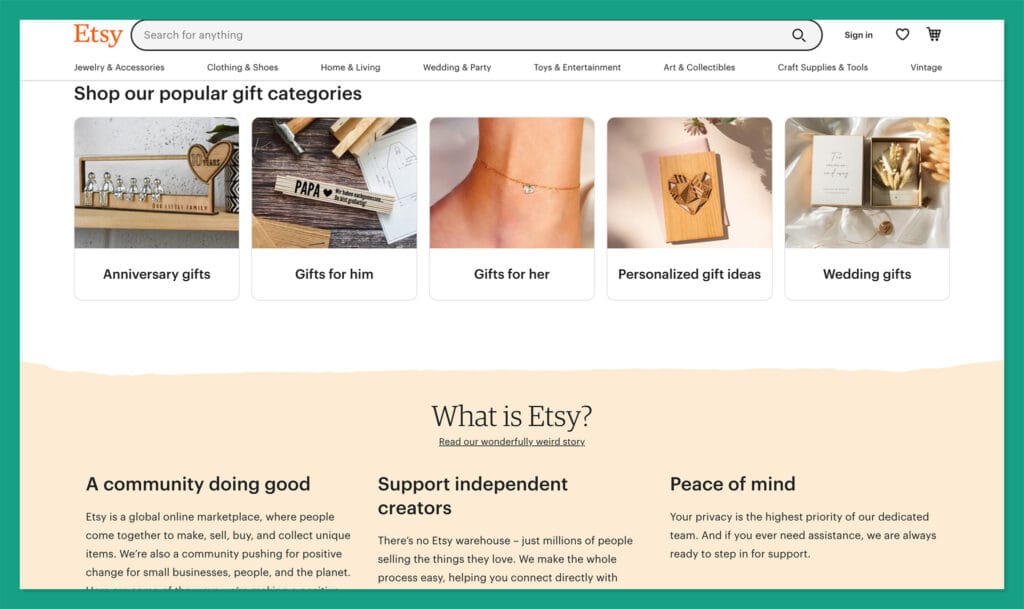
Etsy’s pricing model is a wild west. Since each of the 9.1 million sellers Etsy Q1 2024 Report sets their own prices and shipping costs, there is no consistency. A $15 mug can have $15 shipping, instantly doubling its price.
For international shoppers, the pain is greater; the buyer is responsible for all customs and import taxes, a “surprise fee” that can add 20% or more to the cost upon arrival Etsy Help Center.
But the biggest hidden cost is the “Time Tax.” To avoid receiving a low-quality or dropshipped item, a diligent buyer must spend significant time vetting each seller—reading reviews, checking shop history, and analyzing photos. If you value your time, this vetting process adds a real, albeit un-invoiced, cost to every Etsy purchase.
TCO Example: A user buys a mug advertised for $35.
- Advertised Price: $35.00
- Seller’s Shipping Fee: +$8.00
- Sales Tax: +$2.80
- Total Monetary Cost: $45.80
- “Time Tax”: 15–20 minutes of seller vetting.
- If returned for a non-defective reason, the user pays for return shipping, resulting in a net loss of both money (~$16) and time.
Uncommon Goods: The $24.99 ‘Cover Charge’ for Free Shipping
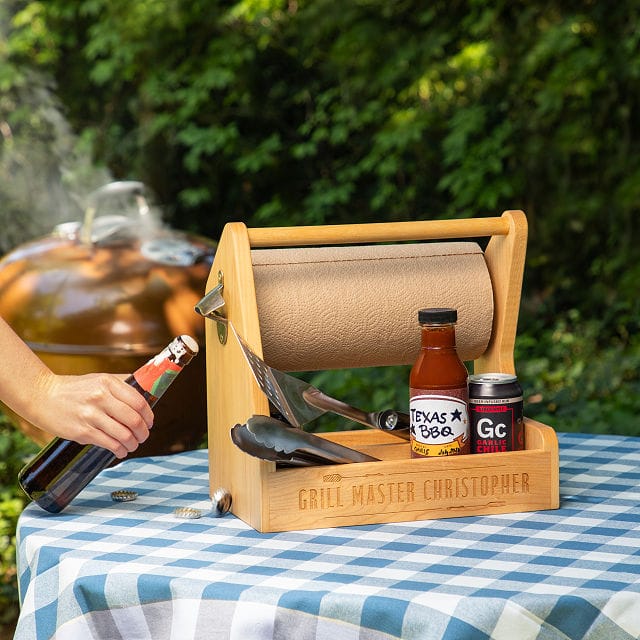
Uncommon Goods presents itself as a premium retailer, but its shipping policy is a significant pain point. According to their official site, standard shipping starts at a steep $8.50 for even the smallest orders Uncommon Goods Shipping Info. This pricing structure is designed to do one thing: push you into their “Uncommon Perks” subscription.
This program, which costs $24.99 per year, offers free standard shipping on all orders Uncommon Goods Perks Page. While it seems optional, it’s a de facto subscription for anyone who plans to shop there more than twice a year. Shoppers looking to dodge subscription fees entirely often turn to our Imstone Gifts promo code page for free-shipping deals without the annual lock-in.
TCO Example: A user places four orders in a year.
- Without Perks: 4 orders x ~$8.50 shipping = $34 in shipping fees.
- With Perks: $24.99 for the year.
- The subscription becomes the only logical choice for repeat customers, effectively adding a nearly $25 annual “cover charge” to use the platform affordably. One-off purchases feel punishingly expensive.
Wayfair: The $150 ‘Regret Tax’ on Furniture Returns

💡 KEY INSIGHT: Wayfair’s business is built on selling large items like furniture. They lure you in with “free shipping,” but they financially trap you with the cost of returns. As of their current return policy, if you want to return a large item for any reason other than damage or defect, you pay the return shipping fee Wayfair Return Policy. This isn’t a few dollars; for a sofa, this fee can easily be $150 or more.
This policy creates a massive “Regret Tax.” It makes users second-guess legitimate returns due to the sheer cost, effectively locking them into keeping a product they don’t love.
TCO Example: A user buys a sofa for $1,000.
- Purchase Price: $1,000.00 (with “free” shipping)
- The sofa arrives, but the color isn’t as expected.
- Return Shipping Fee (deducted from refund): -$150.00
- User’s Refund: $850.00
- Net Loss (The Regret Tax): $150.00
That’s a $150 loss for the “privilege” of seeing the sofa in their home. This financial barrier can turn their 30-day return policy into a marketing gimmick for large items. You have to be absolutely certain before you click “buy.”
Part 3: Feature Deep-Dive – Choice vs. Curation vs. Scale
The fundamental difference between these Imstone Gifts competitors lies in their business models, which directly impacts your experience as a Home and Garden buyer. You’re choosing between an open bazaar (Etsy), a boutique gallery (Uncommon Goods), and a superstore (Wayfair). Understanding this distinction is the most critical step.
Before browsing each one, consider running a sanity check against our working coupon for Imstone Gifts to confirm whether the original platform already covers the same item categories at a better net price.
| Feature Category | Etsy | Uncommon Goods | Wayfair | Critical Notes (“Gotchas”) |
|---|---|---|---|---|
| Product Sourcing Model | Open Marketplace (9.1M+ sellers) | Curated Direct Retail (Internal Buying Team) | Dropship Retailer (20k+ suppliers) | ⚠️ Etsy & Wayfair: You are buying from the seller/supplier, not the platform. Quality is highly variable. Uncommon Goods: Acts as the single seller, ensuring consistency. |
| Product Selection Size | 100M+ listings | 5,000 – 7,000 SKUs | 40M+ products | ❌ Uncommon Goods: Limited selection is a core feature, not a bug. Not for users who need endless choice. |
| “Handmade/Unique” Focus | Core Mission (but diluted) | Core Mission (strictly curated) | Not a primary focus | ⚠️ Etsy: Suffers from what journalists call the “Amazonification of Etsy,” with mass-produced items often misrepresented as handmade. |
| Ethical Sourcing Claims | Seller-dependent | B-Corp Certified; avoids fur/leather. | Supplier-dependent | ✅ Uncommon Goods: This is their key differentiator, verified by their B Corporation Profile. |
| Customer Support Model | Central support + direct to seller | Centralized, in-house team | Centralized, in-house team | ❌ Etsy: Has received mixed user feedback on support, with some users citing difficulty reaching human agents for dispute resolution. |
| Loyalty Program | None for buyers | Uncommon Perks ($24.99/year for free shipping) | Wayfair Credit Card (5% back or financing) | ⚠️ Uncommon Goods: The “Perks” program feels necessary to avoid high shipping costs, making it a recurring cost of using the platform. |
| Mobile App Features | iOS/Android native apps | Mobile-responsive website only | iOS/Android with “View in Room 3D” AR | ✅ Wayfair: The AR feature is a standout, directly addressing the pain point of buying furniture online Wayfair – Shop All Things Home. |
| Product Safety Vetting | Reactive (removes listings after flags) | Proactive (requires vendors meet CPSC standards) | Hybrid (requires supplier compliance, audits some) | 🚨 YMYL RISK: Etsy presents the highest risk for unregulated items (e.g., children’s toys), as they explicitly place safety responsibility on sellers Consumer Reports: How to Buy Safe Toys. |
The implications here are massive. Etsy’s “Open Marketplace” promises infinite variety, but in practice, it means you, the buyer, are the final line of quality control. As noted in reports, the platform is struggling with dropshippers and resellers who dilute the “handmade” promise. This means the time you save browsing isn’t real; you have to reinvest it in vetting individual sellers.
In contrast, Uncommon Goods’ limited selection is a deliberate feature. Their B-Corp certification isn’t just a badge; it’s a commitment to a specific type of product and sourcing. You are paying for their buyers’ curation and ethical vetting, which is why their approach to product safety is proactive, requiring vendors to meet CPSC standards.
This is a critical distinction, especially for YMYL (Your Money or Your Life) categories like baby and kids’ products, where studies have highlighted the risks of unregulated items on marketplaces Consumer Reports: How to Buy Safe Toys.
Wayfair sits in a different universe. Its “View in Room 3D” feature is a genuinely useful piece of tech for the home goods space. However, its dropship model means it’s a logistical coordinator, not a direct seller. The quality of a sofa or table is entirely dependent on a supplier you’ve never heard of, creating a “quality roulette” that the platform’s brand can’t always protect you from.
For a side-by-side overview that goes wider than just these three retailers, our hub of comparison articles covers similar trade-offs across other gift platforms.
Watch: The Real Differences Between These Platforms
This video walks through the seller-side trade-offs of Etsy and several alternatives — useful context for understanding why your buyer experience varies so dramatically platform to platform.
Part 4: Critical Considerations – Security, Reliability, and Trust
When you’re buying gifts or items for your home, you’re not just trusting a company with your credit card; you’re often trusting them with your data and your family’s safety. Understanding a platform’s security posture and logistical reliability is not optional. A failure here is a deal-breaker.
This section consolidates our analysis of security, performance, and the “blind spots” vendors won’t advertise.
Security & Trust: Ensuring Secure Transactions
While all three platforms are PCI DSS compliant—the minimum for handling payments—the table below reveals startling gaps in user account security and product safety protocols.
💡 PRO TIP — Protecting Your Gifting Data: On Etsy, always enable 2-Factor Authentication (2FA) to protect your account and your gift recipients’ addresses. Since Uncommon Goods and Wayfair lack 2FA, avoid storing addresses long-term. Consider using a unique, complex password for each site via a password manager to minimize risk.
Compliance Status Verification
| Certification / Standard | Etsy | Uncommon Goods | Wayfair |
|---|---|---|---|
| PCI DSS (Payment Security) | ✅ Compliant Etsy Payments Policy | ✅ Compliant UG Privacy Policy | ✅ Compliant Wayfair Privacy Policy |
| 2-Factor Authentication (2FA) | ✅ Available (App/SMS) | ❌ Not Offered | ❌ Not Offered |
| Product Safety Standard | ❌ Seller Responsibility Etsy Seller Policy | ✅ Vendors must meet CPSC Standards | ⚠️ Supplier Responsibility (with some audits) |
The lack of Two-Factor Authentication (2FA) for customer accounts on Uncommon Goods and Wayfair is a shocking oversight. A compromise of a user’s account doesn’t just expose their own data; it can expose the personal home addresses of multiple non-users—friends and family who never consented to have their data stored on that platform.
This is a significant privacy and potential safety risk that Etsy’s available 2FA helps mitigate Etsy Help Center.
The second major issue is Product Safety. Etsy’s model places 100% of the product safety responsibility on the seller, posing a significant YMYL risk Etsy Seller Policy. Uncommon Goods, by contrast, explicitly states they require vendors to meet CPSC standards for children’s products Uncommon Goods Product Safety. For any item that could pose a physical risk, this difference in policy is paramount.
Performance & Reliability: Delivery Promises vs. Reality
A gift that arrives late is often worse than no gift at all. A platform’s performance is about the real-world logistics of getting a product to your door on time and intact. This is where marketplace models show their cracks.
| Metric | Vendor Claim / System | Independent Reality (from user reports) |
|---|---|---|
| Etsy Shipping Reliability | Provides tracking; aggregates on-time delivery data. | Highly Variable: “Item never arrived” is a frequent 1-star review reason. Reliability is entirely seller-dependent Etsy Trustpilot Reviews. |
| Uncommon Goods On-Time Shipment | Delivers in 3–8 business days from a central warehouse. | Generally Reliable outside of peak holidays, but sentiment is mixed with a 2.6/5 Trustpilot score Uncommon Goods Trustpilot Page. |
| Wayfair Delivery Speed | Claims fast delivery for small parcels. | Small parcels are reliable. Large parcel delivery is a primary point of failure, with frequent reports of missed appointments and scheduling issues Wayfair BBB Profile. |
Wayfair’s performance is a tale of two companies. Their small parcel delivery is efficient. However, their Achilles’ heel is the “last mile” for large items, their core business. This “delivery roulette” is a fundamental risk of Wayfair’s model. You are not just buying a product; you are gambling on their choice of a local delivery partner.
Part 5: Use Cases & Workflows in Home & Garden
Theory is one thing; practical application is another. Let’s walk through common Home and Garden scenarios to see how these platform differences play out in the real world.
Workflow 1: Sourcing a Unique Centerpiece for a Dining Table
- Goal: Find a one-of-a-kind vase or decorative bowl that isn’t from a big-box store.
- Etsy Workflow:
- Search: Use terms like “handmade ceramic vase,” “unique wooden bowl,” “artisan centerpiece.”
- Filter & Scroll: Sift through thousands of results, identifying potential candidates.
- The “Time Tax”: For each of the 3–5 finalists, spend 10–15 minutes on seller vetting: read reviews for quality and shipping, check the shop’s history, look for signs of dropshipping.
- Purchase: Buy from the most reputable-looking seller, accepting the risk of variation from the photo.
- Uncommon Goods Workflow:
- Browse: Navigate to the “Home Decor” or “Dining & Entertaining” sections.
- The “Curation Fee”: Review the 20–30 curated options. The prices are higher, reflecting the vetting UG has already done.
- Purchase: Select an item, confident in its quality and the platform’s return policy. The process is faster but offers far less choice.
- Verdict: For pure uniqueness and artistic discovery, Etsy is the better tool, but only if you’re willing to perform the “due diligence” workflow yourself.
Workflow 2: Furnishing a Nursery Safely (A YMYL Case Study)
- Situation: Expecting parents need to buy a crib, a changing table, and small decorative items/toys. Safety is the absolute top priority.
- Task: Choose a platform that minimizes risk from harmful materials or unsafe product design.
- Action & Result:
- On Etsy, searching for “handmade wooden baby rattle” yields thousands of results. However, as per their own policy, Etsy does not guarantee these items meet CPSC safety standards Etsy Seller Policy. The parents would need to trust a small seller’s unverified claim, a significant YMYL risk.
- On Uncommon Goods, the selection of children’s items is tiny. However, the platform’s policy requires vendors to adhere to CPSC guidelines Uncommon Goods Product Safety. This provides a layer of assurance the parents can rely on.
- On Wayfair, they could find hundreds of cribs. Wayfair requires its suppliers to comply with safety laws, but they are primarily a logistical platform, not a direct safety guarantor for every item.
- Verdict: For high-stakes YMYL categories like baby products, the Uncommon Goods model, despite its limited selection, offers the most peace of mind.
Workflow 3: Bulk Buying for a Kitchen Renovation
- Goal: Purchase cabinet hardware, a new faucet, and pendant lighting. Consistency and price are key.
- Platform Choice: Wayfair is the clear choice here. Its powerful search filters allow you to specify exact dimensions, finishes (e.g., “brushed brass”), and styles across thousands of options. The ability to buy from “house brands” like Andover Mills or Mercury Row, while a “shell game” for judging quality, is useful for coordinating styles across different product types from potentially the same factory. Neither Etsy nor Uncommon Goods can compete on the scale, price, or filtering required for such a project. The primary risk remains delivery logistics and potential quality variations.
Part 6: Alternatives & Competitor Deep Dive
No platform is perfect. The best choice is about matching a platform’s strengths to your specific need while understanding its inherent flaws. This section provides a direct comparison to help you choose. If neither of these platforms feels right, our exclusive offer for Imstone Gifts may be the most cost-effective fallback for niche home and garden items.
Best For Unique, Customizable Items: Etsy
Etsy’s core strength remains its direct connection to millions of artisans. It is the undisputed leader for items requiring deep customization beyond simple engraving.
Best For
- Highly specific or personalized items (e.g., custom pet portraits, vintage parts).
- Users who enjoy the “thrill of the hunt” and are willing to vet sellers.
- Direct communication with a maker for from-scratch customization.
✅ Strengths
- Unmatched product uniqueness from 9.1M sellers
- Deep customization via direct seller chat
- Native mobile apps (iOS & Android)
- 2-Factor Authentication available
⚠️ Considerations
- Quality and shipping fully seller-dependent
- “Time Tax” of 15+ min vetting per order
- No platform-wide safety vetting (YMYL risk)
- Surprise customs fees for international buyers
Consider If: You are patient and treat the shopping process as a discovery mission, not just a transaction. You understand that you are buying from an individual, not a corporation.
Avoid If: You have a tight, non-negotiable deadline. You prioritize consistent quality control and a simple, no-questions-asked return process. You are not willing to risk receiving an item that differs from its photo.
Best For Worry-Free, Ethical Gifting: Uncommon Goods
Uncommon Goods sells trust. Its entire model is built on curation, ethical standards, and a customer-centric return policy.
Best For
- Thoughtful, unique gifts where you need confidence in quality and origins.
- Gifting to someone who values a product’s story and the B-Corp mission.
- A completely worry-free experience with an ironclad return policy and strong customer service.
✅ Strengths
- B-Corp Certified — verified ethical sourcing
- CPSC-compliant vendors for children’s items
- “Forever Returns” — ironclad return policy
- Centralized in-house customer support
⚠️ Considerations
- Premium pricing on every category
- Tiny catalog: only 5,000–7,000 SKUs
- De facto $24.99/year shipping subscription
- No 2FA on customer accounts
Consider If: Your primary goal is to give a great gift with zero stress, and you are willing to pay a premium for that peace of mind.
Avoid If: You are on a tight budget. You need a very wide selection to choose from. You are an infrequent shopper for whom the $24.99/year “Perks” membership isn’t financially viable.
Best For Selection & Price at Scale: Wayfair
Wayfair is a home goods superstore. Its value is in its massive selection and competitive pricing on mass-market items.
Best For
- Maximum selection and competitive pricing on furniture and home decor.
- Furnishing a space where you need items of a specific size, color, and style.
- Users comfortable with the “online shopping gamble” in exchange for a lower price.
✅ Strengths
- 40M+ products — largest catalog in category
- Powerful filtering by size, color, finish
- “View in Room 3D” AR feature on mobile
- Wayfair credit card (5% back or financing)
⚠️ Considerations
- $150+ “Regret Tax” return fees on large items
- Quality roulette across 20,000+ suppliers
- “House brand shell game” obscures price comparison
- Large parcel delivery often unreliable
Consider If: You are using their powerful filters to find a specific item and have read recent reviews for that exact product. You are prepared to inspect deliveries for damage immediately.
Avoid If: You are seeking heirloom-quality furniture. You are unwilling to pay potentially high return shipping fees for large items. You need a guaranteed, hassle-free delivery experience for a large item on a specific date.
Part 7: Conclusion & Frequently Asked Questions
Conclusion: Making the Right Choice in a Flawed Market
My deep-dive into the top Imstone Gifts alternatives and competitors reveals a market for home and garden, decor, kitchen and dining, baby and kids, and pet supplies where every choice involves a significant trade-off. There is no perfect platform, only the one whose flaws you can tolerate.
The decision boils down to a choice between Etsy’s risk-filled hunt for uniqueness, Uncommon Goods’ expensive guarantee of quality, and Wayfair’s high-stakes gamble for selection and price.
If you are a patient treasure hunter who vets sellers rigorously, choose Etsy. If you prioritize a worry-free, ethically-sound gift and price is not a primary concern, choose Uncommon Goods. If you are furnishing a home on a budget and are prepared to navigate potential quality and delivery issues for an unbeatable selection, Wayfair offers a compelling, if risky, value proposition.
Before you buy, arm yourself with skepticism. Question “free” shipping, investigate return fees, and never assume a platform’s brand protects you from a third-party seller’s poor quality. My final advice is to start small. Before making a large purchase, place a small, low-risk order to test a platform’s process or an Etsy seller’s quality. In the modern online gift market, the most important feature is your own diligence — and our best price for Imstone Gifts page is a good first stop before committing to any large order on a competing platform.
Frequently Asked Questions (FAQs)
Q1: What is the main difference between Etsy and Uncommon Goods?
The main difference is Choice vs. Curation. Etsy is a massive open marketplace with over 100 million items from 9.1 million sellers, where you are responsible for vetting each one Etsy Q1 2024 Report. This offers unparalleled choice and customization.
Uncommon Goods is a curated online store with only a few thousand items. Their team does the vetting for you, focusing on unique, ethically sourced products. This curation provides peace of mind but comes at a premium price and with a much smaller selection Uncommon Goods B-Corp Profile.
Q2: Is Wayfair good for unique, handmade gifts?
Wayfair is generally not the recommended platform for unique, handmade gifts. Its business model is focused on mass-market home goods at a massive scale, coordinating with over 20,000 suppliers. While you might find products with a unique design, it is not a platform for handmade or artisan-crafted gifts.
For that specific goal, Etsy is your primary destination for direct-from-maker customization, and Uncommon Goods is your destination for curated, unique designs that have been pre-vetted for quality.
Q3: Which platform has the best return policy?
Uncommon Goods has an objectively consumer-friendly return policy with its well-known “Forever Returns” guarantee, which builds immense trust. In contrast, Etsy’s policy is entirely dependent on the individual seller and can be contentious, offering limited platform protection if a seller is uncooperative.
Wayfair’s 30-day policy for large items is severely undermined by potentially prohibitive return shipping fees, which can act as a financial barrier to making a return Wayfair Return Policy.
Q4: What is the biggest hidden cost when shopping on these sites?
For Etsy, it’s often the surprise international shipping costs and customs fees that aren’t calculated at checkout Etsy Help Center.
For Uncommon Goods, it’s the high base shipping cost (starting at $8.50) that pushes you toward a de facto $24.99/year subscription to make regular purchases viable Uncommon Goods Perks Page.
For Wayfair, the biggest hidden cost is, without a doubt, the massive return shipping fees on furniture (the “Regret Tax”), which can make their return policy financially useless for large items.
Q5: Is it safe to buy children’s toys on Etsy?
It carries a significant and, in my opinion, unnecessary risk. This is a major YMYL (Your Money or Your Life) concern. Etsy’s official policy places 100% of the safety responsibility on its millions of individual sellers Etsy Seller Policy. Products are not proactively vetted by the platform to meet CPSC (Consumer Product Safety Commission) standards.
For something as important as a child’s toy, I would always recommend a platform like Uncommon Goods, which explicitly states they require their vendors to meet CPSC standards, providing a much stronger layer of accountability Uncommon Goods Product Safety.
Q6: Why does Wayfair use so many different brand names?
This is a deliberate marketing strategy sometimes called the “‘house brand’ shell game.” These brands, like Andover Mills or Mercury Row, are not distinct companies but marketing labels Wayfair applies to products often sourced from the same few suppliers.
This strategy makes it difficult for you to judge a product’s quality by its brand name. Crucially, it also prevents you from effectively comparison shopping for the exact same item on other websites, as the “brand” only exists on Wayfair.
Q7: Do I really need the ‘Uncommon Perks’ subscription?
If you plan to order from Uncommon Goods more than two or three times a year, it is almost financially necessary. With their standard shipping costs starting at $8.50, the $24.99 annual fee for free shipping pays for itself very quickly Uncommon Goods Shipping Info.
For this reason, it functions as a mandatory “cover charge” for anyone who wants to be a regular customer of the platform. For a one-time purchase, however, it’s an expensive add-on you should likely skip.
Q8: Which platform is best for highly personalized gifts?
Etsy is the undisputed champion for deep, from-scratch customization. Because you can communicate directly with millions of individual makers, you can often request unique designs, colors, and features that go far beyond the fixed personalization options (like adding a name or date) available on other platforms.
If you have a truly unique vision for a gift, Etsy is the place to find an artisan who can make it a reality. In contrast, Uncommon Goods offers limited, pre-set personalization on select items.