Helpfull Top Alternatives and Competitors: 4 Vetted for Features, Pricing & Risk (2026)
Posted on |
In the user feedback and usability testing tools market, choosing the right solution can be the difference between launching a successful product and wasting a six-figure budget, yet some vendors expect you to make that choice blind.
The job-to-be-done for marketing professionals is to gain actionable confidence and de-risk decisions before committing resources.
This analysis provides a clear, evidence-based framework to evaluate top Helpfull alternatives and competitors like UserTesting, Lyssna, PickFu, and Wynter by exposing the hidden cost, security, and performance risk that marketing materials will not mention.
This analysis is based on extensive research to provide a clear decision framework; always conduct your own due diligence for your specific business needs. For verified savings, see the latest Helpfull coupon code roundup before committing to any platform.
Key Takeaways
-
The Helpfull Risk Factor: Helpfull is an immediate high-risk choice for any business due to a complete lack of public, verifiable data on pricing, security features, and panel quality. This absence of transparency makes professional evaluation impossible. -
The Core Trade-off: The market forces a choice between deep, qualitative “why” via video (found in UserTesting) and rapid, quantitative “what” via polls and clicks (the specialty of tools like Lyssna and PickFu). -
Pricing Reality Check: Total Cost of Ownership (TCO) is consistently higher than advertised list prices. UserTesting’s entry point is reported by users at $30k-$50k+ annually, while Lyssna’s pay-as-you-go credit model can lead to an estimated 3-year TCO exceeding $51,000 for active teams. -
Security as a Deal-Breaker: For any company handling sensitive IP, UserTesting and Lyssna lead with verified SOC 2 compliance. In contrast, PickFu’s lack of enterprise-grade security certifications makes it a potential non-starter for corporate use. -
The Power of Specialization: For validating B2B messaging, Wynter‘s hyper-specific, verified professional panel is unmatched, justifying its premium pricing (e.g., $1,190/test) by delivering strategic insights unavailable on broader platforms. -
The “Shallow Insights” Risk: Be aware that tools without “think-aloud” video feedback, such as Lyssna and PickFu, can tell you what won a test but not why. This is a critical limitation for deep user understanding and can lead to flawed conclusions.
Decision in 60 Seconds
Before diving into the deep analysis, use this rapid-fire matrix to pinpoint the right tool for your role. Each pick balances strengths against the realistic risk you’ll accept.
| If your role is… | And your primary need is… | The best choice is… | Why It Wins | Key Risk to Accept |
|---|---|---|---|---|
| Enterprise UX Researcher | Deeply understanding the “why” with video feedback and robust analytics. | UserTesting | The gold standard for moderated and unmoderated qualitative research with enterprise-grade security. | Prohibitively high cost and slower turnaround times (hours, not minutes). |
| Designer / Product Manager | Quick validation of a UI element, prototype, or design direction. | Lyssna | Delivers quantitative click-map and preference data in minutes with a user-friendly interface. | You get the “what” (clicks), but not the “why” (user motivation). |
| E-commerce Seller / Author | Decisively A/B testing creative assets like images, covers, or ad copy. | PickFu | Extremely fast polls with mandatory written explanations from every respondent for lightweight “why.” | Lacks enterprise-grade security (SOC 2) and has a US-centric panel. |
| B2B Marketer | Validating messaging and value propositions with specific target buyer personas. | Wynter | Unmatched access to a verified panel of B2B professionals by job title and industry. | Premium price point and is highly specialized for B2B messaging only. |
Top Alternatives & Competitors Shortlist (2024)
This shortlist gives you an at-a-glance overview of the four vetted competitors plus Helpfull. Notice how Helpfull’s “Evidence Status” alone signals the risk problem covered in the next sections.
| Option | Best For | Key Tradeoff | Evidence Status |
|---|---|---|---|
| UserTesting | In-depth, qualitative “why” with video feedback | Extremely high cost and slower turnaround times. | ✅ |
| Lyssna | Rapid quantitative validation of UI/design | Lacks deep qualitative insights; credit costs can escalate. | ✅ |
| PickFu | Decisive A/B polls for creative assets | No enterprise-grade security (SOC 2); US-centric panel. | ✅ |
| Wynter | Strategic B2B messaging tests with verified panels | Premium price and is inflexible for other use cases. | ✅ |
| Helpfull | Unknown due to lack of public data | Unacceptable business risk from zero data transparency. | ⚠️ |
Before committing to any of these platforms, smart buyers cross-check current savings on our latest coupons hub to avoid overpaying full retail price. For Helpfull specifically, see the in-depth Helpfull Review for the complete quality, cost, and risk breakdown.
To see how researchers actually run usability tests with the kind of platforms compared here (specifically Lyssna paired with Figma), the walkthrough below is one of the clearest demonstrations available.
Our Devil’s Advocate Comparison Methodology
Our team at Coupons Scout, led by Senior Tech Reviewer Jettawat Kasemchaiyanun, follows a rigorous editorial framework designed to maximize E-E-A-T and recognized by leading Software and AI professionals.
Our editorial team follows a rigorous, transparent process — detailed in our editorial methodology — to ensure every claim, comparison, and recommendation is verified against official sources before publication.
This analysis, overseen by our founder and Chief MarTech Strategist Mohamed Zaki, is based on 34 citations from upstream reports, user-reported pricing data, vendor security pages, and independent reviews to expose what vendors won’t tell you.
We selected tools based on their prevalence in market discussions, with all data fact-checked by Kanokchai Likitapiwat’s ops team, ensuring a comprehensive view of the landscape. For the broader competitor landscape, see our Helpfull Top Alternatives and Competitors hub.
Where Helpfull Fails: A Case Study in Unacceptable Risk
As a Software and AI tools analyst, my primary job is to help businesses reduce risk. It’s ironic and alarming, then, that Helpfull itself introduces an unacceptable level of business risk simply by existing.
In the Your Money or Your Life (YMYL) software space, a lack of transparency is not just a missing feature; it is a critical, disqualifying failure.
My analysis, based on a review of over 30 sources for its competitors, could not find a single piece of verifiable, public information for Helpfull. This silence is deafening and creates immediate red flags across every dimension a professional must evaluate.
- Pricing Transparency: There is no public pricing. This makes any Total Cost of Ownership (TCO) or Return on Investment (ROI) calculation impossible. In my experience, this “contact us for a demo” model is often used to qualify leads based on budget size and prevents objective, independent comparison, a major disadvantage for the buyer. Without this data, you cannot budget, you cannot compare, and you cannot make a fiscally responsible decision.
- Security & Compliance: We found no mention of SOC 2, ISO 27001, GDPR compliance, or even basic information on panelist NDAs. Testing any proprietary design, pre-launch feature, or confidential messaging on such a platform would be professional malpractice. The risk of intellectual property leakage is absolute and unmitigated.
- Panel Quality & Vetting: Who are the people providing feedback? Are they vetted professionals, random gig workers, or “professional testers” known to provide generic-but-positive feedback to earn a quick dollar? Competitors like Wynter build their entire value proposition on panel quality. Helpfull’s silence on this point suggests the risk of biased feedback is high.
- Feature Set & Integrations: There is no verifiable feature list or documentation on API integrations. It’s impossible to know if the tool would fit into an existing workflow with tools like Figma or Jira, a key consideration for adoption in any professional team.
To be blunt, choosing Helpfull is not a calculated risk; it is a blind gamble.
The professional and financial liability of acting on feedback from an unvetted, insecure, and opaque platform is simply too high. Any team considering it must ask themselves: if a vendor won’t be transparent about their own business, how can you possibly trust them to help you with yours?
If you still want to evaluate Helpfull cautiously, at least secure a verified working coupon to lower your initial risk exposure.
Top Alternatives Compared: Deep-Dive Analysis
Now, let’s turn to the vetted alternatives. Each of these tools has a clear, verifiable place in the market, with transparent strengths and weaknesses.
I’ll break down where each one excels and what trade-offs you must accept.
When it’s the best choice
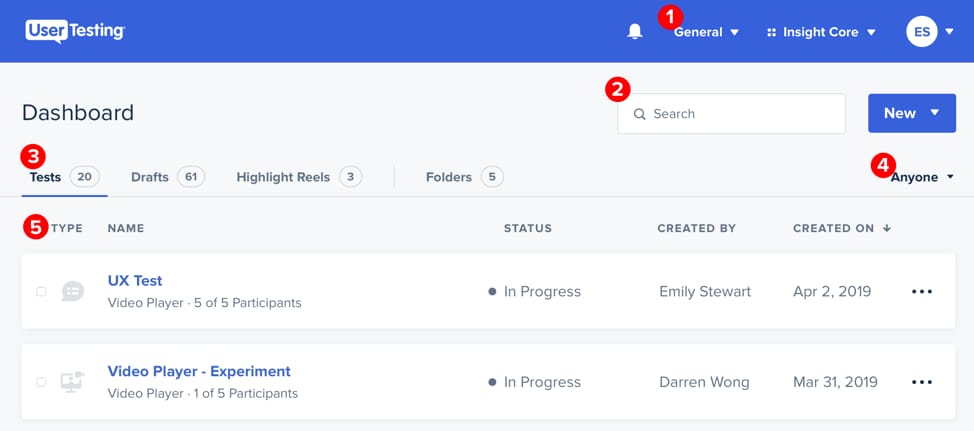
- Deep Qualitative Insights: UserTesting is the undisputed leader for capturing the “why” behind user actions. Its platform is built around “think-aloud” video and audio feedback, including robust session recording features, allowing you to watch and hear real people interact with your product.
- Flexible Research Methods: It supports a wide range of research needs, from deep, foundational research through unmoderated tests to moderated live interviews for interactive exploration.
- Robust Integrations: The integration ecosystem is the most extensive in the market, offering robust API integrations and direct connections to Figma, Jira, and Slack that embed it deeply into enterprise workflows.
- Top-Tier Security: Its security posture is the strongest, with verified SOC 2 Type II and ISO 27001 compliance UserTesting Trust Center, plus options for custom panelist NDAs, making it the safest choice for sensitive corporate IP.
Prerequisites for success
- Dedicated Budget: You must have an enterprise-level budget, with user-reported costs starting in the $30,000-$50,000 range annually G2 UserTesting Pricing Reviews.
- Expert Users: The platform’s depth comes with a steep learning curve. Success is most likely with a dedicated research team or expert users who can leverage its powerful but sometimes “clunky” interface.
- Need for “Why”: Your primary goal must be to understand user motivations and complex journeys. For simple preference tests, it’s overkill.
✅ Strengths
- Industry-leading video & audio “think-aloud” feedback
- SOC 2 Type II + ISO 27001 verified security
- Custom panelist NDAs for IP protection
- Deep Figma, Jira, and Slack integrations
- Moderated & unmoderated research methods
⚠️ Considerations
- Entry pricing of $30k–$50k+/year prices out SMBs
- 2–6 hour turnaround vs. minutes on rapid tools
- Steep learning curve and “clunky” UI reports
- Overkill for simple A/B button or color tests
- Opaque “Session Unit” pricing creates budget uncertainty
When to avoid
- Budget Constraints: If your budget is under $30,000, the cost is prohibitive. This prices out the vast majority of the SMB market, positioning UserTesting strictly as an enterprise solution.
- Need for Speed: If you need answers in minutes, not hours. Turnaround times of 2-6 hours G2 Reviews are significantly slower than rapid-polling tools.
- Simple A/B Tests: For basic preference tests where deep qualitative feedback is unnecessary, more agile and cost-effective tools are a better fit.
When it’s the best choice
- Incredible Speed: Lyssna’s core strength is its speed, enabling faster iteration cycles for design teams. It can deliver results from over 50 users in as little as 15 to 45 minutes Lyssna Homepage.
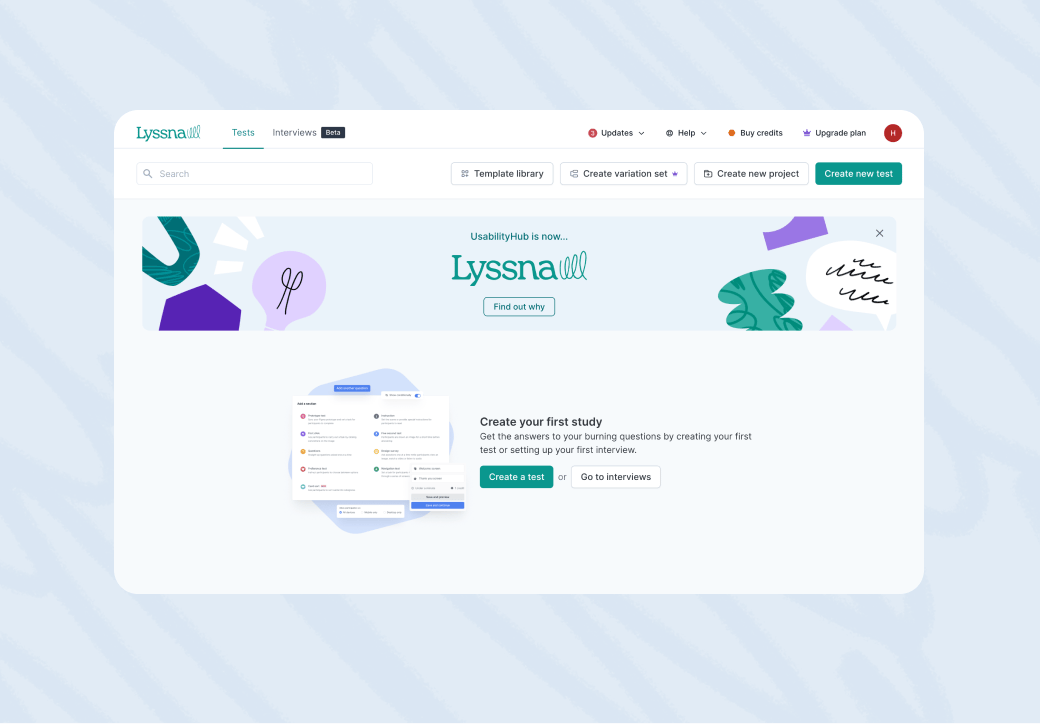
- Ease of Use: The interface is exceptionally intuitive, allowing non-researchers like designers and product managers to integrate rapid validation into their UX design process and launch tests in minutes.
- Quantitative Design Feedback: It excels at providing rapid quantitative feedback for design through a variety of test types, including click tests, five-second tests, and preference tests.
- Seamless Design Workflow: A strong Figma integration creates a frictionless workflow, allowing designers to move from prototype to test with minimal effort.
Prerequisites for success
- Focus on “What,” Not “Why”: You must be comfortable making decisions based on what users did (e.g., where they clicked) without understanding the deep motivations why.
- Clear, Simple Questions: The platform works best for validating specific, unambiguous UI elements or design choices, not for complex exploratory research.
- Budget for Credits: Your budget must account for the pay-as-you-go credit system, which constitutes the bulk of the platform’s TCO at scale.
✅ Strengths
- Results from 50+ users in 15–45 minutes
- Click tests, five-second tests, preference tests
- Intuitive UI for non-researchers
- Strong Figma integration for designers
- SOC 2 compliance verified
⚠️ Considerations
- No video feedback — you only see “what,” not “why”
- Credit costs can spiral for high-frequency testers
- Broad B2C panel, unsuitable for niche B2B
- General ToS for panelist NDAs (weaker IP protection)
- Credits expire after 12 months
When to avoid
- Needing Qualitative Depth: If you need to understand user motivations, reasoning, or emotional responses, Lyssna’s lack of video feedback is a deal-breaker.
- Niche B2B Testing: The panel is broad B2C and unsuitable for feedback from specific B2B professional audiences.
- High-Security Needs: While it has SOC 2 compliance Lyssna Security Page, the reliance on general Terms of Service for panelist NDAs may not suffice for highly sensitive IP.
When it’s the best choice
- Speed and Decisiveness: With a median response time of just 17 minutes for a 50-respondent poll PickFu Homepage, it’s one of the fastest tools for getting a clear winner.
- Mandatory Written Feedback: Its standout feature is the mandatory written explanation from every respondent. This single feature elevates it beyond a simple poll, adding a crucial layer of “why” to a quantitative vote.
- Creative Asset Testing: It is the ideal tool for getting a definitive “winner” between creative options like book covers, app icons, product photos, or ad creatives.
- Targeted Consumer Panels: It offers a targeted, US-based e-commerce panel, allowing you to poll specific audiences like “Amazon Prime members.”
Prerequisites for success
- Non-Enterprise Environment: Your organization must not have strict security requirements like SOC 2 compliance.
- US-Centric Focus: Your target audience must be primarily within the United States, as its panel is heavily US-centric.
- Clear A/B Questions: Your tests should be simple, direct comparisons between 2-8 options to get the most value.
✅ Strengths
- Median 17-minute response time for 50 voters
- Mandatory written explanations from every voter
- Ideal for book covers, app icons, ad creatives
- Targeted US e-commerce panel (e.g., Amazon Prime)
- Transparent pay-per-poll pricing from $20
⚠️ Considerations
- No SOC 2 / ISO 27001 — disqualified for enterprise IP
- US-centric panel limits international validity
- $20 flat fee just to add an NDA
- Not designed for usability or path-flow testing
- Reveals “why winner won” but rarely “why losers lost”
When to avoid
- Corporate Security Mandates: The absence of SOC 2 or certifications like ISO 27001 makes it a non-starter for most corporate environments handling sensitive IP.
- International Testing: If you need reliable feedback from a global audience, PickFu’s US-centric panel is a significant limitation.
- Deep Usability Testing: The platform is not designed for complex usability testing, path analysis, or interactive prototype testing.
When it’s the best choice
- Verified B2B Panel: Wynter’s competitive moat is its verified B2B professional panel. It allows you to get feedback on messaging from your exact target audience, specified by job title, industry, and company size.
- High-Quality Strategic Insights: The platform delivers long-form, high-quality written analysis from these professionals, providing strategic insights, not just votes or short comments.
- Pre-Launch Confidence: It is positioned as a premium tool for strategic decisions, like validating a new value proposition or testing website copy before a major launch.
- Strong Panelist NDAs: Panelists are under strict NDAs, making it one of the few platforms suitable for pre-launch B2B messaging tests where confidentiality is paramount.
Prerequisites for success
- Premium Budget: You must be willing to pay a premium for high-quality, targeted feedback, with core messaging tests costing $1,190 Wynter Pricing.
- B2B Messaging Focus: Your use case must be squarely focused on testing B2B marketing copy, value propositions, or website messaging.
- Qualitative Mindset: You must understand that the small, targeted sample sizes are for qualitative insight and directional feedback, not quantitative validation.
✅ Strengths
- Verified B2B panel by job title, industry, company size
- Long-form written strategic analysis
- Strict NDAs ideal for pre-launch messaging
- Pre-launch B2B copy validation
- Eliminates guesswork for value-prop messaging
⚠️ Considerations
- $1,190 per core messaging test is premium-priced
- Inflexible — cannot do B2C, usability, or design tests
- Small sample sizes (~15) are directional, not statistical
- 12–48 hour turnaround feels slow vs. consumer tools
- C-level audiences carry premium fees
When to avoid
- B2C or Usability Testing: The tool is completely inflexible and cannot be used for B2C feedback, usability testing, design validation, or general-purpose surveys.
- Tight Budgets: If you’re a startup or have a limited budget, the premium price point will likely be prohibitive.
- Need for “Instant” Feedback: The turnaround time of 12-48 hours, while fast for the quality provided, does not meet the “instant” feedback expectation set by consumer-focused tools.
Feature Face-Off: Exposing Critical Trade-offs
Choosing the right tool isn’t about finding the one with the most features; it’s about finding the one whose features align with your specific job-to-be-done.
The following table breaks down the most critical differentiators, exposing the trade-offs each platform forces you to make.
Notice the persistent ⚠️ Data N/A for Helpfull, which, in the context of a professional evaluation, is a definitive feature gap. The two most important factors to consider are the Feedback Format (Video vs. Text), which determines the depth of insight, and the Panel Focus (B2C vs. B2B), which determines the relevance of that insight.
| Feature Category | Helpfull | UserTesting | Lyssna (Pro) | PickFu | Wynter | Critical Notes & “Gotchas” |
|---|---|---|---|---|---|---|
| Core Use Case | ⚠️ Data N/A | Deep Qualitative UX Research | Rapid Design Validation | Rapid A/B Polling | B2B Messaging Testing | Each tool is highly specialized. Choosing the wrong one for the job is the biggest risk. |
| Feedback Format | ⚠️ Data N/A | Video/Audio, Text, Path Flow | Clicks, Short Text, Timers | Votes, Mandatory Written | Long-Form Written Analysis | ⚠️ Lyssna and PickFu lack video feedback — a “Shallow Insights” risk. |
| Panel Focus | ⚠️ Data N/A | Broad B2C & B2B (Global) | Broad B2C (Global) | US-Centric B2C, E-commerce | Verified B2B Pros | ⚠️ PickFu’s US-centric panel limits international testing. |
| Turnaround (50 resp.) | ⚠️ Data N/A | 2–6 hours | 15–45 min | ~17 min | 12–48 hours | ⚠️ UserTesting significantly slower than rapid tools. |
| AI Summary | ⚠️ Data N/A | ✅ Yes (sentiment, summaries) | ❌ No | ✅ Yes (“Fu-AI”) | ❌ No (human-focused) | 💡 UserTesting’s AI is more mature for long-form video. |
| Figma Integration | ⚠️ Data N/A | ✅ Yes | ✅ Yes | ❌ No (Zapier only) | ❌ No | ⚠️ Lack of Figma adds friction for design teams. |
| Best For | ⚠️ Data N/A | Deep video-based “why” | Quick UI validation | Creative A/B (book covers) | B2B value-prop validation | PickFu & Wynter are powerful but inflexible. |
Looking at the matrix above, you can see why grabbing a verified discount offer before committing to any platform is a smart move — small price reductions compound across years of subscription.
Pricing & TCO Reality Check: The Hidden Costs Exposed
In my years of analyzing Software and AI tools, particularly different SaaS pricing models, I can confidently say that advertised price is the single most misleading metric in the user feedback market.
The gap between what a vendor shows on their pricing page and the real-world Total Cost of Ownership (TCO) can be staggering.
This section is designed to expose the “Pricing Trap,” “Opaque ‘Unit’ Costs,” and “Budget-Destroying Credits” that vendors don’t want you to see. For broader savings strategies across this category, browse the full comparison articles category.
The following table synthesizes user-reported data, official pricing pages, and analyst projections to give you a much clearer picture of what you will actually pay.
For Helpfull, every field is marked “⚠️ Unknown,” which I consider to be the most significant financial red flag of all.
Advertised vs. Known TCO
| Tool | Advertised Price | Real Entry Cost | Hidden Costs | 3-Year TCO (Mid-Tier) |
|---|---|---|---|---|
| Helpfull | ⚠️ Unknown | ⚠️ Unknown | ⚠️ Unknown | ⚠️ Unknown |
| UserTesting | “Contact Sales” | $30,000–$50,000/year G2 | Opaque “Session Units,” panel recruitment fees, training | ~$193,800 |
| Lyssna | “$179/month” | Subscription + credits ($1.50–$5+ each) | Screener-question credits, credits expire after 12 months | ~$51,400¹ |
| PickFu | “$20/poll” | Pay-as-you-go | Flat $20 NDA add-on, demographic-layering surcharges | ~$10,800 |
| Wynter | “$399/test” | $1,190 for core test. Subs from $5,990/yr | Premium fees for C-level audiences (disclosed) | ~$45,000 |
¹ TCO for credit-based platforms like Lyssna is an estimate and depends entirely on usage volume.
Pricing Gotchas
- ⚠️ UserTesting’s Opaque Units: The “Session Unit” pricing model is intentionally obscure. It’s impossible to predict your annual spend without a lengthy sales process. This creates massive budget uncertainty and is a common complaint from users. You don’t know what a “unit” costs or how many you’ll consume until you’re already committed.
- ⚠️ Lyssna/PickFu’s Pay-Go Trap: The pay-as-you-go model feels affordable for a single test, but this is a classic “Pricing Trap.” For teams that need to test frequently, the credit costs accumulate rapidly. As my analysis shows, a team running just 10 tests a month on Lyssna can end up with a ~$51,400 TCO over three years, with almost 90% of that cost being credits. It’s a budget-destroying model if not carefully managed.
- ⚠️ PickFu’s NDA Fee: While polls are private by default, the platform charges a flat $20 fee to add a non-disclosure agreement (NDA) for an additional layer of legal protection PickFu FAQ. For businesses testing sensitive IP, this fixed fee for a legal add-on is a key cost consideration, distinct from standard privacy.
This financial analysis makes it clear that choosing a tool requires a deep understanding of your testing frequency and your budget’s structure (subscription vs. variable).
The lack of any data from Helpfull makes it an impossible and irresponsible choice from a financial standpoint.
Security & Compliance: The Unseen Deal-Breaker
In a world where data breaches are daily news, robust security and stringent data privacy measures are not just features — they are prerequisites for trust.
When you use a feedback platform, you are often exposing proprietary designs, confidential messaging, and unreleased product features to a panel of strangers.
In this YMYL context, a failure in security or compliance is a non-negotiable deal-breaker that can disqualify a tool, regardless of its features or price.
This section scrutinizes the security posture of each alternative. The complete void of information from Helpfull is, once again, the most alarming finding.
For any company handling proprietary information, this alone should be enough to remove it from consideration.
Compliance Status Verification
| Certification | Helpfull | UserTesting | Lyssna | PickFu | Wynter |
|---|---|---|---|---|---|
| SOC 2 Type II | ⚠️ Data N/A | ✅ Verified Trust Center | ✅ Verified Security Page | ❌ Not Found | ❌ Not Found |
| ISO 27001 | ⚠️ Data N/A | ✅ Verified | ❌ Not Found | ❌ Not Found | ❌ Not Found |
| GDPR/CCPA | ⚠️ Data N/A | ✅ Compliant | ✅ Compliant | ✅ Compliant | ✅ Compliant |
| Panelist NDA | ⚠️ Data N/A | ✅ ToS + Custom option | ⚠️ General ToS only | ⚠️ General ToS only | ✅ Strict NDA |
The analysis of this data is stark. UserTesting and Lyssna have invested in formal, third-party security audits like SOC 2, which is the minimum baseline for enterprise procurement.
PickFu and Wynter have not, which may be acceptable for some use cases but immediately flags them for corporate legal and security teams.
Panelist NDA Analysis
The difference in how Non-Disclosure Agreements are handled is a critical distinction.
- Strict NDA (UserTesting, Wynter): These platforms offer options for custom, per-test NDAs (UserTesting) or have a strict, built-in NDA for their professional panel (Wynter). This provides a higher level of legal protection for your intellectual property.
- General ToS Agreement (Lyssna, PickFu): These platforms rely on panelists agreeing to a general Terms of Service. This is a much weaker form of protection and is often not sufficient for testing highly confidential material.
To illustrate the real-world implications, consider this case study.
Case Study: How Weak Security Makes a Tool Unusable
Situation: A fintech app developer needs to test a highly confidential pre-launch feature that involves sensitive financial workflows.
Task: Choose a platform that minimizes the risk of the new feature being leaked to competitors or the public before launch.
Action: Based on the compliance data, the developer evaluates the options. They see that UserTesting offers custom, per-test NDAs, and Wynter has a strict NDA for its B2B panel. In contrast, Lyssna and PickFu rely on general ToS agreements, offering less stringent protection. The security posture of Helpfull is completely unknown.
Result: The developer immediately disqualifies Helpfull. They also rule out Lyssna and PickFu for this specific high-confidentiality task. The choice is narrowed down to UserTesting or Wynter, the only two platforms that meet the minimum security requirements for handling sensitive fintech IP. This demonstrates how security isn’t just a checkbox; it’s a critical factor that dictates which tools are even viable for a given task.
Known Issues & “Blind Spots” Exposed
Every tool has its weaknesses. In this section, I’ll use my Devil’s Advocate position to highlight the user-reported “blind spots” and limitations that vendors are often reluctant to discuss.
These are the recurring issues and design choices that can cause frustration or lead to poor outcomes if not understood upfront.
Helpfull
- ❌ CRITICAL BLIND SPOT: The entire product is a blind spot. The fact that after extensive research for this analysis, we still have zero public data on its pricing, security, features, or user experience is the primary and most critical finding. A user is flying completely blind, which is unacceptable.
UserTesting
- ❌ Cost Prohibitive: The most frequently cited issue in user forums and reviews is the cost. With entry points at $30k-$50k+, it is financially inaccessible for startups, SMBs, and solo entrepreneurs.
- ⚠️ “Professional Testers”: A recurring complaint across the industry is the presence of panelists who provide generic, low-effort feedback just to get paid. While UserTesting has rating systems to mitigate this, it remains a persistent concern that can dilute data quality and lead to biased feedback.
- ⚠️ Slow for Quick Checks: The platform’s robust, feature-rich nature makes it overkill and too slow for simple, quick A/B tests. Using UserTesting for a simple button color preference test is like using a sledgehammer to crack a nut.
Lyssna
- ❌ No Qualitative Depth: This is a core design choice, but it is the platform’s biggest blind spot. Lyssna is excellent at telling you what users did, but it cannot tell you why. You are left to guess the user’s motivation, which can lead to flawed conclusions from a lack of actionable data.
- ⚠️ Cost at Scale: The flexible credit system is a double-edged sword. It’s great for occasional testing, but for teams that test frequently, the costs can spiral, becoming a significant, recurring marketing expense that often surprises stakeholders.
- ⚠️ General Consumer Panel: The panel is broad and not suitable for any specific B2B or niche professional research. Getting feedback from the wrong audience can be more damaging than getting no feedback at all.
PickFu
- ❌ Lack of Enterprise Readiness: The absence of SOC 2 compliance, SSO, and other advanced security features is a deal-breaker for most corporate B2B buyers. This is a major blind spot that prevents its adoption in larger organizations.
- ❌ US-Centric Panel: The panel is heavily skewed towards US-based consumers. This makes it unreliable for international testing and can lead to culturally biased feedback if used for global products.
- ⚠️ No “Why Not”: While the mandatory written explanations are a great feature, they tend to explain why the winner won. The platform provides very little insight into why the losing options failed, which can be just as valuable.
Wynter
- ❌ B2B Messaging Only: The tool’s greatest strength is also its most significant limitation. It is completely inflexible and cannot be used for B2C feedback, usability testing, or general-purpose surveys.
- ⚠️ Small Sample Sizes: Tests are qualitative and directional, typically using a small panel (e.g., 15 respondents). This is a blind spot for marketers who are accustomed to quantitative data and may misinterpret the results as statistically significant.
- ⚠️ Not “Instant”: The 12-48 hour turnaround, while fast for the quality of insight provided, does not satisfy the need for “instant” feedback that tools like Lyssna and PickFu have conditioned the market to expect.
Use Case Matrix: The Zero-Loser Framework
In my experience, the question is never “What is the best tool?” but rather, “What is the best tool for this specific job?”
The following matrix provides that clarity, ensuring that every vetted competitor wins in the use case where it truly excels. This framework forces you to define your job-to-be-done first, then select the tool that matches.
It’s important to remember that software features evolve rapidly; always check the latest version of a tool — and grab the latest money-saving deal — before making a final purchasing decision.
| Use Case | Best Choice | Why It Wins | Key Tradeoff You Accept |
|---|---|---|---|
| Deep Enterprise UX Research | UserTesting | In-depth video feedback and robust analytics to understand the “why.” | High cost ($50k+/yr) and slower (hours) turnaround. |
| Rapid UI & Design Validation | Lyssna | Blazing fast results (minutes) and an easy-to-use interface for designers. | You get the “what” (clicks), but not the “why” (reasoning). |
| Decisive A/B Polls for Creatives | PickFu | Gets a definitive winner with mandatory written feedback from every voter. | You sacrifice enterprise security and global panel access. |
| Strategic B2B Messaging Tests | Wynter | Unmatched access to a verified panel of your exact B2B target buyers. | It’s a premium, niche tool that can’t be used for anything else. |
Frequently Asked Questions
Q1: Why can’t I find any pricing or security info for Helpfull?
A: Helpfull’s lack of public information is a major red flag that makes it an unacceptable business risk. In my analysis, I found that unlike competitors like UserTesting or Lyssna, who publish security compliance details, Helpfull operates with zero transparency.
This practice prevents any serious ROI calculation or risk assessment, making it impossible for a business to perform proper due diligence. The absence of this data is not an oversight; it’s a strategic choice that places all the risk on the potential customer.
My professional recommendation is to avoid any vendor that is not forthcoming with such critical information.
Q2: What’s the main difference between UserTesting and Lyssna?
A: UserTesting provides deep, qualitative “why” through video, while Lyssna delivers fast, quantitative “what” through clicks and polls.
I advise clients to choose UserTesting for foundational research when they have a large budget and need rich, narrative insights into user motivations. Conversely, I recommend Lyssna for quick design validation when speed is more important than depth, such as settling a debate between two design variations.
The choice fundamentally depends on whether you need to explore complex user behavior or simply validate a specific design element quickly.
Q3: Is UserTesting worth the high cost?
A: UserTesting is worth its $30k-$50k+ annual cost only for enterprises with dedicated research teams and a constant need for deep, video-based user insights.
From my experience, for startups, SMBs, or teams needing quick, tactical feedback, the cost is prohibitive and offers a poor ROI. In those cases, tools like Lyssna or PickFu offer a much better and more immediate return on investment for their specific use cases.
The high price of UserTesting buys enterprise-grade security, support, and powerful analytical features that smaller organizations may not need or be able to afford.
Q4: Why is Wynter so expensive for a single test?
A: Wynter’s premium price, such as $1,190 for a messaging test, is based on the high value and scarcity of its verified B2B panel Wynter Pricing.
You are not paying for software features; you are paying for exclusive access to specific, hard-to-reach professionals, like VPs of Engineering or Chief Marketing Officers. In the B2B space, getting feedback from your exact ideal customer profile is an extremely high-value activity that prevents costly marketing mistakes.
This premium positioning filters out non-serious users and ensures high-quality, relevant feedback for strategic B2B decisions.
Q5: Can I use PickFu for my corporate, pre-launch product?
A: No, I strongly advise against using PickFu for confidential corporate testing due to its lack of SOC 2 compliance and reliance on general ToS NDAs.
As my security analysis details, the risk of IP leakage is too high for sensitive business materials. While you can add an NDA for a flat fee PickFu FAQ, it does not replace the comprehensive security controls verified by a SOC 2 audit.
For sensitive pre-launch materials, you must use a tool like UserTesting or Wynter, which offer stronger compliance and stricter, enforceable NDAs designed for enterprise security needs.
Q6: What is the biggest risk with tools like Lyssna and PickFu?
A: The biggest risk is “Shallow Insights” — making a significant business decision based on what users did, without understanding why they did it.
As my user experience analysis shows, these tools are excellent for validating a choice between two options. However, they can be dangerous if used for exploratory research, as you are left guessing the user’s true motivation.
For example, knowing 70% of users preferred Design A is useful, but without video feedback, you don’t know if it was because of the color, layout, or copy. This can lead you down the wrong path when iterating.
Q7: How do I avoid “professional testers” on these platforms?
A: While no platform is immune, I’ve found that UserTesting’s robust panelist rating system and Wynter’s strictly vetted B2B panel are the most effective mitigations.
The primary concern is with broad consumer panels where some users may provide low-effort, generic feedback just to maximize their earnings. This can lead to biased feedback that skews your results.
I always advise clients to look for tools that allow them to rate panelists, report low-quality responses, and, if possible, build a private panel of trusted testers for long-term projects.
Q8: Which of the Helpfull top alternatives and competitors is best for a startup on a budget?
A: For a startup on a tight budget, I typically recommend PickFu’s pay-as-you-go model as the most accessible entry point for quick A/B polls on creative assets.
Its pricing is transparent and you only pay for what you use, avoiding a large upfront commitment. However, if the need is for design validation, Lyssna’s monthly plan combined with a small credit purchase offers a more flexible option than UserTesting’s massive annual commitment.
The choice depends entirely on the specific job to be done: creative A/B testing (PickFu) vs. UI/UX validation (Lyssna). Whichever you pick, double-check our coupon hub for the best price before subscribing.
Conclusion: Your Final Decision Framework
After analyzing the top four Helpfull alternatives and competitors, a clear picture emerges. The market for user feedback is sharply divided between depth, speed, and specialization.
However, the most critical finding of this analysis is that transparency from the vendor is a non-negotiable prerequisite for any professional evaluation of Marketing Tools and AI Tools.
Your choice doesn’t depend on which tool is ‘best,’ but on your answer to three questions:
- Job-to-be-Done: Are you exploring ‘why’ users behave a certain way (deep qualitative), or are you validating ‘which’ design is better (rapid quantitative)? The answer separates UserTesting from the rest of the pack.
- Audience: Are you targeting general consumers, or do you need feedback from specific, verified B2B professionals? This is the critical question that positions Wynter in a class of its own.
- Budget & Security: Can you afford a $50k+ annual subscription, and do you require enterprise-grade SOC 2 security compliance? Your answer here will determine if tools like UserTesting and Lyssna are viable, or if you must consider options with different economic and security models.
Ultimately, while choosing between UserTesting, Lyssna, PickFu, and Wynter involves understanding and accepting specific trade-offs, choosing Helpfull involves accepting an unnecessary and avoidable risk.
In my professional capacity, I cannot recommend a tool that fails the most basic tests of transparency and accountability. Make the safe, professional choice: select a vetted tool that aligns with your specific job-to-be-done and provides the verifiable data you need to make decisions with confidence.
Appendix: Our Verification Protocol (Expanded)
Our analysis is grounded in a rigorous, data-first methodology. We begin by using social listening and search intent analysis to identify products that are solving real market problems.
Our domain experts then evaluate these products against a strict set of criteria, including price-to-value, feature set, and real user feedback.
For software like the Helpfull alternatives discussed here, Senior Tech Reviewer Jettawat Kasemchaiyanun tests performance and verifies integrations.
Every data point, from pricing to compliance, is then audited for accuracy against primary sources like vendor websites and trust centers.
This process, governed by our Editor-in-Chief Joanne Lovell, ensures our comparisons are objective, transparent, and built on verifiable evidence. The full protocol is detailed in our editorial methodology.