Bartesian Top Alternatives and Competitors: Unmasking Hidden Costs and Reliability Risks 2026
Posted on |
I’m Mohamed Zaki, founder of Coupons Scout and an expert in Home and Garden, Kitchen and Dining, Appliances.
In my years analyzing home appliances, I’ve seen countless gadgets promise convenience but deliver frustration. When exploring the best Bartesian alternatives, the sticker price is just the beginning; the real story is in the long-term costs and hidden risks we’ll uncover.
The $370 Bartesian you’re considering could secretly cost you over $2,500 in three years, and that’s not the biggest risk. This is the central conflict of any modern drink-making appliance: the dream of “bar-quality cocktails at the push of a button” versus the expensive, high-maintenance reality of the “Keurig Trap.”
This isn’t a simple review. It’s a Devil’s Advocate analysis based on over 35 independent sources, user reports, and reliability data from 2025-2026. My mission is to expose the “blind spots” vendors won’t advertise.
This guide to the top Bartesian competitors pits the closed-pod system against its rivals—the Bev by Black+Decker and the Barsys 360—on cost, reliability, taste, and convenience. We will unmask the real Total Cost of Ownership (TCO), expose long-term reliability failures, and break down the critical ecosystem risks that could leave you with a useless “paperweight.” Before you buy, make sure to check for the latest Bartesian coupon codes and discounts to save on your purchase.
Our team at Coupons Scout provides this comprehensive evaluation based on our public Verification Protocol. Our analysis framework focuses on YMYL (Your Money or Your Life) factors like financial cost, physical safety, and long-term product viability. We don’t just look at features; we analyze the total user experience, from setup and cost to long-term reliability and potential points of failure, ensuring our advice is relevant to your Home and Garden needs. This analysis transparently reports the findings and risks identified in this extensive dataset. You can also read our detailed Bartesian Review for a deeper dive into the product’s performance.
This guide will walk you through:
- Introduction & Key Takeaways: The essential findings you need to know now.
- Core Analysis: The “$1,000 Pod Tax”: A deep dive into the true Total Cost of Ownership.
- Feature Deep-Dive: Closed vs. Open Systems: How the core design dictates your entire experience.
- Critical Considerations: The “Leaking Machine” & “Paperweight” Risk: Examining reliability, compliance, and ecosystem dangers.
- Use Cases: Who Are These Machines Really For?: Scenarios where these appliances shine or fail.
- Top Alternatives & Competitors In-Depth: A detailed breakdown of the best options beyond Bartesian.
- Conclusion & FAQs: Final verdict and answers to your biggest questions.
This analysis is for informational purposes. For any major purchase, always review the latest terms, warranty, and return policies directly from the vendor.
Part 1: Key Takeaways & Decision in 60 Seconds
Key Takeaways
-
⚠️ The “Pod Tax” Is Massive: A Bartesian’s 3-year cost ($2,527) is nearly $1,000 more than the open-system Barsys 360 ($1,567) due to expensive, recurring pod purchases. -
⚠️ Reliability is a Major Risk: Widespread user reports show Bartesian machines leaking and failing between 12-24 months, conveniently after the 1-year warranty expires. Bartesian’s 1.6/5 BBB rating corroborates this. -
⚠️ Ecosystems Can Die: Closed-pod systems like Bartesian and Bev risk becoming useless “paperweights” if the company fails, a lesson learned from the discontinued Keurig Drinkworks. -
✅ Best for Convenience Seekers: The Bev by Black+Decker is a more pragmatic entry point into the pod ecosystem than the Bartesian, offering a lower initial price ($299) and a superior 2-year warranty. -
✅ Best for Hobbyists & Customizers: The Barsys 360 is the clear winner for users who value control, using their own ingredients, and achieving a lower long-term cost per drink. -
The Ultimate Trade-Off: You are choosing between the unmatched convenience of pods and the total control (and better taste) of open systems or a manual shaker set. You cannot have both.
Decision in 60 Seconds
| Persona/Need | Best Choice | Why | Key Risk |
|---|---|---|---|
| Ultimate Convenience Seeker | Bev by Black+Decker | Lowest entry cost for a pod system with a superior 2-year warranty, mitigating the biggest reliability concern. | High long-term cost per drink; still locked into the sweet-tasting, expensive pod ecosystem. |
| Tech-Savvy Hobbyist | Barsys 360 | Complete control over ingredients and strength, leading to a much lower cost-per-drink and better taste. | High initial hardware cost and total dependence on a functional app; the company’s failure would brick the device. |
| Budget-Conscious Purist | Manual Shaker Set | The absolute lowest cost, highest quality, and most control. The gold standard for craft cocktails. | Requires skill, effort, and time. Not ideal for serving many different drinks to a crowd quickly. |
| The “Set it & Forget It” Host | On The Rocks (Bottled) | Zero hardware cost or maintenance. Premium, consistent taste. The simplest solution for high-quality, instant cocktails. | Highest cost per drink, limited variety compared to automated systems, and generates more packaging waste. |
Top Alternatives & Competitors Shortlist
| Option | Best For | Tradeoff | Evidence Status |
|---|---|---|---|
| Bev by Black+Decker | Budget-Conscious Convenience | Perceived cheaper build quality, but a better warranty. | ✅ Verified |
| Barsys 360 | Tech-Savvy Customizer | High initial cost and complex app-based setup. | ✅ Verified |
| Manual Shaker Set | Quality & Cost Purist | Requires effort, skill, and cleanup. | ✅ Verified |
| On The Rocks (Bottled) | Maximum Simplicity | Highest price per drink with zero hardware cost. | ✅ Verified |
| DIY Cocktail Kits | Guided Craft Experience | Variety is limited to the kit’s specific contents. | ⚠️ Needs verification |
Part 2: Core Analysis: The “$1,000 Pod Tax”
In my years analyzing any home appliance, I’ve found that the true cost of ownership over the entire product lifecycle is the most critical financial metric, far outweighing the upfront price.
The automated cocktail market is a classic example. The massive gap between the advertised hardware price and the true 3-year Total Cost of Ownership (TCO) is the most critical “blind spot” for consumers.
This isn’t just about a few extra dollars; it’s about a financial model designed to look cheap upfront while locking you into a costly ecosystem. I call this “The Keurig Trap,” and it’s a financial sinkhole. Looking for a way to offset some of that cost? Be sure to grab a Bartesian discount code before placing your order.
Advertised Price vs. 3-Year TCO
The data is jarring. The Bartesian, despite being cheaper upfront than the Barsys 360, costs nearly $1,000 more over a three-year period for a casual user having just four drinks per week.
This is a subscription you didn’t know you signed up for.
| Competitor | Advertised Price | 3-Year TCO (Casual User) |
|---|---|---|
| Bartesian | $369.99 | $2,527.81 |
| Bev by Black+Decker | $299.99 | $2,427.83 |
| Barsys 360 | $475.00 | $1,567.00 |
TCO Breakdown: How the Costs Add Up
To understand this gap, we must break down the components for each machine over three years, assuming a “casual user” consumes four drinks per week (208 drinks/year). For a full breakdown of these machines and how they stack up, check our Bartesian Top Alternatives and Competitors comparison.
1. Bartesian ($2,527.81 Total)
- Hardware Cost: $369.99
- Consumable Costs (3 Years):
- Pods (624 drinks @ $2.62/pod): $1,634.88
- Spirits (624 drinks @ ~$0.79/drink): $492.96
- Hidden Costs (3 Years):
- Cleaning Capsules (36 months @ ~$2.50/capsule): $89.94
- Estimated Energy Use (~5 kWh/year @ $0.17/kWh): $2.55
- Total Consumable/Operating Cost: $2,210.33
2. Bev by Black+Decker ($2,427.83 Total)
- Hardware Cost: $299.99
- Consumable Costs (3 Years): Identical to Bartesian: $2,127.84
- Hidden Costs (3 Years):
- Estimated Energy Use: ~$2.55
- Total Consumable/Operating Cost: $2,130.39
3. Barsys 360 ($1,567.00 Total)
- Hardware Cost: $475.00
- Consumable Costs (3 Years):
- Spirits & Mixers (624 drinks @ ~$1.75/drink): $1,092.00
- Hidden Costs (3 Years):
- Estimated Energy Use: ~$2.55
- Total Consumable/Operating Cost: $1,094.55
Pricing Gotchas: The Hidden Traps
This TCO is calculated for a “casual user.” If you entertain guests frequently, your “Pod Tax” will be significantly higher. Let’s break down how this happens.
- ❌ The “Pod Tax” is Massive: Data shows that a Bartesian user will spend $2,137.84 on drinks over three years. A Barsys user, using their own ingredients, will spend $1,092.00. The “convenience” of simply inserting a pod costs you an incredible $1,045.84 during this period. You are paying a premium of nearly 100% on every single drink for the life of the machine.
💡 PRO TIP: Calculate Your Personal “Pod Tax”
Before buying, estimate your weekly drinks. At ~$1.66 extra per pod drink vs. a Barsys, just 5 drinks/week equals a “Pod Tax” of over $430 per year. For frequent entertainers, this can easily exceed $1,000 annually. Don’t underestimate recurring costs. You may want to explore our latest coupons to offset some of these expenses.
-
⚠️ The Illusion of a Cheaper Machine: Many buyers will see the Bev by Black+Decker‘s $299.99 price tag and think they are getting a bargain compared to the $369.99 Bartesian. This is a marketing illusion. Over three years, the TCO difference is a negligible $100.00 because the high recurring cost of pods is the dominant financial factor. The only real advantage of the Bev is its longer warranty, not long-term savings.
-
❌ Pods are Non-Refundable: This is a critical financial risk. According to the Bartesian Return Policy, as of February 2026, consumable pods are non-refundable. If you buy the machine, stock up on pods, and then the machine breaks or you decide you don’t like the taste, you are stuck with hundreds of dollars of useless plastic cups. This policy heavily favors the vendor and puts the entire financial risk on you, the consumer.
Part 3: Feature Deep-Dive: Closed vs. Open Systems
As a Home and Garden appliance expert, I advise that for a device like the Bartesian, the most important feature is the System Type.
This one choice—between a closed-pod system and an open-ingredient system—dictates almost everything else about your experience, including long-term cost, variety, and control. It’s the difference between a simple appliance and a complex hobby, a critical distinction for any new piece of kitchen tech.
The table below, based on data from sources like the PCMag Review of Bartesian and TechCrunch’s Automated Cocktail Maker Review, breaks down the practical differences.
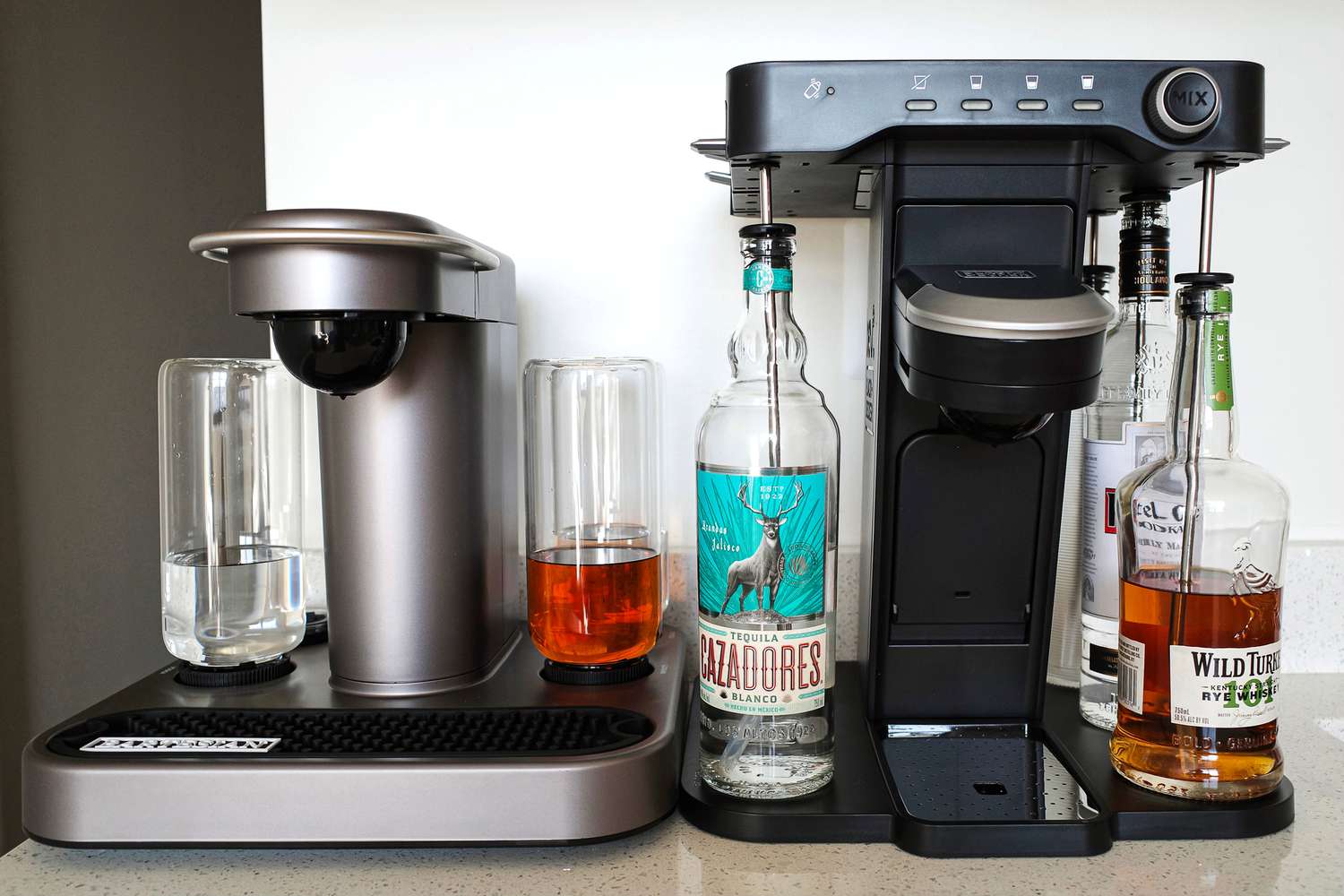
Feature Comparison Matrix
| Feature Category | Bartesian | Bev by Black+Decker | Barsys 360 |
|---|---|---|---|
| System Type | Closed (Proprietary Pods) | Closed (Proprietary Pods) | Open (BYO Ingredients) |
| Initial Hardware Cost | $369.99 | $299.99 | $475.00 |
| Avg. Cost Per Drink | ~$3.41 (Pod + Spirit) | ~$3.41 (Pod + Spirit) | ~$1.75 (Variable) |
| Strength Control | 4 Pre-set Levels | 1 Standard Level + “More” button | Fully Customizable via App (ml) |
| Recipe Variety | 60+ Pods | 60+ Pods | Unlimited (Custom Recipes) |
| Cleaning Effort | High (Monthly capsule cleaning) | High (Line flushing) | High (Line flushing + container cleaning) |
| Footprint (L x W) | 12.5″ x 12.75″ | 16.5″ x 11.2″ | 13.5″ x 13.5″ |
| Warranty | 1-Year Limited | 2-Year Limited | 1-Year Limited |
| Key “Gotcha” | Reports of leaking post-warranty. | Perceived “cheaper” build quality. | App-dependent; a “brick” if the company fails. |
Critical Notes:
- ⚠️ Ecosystem Lock-In: Bartesian/Bev are 100% dependent on Bartesian Inc.’s pods. This is a significant risk, as seen with the failure of similar systems. Barsys, while dependent on its app, offers total freedom in sourcing ingredients.
- ⚠️ The “Pod Tax”: The cost per drink for pod systems is nearly double that of an open system. Over three years, this seemingly small difference amounts to a staggering $1,000 “tax” for the convenience of pods.
- ⚠️ The “Dust Collector” Fear: All automated systems require significant, regular cleaning to prevent clogs and failures. This is a primary user complaint across all brands and a key reason these devices end up in a closet.
- ✅ The Bev’s Warranty Advantage: The Bev’s 2-year warranty is a major advantage, especially given widespread user reports of Bartesian machines failing after just one year.
Integration & Ecosystem: Walled Garden vs. Open Platform
The fundamental choice you make with these machines is not about features, but about philosophy.
Are you entering a “walled garden” where all your choices are made for you, or an “open platform” that gives you control but also responsibility? In my experience, both ecosystems are a kind of prison; they just have different walls.
Bartesian & Bev: The Walled Garden
This ecosystem is designed for maximum lock-in. It’s a classic razor-and-blades model where the company sells you the “razor” (the machine) at a reasonable price and then makes its profit on the “blades” (the pods) for years to come.
- Lock-In: The lock-in is High and absolute. The system is 100% closed. There is no official way to use third-party ingredients, refill pods, or customize recipes beyond the four pre-set alcohol strength settings.
- Third-Party Options: As of the latest 2026 data, there are no licensed or mainstream third-party pods. The business model depends entirely on preventing this. If a third party ever successfully creates a cheaper, compatible pod, Bartesian’s financial model would collapse.
- Gotchas: The biggest “gotcha” is that the recipe is fixed by the barcode on the pod. You cannot make a drink “less sweet,” add a dash of different bitters, or use fresh lime juice instead of the pod’s concentrate. You are completely at the mercy of their flavor chemists. If you do decide to buy, at least use a Bartesian promo code to save on the initial purchase.
Barsys 360: The Open Platform
This ecosystem appears to offer freedom, but it’s a freedom with significant constraints. It’s a prison of hardware, not consumables.
- Lock-In: The lock-in on consumables is Low, which is its greatest strength. You are free to use any brand of whiskey, gin, or juice that you prefer. However, the hardware lock-in is High.
- Integration Gotchas: While it lacks true smart home integration with platforms like Alexa or Google Home, the entire system is dependent on a Wi-Fi connection and the Barsys smartphone app. If your home Wi-Fi is down, you cannot make a drink. If the app is buggy after an update, you cannot make a drink. If the company goes out of business and the app disappears, you cannot make a drink. It cannot be operated manually.
- Hard Limits: The system has physical limitations. It cannot use carbonated mixers like tonic water or soda, which must be added manually after the fact. It also cannot handle ingredients with pulp, such as many fresh-squeezed juices, as this can clog the delicate internal pump system and lines. This significantly limits the types of “fresh” cocktails you can truly automate.
Ultimately, you are choosing between two different kinds of prisons. Bartesian’s is a prison of consumables, where you can only buy their approved pods. Barsys’s is a prison of hardware, where the machine is useless without the company’s app and servers.
Ultimately, neither offers the true freedom and craft of manual mixology, forcing a choice between two imperfect automation paths for your home bar setup. For a deeper look at how these machines compare across many categories, explore our full category of comparison articles.
Watch this side-by-side comparison of the top cocktail maker machines to see how Bartesian, Bev, and Barsys perform in real-world testing:
Part 4: Critical Considerations: The “Leaking Machine” & “Paperweight” Risk
Following modern small appliance trends, these machines are marketed on convenience, but when we talk about trust, we must look beyond safety certifications.
The real “blind spot” in the automated cocktail market isn’t electrical safety; it’s the Ecosystem Viability Risk. This is the danger that your expensive machine could become a useless “paperweight” overnight.
This introduces a significant supply chain risk: if Bartesian Inc., led by CEO Ryan Close, faces financial trouble… they could discontinue it just like Keurig did.
Security, Compliance & Trust: The “Paperweight” Risk
This risk is not theoretical. It has happened before, and the structure of these products makes it a persistent danger.
For closed systems like Bartesian and Bev, the dependency is on a single company for pods. For app-dependent open systems like Barsys, the dependency is on a single company for software. Both have a single point of failure.
⚠️ Case Study: The Ghost of Keurig Drinkworks
Users invested >$400 in Keurig’s pod-cocktail machine, but in 2021, the company abruptly discontinued the entire system. This rendered the expensive hardware permanently non-functional overnight, demonstrating the “paperweight risk” inherent in any closed-ecosystem appliance like the Bartesian.
Ecosystem Risk Analysis:
-
Bartesian / Bev (Closed System):
- Risk Level: Medium-High
- Analysis: These devices are 100% dependent on Bartesian Inc. for their proprietary pods. If Bartesian Inc. faces financial trouble, gets acquired and restructured, or simply decides the product is not profitable enough, they could discontinue it just like Keurig did. This would leave every single one of their customers with a bricked device.
-
Barsys 360 (Open System):
- Risk Level: Medium
- Analysis: While you can use your own ingredients, the Barsys 360 is entirely dependent on its smartphone app. If Barsys Inc. goes out of business and the app is removed from the Apple App Store or Google Play Store, the machine cannot be operated. It is a different kind of “paperweight” risk, but it is just as critical.
While all three machines have the standard safety certifications, this offers a false sense of security. The real danger isn’t that the machine will harm you, but that the company behind it will abandon you.
Compliance Status Verification
| Certification | Bartesian | Bev by Black+Decker | Barsys 360 |
|---|---|---|---|
| Electrical Safety | ETL Listed (UL Standard) | ETL Listed (UL Standard) | ETL/UL Certified |
| Material Safety | BPA-Free (Claimed) | BPA-Free (Claimed) | BPA-Free (Claimed) |
| Product Recalls | None Found (CPSC 2020-2026) | None Found (CPSC 2020-2026) | None Found (CPSC 2020-2026) |
Performance & Reliability Reality: The “Leaking Machine” Problem
Beyond the financial and ecosystem risks lies a more tangible and immediate problem: the hardware itself.
My analysis of user-reported data from 2025 and 2026 reveals that long-term reliability is the primary “blind spot” and the most significant performance failure of pod-based cocktail machines.
The dream of a perfect, push-button cocktail quickly fades when the machine starts leaking all over your kitchen countertop appliance. Given these risks, it’s wise to at least use a Bartesian voucher code to minimize your upfront financial exposure.
A Pattern of Failure: The “Leaking Machine”
The most alarming finding is the widespread, recurring issue of Bartesian and Bev machines leaking. This isn’t an isolated incident; it’s a clear pattern documented across the r/bartesian Subreddit and 1-star Amazon reviews.
The pattern of the Bartesian machine leaking places the failure point conveniently just outside the standard 1-year warranty coverage.
This pattern is so prevalent that it calls into question whether this is a design flaw or a form of planned obsolescence built into a business model that relies on customers purchasing new hardware every two years. Bartesian’s official BBB rating is a shocking 1.6 out of 5 stars, which corroborates these widespread issues.
Case Study: The 13-Month Failure
Situation: A user, whose complaint is documented on the Better Business Bureau website, reported that their Bartesian machine started leaking heavily.
Task: They contacted Bartesian customer support for a solution, noting that the machine was just over one year old.
Action: According to the user’s formal complaint, the support representative acknowledged that the unit was defective. However, they stated that since it was outside the strict 1-year warranty period, the company would not repair or replace it.
Result: The user was offered only a small discount on the purchase of a new machine at the full retail price. This narrative is not unique; it is cited multiple times in the BBB data and represents a massive financial risk for consumers.
Key Logistics: Shipping and Return Policies
A critical, often overlooked aspect of purchasing a Home and Garden appliance online is the logistics.
Bartesian offers standard ground shipping across the US, but the return policy is where the risk lies. As per their terms, the machine can be returned within 30 days, but you are responsible for return shipping costs.
More importantly, as stated in the Bartesian Return Policy, all consumable items, including cocktail pods, are final sale and non-refundable. This means if you buy a large stock of pods with your machine and decide to return it, you are left with a sunk cost on the pods.
Part 5: Use Cases: Who Are These Machines Really For?
These automated cocktail makers are not a one-size-fits-all solution. Their value is highly dependent on the user’s lifestyle, palate, and tolerance for maintenance.
Here are a few common scenarios where these kitchen and dining appliances might be considered.
Use Case 1: The Frequent Home Entertainer
- Persona: Hosts parties or gatherings at least monthly. Values variety and efficiency over craft. Wants to impress guests with a novel home gadget.
- Best Fit: Bartesian or Bev by Black+Decker.
- Workflow: For home entertaining, the pod system excels. Guests can self-serve from a menu of 60+ options, and the host is freed from active bartending. The consistency ensures every guest gets the same drink, and cleanup is consolidated to a single machine rather than a counter full of shakers and bottles.
- When to Avoid: If your parties are large, the per-drink cost can become astronomical. A party of 20 people having two drinks each would cost over $130 in pods alone. The high cost of pods is the number one complaint among users in this category. If you do decide this is the right fit, be sure to grab a special Bartesian offer to reduce your costs.
Use Case 2: The Nightly Cocktail Drinker
- Persona: Enjoys one or two consistent cocktails after work. Values speed and minimal effort over customization.
- Best Fit: Manual Shaker Set or On The Rocks (Bottled).
- Workflow: For this user, the “convenience” of an automated machine is questionable. The daily ritual involves turning it on, ensuring reservoirs are full, selecting a pod, and then performing the mandatory cleaning. The time savings are minimal compared to a simple two-ingredient cocktail or a pre-bottled option. The high recurring cost makes this a very expensive daily habit.
- When to Avoid: Any automated system. The high cost-per-drink and mandatory maintenance make it a poor value proposition for simple, regular use compared to far cheaper and faster manual methods.
Use Case 3: The Tech-Savvy Hobbyist
- Persona: Enjoys calibrating new technology and has a specific taste in spirits. Sees their home bar setup as a collection of interesting tools.
- Best Fit: Barsys 360.
- Workflow: This user will enjoy the initial setup and calibration of the Barsys. They will appreciate the ability to load their favorite craft gin or small-batch whiskey and precisely dial in a recipe via the app. The “wow factor” of the machine in action is part of the appeal.
- When to Avoid: If you lack patience for buggy apps or connectivity issues. User reports cite the app-dependency as a major pain point, turning the machine into a brick when the software fails.
Use Case 4: The Gifter
- Persona: Looking for a high-end, impressive gift for cocktail lovers for a holiday, Father’s Day, or housewarming.
- Best Fit: Potentially a Bartesian, but with major caveats.
- Workflow: The Bartesian’s slick marketing and high price point make it a popular gift. It has a great initial “wow” factor upon unboxing.
- When to Avoid: You could be gifting a significant financial burden. The recipient is now on the hook for the expensive pods and may be disappointed by the sweet taste profile or frustrated by the reliability issues. A high-quality shaker set from Cocktail Kingdom or a selection of premium spirits might be a more thoughtful and less burdensome gift.
Part 6: Top Alternatives & Competitors In-Depth
Choosing the right home cocktail system means looking beyond the flagship product.
Here is a detailed breakdown of the top Bartesian alternatives and competitors, evaluating each against the core criteria of cost, control, and convenience. For a comprehensive side-by-side breakdown, see our full Bartesian Top Alternatives and Competitors guide.
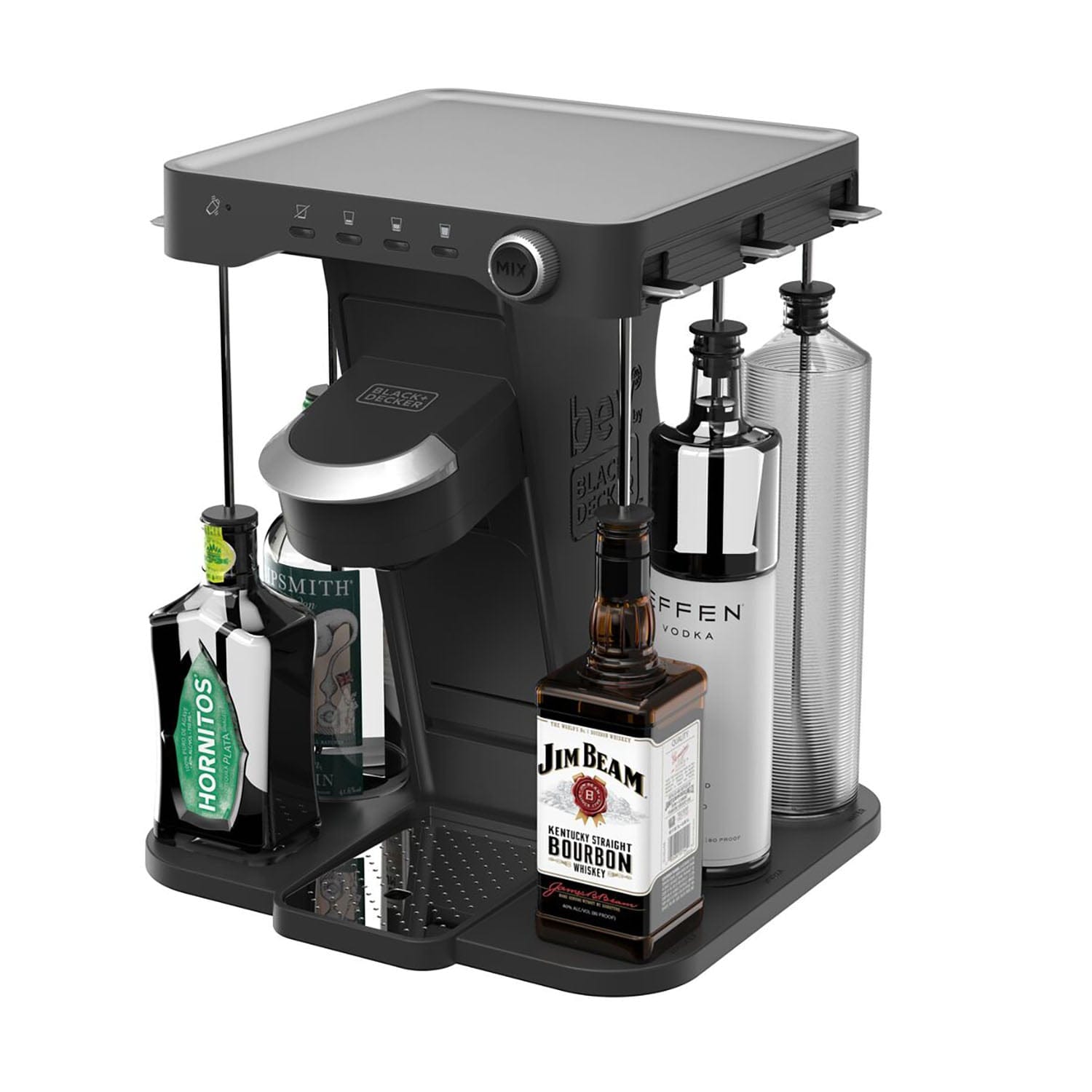
Alternative 1: Bev by Black+Decker
- Best For: The budget-conscious user who is sold on the pod concept but wants to minimize upfront cost and risk.
Consider If:
- You prioritize warranty above all else; its 2-year warranty is double that of the Bartesian and directly addresses the 13-month failure point.
- You want the absolute lowest hardware cost to enter the pod ecosystem ($299 vs. $370).
- You have limited under-cabinet space; the inverted bottle design saves counter width but requires more vertical height.
Avoid If:
- You think you’re getting a long-term bargain. The 3-year TCO is only $100 less than the Bartesian because you’re still paying the same “Pod Tax.”
- You want precise strength control; its “more” button is less granular than Bartesian’s four settings.
- Build quality is a major concern. User perception is that it feels less premium than the Bartesian, a tradeoff for the lower price.
✅ Strengths
- Superior 2-year warranty addresses the most common failure point
- Lowest hardware entry cost at $299.99
- Same 60+ pod variety as the Bartesian
- Inverted bottle design saves counter width
⚠️ Considerations
- 3-year TCO is only $100 less than Bartesian due to identical pod costs
- Less granular strength control (just a “more” button)
- Perceived cheaper build quality compared to Bartesian
- Larger physical footprint (16.5″ x 11.2″)
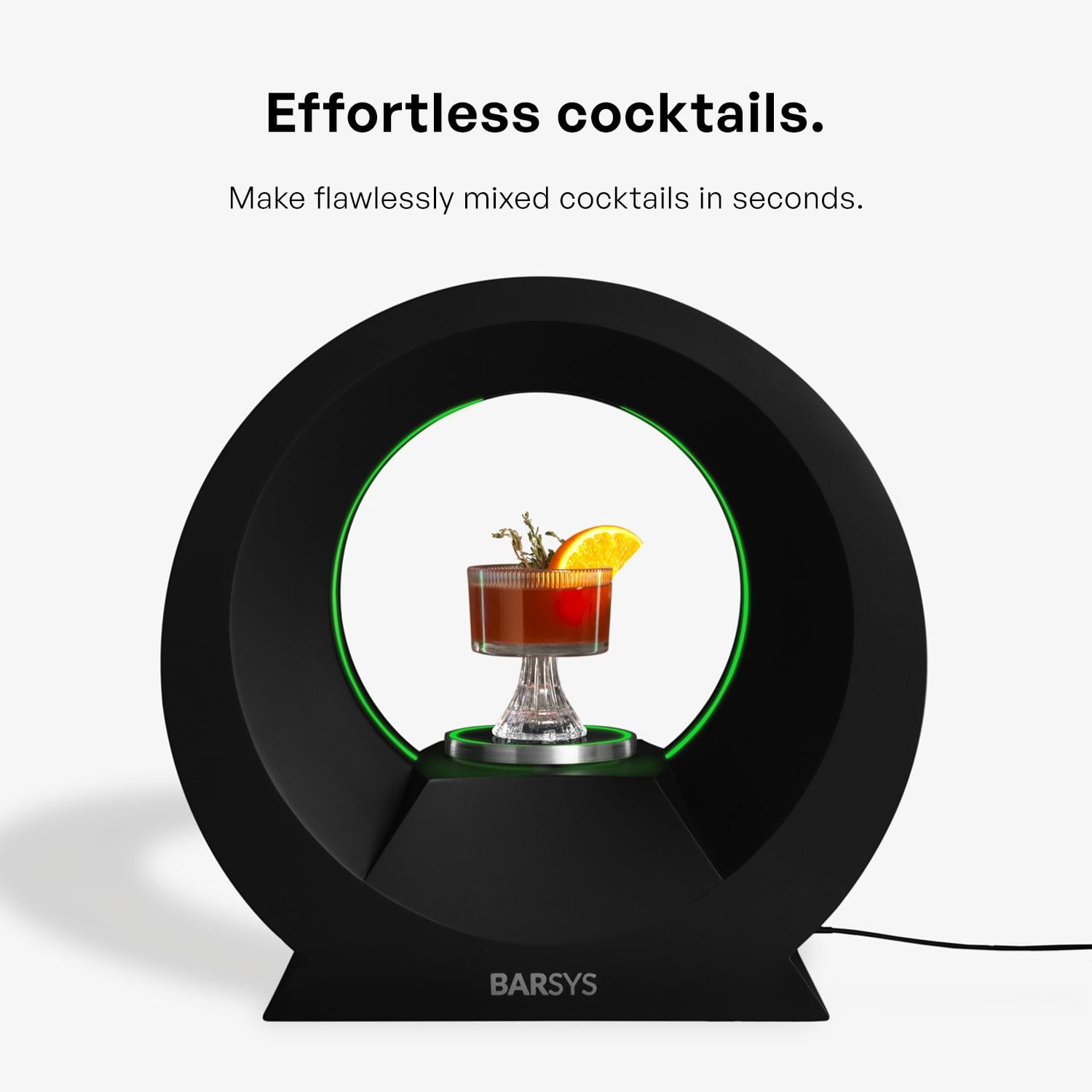
Alternative 2: Barsys 360
- Best For: The control-oriented hobbyist who wants to use their own ingredients and values long-term savings over upfront simplicity.
Consider If:
- You despise the idea of being locked into a proprietary pod system and paying a premium for juice concentrate.
- You want to create and save your own custom recipes with precise measurements. If you value full recipe customization and seek a lower cost-per-drink, the Barsys 360 is superior in every way.
- You are a tech-savvy user who is comfortable with app-controlled smart home devices.
Avoid If:
- You want a “plug-and-play” experience. The setup is significantly more involved than a pod machine.
- Your favorite cocktails involve fresh pulp, muddled herbs, or carbonation; the machine cannot handle these.
- You are not willing to accept the “single point of digital failure.” If the company or app disappears, your $475 machine becomes a paperweight.
✅ Strengths
- Open system — use your own spirits and mixers, no pod lock-in
- Dramatically lower 3-year TCO ($1,567 vs. $2,527)
- Fully customizable recipes via smartphone app
- Unlimited recipe variety with precise measurement control
⚠️ Considerations
- Highest initial hardware cost at $475
- Entirely app-dependent — no manual operation possible
- Cannot handle carbonated mixers or pulpy ingredients
- “Brick” risk if company goes out of business
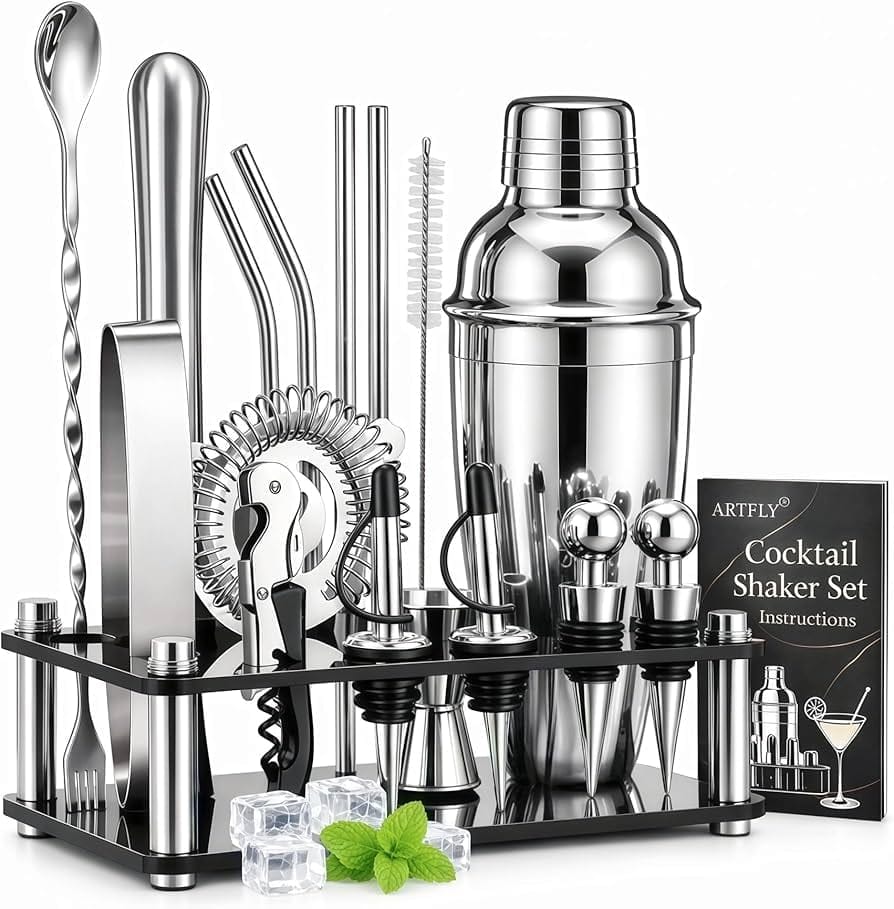
Alternative 3: Manual Shaker Set
- Best For: Anyone who prioritizes taste, quality, and cost-effectiveness above all else.
Consider If:
- You want to make the best-tasting drinks possible. No automated machine can replicate the aeration and chilling of a proper shake.
- You are on a budget. The 3-year TCO is the lowest of all options, even including stocking a full bar.
- You enjoy the craft and ritual of mixology. For many, this is a relaxing hobby, not a chore to be automated.
Avoid If:
- You need to serve many different types of cocktails to a large group of people quickly.
- You value speed and one-button simplicity more than anything else.
- You hate cleaning up; a shaker, jigger, and strainer require washing after use.
✅ Strengths
- Lowest total cost of ownership of all options
- Produces the highest quality, best-tasting cocktails
- Complete creative freedom — no ecosystem dependency
- No risk of hardware failure or company discontinuation
⚠️ Considerations
- Requires skill, effort, and learning curve
- Not ideal for serving large groups quickly
- Cleanup required after each use
- No automation — manual labor for every drink
Part 7: Conclusion & FAQs
Conclusion: What is the Best Automated Cocktail Machine in 2026?
My deep-dive into the Bartesian and its place in the Home and Garden market reveals a clear but costly trade-off.
The convenience of pod systems is undeniable, but as I’ve shown, it comes at the price of a massive ‘Pod Tax,’ significant reliability risks, and a complete lack of control over your drink’s taste. The promise of simplicity is powerful, but the long-term reality for this kitchen and dining appliance is often frustrating and expensive.
This is the definitive analysis of Bartesian top alternatives and competitors. Before committing to any purchase, make sure to check for the latest Bartesian exclusive deals and money-saving offers on our website.
The right choice depends entirely on your priorities. If you accept the high costs and reliability risks for the prize of ultimate convenience, the Bev by Black+Decker with its 2-year warranty is the most logical entry point into the pod ecosystem.
If you’re a hobbyist who values customization, wants to use your own ingredients, and seeks lower long-term costs, the Barsys 360 is superior in every way, provided you can handle the more complex tech setup.
For everyone else who prioritizes quality, cost, and craft, a simple manual shaker set from a respected brand like Cocktail Kingdom remains the undefeated champion of quality, cost, and craft.
Before buying ANY automated system, I urge you to ask three final questions. First, is the warranty longer than the 12-month failure point so frequently reported by users? Second, am I truly willing to perform the tedious monthly cleaning required to keep this machine functional? And third, what is my ‘single point of failure’—a pod company or a software app—and can I accept the risk of it disappearing? Your honest answers will likely save you from buying a very expensive dust collector and help you find the best solution for your home bar. You can also explore the Bartesian Review on our site for even more details on these risks.
Frequently Asked Questions
Q1: How much does a Bartesian really cost per year?
A: A casual Bartesian user spends about $720 per year on pods and spirits, on top of the initial $370 machine cost. This calculation is based on an average of four drinks per week, where the pods and alcohol contribute to a per-drink cost of about $3.41. This cost can quickly escalate if you use the machine more frequently or host parties.
For comparison, the annual consumable cost for a Barsys 360 user is closer to $364 for the same number of drinks. The high recurring cost is the primary financial drawback of the entire pod-based ecosystem for home appliances. You can potentially reduce costs by looking for current Bartesian sale prices and coupons.
Q2: Is the Bartesian worth the money in 2026?
A: For most people, my analysis shows that no, the Bartesian is not worth the money. The long-term cost is excessively high compared to every other alternative in the home cocktail market. While the convenience is high, the “pod tax” of nearly $1,000 over three years and the widespread reliability issues make it a poor financial investment for a home appliance.
You are paying a premium price for a machine that, according to a significant number of user reports, may not last much longer than its 1-year warranty. A consumer is better off investing in an open system or a high-quality manual set.
Q3: What is better: the Bartesian or the Bev by Black+Decker?
A: The Bev by Black+Decker is slightly better due to its lower initial cost ($299) and a superior 2-year warranty. I must stress that both machines share the same fundamental flaws: they use the same expensive pods, have the same sweet taste profile, and suffer from similar user complaints about reliability.
However, the Bev’s 2-year warranty directly addresses the most common and costly problem with the Bartesian: hardware failure occurring shortly after the 1-year warranty expires. For this reason, the Bev is the more pragmatic and less risky choice, even if it is still a choice within a flawed ecosystem.
Q4: What are the main problems with the Bartesian?
A: The main problems are high long-term costs (the “pod tax”), frequent user reports of the machine leaking after the 1-year warranty expires, and cocktails that are often criticized for being too sweet or artificial.
The machine’s questionable long-term reliability is its biggest “blind spot” and the greatest risk to consumers. The 1.6/5 rating on the Better Business Bureau corroborates these issues, with numerous complaints detailing hardware failure and unsatisfactory customer support experiences. These three issues—cost, reliability, and taste—are the most cited drawbacks in user reviews.
Q5: Can you use your own alcohol in the Bartesian?
A: Yes, you provide your own base spirits like vodka, whiskey, rum, gin, and tequila. The machine has five large glass reservoirs that you fill with your preferred brands of these core liquors.
When you insert a pod, the machine reads the barcode, identifies which spirit(s) are needed, and draws the correct amount from the reservoirs. It then mixes your spirit with the contents of the cocktail pod to create the drink. You cannot use infused spirits or liqueurs in the main reservoirs, as the system is designed only for the standard five base spirits.
Q6: Can you use your own juice or make Bartesian drinks less sweet?
A: No, you cannot use your own juice or adjust the sweetness of the drink. This is one of the biggest limitations of the closed ecosystem. The pod contains all the juice concentrates, bitters, and flavorings, and the recipe is locked by the pod’s barcode.
Your only options for customization are changing the alcohol strength (from mocktail to strong) or manually adding water or extra ice to your glass after the drink is made to dilute it. You are stuck with the company’s recipe, which many users find to be “too sweet.”
Q7: What’s a cheaper alternative to the Bartesian?
A: Over a three-year period, the Barsys 360 is almost $1,000 cheaper, making it a significantly cheaper alternative if you are a frequent user. For those who want ultimate simplicity and zero hardware cost, premium bottled cocktails like On The Rocks have a similar per-drink price but no upfront investment.
However, the cheapest and highest-quality alternative of all remains a manual shaker set, which has a 3-year TCO of only $1,536, including fully stocking a bar with spirits and mixers. Don’t forget to browse our latest coupons page for savings on bar tools and appliances.
Q8: Is the Bartesian likely to be discontinued?
A: The risk is not zero, and anyone telling you otherwise is ignoring history. Keurig’s similar “Drinkworks” machine was abruptly discontinued in 2021, making the hardware useless overnight.
Bartesian’s entire ecosystem depends on the company’s continued survival and profitability. While not necessarily “likely” to be discontinued tomorrow, it is a medium-to-high risk that consumers must be aware of when buying into any closed ecosystem. A change in company ownership, profitability, or strategy could render your expensive home appliance obsolete. This is a core risk of the “razor-and-blades” business model for consumers.
Q9: How do you clean a Bartesian machine?
A: You clean the Bartesian through a combination of automated prompts and manual washing. The machine will periodically prompt you to run a “rinse cycle.” For a deeper clean, required monthly, you run a cleaning cycle with a water-filled reservoir and use proprietary cleaning capsules.
The five glass spirit reservoirs and other removable parts are dishwasher safe. However, the internal lines require this regular flushing to prevent the buildup of sugar from the pods, which can lead to the clogs and leaks mentioned in this review. Failure to adhere to this tedious cleaning schedule is a primary cause of machine malfunction according to user reports.
Q10: Is the Bartesian good for parties?
A: Yes, the Bartesian’s biggest strength is for hosting parties where its speed, variety, and convenience shine. It allows guests to choose from many different drinks, and it produces them consistently without requiring the host to play bartender all night.
However, this convenience comes at a high price. You must be aware of the high per-drink cost if serving many guests, which can make a party very expensive compared to manual bartending with standard-sized bottles. A single party could easily consume dozens of pods, costing you over $100 in just one evening. If you’re planning a party, at least save money with a Bartesian discount to keep your budget in check.