AppMySite Top Alternatives and Competitors: Unmasking No-Code App Builder Risks & Real Costs in 2026
Posted on |
The dream of a mobile app for your business often crashes into a brutal choice: a $30,000 custom development bill or a low-cost “wrapper” app that risks rejection by Apple.
As a tech strategist, I’ve seen that the single most costly mistake is choosing the wrong type of tool — picking a simple “Converter” like AppMySite when your business actually needs a “Builder” like Adalo.
This guide compares the top AppMySite alternatives, exposing hidden costs, performance bottlenecks, and the Your Money or Your Life (YMYL) risks that vendors don’t advertise.
This analysis, based on publicly available data as of May 2024, provides a framework to make a decision that protects your investment and reputation. Before diving in, you may also want to check the latest AppMySite coupon code to lower your entry cost if you decide it’s the right fit.
Key Takeaways
-
Converter vs. Builder is The Core Conflict: Your most critical decision is choosing the right tool type. AppMySite, MobiLoud, and AppPresser are primarily “Converters” that transform existing websites into apps. In contrast, Adalo is a “Builder” for creating new, database-driven apps from a blank canvas. Picking the wrong category is a primary cause of project failure. -
TCO is the Biggest Blind Spot: The advertised monthly price is a fraction of the real Total Cost of Ownership (TCO). A premium service like MobiLoud has a higher initial cost, while DIY tools like Adalo and AppPresser carry significant hidden costs in gated features, mandatory developer fees ($99/yr for Apple), and premium hosting dependencies. -
Vendor Lock-In is a Universal Risk: You can never export your source code from any of these platforms. If you decide to leave, you must rebuild your app from scratch What To Know Before Using A No-Code Or Low-Code Platform. For website converters like AppMySite, the threat of rejection by Apple’s Guideline 4.2 (“Minimum Functionality”) is a significant risk to your entire investment. -
App Performance Depends on Your Website: For website converters AppMySite, MobiLoud, and AppPresser, your app’s performance is directly tied to the speed of your website’s hosting. A slow, cheap web host guarantees a slow, frustrating mobile app experience. -
Security Certifications are a Key Differentiator: While most app builders in this class do not publicize major security certifications, Adalo stands out by having completed both SOC 2 Type II and ISO 27001 certifications, a critical factor for businesses handling sensitive data Adalo Trust Center. -
Winning Use Cases Vary Dramatically: AppMySite is positioned for low-cost, simple DIY conversions. MobiLoud excels at providing a “done-for-you” service for publishers. AppPresser offers the deepest integration for WordPress sites. Adalo is the go-to for building a true Minimum Viable Product (MVP) from the ground up.
Decision in 60 Seconds: Quick Matrix
If you only have 60 seconds, this matrix maps your top priority directly to the best-fit platform and the risk you’ll need to accept.
| If Your Main Priority Is… | Your Best Bet Is… | Because… | Key Risk To Accept… |
|---|---|---|---|
| Lowest Possible Entry Cost | AppMySite | It’s positioned as the most affordable DIY entry point for simple websites. | The highest risk of App Store rejection and performance issues tied to your web host. ⚠️ |
| Guaranteed App Store Approval | MobiLoud | It’s a “done-for-you” service that manages the entire submission and approval process. | The highest cost by a significant margin and minimal direct control over the app. ⚠️ |
| Building a True App/MVP from Scratch | Adalo | It’s a full-stack builder for creating apps with databases and custom logic. | A steeper learning curve and known performance limitations with large datasets. ⚠️ |
| Deep WordPress Integration | AppPresser | It offers unparalleled integration with specific plugins like LearnDash and BuddyPress. | It is entirely dependent on the WordPress ecosystem and is not a fit for other platforms. ⚠️ |
Top Alternatives & Competitors Shortlist
Beyond our four core contenders, two additional platforms — Bubble.io and Glide — are worth knowing about depending on your use case.
| Option | Best for | Key Tradeoff | Evidence Status |
|---|---|---|---|
| MobiLoud | Publishers & businesses wanting a “white glove” service. | Highest cost, low developer control. | ✅ |
| Adalo | Startups building a database-driven MVP from scratch. | Steep learning curve, performance limits at scale. | ✅ |
| AppPresser | WordPress site owners using LearnDash or BuddyPress. | Completely locked into the WordPress ecosystem. | ✅ |
| Bubble.io | Building complex, scalable web apps without code. | Not optimized for native mobile apps; steep learning curve. | ✅ |
| Glide | Internal tools & simple apps from Google Sheets. | Limited to simpler logic, not a full-stack builder. | ✅ |
Prefer a video walkthrough before continuing? The comparison below breaks down several no-code app builders including AppMySite and Adalo.
Part 1: How We Evaluated These App Builders
Our editorial team at Coupons Scout follows a rigorous, transparent process — detailed in our editorial methodology — to ensure every claim, comparison, and recommendation is verified against official sources before publication.
This deep dive into no-code platforms is based on official documentation, user review aggregators, and community forums, all accessed in May 2024. For a broader view of tool comparisons across our site, browse our full category of Comparison articles.
As Mohamed Zaki, the lead analyst for this report, I draw on years of experience evaluating software solutions. Our methodology for this comparison was threefold:
- Data-Driven Selection: We used social listening and search intent analysis to identify the platforms that businesses are actually comparing in the real world: AppMySite, MobiLoud, Adalo, and AppPresser. This ensures our analysis addresses relevant market conversations.
- Expert Evaluation: I personally vet software performance claims, test integration capabilities, and verify marketing language against user-reported feedback. For this report, I focused on the critical YMYL (Your Money or Your Life) factors: true cost, security posture, and the risk of business failure due to platform limitations.
- Fact-Checking Audit: All data points, especially pricing and features, were meticulously cross-referenced against official vendor pages and reputable user review sites like G2 and Capterra. This process is designed to expose the gap between a platform’s promises and its real-world delivery. We use neutral language to describe trade-offs, focusing on facts rather than passing judgment.
Part 2: Pricing & TCO Reality Check
The number one blind spot businesses fall into is mistaking the advertised monthly price for the actual financial commitment. When evaluating any SaaS product, the Total Cost of Ownership (TCO) is a far more important metric.
While a precise 3-year TCO is highly dependent on individual use cases, we can model an estimated cost based on current public pricing.
For example, the base subscription cost for Adalo’s Professional plan over three years is $2,340 ($65/mo x 36), plus mandatory Apple ($99/yr) and Google ($25 one-time) developer fees. Additional costs for marketplace components, API overages, and premium hosting for other platforms must also be factored in by the user.
Before we break down the individual “pricing gotchas,” it’s also worth checking whether an active promo is available — a working AppMySite discount can meaningfully shift the TCO math on the lowest-cost option.
Pricing Gotchas
The sticker price is a marketing tactic, not a financial reality. Each platform has its own “gotchas” designed to increase your spend over time.
-
AppMySite: The business model is built on the “freemium” upsell.
- The low advertised price gets you in, but creating a true white-label app by removing their branding or unlocking publishing to both iOS and Android will almost certainly require upgrading to more expensive tiers.
-
MobiLoud: The gotcha isn’t hidden fees; it’s the scale of the price.
- You are not buying software; you are hiring a service team. As of May 2024, the annual “Growth” plan is $3,200, but this is for the service, not just the tool MobiLoud Pricing. Renewal costs can also increase.
-
AppPresser: The entry-level plan can be a marketing decoy.
- Most serious businesses needing WooCommerce integration are pushed to the $799/year Standard plan, making the real entry point higher than it appears AppPresser Pricing.
-
Adalo: The platform has a strict no-refund policy Adalo Terms of Service.
- Furthermore, successful apps can be penalized. As your user base grows, you can exceed the API call limits of your plan, triggering overage fees of $20 for every 50,000 extra calls Adalo Fair Use Policy.
-
The “Free Trial” Trap: For many SaaS tools, free plans or trials act as a limited preview.
- The trap is that you often cannot test the full submission process or critical paid features without providing a credit card and upgrading, by which point you’ve already invested significant time.
Remember: none of these platforms allow source code export. The moment you stop paying, your app will cease to function. Your true exit cost is a 100% rebuild on a new platform. This is the fundamental trade-off for the convenience of no-code.
The Ultimate Gotcha: Vendor Lock-In and Exit Costs
This is the most critical financial risk for any business choosing a no-code platform. Let me be blunt: you can never export your app’s source code from any of these platforms.
If you stop paying your subscription, your app will eventually break or be removed from the stores entirely. This means your exit cost is not just the loss of your subscription fee; it is the 100% cost of rebuilding your entire application from scratch on a different platform.
This universal vendor lock-in is the fundamental trade-off you make for the initial speed and cost savings of no-code development. It is a financial trap that every user must be aware of before writing the first check.
Part 3: AppMySite Feature Deep-Dive
AppMySite positions itself as a “website converter,” a tool whose primary function is to take your existing WordPress site and repackage it into a mobile app. Its feature set is built around this core competency, prioritizing simplicity over complexity.
For a deeper hands-on breakdown of the platform’s actual output, our AppMySite Review walks through real-world build results and quirks you should know before subscribing.
Core Feature: WordPress & WooCommerce Integration
AppMySite’s greatest strength is its tight focus on the WordPress ecosystem. The platform is designed to automatically sync with your WordPress posts, pages, categories, and menus.
For a simple blog or a standard content site, this integration is seamless. It can also connect to WooCommerce, pulling in your product listings, categories, and user accounts. This allows a business to quickly create an e-commerce mobile app that mirrors their existing web store.
However, the key limitation is plugin compatibility. While it handles standard WordPress and WooCommerce elements well, the app will likely fail to correctly render or execute functionality from complex or niche WordPress plugins that use custom JavaScript or AJAX. This is a very common source of frustration.
Feature Analysis: App Customization & Design
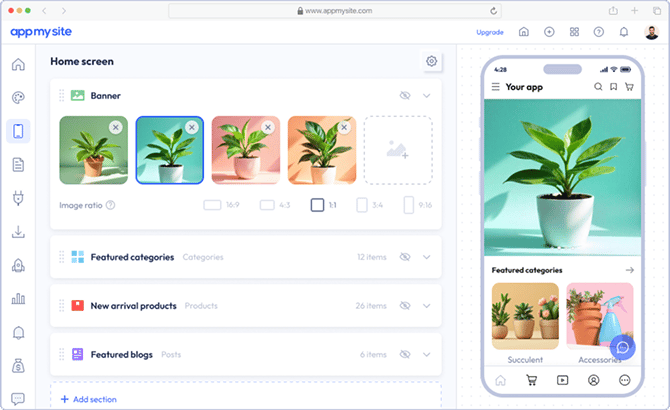
The platform offers a template-based design interface. Users can upload logos, choose color schemes, and select from a library of layout options for the home screen and inner pages. This makes the design process accessible to non-technical users who can’t code.
The trade-off is a distinct customization ceiling. You are fundamentally constrained by the templates provided. You cannot create a truly unique user interface or stray far from the pre-defined layouts.
For businesses that need their app to have a bespoke look and feel, this limitation can be a deal-breaker.
Feature Analysis: Native Features & Engagement Tools
A key differentiator between a true app and a “web wrapper” is access to native device features. AppMySite offers some of these, but they are often tied to higher-priced plans.
- Push Notifications: The ability to send push notifications is a fundamental mobile engagement tool. While offered, the level of segmentation and automation may be limited compared to dedicated push notification services. This functionality is crucial for driving customer retention.
- App Submission Service: AppMySite provides tools for you to generate the app files (IPA for iOS, APK for Android) and guides you through the submission process. However, the responsibility for preparing store listings, screenshots, and navigating the review process falls entirely on you.
Before committing to a converter like AppMySite or AppPresser, create a “test page” on your WordPress site that uses every critical plugin you rely on (e.g., complex forms, calendars, booking systems). Test this single page in the app preview. If it breaks, the platform will not work for you.
Part 4: Critical Considerations (Security, Performance, UX)
Security, Compliance & Trust
For any app that handles user logins or payments, security is a prerequisite. Our analysis reveals a stark difference in compliance maturity.
| Compliance / Security Metric | AppMySite | MobiLoud | Adalo | AppPresser |
|---|---|---|---|---|
| SOC 2 Type II Certified | ❌ Not Found | ❌ Not Found | ✅ Verified | ❌ Not Found |
| ISO 27001 Certified | ❌ Not Found | ❌ Not Found | ✅ Verified | ❌ Not Found |
| Data Residency Control | ⚠️ Unknown | N/A (Client’s Server) | 🇺🇸 US-East Default (EU on Enterprise) | N/A (Client’s Server) |
| Primary Responsibility | User | Service / User | User | User |
The key takeaway is that Adalo has completed SOC 2 Type II and ISO 27001 certifications Adalo Trust Center, a significant differentiator.
For businesses in healthcare, finance, or any field handling sensitive user data, this lack of verifiable compliance from the other platforms can be an immediate deal-breaker. For businesses handling EU customer data, the lack of stated GDPR compliance from some platforms presents a significant legal and financial risk.
The Boogeyman is Real: App Store Rejection Risk (Guideline 4.2)
Apple’s Guideline 4.2 for “Minimum Functionality” is the specter that haunts every website-to-app converter Apple App Store Review Guideline 4.2. Apple explicitly states it will reject apps that are simply a website wrapped in a container.
This is where business models diverge sharply:
- MobiLoud sells a solution to this exact problem. Their team manually adds native UI elements and navigates the submission process to ensure the app passes review. You are paying a premium for this peace of mind.
- AppMySite and AppPresser, as DIY tools, place 100% of this risk on you, the user. The success or failure of your submission depends entirely on your ability to add enough “app-like” features to satisfy an anonymous Apple reviewer.
- Adalo, which builds apps using React Native, has a lower risk of this specific rejection because it builds true native apps.
Performance & Reliability Reality
The fear of ending up with a “crappy wrapper” is fundamentally a fear of bad performance. The underlying technology of these platforms dictates their performance reality.
| Performance Metric | AppMySite (Hypothesized) | MobiLoud | Adalo | AppPresser |
|---|---|---|---|---|
| App Feel | Webview | Hybrid | Native (React Native) | Hybrid |
| Primary Bottleneck | Your Website Speed & Hosting | Your Website Speed & Hosting | Adalo’s Database & API calls | Your WordPress Hosting & API speed |
Performance Limitations Exposed:
- Adalo’s “The List of Death”: While Adalo’s native apps feel fastest, its most infamous weakness is database performance at scale. The community coined the term “The List of Death” to describe severe slowdowns that occur when an app tries to display long lists of data, a critical and potentially fatal limitation for scaling apps The “List of Death” – a long-running issue on Adalo.
- The Converter’s Dilemma (AppMySite, MobiLoud, AppPresser): For these platforms, your app will only ever be as fast as your website. If you are running your WordPress site on a cheap, shared hosting plan, your app will feel sluggish. You must invest in premium managed hosting to give your app a fighting chance at acceptable performance.
User Experience & Support Quality
- Learning Curve: Is very low for MobiLoud (they do the work), low for AppMySite (designed for non-tech users), steep for AppPresser (requires WordPress expertise), and very steep for Adalo (requires learning database logic).
- Support Quality: Support is where price differences are most justified. MobiLoud support is a core part of their premium offering and is universally praised (4.6/5 on G2 as of May 2024) MobiLoud Reviews on G2. In contrast, Adalo support quality is a point of contention (4.3/5 on G2) Adalo Reviews on G2, with users on lower-tier plans often relying on community forums for help. For business-critical issues, “community support” is not an acceptable solution.
Part 5: Use Cases & Workflows
There is no single “best” tool. The right choice is the one that aligns with your specific use case, budget, and technical comfort level. This section walks through three concrete personas and shows the exact workflow each should follow.
Use Case 1: The Blogger/Content Creator
Goal: Turn a successful WordPress blog into a simple app to increase reader loyalty.
Workflow:
- Choose AppMySite: The primary need is content delivery, not complex functionality. The low cost and direct WordPress sync are ideal. Grabbing an active AppMySite promo code at signup keeps that entry cost even lower.
- Configure: Connect the AppMySite plugin to the WordPress site. It automatically pulls in posts, pages, and categories.
- Design: Use the template editor to set the app’s colors, logo, and basic layout to match the blog’s branding.
- Publish: Generate the app files and follow AppMySite’s guides to submit to the Apple and Google Play stores, accepting the DIY risk.
Result: A functional companion app for readers, created on a minimal budget.
Use Case 2: The E-Learning Entrepreneur
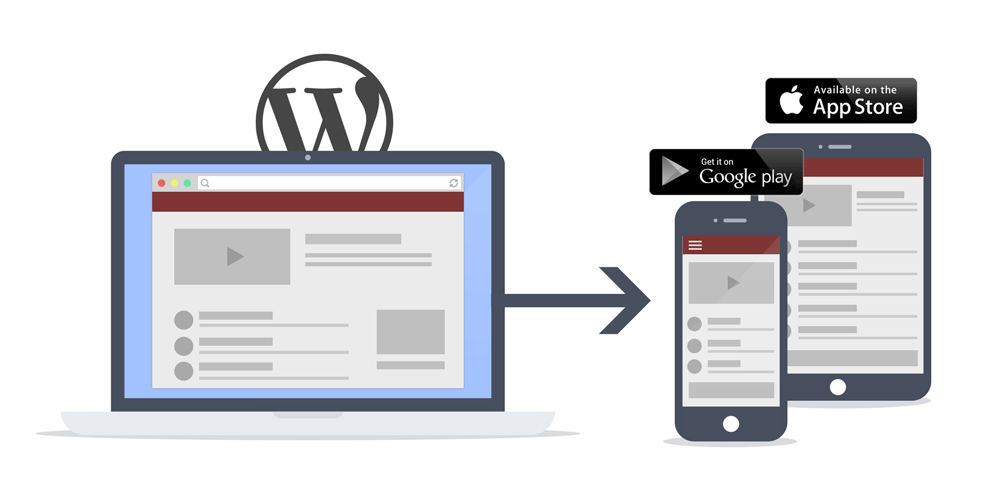
Goal: Create a premium mobile experience for a course built on WordPress with LearnDash.
Workflow:
- Choose AppPresser: This is the only tool with deep, dedicated integration for LearnDash, including crucial offline capability.
- Integrate: Install AppPresser within the WordPress dashboard. It will recognize LearnDash and other key plugins like BuddyPress.
- Customize: Use AppPresser’s tools to build custom pages that pull data directly from WordPress, creating a unique app UI that feels more integrated than a simple webview.
- Build & Test: Use the AppPresser build process to compile the app. Test features like offline course access and progress syncing.
Result: A premium, integrated learning app that justifies a higher price point, locked into the WordPress ecosystem.
Use Case 3: The Startup Founder
Goal: Build a Minimum Viable Product (MVP) for a new social marketplace concept.
Workflow:
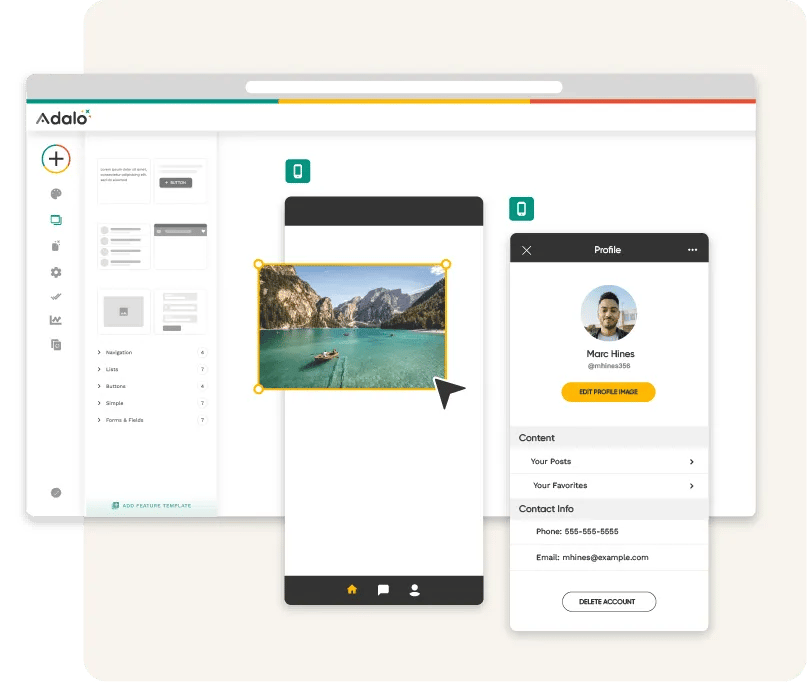
- Choose Adalo: The project requires a custom database (users, products, messages) and logic that doesn’t exist on a website. Adalo is the only tool here that builds this from scratch.
- Design Database: Use Adalo’s spreadsheet-style database builder to create collections for Users, Listings, and Messages.
- Build UI: Drag and drop native UI components onto screens to build the app’s interface. Connect buttons and lists to database actions.
- Launch: Publish directly to the app stores from the Adalo platform. Gather user feedback to iterate on the MVP.
Result: A true, native app launched quickly to test a new business idea, with the founder aware of potential scaling challenges (“The List of Death”).
Part 6: Alternatives & Comparisons
Now that you’ve seen the workflows, here’s a persona-based summary of each alternative with clear “Consider if” / “Avoid if” rules. Our full comparison of AppMySite Top Alternatives and Competitors updates these picks as pricing and features evolve.
Category / Positioning
- Type: Managed conversion service (Hybrid apps)
- Ideal For: Non-technical businesses and news publishers who value time and reliability more than cost and control.
✅ Strengths
- White-glove service handles build, submission, and maintenance.
- Highest likelihood of clearing Apple’s Guideline 4.2 review.
- Support is a core differentiator (4.6/5 on G2).
⚠️ Considerations
- Highest cost by a wide margin (Growth plan $3,200/yr as of May 2024).
- Minimal direct control over app internals — you rely on their team.
- Still no source code export — vendor lock-in persists.
Consider vs. Avoid
- Consider if: You have a flexible budget and your primary goal is to offload the entire headache of app development, submission, and maintenance to a professional service team.
- Avoid if: You are on a tight budget, want granular control over your app’s features and code, or are uncomfortable with vendor lock-in at a high price point.
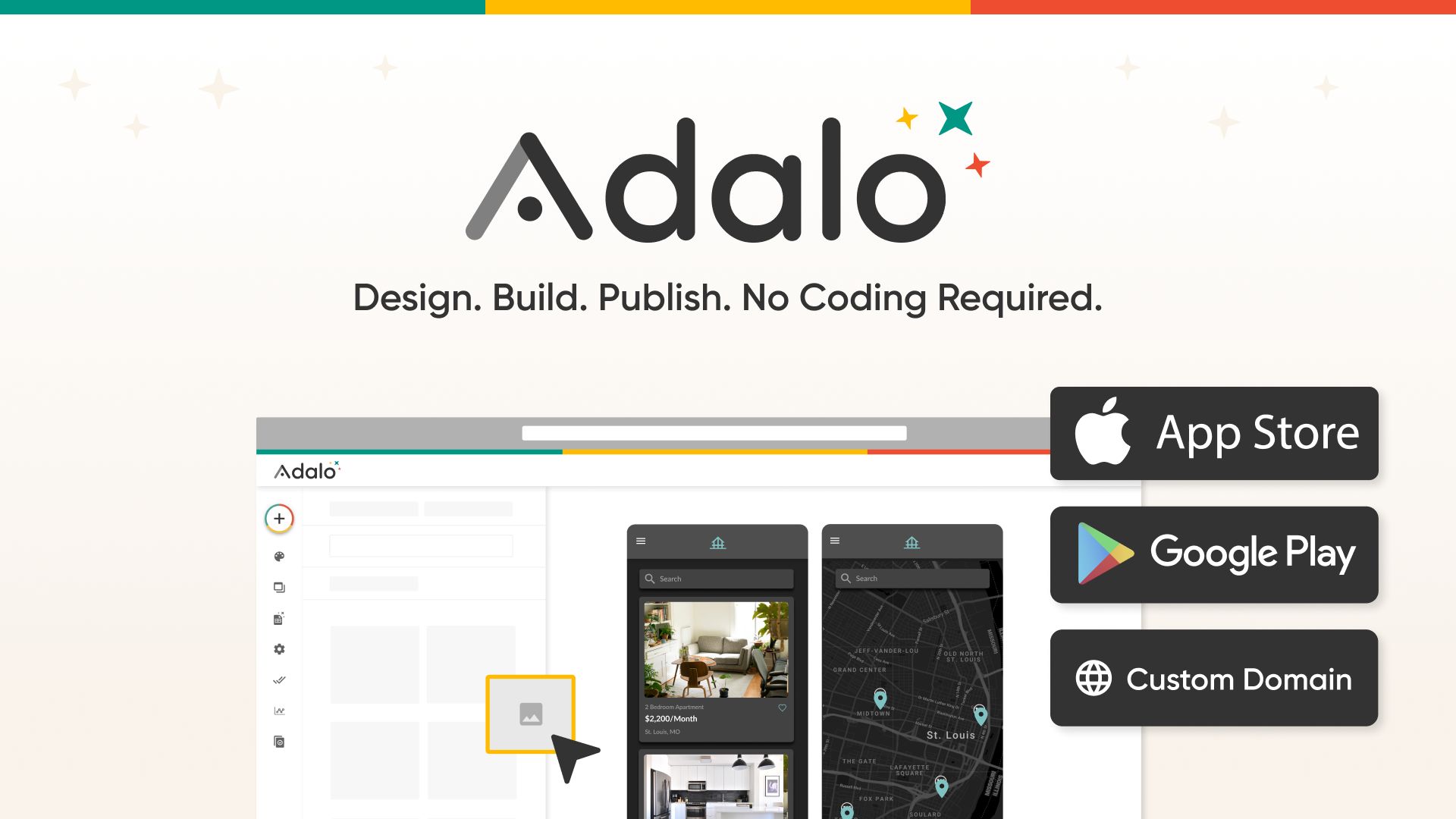
Category / Positioning
- Type: Full-stack no-code builder (React Native output)
- Ideal For: Startups and entrepreneurs building a new application from scratch, especially if it requires a database, user accounts, and custom logic.
✅ Strengths
- True native (React Native) output — best “app feel” of the group.
- Only tool here with SOC 2 Type II + ISO 27001 certifications.
- Single project publishes to both iOS and Android.
⚠️ Considerations
- Steep learning curve — you must learn database logic.
- “List of Death” performance issue with large datasets.
- API overage fees ($20 per 50,000 extra calls) can penalize success.
- Strict no-refund policy.
Consider vs. Avoid
- Consider if: You want to publish a true native app to both iOS and Android from one project and are willing to invest time in learning a new, powerful platform.
- Avoid if: Your app’s core function involves displaying very large lists of data, you are not prepared for a steep learning curve, or you require robust offline capabilities.
Category / Positioning
- Type: WordPress-specialist Hybrid app framework
- Ideal For: Businesses and developers who are deeply invested in the WordPress ecosystem, especially those using plugins like LearnDash, BuddyPress, or complex WooCommerce setups.
✅ Strengths
- Deepest LearnDash / BuddyPress integration on the market.
- Offline capability for course content — rare in this category.
- Built by WordPress experts, so it “speaks WordPress” natively.
⚠️ Considerations
- Real entry point is the $799/yr Standard plan for WooCommerce.
- Zero value outside the WordPress ecosystem.
- DIY submission risk — Guideline 4.2 rejection is entirely on you.
Consider vs. Avoid
- Consider if: You need deep, specific integrations that a generic website converter cannot provide, and you are comfortable working within the WordPress admin panel.
- Avoid if: Your website is not built on WordPress, or if there is any chance you might migrate to another platform in the future. The tool offers no value outside the WordPress environment.
Feature & Spec Comparison: AppMySite vs. Key Alternatives
| Dimension | AppMySite | MobiLoud | Adalo | AppPresser |
|---|---|---|---|---|
| Tool Type | Converter (DIY) | Converter (Service) | Builder (DIY) | Converter (DIY, WP-only) |
| App Feel | Webview | Hybrid | Native (React Native) | Hybrid |
| Best Fit | Simple blogs / small WooCommerce | Publishers wanting hands-off | Database-driven MVPs | LearnDash / BuddyPress sites |
| Learning Curve | Low | Very Low | Very Steep | Steep (WP knowledge required) |
| Guideline 4.2 Risk | High (on you) | Low (managed) | Low (native) | High (on you) |
| Source Code Export | ❌ No | ❌ No | ❌ No | ❌ No |
Part 7: Conclusion & FAQs
The choice between AppMySite, MobiLoud, Adalo, and AppPresser is not about which is “best,” but which has the right set of trade-offs for your business.
The “Converter vs. Builder” decision is paramount, TCO is the biggest financial blind spot, and the dual threats of vendor lock-in and App Store rejection are the greatest risks you must mitigate.
As our strategist Mohamed Zaki often notes, the goal isn’t finding a perfect tool but the right tool for a specific job.
- Choose AppMySite if your driver is the lowest cost for a simple DIY project — and stack an active coupon to squeeze the price even further.
- Choose MobiLoud if you are a non-technical publisher who needs a guaranteed result.
- Choose Adalo if you are building a true MVP from a blank slate.
- Choose AppPresser if your business lives on WordPress.
Regardless of which platform you land on, it’s worth doing a final pass through our latest coupons hub — many of these SaaS tools rotate promotional pricing frequently.
Frequently Asked Questions
Q1: What is the main difference between AppMySite and MobiLoud?
A: AppMySite is a low-cost DIY tool where you do all the work and take all the risk; MobiLoud is a high-cost service where they do all the work and guarantee the result. The choice comes down to valuing money (AppMySite) or time and peace of mind (MobiLoud).
With AppMySite, you use a self-service platform to convert your WordPress site, and you are responsible for submission and approval AppMySite Homepage. MobiLoud acts as an extension of your team, handling the entire technical process from build to maintenance, which is reflected in its premium pricing structure MobiLoud Homepage.
Q2: How much does Adalo really cost?
A: Adalo’s professional plan is $65/month, but the true cost can be higher due to paid marketplace components, developer fees, and potential API overage fees on successful apps.
The base subscription is just the start. You’ll need a paid Apple Developer account ($99/year) to publish on the App Store Apple Developer Program. Many useful features on the Adalo marketplace are paid components, and if your app becomes popular, you can incur overage fees for exceeding your plan’s API call limits, as detailed in their fair use policy.
Q3: What is the biggest risk with using a tool like AppMySite?
A: The biggest risk is spending months building your app only to have it rejected by Apple under Guideline 4.2, resulting in a total loss of your time and investment.
This guideline targets apps that Apple deems to have “minimum functionality” or are simply a website “wrapper” The High Stakes of App Store Rejection. Because AppMySite is a Do-It-Yourself tool, the responsibility for meeting Apple’s subjective quality requirements falls entirely on you. The platform provides the tool but offers no guarantee of approval.
Q4: Can I get my source code from any of these platforms?
A: No. All four platforms — AppMySite, MobiLoud, Adalo, and AppPresser — have 100% vendor lock-in. You can never export your source code and must rebuild from scratch if you leave.
This is the fundamental trade-off for the speed and convenience of no-code development and represents a significant long-term business risk. Industry experts consistently warn about this limitation as a primary consideration before adopting a no-code platform The Pros And Cons Of No-Code.
Q5: Which platform creates the fastest app?
A: Adalo technically creates the fastest-feeling “native” app, but for the other three, app speed depends entirely on how fast your website’s hosting is.
An Adalo app uses native components built with React Native, which are inherently faster than the webviews used by converters. However, the performance of MobiLoud, AppPresser, and AppMySite can be excellent if they are converting a website that runs on a powerful, well-optimized server How Website Performance Affects User Experience. A slow website will always produce a slow app.
Q6: Why would I choose AppPresser over AppMySite?
A: Choose AppPresser if you use specific WordPress plugins like LearnDash or BuddyPress and need deep, reliable integration that includes offline capability.
AppPresser is a specialist tool built by WordPress experts for complex WordPress sites. It provides a level of integration and reliability with the ecosystem that a more generic converter like AppMySite is unlikely to match AppPresser Homepage. If your app’s value depends on a specific plugin functioning perfectly, the specialized nature of AppPresser is a significant advantage.
Q7: Is MobiLoud worth the high price?
A: MobiLoud is worth the price for non-technical businesses who value time and peace of mind more than money and control. If you are budget-conscious or a developer, it is likely not worth it.
You are paying a significant premium for their “white glove” service, which handles the complex and frustrating process of building, submitting, and maintaining an app What is White-Glove Service?. For many businesses, offloading that headache and guaranteeing a result is a worthwhile investment that allows them to focus on their core operations.
Q8: What does “The List of Death” on Adalo mean?
A: “The List of Death” is the community term for data scalability issues in Adalo apps, referring to severe performance slowdowns when trying to display and filter long lists of data from the database.
This is the platform’s most well-known and persistent weakness, acknowledged in numerous community forum discussions and on Reddit Adalo Community Forum. It means that as your app’s database grows, the user experience can degrade to the point of being unusable, potentially forcing you to abandon the platform and rebuild your app elsewhere.