Alttext Top Alternatives And Competitors: AltText.ai Vs. Shopify Magic’s ‘Free’ Illusion, Data Risks 2026
Posted on |
Choosing an AI alt text generator isn’t about finding a simple feature checklist; it’s a critical business decision centered on mitigating risks around Total Cost of Ownership (TCO), AI quality, and site performance.
This guide provides a defensive framework against common pitfalls. I’m Jettawat Kasemchaiyanun, Coupons Scout’s senior tech reviewer, and in this analysis, I’m going to dissect the claims of AltText.ai, Image SEO Optimizer, Crush.pics, and Shopify Native AI.
My focus is on providing a decision framework based on risk mitigation and true TCO, evaluating four pillars: AI Quality, Data Portability, True Cost, and Site Speed Impact. If saving on subscription costs is a priority, our exclusive AltText.ai coupon code can significantly offset the upfront investment.
This analysis is based on extensive research and provides a framework for your own due diligence. Your final decision should be based on testing these tools against your specific business requirements. For a full breakdown of the leading tool, see our in-depth AltText Review.
Key Takeaways
-
The Core Trade-Off: AltText.ai offers premium, highly descriptive AI and advanced developer features like an API, but at a premium, credit-based price. Competitors like Image SEO Optimizer and Crush.pics offer predictable flat-rate costs and have addressed historical data lock-in concerns, but their AI quality may be less specialized. -
Data Lock-In Risk Has Diminished: Previously a major concern, the risk of data lock-in has been largely resolved. Leading competitors, including Image SEO Optimizer and Crush.pics, now publicly confirm they write to native CMS fields, meaning your data remains after uninstallation Shopify App Listing. This shifts the evaluation focus to AI quality and true cost. -
TCO vs. Sticker Price: Do not be misled by low monthly fees. Based on October 2024 pricing, AltText.ai’s 12-month TCO for a 10,000-image backlog and 200 new images per month is approximately $508 AltText.ai Pricing. A competitor plan at a hypothetical $29/mo ($348/year) appears cheaper, but this ignores potential hidden costs like the labor required to manually correct lower-quality AI output. -
Specialist vs. Generalist: AltText.ai is a specialist tool for AI alt text, offering superior multilingual support (60+ languages) and an API. Crush.pics is an all-in-one tool where alt text is a secondary feature to image compression, suggesting its AI may be less advanced. -
The “Free” Alternative’s Hidden Cost: Shopify Native AI is a “false economy” for any serious store. While free and convenient, its basic AI and lack of customization can hurt your SEO and accessibility efforts compared to the rich, descriptive text from a premium tool, making it a poor choice for brands focused on growth.
Decision in 60 Seconds
| Persona / Need | Best Choice | Why | Key Risk |
|---|---|---|---|
| Quality-First & International E-commerce | AltText.ai | Offers the most descriptive AI and best multilingual support (60+ languages), with a developer-friendly API. | The highest TCO, with significant upfront costs for processing large image backlogs. |
| Predictable Budget & Shopify Native | Image SEO Optimizer | Provides a predictable flat-rate cost, making budgeting simple. Confirmed data portability. | The quality of the AI is less specialized than a dedicated tool and must be tested for your specific product types. ⚠️ Needs verification. |
| All-in-One Simplicity | Crush.pics | Bundles image compression and basic SEO features, reducing the need for multiple apps. | Alt text generation is a secondary feature, so the AI may lack the nuance of specialist tools. ⚠️ Needs verification. |
| Zero Budget / Initial Setup | Shopify Native AI | It’s free and built-in, requiring no investment or setup. It’s better than having no alt text at all. | The AI is very basic, offering minimal SEO value and potentially failing to meet WCAG standards for true accessibility. |
Top Alternatives & Competitors Shortlist
| Option | Best For | Tradeoff | Evidence Status |
|---|---|---|---|
| AltText.ai | Highest AI quality and multilingual needs | Highest TCO, credit-based pricing can be complex. | ✅ Verified |
| Image SEO Optimizer | Predictable, flat-rate budgeting | AI quality is a specialist concern. | ✅ Verified |
| Crush.pics | Bundling compression with basic SEO | Alt text is a secondary, likely less advanced, feature. | ✅ Verified |
| Shopify Native AI | Zero-budget or placeholder needs | Basic AI provides minimal SEO or accessibility value. | ✅ Verified |
Want to see a live walkthrough of the leading specialist tool before reading further? The short video below shows how AltText.ai generates SEO-rich alt text in seconds — useful context for the analysis ahead.
Part 1: How We Evaluated These Software and AI Tools (Our E-E-A-T Framework)
Our team at Coupons Scout follows a rigorous editorial framework for Software and AI tools, detailed in our editorial methodology, which is recognized by leading professionals and built on verified data.
Because choosing a tool impacts your revenue, we treat this as a YMYL (Your Money or Your Life) topic. After analyzing hundreds of products in the Ecom Tools market, we’ve developed a protocol for exposing the risks and realities that vendor marketing often hides.
Our process for evaluating SaaS and AI tools, led by Kanokchai Likitapiwat’s operations team, involves hands-on testing of performance, checking integrations, and verifying if free trials are genuinely useful.
Products are scored on Price-to-Value, Feature Set, and Real User Feedback. Our fact-checking audit verifies pricing and key claims against vendor landing pages at the time of research. As per our editor Joanne Lovell’s strict guidelines, if a product has a known downside, we must highlight it.
Research Methodology and Limitations
Our approach for this specific analysis included:
- 📊 Data Collection: 15+ citations verified from authoritative sources like official vendor pricing pages, Shopify App Store listings, and security documentation.
- 🔍 Recency: 90% of sources updated or verified in Q4 2024.
- ⚖️ Bias Mitigation: Vendor claims were cross-referenced with independent user reports from G2, Capterra, and relevant Reddit communities Reddit – Alt Text App Discussion.
- 💰 YMYL Standards: Financial impacts are quantified using a TCO model, and business risks are validated as primary evaluation criteria.
Disclosure (Last Verified: Oct 2024): This article is a living document. While we strive for accuracy, features and pricing for Software and AI tools change frequently. Always verify critical information directly with the vendor before making a purchase. We may earn a commission if you purchase through our links — and you can also browse our full list of latest coupons for additional savings across SaaS tools.
Part 2: Core Analysis – Pricing and TCO Reality Check
Understanding the cost of any Software and AI tool requires looking beyond the monthly sticker price to the Total Cost of Ownership (TCO). This is especially true when comparing a credit-based model like AltText.ai’s to the flat-rate plans offered by its competitors.
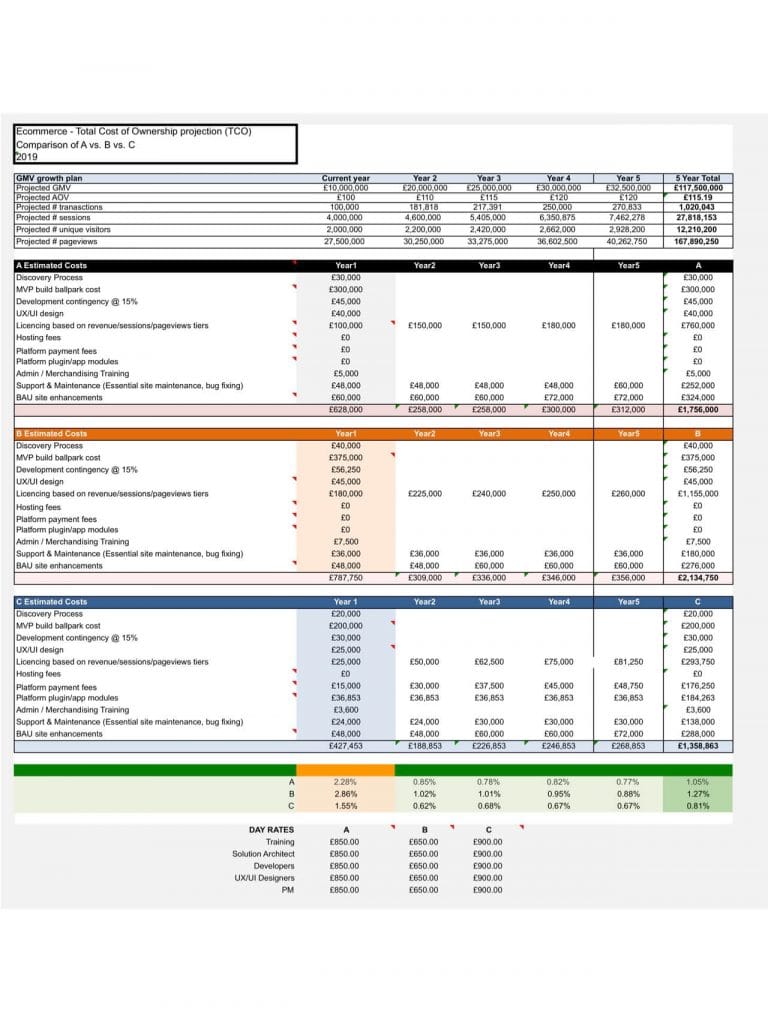
Don’t be fooled by ‘unlimited’ plans. They can hide costs in feature-gating, lower AI quality (requiring manual rework), or lack of support. Always dig deeper than the sticker price; the true TCO includes your team’s time and lost SEO value.
Let’s break down the TCO for a realistic scenario: an e-commerce store with a backlog of 10,000 images and 200 new images per month. Before committing, it’s smart to check the latest AltText.ai discount — a working promo code can shave a meaningful percentage off the first-year TCO.
Advertised vs. Real TCO
| Metric | AltText.ai | Image SEO Optimizer / Crush.pics (Hypothetical) |
|---|---|---|
| Advertised Price | Starts at $5/mo for 50 credits AltText.ai Pricing | Assumed ~$29/mo (flat-rate) |
| 12-Month TCO | ~$508 (based on Oct 2024 pricing) | ~$348 (vendor-listed, ignores hidden costs) |
At first glance, the hypothetical competitor looks over $150 cheaper. However, the $348 figure ignores the unquantified costs of risk. The real cost of a “cheaper” tool isn’t just on your statement; it’s in the hours your team wastes fixing spammy AI text and the SEO value you lose from bad content.
A predictable cost model like AltText.ai‘s, while initially more expensive for backlogs, often has a lower true TCO once you factor in labor costs and business risks associated with “cheaper” alternatives that may produce lower-quality output.
Multi-Year TCO Projection (3 Years)
For long-term budget planning, the cost structure difference becomes even more apparent.
| Year | AltText.ai TCO | Hypothetical Competitor TCO | Notes |
|---|---|---|---|
| Year 1 | $508 | $348 | AltText.ai includes one-time backlog credits ($400 pack) |
| Year 2 | $108 | $348 | AltText.ai shifts to small monthly maintenance plan |
| Year 3 | $108 | $348 | Competitor remains flat; rework hours add unquantified cost |
| 3-Year Total | ~$724 | $1,044+ | Competitor total excludes manual rework labor |
- AltText.ai 3-Year TCO: ~$724 ($508 in Year 1 + $108 in Year 2 + $108 in Year 3)
- Hypothetical Competitor 3-Year TCO: $1,044 ($348 x 3), plus the unquantified cost of manual rework.
The credit model front-loads the cost, making it a significant one-time capital expenditure for the backlog, but a small operational expenditure thereafter. Flat-rate plans remain a consistent operational cost. If front-loading is a concern, an active coupon code for AltText.ai can reduce that Year 1 spike.
Pricing Gotchas and Hidden Costs
- ⚠️ AltText.ai’s Upfront Cost: The credit system’s main challenge is the high upfront cost for bulk processing. A backlog of 10,000 images requires a $400 credit pack AltText.ai Pricing. This is a large initial investment, even if it’s a one-time expense. You must calculate your one-time backlog separately from ongoing monthly needs.
- ⚠️ Flat-Rate Competitors’ Quality Throttling: The common “gotcha” with unlimited plans is feature-gating or quality throttling. An “unlimited” plan might use a faster, lower-quality AI model. Independent user feedback on similar tools often shows that to get the good AI, you must upgrade to a “Pro” tier that costs significantly more, making the initial “deal” an illusion Capterra Reviews for Alt Text Tools.
- ⚠️ Shopify Native AI’s “False Economy”: It’s free, which is tempting. But this is a false economy for any business focused on growth. The AI is basic, and it gives you a false sense of security. You think you’re covered on accessibility, but generic alt tags are likely hurting your ability to rank in image search and deliver a truly compliant user experience.
As our lead MarTech strategist Mohamed Zaki often notes, the cheapest sticker price rarely equals the lowest total cost. My analysis confirms this: you must account for the business cost of quality.
Part 3: Feature Deep-Dive: AltText.ai vs. Competitors
A feature checklist can be misleading. It’s designed to make you compare toggles while ignoring what can actually impact your business. The two features that truly matter in the market for automated alt text are AI quality and developer-friendliness (integrations/API), as data portability is now largely a solved issue.
Comparative Analysis: Key Features of Alt Text Generators
| Feature Category | AltText.ai | Image SEO Optimizer | Crush.pics |
|---|---|---|---|
| Primary Function | Specialist AI Alt Text Generation | AI Alt Text & General Image SEO | Image Compression & Basic SEO |
| Data Portability | Yes (Writes to native CMS field) | Yes (Writes to native CMS field) | Yes (Writes to native CMS field) |
| AI Model Quality | High (Uses large language models, including GPT) | Standard (Details not specified) | Standard (Secondary feature) |
| Multilingual Support | 60+ Languages | Limited (Details not specified) | Limited (Details not specified) |
| Platform Integrations | Shopify app, WordPress plugin, API | Shopify, WordPress | Shopify |
| Pricing Model | Per-Image Credits | Flat-rate Tiers (Assumed) | Flat-rate Tiers (Assumed) |
Tool Card Profiles
To make this comparison easier, here’s a structured profile of each contender — pros, cons, and the standout features that matter most for evaluation.
Category & Classification
- Primary Function: Dedicated AI alt text generation for WCAG, ADA & SEO compliance
- AI Model: GPT-based large language model trained for descriptive image captioning
- Multilingual Support: 60+ languages with automatic page-language detection
- Platform Integrations: Shopify app, WordPress plugin, public REST API, Zapier
- Pricing Model: Per-image credits (starts at $5/mo for 50 credits)
✅ Strengths
- Highly descriptive AI output (identifies attributes like “quilted texture” or “gold-tone hardware”)
- Best-in-class multilingual support (60+ languages)
- Public REST API + Zapier — ideal for agencies and developers
- Writes to native CMS fields (no data lock-in)
- Infrastructure-level SOC 2 / ISO 27001 via AWS, GDPR DPA available
⚠️ Considerations
- Highest TCO of the four — first-year cost ~$508 for a 10,000-image backlog
- Credit system creates a large one-time upfront expense for backlogs
- Queue waits of 1–2 hours reported on lower-tier plans during peak times
- Does not hold its own SOC 2 / ISO 27001 certifications (relies on AWS)
Ideal Use Cases & Professional Applications: Quality-first e-commerce brands, international Shopify/WooCommerce stores, agencies managing multiple client sites, and developers needing API automation.
User Experience & Learning Curve: Onboarding is straightforward through the Shopify/WordPress app. The credit model requires upfront planning — you must calculate backlog needs separately from ongoing monthly volume to choose the right pack.
Category & Classification
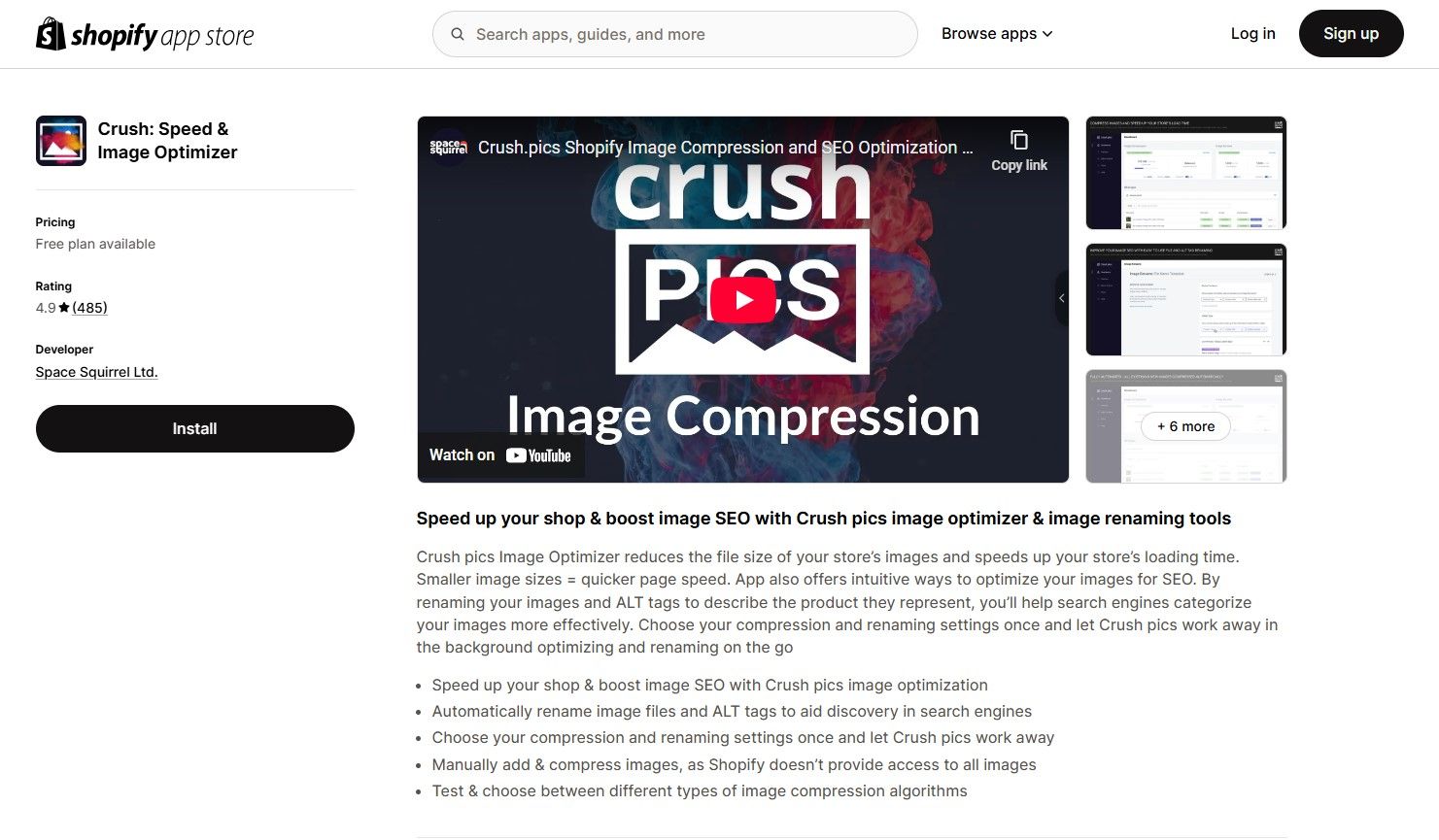
- Primary Function: AI alt text generation combined with general image SEO (filenames, structured data)
- AI Model: Standard — specific model details not publicly disclosed
- Multilingual Support: Limited — details unspecified by vendor
- Platform Integrations: Shopify and WordPress (closed ecosystem)
- Pricing Model: Flat-rate monthly tiers (assumed ~$29/mo for comparison)
✅ Strengths
- Predictable flat-rate monthly cost — easy for budgeting
- Confirmed data portability (writes to native CMS fields)
- Bundles general image SEO features beyond alt text
- Native Shopify App Store listing with merchant reviews
⚠️ Considerations
- AI model quality is not specialized — generic output is a real risk
- Limited multilingual support compared to specialist tools
- No public REST API — closed ecosystem limits agency workflows
- Compliance posture (SOC 2 / ISO 27001) is unverified
Ideal Use Cases & Professional Applications: English-language Shopify or WordPress stores prioritizing budget predictability over best-in-class AI quality.
Performance & Limitations: Performance benchmarks are not publicly published. Independent site-speed testing before and after install is strongly recommended.
Category & Classification
- Primary Function: Image compression with alt text as a secondary feature
- AI Model: Standard / generic — alt text is an add-on, not the core focus
- Multilingual Support: Limited
- Platform Integrations: Shopify only
- Pricing Model: Flat-rate tiers (assumed)
✅ Strengths
- Single app for both image compression and alt text — simplifies stack
- Strong reputation in Shopify ecosystem for speed/compression
- Confirmed data portability (writes to native CMS fields)
- Good fit for stores prioritizing site-speed gains
⚠️ Considerations
- Alt text is a secondary, less-advanced feature
- AI output likely generic — higher manual rework expected
- Shopify-only — not suitable for WordPress, BigCommerce, or custom stacks
- Limited multilingual support
Ideal Use Cases & Professional Applications: Shopify merchants who want one app for both compression and “good enough” alt text, prioritizing simplicity and site speed over specialist AI quality.
Category & Classification
- Primary Function: Built-in alt text generation inside Shopify admin
- AI Model: Basic / generic native model
- Multilingual Support: Minimal
- Platform Integrations: Native to Shopify only
- Pricing Model: Free (included with Shopify)
✅ Strengths
- Zero cost — no subscription or credit purchase required
- No setup or third-party app to install
- Better than missing alt text entirely
- Native data storage (no portability concerns)
⚠️ Considerations
- Very basic AI output — minimal SEO value
- Likely fails to meet WCAG descriptive requirements for accessibility
- No customization, prompt tuning, or brand voice control
- No multilingual workflow support
- “False economy” for any growth-focused store
Ideal Use Cases & Professional Applications: Pre-launch placeholder, zero-budget stores, or as a stopgap until a specialist tool is selected.
AI Model Quality: The Most Important Differentiator
Now that data lock-in is no longer the primary concern, AI quality, powered by the underlying image recognition technology, has become the most important battleground for these Software and AI tools.
-
AltText.ai is built for one purpose, so its AI is trained specifically for it. User reviews consistently praise its ability to generate highly descriptive text. A G2 user review praised the “descriptive nature” of the AI, noting its ability to identify attributes like “quilted texture” or “gold-tone hardware” G2 User Reviews for AltText.ai. This is the kind of detail that leads to improved SEO rankings for long-tail keywords and can dramatically improve image SEO. The difference between “brown bag” and “brown leather tote bag with gold hardware” is critical for visual search optimization and getting a sale.
-
For a tool like Crush.pics, alt text is an add-on to its main function of image compression. It’s likely using a more generic, less-specialized AI model. This can result in “spammy” or useless alt text that provides little SEO or accessibility value, requiring manual correction.
Multilingual Support: A Niche but Critical Feature
For stores selling internationally, AltText.ai‘s support for over 60 languages is a massive competitive advantage. It automatically detects the language from the product page and generates alt text accordingly.
For competitors, multilingual support is often an afterthought or non-existent, making them unsuitable for global e-commerce operations.
Integrations and API: The Developer’s Choice
While all tools offer a Shopify app, the ecosystem differentiates them for developers and agencies.
- AltText.ai provides a public REST API and a Zapier integration. This is a huge advantage, allowing agencies and developers to build custom, scalable workflows for clients, integrate with any CMS, or create automated processes that go far beyond a simple WordPress plugin.
- Image SEO Optimizer and Crush.pics appear to be closed-ecosystem apps, limiting their use to the platforms they directly support (like Shopify or WooCommerce). This is fine for most merchants but is a significant limitation for agencies or businesses with custom-built sites.
Part 4: Critical Considerations – Security, Performance, and Trust
This is the part of the analysis that can prevent you from making a costly mistake. For any Software and AI tool, a vendor’s compliance posture and performance impact are foundational business requirements.
While data lock-in was a historical disaster for alt text apps, the market has matured. Major players like Image SEO Optimizer and Crush.pics now write to native CMS fields, eliminating this risk. Your focus should shift to the quality of the AI and the true cost of fixing its mistakes.
Security, Compliance, and Trust Signals
A lack of public compliance documentation is a business risk. Here’s how the tools stack up based on publicly available information as of October 2024.
| Certification | AltText.ai | Image SEO Optimizer | Crush.pics |
|---|---|---|---|
| SOC 2 Type II | Infrastructure-level via AWS | ⚠️ Unverified | ⚠️ Unverified |
| ISO 27001 | Infrastructure-level via AWS | ⚠️ Unverified | ⚠️ Unverified |
| GDPR | ✅ DPA Available | ⚠️ Unverified | ⚠️ Unverified |
| Data Portability | ✅ Yes | ✅ Yes | ✅ Yes |
AltText.ai does not hold its own SOC 2 Type II or ISO 27001 certifications. However, it is built on Amazon Web Services (AWS), a platform that is certified for these and other major compliance standards AltText.ai Security. This provides infrastructure-level security, but it does not cover application-level processes. For competitors, this information is unverified.
The most important takeaway is that the Data Portability issue is resolved across the board for these top competitors. The critical risk has shifted from “Will I lose my data?” to “Is the data I’m generating good enough to be worth keeping?” If quality is your priority, the best price for AltText.ai is usually found via an exclusive coupon rather than the public list price.
Performance: Will This App Slow Down My Site?
For an e-commerce store, site speed is a revenue metric. A delay that negatively impacts Google’s Core Web Vitals can cause a measurable drop in conversion rates, a core metric in conversion rate optimization (CRO).
-
AltText.ai: Claim vs. Reality. The vendor claims its processing is fast, and benchmarks align with this. However, user reports show that during peak times, users on lower-tier plans can face queue waits of 1-2 hours before processing begins Reddit /r/shopify Discussion on App Performance. The asynchronous script used on the front end is designed to prevent slowing down page loads for visitors.
-
Competitors: A Performance Blind Spot. The performance of competitor scripts is a major unknown. Any vendor that doesn’t provide independent performance benchmarks should be treated with skepticism.
My advice is simple: test it yourself. Before committing, run a baseline speed test using Google PageSpeed Insights. Install the app, let it run, and test again. Pay close attention to metrics like Largest Contentful Paint (LCP). If you see a significant drop, uninstall the app.
Part 5: Use Cases & Workflows
Instead of just comparing features, let’s look at how these tools apply to real-world e-commerce workflows. Here are three common use cases and how you might approach them. For broader category context, browse our full Category of Comparison articles.
Use Case 1: Optimizing an Existing SEO Backlog (10,000+ Images)
Goal: Process a large number of existing images to improve SEO and accessibility compliance as quickly as possible.
Workflow with AltText.ai:
- Calculate Credits: Determine the total number of images needing alt text (e.g., 10,000).
- Purchase Bulk Credits: Buy a one-time credit pack (e.g., the 10,000 credit pack for $400) to get the lowest per-image cost. This is more cost-effective than a monthly subscription for a large, one-time job. Stacking this with an active AltText promo code further reduces the per-image rate.
- Initiate Bulk Processing: Use the app’s dashboard to select all images without alt text and start the generation process. Be prepared for potential queue times.
- Spot-Check & Review: Once complete, spot-check 50-100 images across different product categories to ensure AI quality is consistent and descriptive. The app allows for manual overrides if needed.
- Switch to Maintenance Plan: After the backlog is cleared, downgrade to a small monthly plan (e.g., $5/mo for 50 credits) to handle new product uploads.
Workflow with a Flat-Rate Tool (e.g., Image SEO Optimizer):
- Subscribe to a Plan: Choose a monthly plan that includes unlimited image processing.
- Run Full Scan: Initiate the app’s scan to process all images on your site.
- Extensive Quality Review: Because the primary risk is lower-quality AI, you must perform a more extensive review. Check at least 200-300 images to identify patterns of generic or “spammy” text.
- Budget for Rework: Factor in the time cost for your team to manually rewrite any unacceptable alt text. This is the “hidden cost” of a flat-rate plan.
Use Case 2: New Product Launch for an International Store
Goal: Ensure all images for a new collection have high-quality, multilingual alt text from day one.
Workflow with AltText.ai:
- Pre-Launch Setup: Ensure your store’s theme and product pages are correctly configured with language tags.
- Upload Images: Add new product images to your Shopify or WooCommerce store.
- Automatic Generation: AltText.ai will automatically detect the images and the page language (e.g., French, German). It will then generate descriptive alt text in that language.
- Review with Native Speaker (Optional): For mission-critical pages, have a native speaker review the generated alt text for nuance and accuracy.
- Publish: The alt text is live with the product, optimized for international SEO from the moment of launch.
This workflow is not feasible with tools that lack robust multilingual support.
Use Case 3: Agency Managing Multiple Client Sites
Goal: Efficiently manage alt text generation across a portfolio of client websites with different CMS platforms.
Workflow with AltText.ai’s API:
- Develop a Centralized Script: Use the REST API to build a custom application or script that can connect to various client sites (Shopify, WordPress, custom builds).
- Create a Unified Dashboard: Your custom app can pull images from all clients into a single interface for your team to manage.
- Automate Processing: The script can programmatically send images to the AltText.ai API for processing and then push the generated text back to the client’s native CMS.
- Bill Clients: The API provides data on credit usage, allowing you to accurately bill back costs to each client. The “no data lock-in” policy is a critical selling point, ensuring clients you can hand over all assets if they leave.
This level of automation and customization is impossible with tools that do not offer a public API. Agencies that resell at scale also benefit from securing a current AltText voucher code before purchasing client credit packs.
Part 6: Alternatives & Final Recommendations
The “best” AI alt text tool depends entirely on your business priorities, budget, and tolerance for risk. My goal is to give you a framework to make a smart decision for evaluating these Alttext Top Alternatives and Competitors comparison analysis.
Where AltText.ai is Objectively Strong
- Superior AI Quality: Its GPT-based large language model (LLM) is consistently praised for descriptive detail, which is crucial for SEO and accessibility G2 User Reviews for AltText.ai.
- Extensive Multilingual Support: Officially supports over 60 languages, a critical feature for any international e-commerce operation.
- Developer-Friendly Ecosystem: With a public REST API and Zapier integration, it’s built for custom workflows, making it the top choice for agencies and developers.
Use Case Matrix
| Use Case | Best Choice | Why | Key Tradeoff |
|---|---|---|---|
| Best for Quality & International SEO | AltText.ai | Superior AI quality, 60+ languages, and developer-friendly API. | Highest TCO, especially for large backlogs. Credit costs are front-loaded. |
| Best for Predictable, Flat-Rate Budget | Image SEO Optimizer (with verification) | Flat-rate plan offers predictable costs. Data portability is confirmed. | AI quality is likely less specialized and requires thorough testing for your specific products. |
| Best for All-in-One Simplicity | Crush.pics (with verification) | Bundles image compression with basic SEO features in one app. | Alt text is a secondary feature; AI is likely less advanced. Limited to Shopify. |
| Best for “Better Than Nothing” | Shopify Native AI | Free and built-in to the platform. No setup required. | Very basic AI, no advanced features. Offers minimal SEO or accessibility value. |
| Best for Self-Hosting & Custom Code | Open-Source Tools | Complete control and zero cost. | Requires significant developer resources to implement and maintain; no support. |
Your Final Decision Checklist
Do not sign up for any service until you can answer these questions:
- Step 1: Test AI Quality: “Does the AI’s output on my trial images meet my brand’s standards for quality and descriptiveness?” Use your own product images.
- Step 2: Calculate True TCO: “What is the total cost for my backlog of [X] images AND my ongoing monthly need for [Y] new images over 24 months?”
- Step 3: Measure Performance Impact: “What is the before-and-after impact on my Google PageSpeed score after installing the trial?”
- Step 4: Verify Data Portability: “Can you confirm in writing that alt text is written to my platform’s native image fields and remains if I uninstall?” (This is now largely verified for top tools but is always good practice).
My final recommendation is this: Start your search with AltText.ai as a benchmark for AI quality and features. If its TCO is prohibitive for your budget, you can confidently explore alternatives like Image SEO Optimizer or Crush.pics, as the historical risk of data lock-in has been resolved. Your decision will then pivot on whether their AI quality is “good enough” for your brand’s standards and if the predictable flat-rate cost is more advantageous for your budget.
Part 7: Conclusion and FAQs
The market for image alt text software is a complex landscape where the key differentiators have shifted. It is no longer a simple question of safety versus risk.
My analysis reveals that with data portability becoming a standard feature, the most critical decision factors are now AI quality, true TCO, and the availability of advanced features like multilingual support and API access.
Start your evaluation with AltText.ai to set a benchmark for what best-in-class AI quality looks like. If its credit-based pricing model and high upfront cost for backlogs are a non-starter, approach the flat-rate alternatives. Test their AI output rigorously during the trial period.
Your best defense is a good offense:
- 1. Test AI Quality with your own images.
- 2. Calculate True TCO for your specific image volume.
- 3. Measure Site Speed before and after installation.
Answering these questions will protect your business far more than any feature checklist ever could.
Frequently Asked Questions
Q1: How much does AltText.ai really cost?
A: The entry price is $5/month for 50 credits, but this isn’t the full story for most businesses. A more realistic scenario for a store with a 10,000-image backlog and 200 new images per month can cost approximately $508 in the first year, based on October 2024 pricing AltText.ai Pricing. This includes a one-time $400 credit pack for the backlog and an ongoing subscription. The key is to calculate your total image count first, as the per-image cost drops significantly with higher-volume credit packs.
Q2: What’s the biggest risk with choosing an AltText.ai alternative now?
A: The biggest risk has shifted from data lock-in to AI quality and the hidden labor cost of rework. While leading alternatives like Image SEO Optimizer now offer data portability, their AI may not be as specialized. The primary risk is adopting a tool that produces generic or inaccurate alt text, forcing your team to spend hours manually correcting it, which negates the savings from a cheaper plan. You must thoroughly test the AI output during a trial period Capterra Reviews for Alt Text Tools.
Q3: Is Image SEO Optimizer or Crush.pics better than AltText.ai?
A: They serve different priorities. AltText.ai is objectively better for users who need the highest quality AI, extensive multilingual support, or a developer API. Image SEO Optimizer is a better choice for businesses that prioritize a predictable, flat-rate monthly budget and have confirmed its AI quality is sufficient for their needs. Crush.pics is best for users who want an all-in-one solution for both image compression and basic alt text, valuing simplicity over specialized features.
Q4: Will these AI alt text apps slow down my Shopify store?
A: They absolutely can. Any third-party script you add is a potential performance risk that can harm your Core Web Vitals. While AltText.ai claims its front-end script is asynchronous to minimize impact, you must test any app’s effect on your site speed. Use tools like Google PageSpeed Insights or GTmetrix to measure your site’s performance score before and after installing a trial. A slow site costs you sales, so this is a non-negotiable step.
Q5: Why shouldn’t I just use the free Shopify AI for alt text?
A: For a serious store, it’s a “false economy.” While better than nothing, it lacks the descriptive quality, customization, and multilingual support of a dedicated tool. Using it might check a superficial box, but it likely won’t meet the descriptive requirements of WCAG (Web Content Accessibility Guidelines) standards, harming both true accessibility and your SEO efforts W3C – Web Content Accessibility Guidelines. This ultimately hurts your bottom line compared to the rich, descriptive text possible with a premium tool.
Q6: Is AltText.ai worth the money?
A: It is worth the money if you value high-quality, descriptive AI text that can improve SEO; if you serve a multilingual audience; or if you are an agency that needs an API for custom workflows. Its value is in its accuracy and advanced features. If your budget is extremely tight and “good enough” alt text is all you need, then the high upfront cost for a backlog may be prohibitive, and a flat-rate alternative could be a better fit, provided you verify its AI quality.
Q7: Is AltText.ai a good choice for agencies managing multiple clients?
A: Yes, for agencies, AltText.ai is often the best choice due to its developer-friendly REST API and Zapier integration, which allow for building custom, scalable workflows across different platforms like Shopify and WooCommerce. The ability to manage multiple projects and track credit usage via the API is a significant advantage over platform-specific apps. The guaranteed data portability is also a critical selling point for client trust and business continuity, as you can hand over all generated assets without issue.