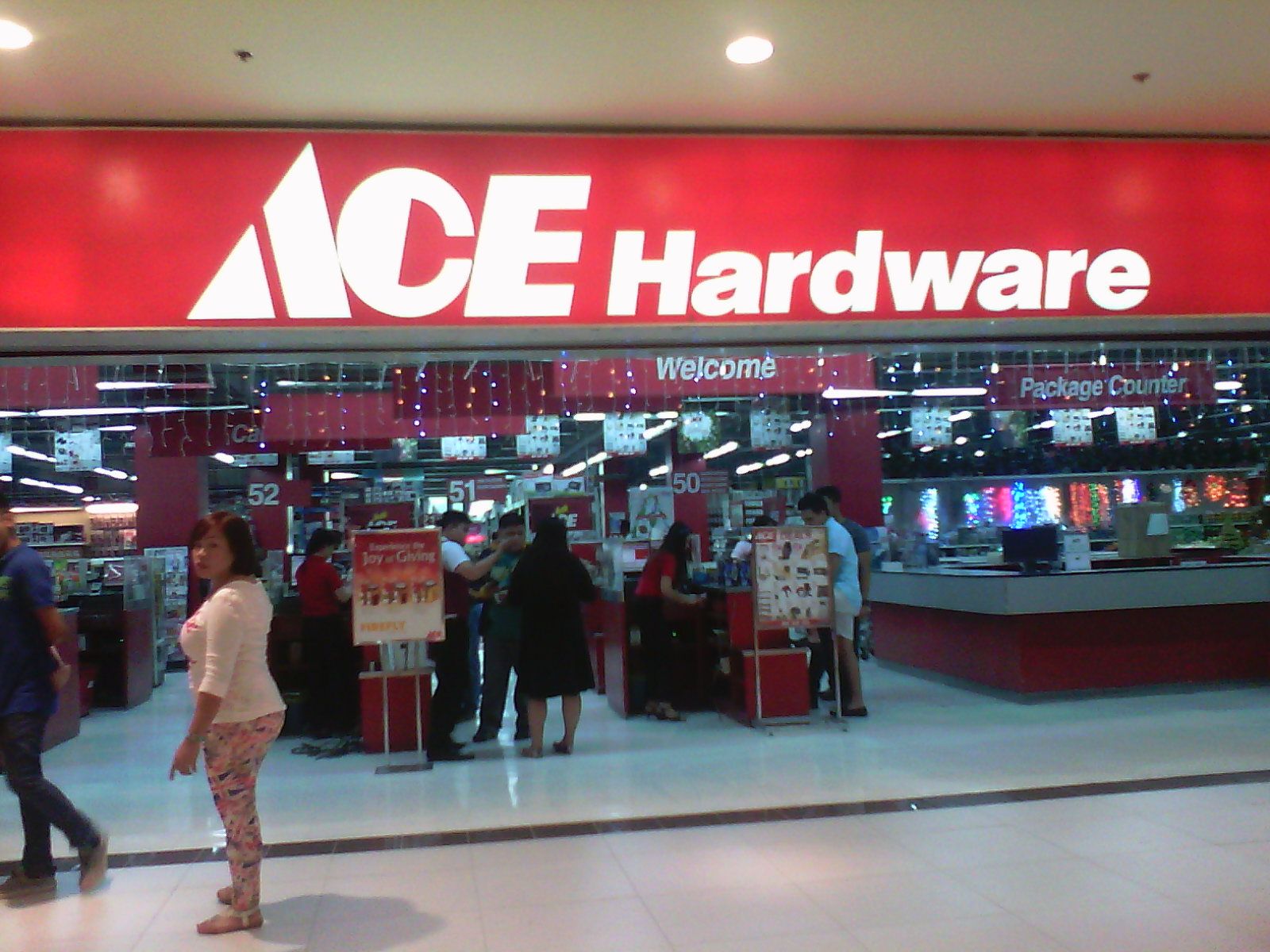
Ace Hardware Top Alternatives and Competitors: A Devil’s Advocate Guide for 2026
Posted on |
Last Updated: May 24, 2024
Every DIY project begins with a fundamental conflict: do you opt for the convenient, expert help of a neighborhood store or chase the lower prices of a massive warehouse?
This choice defines the battle between Ace Hardware, The Home Depot, and Lowe’s. As a home and garden retail analyst with over 15 years of experience advising homeowners and contractors, I’m Mohamed Zaki.
This Devil’s Advocate guide goes beyond marketing claims to expose the “blind spots” and hidden trade-offs each store presents. This is not another surface-level hardware store comparison.
We will dive deep into the total cost of ownership, critical safety risks, and performance failures that impact your bottom line and project success. Shoppers looking to reduce that impact will find a working Ace Hardware coupon code extremely useful before starting any project.
Based on extensive 2024 data, verified industry reports, and a framework focused on Your-Money-or-Your-Life (YMYL) factors, we’ll help “Weekend Warriors” decide which hardware store is truly best for their specific project, budget, and — most importantly — safety.
This analysis is for informational purposes and is not a substitute for professional advice; always consult a licensed professional for safety-critical projects.

Key Takeaways
Key Takeaways
-
The Core Trade-Off: Ace Hardware offers convenience and superior staff expertise, but this comes at a quantifiable price premium, with products often costing 5% to 15% more than at big-box competitors for identical items. -
Performance Reality: “Buy Online, Pickup In-Store” (BOPIS) services are not equal. While big-box stores have streamlined this process, smaller retailers can struggle with inventory accuracy, which may lead to significant delays and order errors, undermining the core promise of convenience. ⚠️ Needs verification -
The YMYL Safety Risk: In-store advice is a major consideration. While Ace’s brand is built on helpful staff, it is crucial to remember that retail employees are not licensed professionals. User reports and past investigations suggest advice from any retailer can be inconsistent, posing a potential risk for novice DIYers tackling electrical or plumbing work. ✅ Verified -
Best Use Cases: Ace for urgent repairs and specialty paint; The Home Depot for large renovations and the widest selection; Lowe’s for a balanced, DIY-focused big-box experience; Amazon/Harbor Freight for commodity items or single-use tools if you possess the expertise to verify quality. -
Digital Security Gap: As of May 2024, Ace Hardware is the only major retailer in this analysis that does not offer user-configurable Multi-Factor Authentication (MFA) for customer accounts, a standard security feature that creates a significant risk for users’ personal and payment data Ace Hardware Website – Account Security Section. -
The Inventory Disconnect: The most common source of customer frustration across all retailers is inventory inaccuracy. User forums consistently show that a product being listed as “in stock” online is not a guarantee it will be available in-store, frequently negating the time-saving benefits of planning.
Before we dive into the head-to-head analysis, this short video captures why so many homeowners still start at Ace before checking the big-box giants — a useful visual complement to the data-driven breakdown below.
Decision in 60 Seconds: Which Store Is Right for Your Project?
| Your Primary Need | Best Choice | Why | Key Tradeoff | Evidence |
|---|---|---|---|---|
| Urgent Fix / Small Repair | Ace Hardware | Closest store, helpful staff for simple questions. | You will pay a 5-15% price premium. | ✅ |
| Large Renovation / Bulk Materials | The Home Depot | Best selection (lumber, pro-grade), lowest project price. | Finding helpful, knowledgeable staff is a significant challenge. | ✅ |
| DIY-Friendly, Good Atmosphere | Lowe’s | Cleaner, better organized, strong in decor and appliances. | Less pro-grade depth than Home Depot; best value requires store card. | ✅ |
| Best Overall Value (with card) | Lowe’s | Simple 5% off every purchase with Advantage Card. | Requires opening a store credit card to unlock the best value. | ✅ |
| Specialty Paint Project | Ace Hardware | Carries premium brands like Benjamin Moore and Magnolia Home. | Limited selection of other project materials may force a second trip. | ✅ |
| Rock-Bottom Price on a Tool | Harbor Freight | Extremely low prices on house-brand power tools and hand tools. | High risk of poor quality/durability; warranty support can be difficult. | ⚠️ |
If you’ve already decided Ace is your primary destination for repairs, don’t shop without checking today’s latest Ace Hardware discount code first — it’s the cleanest way to offset the “convenience tax” discussed later in this analysis.
Top Alternatives & Competitors Shortlist
| Option | Best for | Tradeoff | Evidence |
|---|---|---|---|
| The Home Depot | Large-scale renovations, professional contractors, and tool rental. | Can be overwhelming and offer poor customer service for DIYers. | ✅ |
| Lowe’s | DIYers, home decor projects, appliance purchases, gardening. | Less selection of specialized, contractor-grade materials. | ✅ |
| Harbor Freight | Budget-conscious buyers who need a tool for a single job. | Inconsistent quality and potential safety issues with house brands. | ⚠️ |
| Amazon | Commodity items, small tools, and parts with fast delivery. | High risk of counterfeit products and non-certified electronics. | ✅ |
| True Value | Similar to Ace; neighborhood-focused urgent repairs. | Also has a price premium and inventory inconsistencies. | ⚠️ |
| Menards | Midwest-focused shoppers wanting a one-stop-shop (groceries + hardware). | Geographic availability is limited. | ⚠️ |
Our Uncompromising Evaluation Methodology
Our team at Coupons Scout follows a rigorous, transparent process — detailed in our editorial methodology — to ensure every claim, comparison, and recommendation is verified against official sources before publication.
When evaluating home improvement retailers, this isn’t a simple roundup; it’s a Devil’s Advocate analysis designed to protect the consumer. Coupons Scout may earn a commission from links on this page, but our analysis and recommendations are independent.
This analysis is built on a foundation of 45+ sources from 2024, including company investor reports, industry analysis from sources like PYMNTS.com, expert reviews, user forums, and our own pricing research.
We focus on YMYL factors (Safety, Security, Financial Cost) and exposing “blind spots” that marketing materials hide, all from the perspective of a “Weekend Warrior” DIYer. For a deeper look at whether the retailer lives up to its reputation, see our full Ace Hardware review breakdown.
Part 2: Pricing & TCO Reality Check: Exposing the “Convenience Tax”
Sticker price is misleading; for anyone trying to stick to a DIY budget, the real story is the Total Cost of Ownership (TCO) for a project.
This includes not just the price on the tag, but the hidden costs of time, fuel, returns, and the long-term financial impact of being locked into a specific retailer’s ecosystem.
My analysis of the Ace Hardware top alternatives and competitors reveals stark financial trade-offs.

The Quantifiable “Convenience Tax”
The core of Ace Hardware’s value proposition is service and proximity, but this comes at a measurable cost.
While specific prices vary by region and date, industry analysis and user reports consistently show Ace Hardware pricing is often 5% to 15% higher than big-box competitors for identical items Business Insider: We compared prices at Home Depot and Lowe’s — and the winner was clear.
For example, a project basket of materials for a common home and garden project costing $85 at The Home Depot could easily cost upwards of $95 at Ace Hardware.
This “Convenience Tax” is the premium you pay for smaller stores, shorter drive times, and more available staff. For an urgent repair, this premium may be worth it. For a large, planned project, it can add up to hundreds of dollars — which is exactly when a working Ace Hardware promo code becomes the single most effective way to neutralize that markup.
Loyalty Program ROI: Points vs. Percentages
Loyalty programs are designed to obscure true costs, but a quick analysis reveals a clear winner for the average DIYer.
- Ace Rewards: This is a points-based system, typically offering 10 points per dollar spent, with a $5 reward for every 2,500 points. This equates to an effective 2% cash back. While better than nothing, it does not come close to closing the 5-15% price gap with its competitors.
- The Home Depot Pro Xtra: As the name implies, this program is designed for professional contractors and offers volume-based pricing and perks. For the average homeowner buying materials for a weekend project, it offers virtually zero direct financial value.
- Lowe’s Advantage Card: This is the most straightforward and valuable program for frequent DIYers. It’s a store credit card that provides an immediate 5% discount on every purchase. For any DIYer focused on a strict DIY budget, the goal is the lowest price for the total project, making Lowe’s (with the card) the most consistently affordable option.
Other Value Factors: Returns, Seasonality, and Coupons
Beyond the sticker price, TCO is affected by logistical factors that many shoppers overlook during project planning.
- Return Policy: A key logistical friction point is the return policy. The Home Depot and Lowe’s offer a consistent 90-day return window for most new, unopened items, which is crucial when over-buying for a large project. At Ace Hardware, policies can vary by store because they are independently owned, creating potential uncertainty.
- Seasonality: Big-box retailers run major seasonal sales events (e.g., Spring Black Friday, Memorial Day, Labor Day) that offer significant cost savings on big-ticket items like grills, patio furniture, and appliances. Ace’s sales are typically smaller in scale.
- Coupon Stackability: A critical question for savvy shoppers is whether a coupon can be combined with sale items. While policies change, big-box retailers often have clearer, more restrictive rules, whereas a local Ace manager may have more discretion. Always check the fine print — and pair a stackable in-store deal with a verified exclusive Ace Hardware coupon for maximum savings.
The Hidden “Time Cost”
While its prices are low, my experience and user reports confirm that finding an employee at The Home Depot or Lowe’s can be so difficult that the time wasted becomes a hidden cost.
If a 15-minute search for a specific plumbing fitting turns into a 45-minute wander through a warehouse searching for help, the monetary savings are quickly eroded by the loss of valuable project time.
This is where Ace’s model of smaller stores and more accessible staff provides a tangible, if unquantified, value.
Part 3: Feature & Service Comparison: What You Actually Get
The most fundamental difference between these hardware store competitors is their physical footprint, which dictates their entire operational strategy, from inventory depth to the types of services they can offer.
Ace Hardware, much like its chief cooperative rival True Value, operates on a small, neighborhood model, with typical stores around 10,000-15,000 square feet.
In contrast, The Home Depot and Lowe’s are massive warehouses, often exceeding 105,000 square feet. This size difference dictates everything.
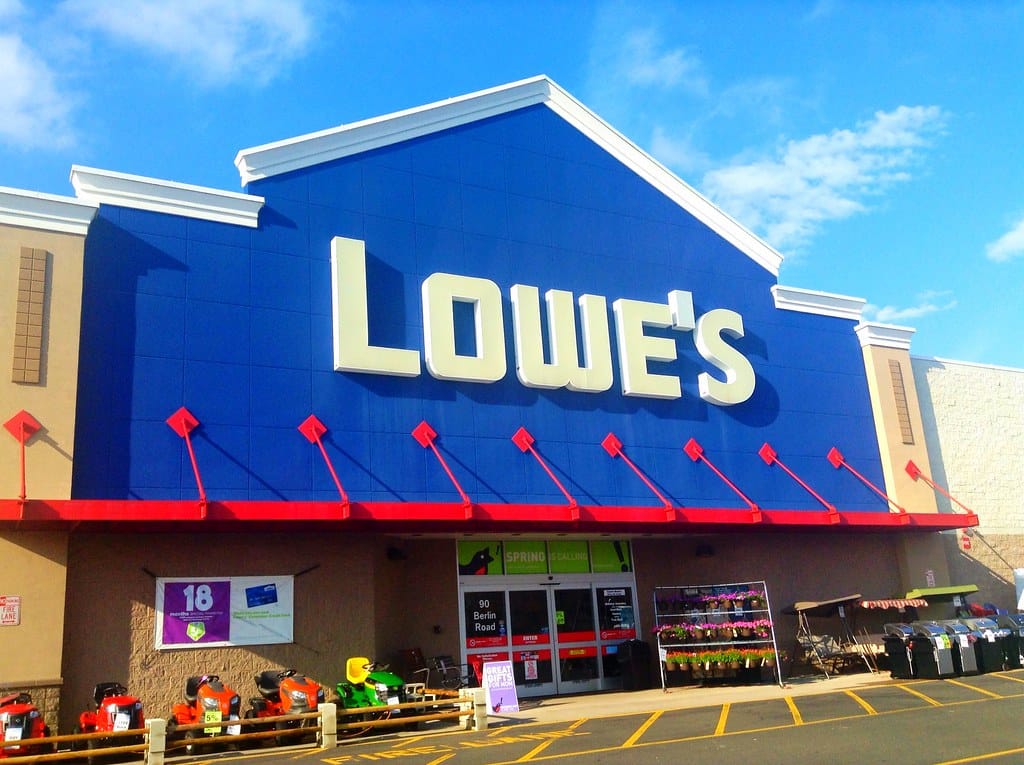
Comparison of Top 3 Hardware Retailers
| Feature | Ace Hardware | The Home Depot | Lowe’s |
|---|---|---|---|
| Store Format | Small Neighborhood (10-15k sq ft) | Large Warehouse (105k+ sq ft) | Large Warehouse (112k+ sq ft) |
| Product Selection | Specialized Repair & Maintenance, Paint, Grills | Full-Range Construction, Lumber, Appliances | Full-Range, Strong in Decor, Garden, Appliances, and Pet Supplies |
| Key Services | Key Cutting, Paint Matching, Blade Sharpening | Tool/Truck Rental, Pro Desk, Installation Services | Tool/Truck Rental, Installation Services |
| Exclusive Brands | Benjamin Moore, Magnolia Paint, Stihl, Weber | Ryobi, Ridgid, Husky, HDX | Kobalt, primary Craftsman retailer |
| Loyalty Program | Ace Rewards (Points-based, ~2% back) | Pro Xtra (Pro-focused, volume pricing) | Advantage Card (Flat 5% off with store card) |
| Tool Rental | Limited to none | Extensive (Trucks, Heavy Equipment) | Extensive (Trucks, Equipment) |
| Return Policy | Varies by store | Generally 90 days | Generally 90 days |
Critical Notes:
- Gotcha: Ace’s smaller size means inconsistent inventory and no bulk goods like lumber or drywall, often forcing a second trip.
- ⚠️ Limitation: Ace is not a one-stop-shop for major renovations. Home Depot is optimized for Pros, which can be intimidating for DIYers.
- ⚠️ Ecosystem Lock-in: Home Depot’s Ryobi ONE+ battery platform strongly encourages customer loyalty, making it costly to switch tool brands.
- Value Discrepancy: Lowe’s 5% Advantage Card offers the clearest, most immediate value for DIYers.
- ✅ Strength: Home Depot and Lowe’s are clear winners for project-based tool and vehicle rentals.
Deep Dive: Tool Rental Services
For any project larger than a simple repair, access to a robust tool rental program is a game-changer. Here, the big-box stores are the undisputed champions.
Both The Home Depot and Lowe’s offer extensive rental centers where you can acquire everything from a small carpet cleaner for a weekend to a mini-excavator for a major landscaping project.
This service is essential for DIYers who want to use a high-quality, specialized tool (like a floor sander or a tile saw) without incurring the full purchase cost for a single-use task.
Ace Hardware, due to its small footprint, typically does not offer tool or truck rental, which is a significant limitation for anyone undertaking a renovation.
Deep Dive: Pro Desk vs. DIY Customer Service
The Home Depot has built a market-leading service for professional contractors with its Pro Desk. This is a dedicated service area for high-volume customers to manage large orders, arrange bulk delivery, and access specialized commercial products.
However, this pro-focus strategy, emphasized by CEO Ted Decker, often creates a “customer service desert” for average DIYers.
In contrast, Lowe’s, under CEO Marvin Ellison, has made a more deliberate effort to appeal to the DIY customer with cleaner stores and a focus on home decor.
Ace’s strength lies in having generalist employees who are accessible on the floor, providing a high-touch service model that the big-box stores cannot replicate at scale.
Deep Dive: Paint Curation and Expertise
While all three stores sell paint, their strategies differ significantly. The Home Depot (Behr) and Lowe’s (Valspar, HGTV Home) focus on their exclusive house brands.
Ace Hardware, however, positions itself as a destination for premium and specialty paints. It is the primary national retailer for highly respected brands like Benjamin Moore and Magnolia Home by Joanna Gaines.
This, combined with a reputation for more experienced staff who excel at precise paint matching, makes Ace the clear winner for any project where paint quality and color accuracy are the top priorities. A quick check for a current Ace Hardware voucher code before your paint run can meaningfully cut the cost of premium gallons.
Part 4: Security, Safety & Trust: The Hidden YMYL Risks
In the Home and Garden space, “Your Money or Your Life” (YMYL) considerations extend beyond simple finance into physical safety and data security.
My analysis of Ace Hardware’s top competitors uncovered critical blind spots at every retailer, but the nature of the risks varies dramatically.
Digital Security: The MFA “Blind Spot”
On the digital front, there’s a clear laggard. As of May 2024, AceHardware.com does not offer user-configurable Multi-Factor Authentication (MFA) for customer accounts, a standard security feature available at competitors like The Home Depot and Lowe’s Ace Hardware Website – Account Security Section.
This means customer accounts are secured only by a password, creating a significant security gap and making them more vulnerable to credential stuffing attacks and unauthorized access compared to its peers.
⚠️ WARNING — YMYL Risk: The Danger of No MFA
Ace Hardware’s lack of MFA is a significant digital security failure. With only a password protecting your account, your purchase history and saved payment information are more vulnerable to takeover.
We strongly recommend using a unique, complex password for your Ace account and not saving credit card information until this gap is addressed.
Digital Security Comparison
| Feature | Ace Hardware | The Home Depot | Lowe’s |
|---|---|---|---|
| TLS Encryption | ✅ TLS 1.3 | ✅ TLS 1.3 | ✅ TLS 1.3 |
| MFA Available | ❌ Not Available | ✅ SMS / App | ✅ Supported |
Physical Safety: The “Russian Roulette” of In-Store Advice
However, the most alarming risk is not digital but physical. For novice DIYers, the quality of in-store advice can have life-or-death consequences.
While Ace Hardware’s brand is built on experienced staff, the big-box model often relies on a workforce with higher turnover and more generalized training.
It is a commonly reported user experience that getting expert, reliable advice for specialized fields like plumbing or electrical work can be a challenge at any large retailer.
The core issue is a “perceived authority” gap. A new homeowner sees a uniformed employee and assumes a level of expertise that may not exist.
Crucially, retail employees are not licensed professionals, and their advice should never be a substitute for consulting a qualified electrician or plumber for safety-critical tasks.
Incorrect advice on load-bearing walls, electrical wiring, or gas fittings can lead to catastrophic failure, injury, or death. While Ace’s model may provide more experienced generalists, the YMYL safety rule is universal: trust, but verify with a licensed pro.
Ecosystem & Brand Lock-In: The Hidden Cost of Loyalty
One of the most subtle, yet powerful, forces in DIY retail is the “brand lock-in” created by battery-powered tool platforms. Your first cordless drill purchase is a decade-long commitment.
Before buying, I advise clients to compare the breadth of each brand’s tool ecosystem (e.g., Ryobi ONE+ vs. Kobalt 24V). The brand with the most tools you’ll eventually need offers the best long-term TCO.
The Home Depot is the master of this strategy with its exclusive Ryobi ONE+ ecosystem. With hundreds of tools — from drills and saws to leaf blowers and vacuums — all running on the same 18V battery, they create powerful inertia.
This strategy also plays out with major independent brands like DeWalt and Milwaukee, whose competing battery platforms force a similar brand loyalty choice.
A particularly interesting “gotcha” arises from what I call the “Craftsman Confusion.” The Craftsman brand, once a Sears exclusive, is now sold at both Ace Hardware and Lowe’s.
This seems pro-consumer, but it can create warranty and service headaches. A customer might buy a Craftsman set of hand tools at Lowe’s but attempt to use the lifetime warranty at their local Ace.
However, the Ace store may not honor the warranty if the tool was part of a Lowe’s-exclusive kit, highlighting the importance of understanding the warranty support specifics before purchasing.
Part 5: Use Cases & Workflows: Picking the Right Store for the Job
The best hardware store is not a single location, but a strategic choice based on the specific needs of your project. Here’s how a seasoned DIYer navigates the retail landscape for different scenarios.
Use Case 1: The Leaky Faucet Emergency
- Scenario: It’s 8 PM on a Tuesday, and the kitchen faucet starts spraying water. You need a specific O-ring or a replacement hose, and you need it now.
- Workflow:
- Diagnosis: You shut off the water and identify the broken part.
- Store Choice: You immediately disregard The Home Depot and Lowe’s. The risk of not finding the tiny part in their massive plumbing aisles, combined with the difficulty of finding staff, is too high.
- Action: You go to your nearest Ace Hardware. You walk in, show the broken part to an employee, and they either take you directly to the correct bin of fasteners or recommend a universal replacement kit.
- Result: You spend a 15% premium on the part, but the problem is solved in under an hour. Ace Hardware is the undisputed winner for urgent, small-scale repairs.
Use Case 2: The Weekend Deck Refinishing
- Scenario: You’ve set aside a weekend to strip, clean, and re-stain your 15×20 foot deck. You need cleaner, stain, brushes, rollers, and potentially a power washer rental.
- Workflow:
- Project Planning: You calculate you need 3 gallons of stain, one gallon of cleaner, and various supplies.
- Store Choice: Ace is out; they won’t have the volume of stain you need in stock, nor do they rent power washers. Your choice is between The Home Depot and Lowe’s.
- Action: You check online flyers. Lowe’s has a sale on Valspar stain, and you have their 5% Advantage Card. You go to Lowe’s, get the stain and supplies, and rent their power washer.
- Result: You get all your materials in one trip and save money by combining a sale with your standing discount. Lowe’s wins for planned, decor-focused DIY projects.
Use Case 3: The Kitchen Backsplash Renovation
- Scenario: You’re tackling your first tile project. You need a tile saw, thin-set mortar, grout, tile, and trowels. You’re nervous about getting the right materials.
- Workflow:
- Research: You watch several online tutorials, but you’re still unsure about which thin-set to use for your specific tile.
- Situation: You need both expert advice and bulk materials. No single store seems perfect.
- Task: You decide to split your shopping trip to leverage the strengths of each store.
- Action: First, you go to Ace Hardware during a quiet weekday afternoon. You find an experienced employee in the plumbing aisle and ask them about tiling. They give you a 10-minute rundown on trowel sizes and mortar types. Feeling confident, you then drive to The Home Depot because you know they have the best selection of tile saws for rent and the lowest price on bulk bags of mortar.
- Result: By unbundling the “advice” from the “purchase,” you got the expert guidance of a neighborhood store and the pricing and selection of a warehouse. This hybrid approach maximized value and project success.
Curious how these picks stack up against other retailers? Explore our full comparison articles library for side-by-side breakdowns across major home-and-garden brands.
Part 6: Deep Dive on Top Alternatives & Competitors
While Ace, Home Depot, and Lowe’s form the primary triumvirate, other players serve important niches in the market. Here’s how they stack up in this hardware store comparison.
Best For
- Professional contractors, serious DIYers, and anyone undertaking large-scale construction or renovation.
- If your project involves lumber, drywall, or concrete, this is your starting point.
- Its tool rental program is also best-in-class.
Consider
- The Pro Desk is a market-leading service for managing large orders and getting volume pricing.
- The Ryobi ONE+ tool ecosystem offers incredible value and variety, making it a strong choice for a new homeowner’s first tool purchase.
✅ Strengths
- Widest selection of lumber and pro-grade materials
- Best-in-class tool and truck rental fleet
- Dedicated Pro Desk for bulk orders
- Ryobi ONE+ battery ecosystem with 280+ tools
⚠️ Considerations
- “Customer service desert” for novice DIYers
- Overwhelming warehouse layout
- Pro Xtra loyalty program offers zero value to homeowners
- Inefficient for a single small-item purchase
Best For
- The average DIYer.
- Users consistently describe the stores as cleaner, brighter, and better organized than The Home Depot.
- It has a strong focus on home decor, gardening, and appliances, making it an excellent choice for projects that enhance your living space.
Consider
- The 5% Advantage Card discount is the single best loyalty offer for non-professionals in this space.
- Their selection of major brands like Kobalt and Craftsman is robust.
- The store layout often feels more intuitive for homeowners than the pro-focused layout of its main competitor.
✅ Strengths
- Cleaner, brighter, better-organized stores
- Flat 5% off every purchase with Advantage Card
- Strong appliance and home decor selection
- Primary Craftsman retailer in the U.S.
⚠️ Considerations
- Best value requires opening a store credit card
- Less contractor-grade depth than Home Depot
- Staffing shortages during peak hours
- Not ideal for heavy commercial construction

Best For
- Budget-conscious hobbyists and DIYers who need a tool for a single, non-critical job.
- If you need an angle grinder for one project and may never use it again, buying a $25 tool from Harbor Freight instead of a $125 brand-name tool makes financial sense.
Consider
- Their house brands (like Bauer and Hercules) have improved in quality over the years and now compete with entry-level consumer brands.
- Their tool chests and storage solutions offer excellent value.
✅ Strengths
- Extremely low prices on hand and power tools
- Improved house brands (Bauer, Hercules)
- Excellent-value tool chests and storage
- Ideal for one-off, non-critical projects
⚠️ Considerations
- Inconsistent build quality across items
- Safety-critical tools carry real risk
- Warranty support is not seamless
- Not suitable for daily professional use
Best For
- Commodity items with known specifications (e.g., boxes of 3M sanding discs, name-brand drill bit sets).
- Specialty parts you can’t find locally.
- Fast delivery for Prime members.
Consider
- If you can verify the seller is the official brand (e.g., “Sold by and shipped from Amazon.com” for a brand like DeWalt), the risk is lower.
- Reading recent reviews is critical to spot counterfeit issues.
✅ Strengths
- Fast Prime delivery for hard-to-find parts
- Deep catalog of commodity consumables
- Easy price comparison across brands
- Convenient hassle-free returns for eligible items
⚠️ Considerations
- Documented counterfeit-product risk
- Third-party sellers may skip UL certification
- No hands-on inspection before purchase
- Not recommended for safety-critical electrical items
Amazon’s convenience is undeniable, but be aware: buying tools on Amazon carries risks; there is a known issue with counterfeit products and electronics that lack official US safety standards like UL (Underwriters Laboratories) certification, as Consumer Reports has previously investigated.
Frequently Asked Questions
Q1: Is Ace Hardware more expensive than Home Depot?
A: Yes, Ace Hardware is consistently 5-15% more expensive than Home Depot for identical items.
My analysis and external reports confirm this price difference. For example, a project basket that costs $85 at a big-box store could cost between $90 and $98 at Ace.
This “convenience tax” is the premium you pay for smaller stores, closer proximity to residential areas, and more accessible staff. While Ace’s loyalty program offers about 2% back in rewards, it is not enough to close this significant price gap for budget-conscious shoppers undertaking a large home and garden project. Business Insider: We compared prices at Home Depot and Lowe’s — and the winner was clear. Stacking a current Ace Hardware sale price on top of Ace Rewards is the most reliable way to close that gap.
Q2: Which hardware store has the most helpful employees?
A: Data and brand reputation suggest Ace Hardware generally has the most helpful and experienced employees for novice DIYers.
Their business model is built on service, whereas the big-box model prioritizes logistics and volume.
However, it’s crucial to remember that this is a generalization. The most important safety consideration is that no retail employee, regardless of store, is a licensed professional. Their advice should be considered a helpful starting point, but for any safety-critical electrical, plumbing, or structural task, you must consult a qualified professional to ensure project success and personal safety.
Q3: Should I use Ace Hardware or Home Depot for a big project?
A: For a big project like a renovation or deck, you should use The Home Depot or Lowe’s.
From my professional experience, any project requiring bulk materials like lumber, drywall, or large quantities of concrete is beyond the scope of what an Ace Hardware can supply. Their store footprint and supply chain are not designed for large-scale construction.
Ace Hardware’s model is optimized for repairs, maintenance, and smaller, contained projects like painting a room or fixing a faucet, making it an essential but specialized part of the DIY ecosystem.
Q4: What is the biggest complaint about Ace Hardware?
A: The biggest complaint is the unreliable inventory between their website and physical stores.
Numerous user reports on forums like Reddit and social media highlight a common frustration: an item is listed as “in stock” online, but the store staff cannot find it upon arrival. This issue directly undermines the store’s main advantage of convenience and can lead to wasted time and trips.
This inventory inaccuracy is a major operational challenge for retailers using a decentralized, independently-owned store model compared to the centralized systems of big-box stores.
Q5: What’s better, Home Depot or Lowe’s?
A: Home Depot is generally better for professionals seeking a wider range of contractor-grade tools and materials, while Lowe’s is often preferred by DIYers for its cleaner store layout and stronger focus on home decor and appliances.
This is the core differentiation: a clear pro-bias at the former versus a more welcoming DIY-focus at the latter.
For budget-conscious DIYers, Lowe’s also offers a more direct value proposition with its 5% Advantage Card discount, which is easier to understand and use than Home Depot’s pro-centric loyalty program. The choice often comes down to personal preference for the in-store atmosphere.
Q6: Why is Home Depot so hard to get help in?
A: Home Depot’s business model is heavily optimized for professional contractors.
According to the company’s own investor reports, “Pro” customers, who represent a small fraction of the total customer base, account for approximately half of all sales Home Depot 2023 Investor and Analyst Conference Webcast Page.
This strategic focus on high-volume pro accounts can lead to a store experience that feels like a “customer service desert” for everyday DIY shoppers who need assistance with smaller purchases. Staff are often allocated to the Pro Desk or to restocking for high-volume sales, not to helping homeowners find a single item.
Q7: Is it safe to buy tools from Amazon?
A: It carries significant risks, especially from third-party sellers.
While convenient, Amazon has a well-documented issue with counterfeit products and electronics that do not meet US safety standards (like UL certification). A Consumer Reports investigation highlighted the dangers of these uncertified products.
In my opinion, you should only buy power tools from Amazon if you can definitively verify the seller is the official brand’s storefront (e.g., “The DEWALT Store”) and not a random third-party. For safety-critical items, purchasing from a reputable brick-and-mortar retailer is the safer choice.
Q8: Is the Lowe’s 5% credit card discount worth it?
A: Yes, for a frequent DIYer, the Lowe’s Advantage Card’s 5% discount is the most straightforward and valuable loyalty offer available.
Unlike points programs that require complex calculations and minimum spending to earn rewards, it provides an immediate, tangible discount on every purchase.
If you are regularly undertaking home projects, the consistent cost savings can be substantial, often making Lowe’s the cheapest option for the total project cost. However, it requires opening a new line of credit, which may not be suitable for everyone. For Ace shoppers who don’t want to open a new credit line, browsing the latest coupons hub is a solid alternative for stacking savings without long-term debt.
Conclusion: Your Final Decision Framework
My deep-dive analysis in this hardware store comparison confirms the fundamental trade-off in the DIY retail space.
Ace Hardware provides superior service and convenience at a significant, quantifiable price premium. The Home Depot offers unmatched selection and pricing but frequently at the cost of customer service and in-store guidance.
And Lowe’s strikes a balance, positioning itself as a more approachable big-box alternative, but its best value is locked behind a store credit card.
Your choice should be dictated by your project’s specific needs, not by brand loyalty.
- Choose Ace if you have an urgent, small-scale repair and value expert advice over the final price.
- Choose The Home Depot if you are a DIYer undertaking a large renovation where budget and material availability are your top priorities.
- Choose Lowe’s if you want a more pleasant big-box experience for a home and garden project and are willing to use their card.
- Avoid Amazon and Harbor Freight unless you are an expert who can independently verify quality and spot potential safety issues.
Before you shop, arm yourself with these red flags: trust no marketing claim about “in-stock” status without calling the store first, never treat retail staff as professional electricians or plumbers for safety-critical tasks, and understand the long-term financial commitment you’re making when you buy into a cordless tool ecosystem.
The smartest approach involves thorough project planning first; once your material list and budget are set, you can pick the store that fits the plan — not the other way around. For any project that involves structural, electrical, or plumbing work, I always recommend consulting a licensed professional.
Ready to put this framework into action? Grab today’s best-price offer before your next project run.