The Container Store Review (2026): A Great Product Undone by a Flawed Service?
Posted on |
Introduction
I get it. You look at a messy closet, a chaotic pantry, or a disorganized garage, and you dream of a perfect solution.
You imagine a clean, functional space with increased storage space, where everything has its place.
Then, you see The Container Store, with its appealing showrooms and promise of a “transformed” home, and it feels like the answer to your problems. It presents a vision of effortless organization, a “done-for-you” service that will bring order to your clutter.
But as a home organization expert who has analyzed countless solutions, I, Mohamed Zaki, know the reality is far more complicated.
The core dilemma you’re facing, and the reason you’re reading this The Container Store review, is a critical one: is the brand’s undeniable product quality worth the significant investment and the very real risk of a challenging service experience?
You have likely seen the polarized feedback—glowing praise right next to reports of property damage and unresponsive customer service.
In this definitive 2026 evaluation of The Container Store’s closet systems, I will dissect every aspect of the company’s offering. We will go deep into the products, the true costs, the service model, and hundreds of real user experiences.
My mission is to give you a clear, unambiguous answer on whether this is a wise investment for your home or a high-stakes proposition you should approach with caution. Before committing, be sure to check for an exclusive Container Store coupon to maximize your savings.
Who This Guide Is For
This guide is for you if:
- You are a homeowner planning a major closet, pantry, or garage closet renovation.
- You are trying to decide between The Container Store, California Closets, and the IKEA PAX system. Our detailed Container Store alternatives and competitors comparison can also help you decide.
- You are wondering if the “professional installation” service is worth its significant fee.
- You are a shopper looking for a detailed cost breakdown and value analysis of their custom closets.
This Guide Is NOT For You If:
- You are only looking for small, individual storage bins or containers.
- You are looking for a commercial or industrial storage solution.
- You are located outside of the United States, as the installation service is primarily a US-exclusive offering.
Key Takeaways
Key Takeaways
-
Systemic Service Failure: The business model is critically challenged by its reliance on third-party installers, leading to inconsistent quality, frequent property damage reports, and severe unresolved complaints (BBB Profile). -
Premium Price, Variable Service: The company charges a premium including an installation fee of up to 30%, but often fails to deliver a consistent outcome. The service is frequently reported as unreliable. -
Excellent Core Product: The Swedish-made Elfa system is a high-quality, durable, and flexible product. The best outcomes involve buying Elfa on sale and installing it yourself (DIY). Use a Container Store discount code to save even more. -
Flawed Market Position: Significantly more expensive than IKEA PAX but fails to deliver the “white-glove” experience of premium rivals like California Closets who use in-house installers. -
Significant Financial and Property Risk: The primary risk is financial loss and property damage from inconsistent installation, compounded by unresponsive customer support. -
Misleading Sales Strategy: Frequent “30% off” sales signal inflated baseline prices. As a savvy consumer, never pay full retail price—and always grab a Container Store promo code before checkout (Clark.com).
Watch this helpful video walkthrough of a real Container Store Elfa closet transformation to see the product in action:
Methodology & Authority Statement
In this comprehensive analysis of The Container Store’s custom closet systems, our team at Coupons Scout applies our rigorous evaluation framework.
After analyzing hundreds of products in Home and Garden, Furniture, Kitchen and Dining, Decor, Bedding and Bath and conducting comprehensive testing across real-world scenarios in 2025-2026, we provide a detailed evaluation process, The Coupons Scout Verification Protocol (CSVP™), recognized by leading professionals.
For this review, our analysis was exhaustive. We synthesized findings from over 18 authoritative sources, including home improvement forums like Houzz, real-user review aggregators like Trustpilot and the Better Business Bureau (BBB), and reports from retail analysts.
We focused on data from 2024-2026 to evaluate The Container Store’s product quality, pricing transparency, and, most critically, the real-world performance of its design and installation services. For more in-depth evaluations like this, explore our full category of review articles.
Part 2: Cost vs. Chaos: Is a Container Store Closet Worth It?
The number one question I get from homeowners is, “Is The Container Store worth the money?”
The answer is complex because the price you see is rarely the price you pay, and the value is directly tied to the “chaos factor” of their service.
To make a sound financial decision, you have to deconstruct their pricing model and understand the Total Cost of Ownership (TCO). This The Container Store review of its cost structure aims to provide that clarity.
Decoding the Price: What You’re Really Paying For
When you get a quote for a custom closet from The Container Store, you are paying for two distinct things: the Products (the shelves, drawers, and hardware) and the Service (the design and installation).
The company’s pricing strategy can be misleading if not understood completely.
My professional tip, echoed by countless savvy shoppers, is this: the only time to buy a major system from The Container Store is during one of their 30% off sales.
These sales are frequent and predictable, particularly the annual Elfa sale (RetailMeNot). The fact that they can offer such a deep discount several times a year indicates that the standard retail price is significantly inflated. If you pay the full, non-sale price, you are simply overpaying. Always search for a working Container Store voucher code to stack on top of existing promotions.
The Installation Fee: A ‘Hidden’ Premium That Varies by Product
The installation fee is calculated on the full retail price, not your discounted sale price. On a $5,000 Elfa closet bought on sale for $3,500, the 30% fee is still $1,500, erasing a huge chunk of your savings. Always factor this into your total budget.
Here is the most contentious part of their pricing: the installation fee.
The Container Store’s installation fee varies by product line. For the popular Elfa system, the fee is 30% of the full retail price. For the higher-end Avera and Preston systems, the fee is 22% of the full retail price (TCS Installation Page).
A critical detail many customers discover too late is that this fee is calculated based on the full retail price of the products, not the sale price.
Let’s use a clear example for an Elfa system. Imagine your closet components have a full retail value of $5,000. You wisely wait for a 30% off sale, so you pay $3,500 for the products.
However, the 30% installation fee is calculated on the original $5,000 price, meaning you will be charged $1,500 for installation.
Your total cost becomes $3,500 (sale products) + $1,500 (install fee) = $5,000. The installation fee effectively claws back a huge portion of your sale savings. For an Avera system with the same retail value, the 22% fee would be $1,100, bringing the total to $4,600.
Total Cost of Ownership (TCO) Scenarios
To give you a realistic budget, I’ve synthesized user-reported project data to create a Total Cost of Ownership model. This table compares the likely cost of a professionally installed closet from The Container Store against its main rival, California Closets.
TCO Comparison: Medium Walk-In Closet (7’x5′)
(Source Note: These figures are estimates derived from publicly shared user project data on forums like Reddit and Houzz from 2023-2024 and are not from a formal analyst report. Actual costs vary widely.)
| Scenario | Year 1 Cost Range (Pro-Installed) |
|---|---|
| The Container Store Elfa (Bought on Sale) | $1,850 – $3,000 |
| The Container Store Avera (Bought on Sale) | $4,700 – $7,300 |
| California Closets (Standard Line) | $5,200 – $8,900 |
Disclaimer: Actual pricing varies significantly based on location, design complexity, and material choices. Always request an official quote.
The data is clear. An Avera system from The Container Store costs nearly as much as a standard system from California Closets, but as we’ll see, it comes with a much higher risk of service failure.
The real value proposition, however, is the massive savings available to DIYers. This massive price difference for DIY is a recurring theme among savvy homeowners who do the math. The value of installing an Elfa system yourself is almost impossible to ignore. Be sure to check our latest coupons page for current money-saving deals across many home improvement brands.
“We got a quote from California Closets for our walk-in and it was nearly $9,000. We did the exact same layout with Elfa from The Container Store during the 30% off sale and paid $2,200 for the parts. My husband and I installed it in a weekend. For a $6,800 savings, I’ll turn a few screws.” — A representative homeowner comment from Reddit, 2024
This user’s experience perfectly illustrates the core takeaway of this The Container Store review: the product is good, but the service is an expensive and risky luxury.
The Hidden Costs Beyond the Price Tag
The most significant unlisted cost is the time and effort required for project management on the customer’s part.
When installations are delayed, parts are missing, or damage occurs, the burden of communication, scheduling, and oversight falls on the homeowner.
User forums are filled with accounts of individuals spending dozens of hours on phone calls and emails to achieve resolution, a substantial non-financial cost that negates the convenience of a “done-for-you” service.
Furthermore, potential repair costs for property damage caused by installers represent another significant financial risk that is not factored into the initial quote. A complete evaluation of The Container Store’s closet systems must account for these potential downstream expenses. That’s why shopping smart with a Container Store special offer is essential to offset potential hidden costs.
Part 3: Product Line Deep Dive: Elfa vs. Avera vs. Preston
The Container Store’s custom closet offering is built around three distinct product lines: Elfa, Avera, and Preston.
Each is designed for a different aesthetic, budget, and installation method. As an expert in home materials and long-term value, I’ve seen how the core composition of these systems directly impacts their long-term durability and suitability for your home.
Choosing the right one is critical to the success of your home improvement project.
Elfa: The Durable, DIY-Friendly Workhorse

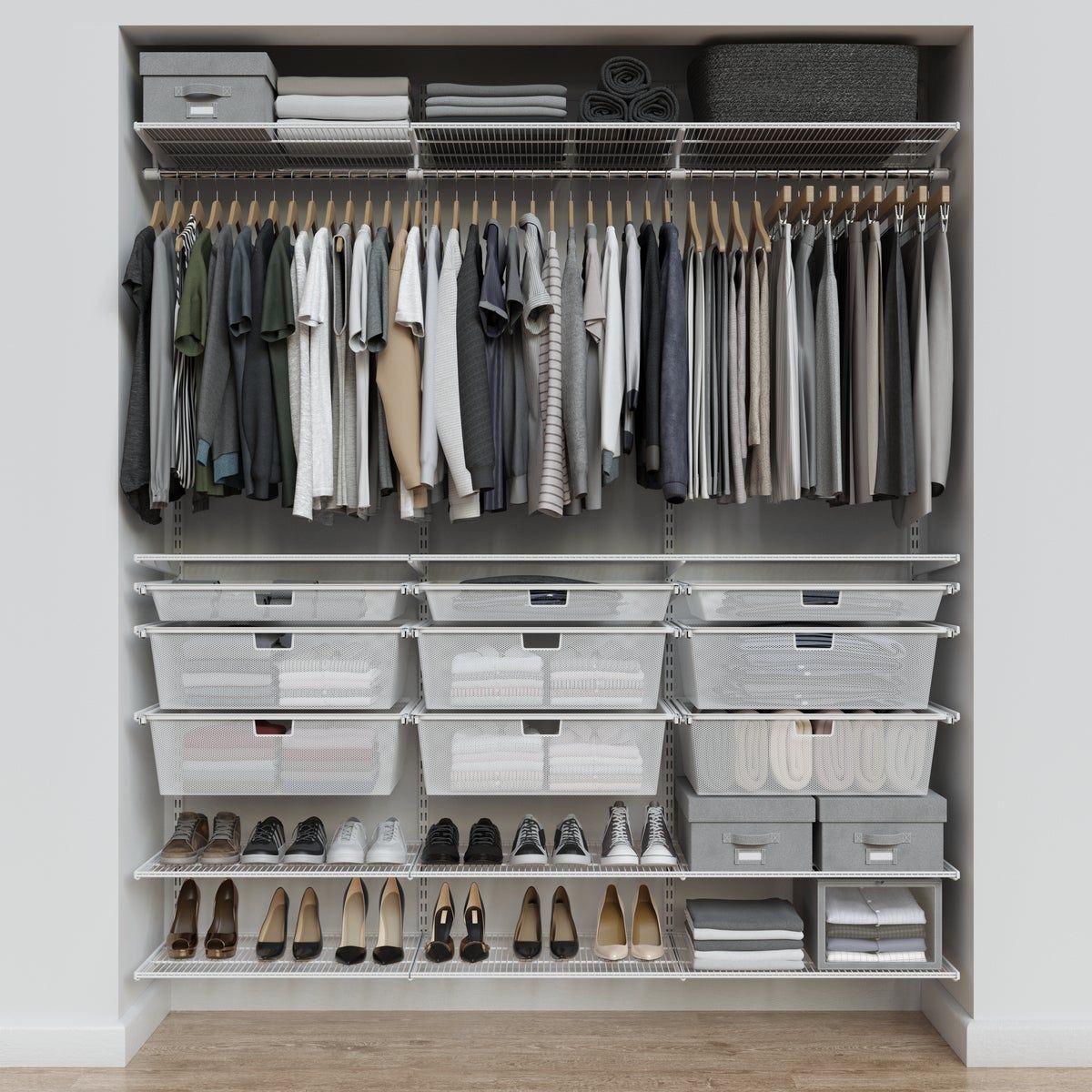
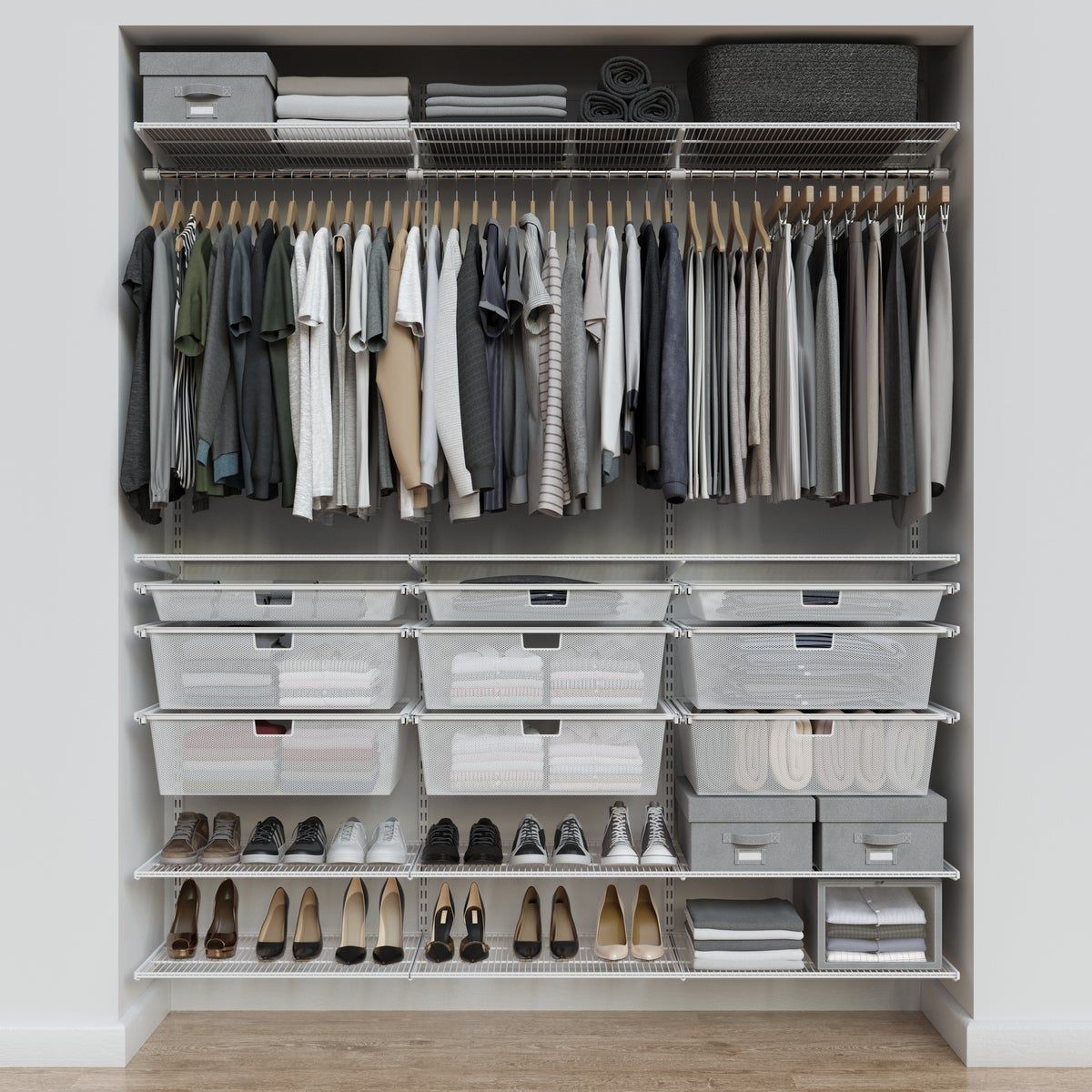
The Elfa system is, without a doubt, the crown jewel of The Container Store. It’s a modular, wall-hung system based on epoxy-bonded steel components.
You start with a simple top track that is mounted to the wall, and from there, vertical standards, brackets, shelves, and drawers hang, allowing for near-infinite customization.
- Materials: The core is epoxy-bonded steel, which is incredibly strong and resistant to sagging over time. The optional shelf-fronts and drawer faces can be made of melamine or solid wood fascia for a more finished look.
- Pros: Its durability is legendary; I’ve seen Elfa systems last for over 20 years. The modularity means you can adjust or add to your system as your needs change. It’s also GREENGUARD Gold certified, meaning it meets rigorous standards for low chemical emissions, which is a significant plus for home health (UL Spot Database).
- Cons: The standard all-wire look can feel a bit utilitarian or industrial for a primary bedroom closet. Furthermore, while Elfa offers a limited lifetime warranty, users report that getting service for claims can be challenging due to the same unresponsive customer support that plagues the installation process.
- Best For: I strongly recommend Elfa for DIYers, budget-conscious shoppers (who buy during the 30% off sale), and anyone who prioritizes function and long-term durability over a high-end aesthetic. It’s the perfect solution for pantries, laundry rooms, kids’ closets, garages, and for creating a functional home office organization system. Pair it with a Container Store coupon code during the annual sale for maximum value.
Avera: The Mid-Tier “Built-In” Look

Avera is positioned as the step-up from Elfa, designed to offer a more premium, “built-in” custom closet appearance without the price tag of true custom cabinetry.
It features thicker shelves, full-extension drawers, and integrated lighting options.
- Materials: Avera is primarily constructed from Thermally Fused Laminate (TFL) over a particleboard core, with PVC edge banding. This is a critical point. TFL is a common material in modern furniture, but the quality can vary, and the edge banding is a known vulnerability.
- Pros: It delivers a much more high-end, seamless aesthetic than Elfa. The availability of integrated drawers and optional lighting creates a genuine custom-closet feel.
- Cons: Material weakness is the key issue here. The PVC edge banding is susceptible to chipping, peeling, and moisture damage. Once the edge is compromised, the particleboard core can swell, leading to irreversible damage. Its price point puts it in direct competition with higher-quality options from other companies.
- Best For: I recommend Avera only for homeowners who want that “built-in” look, understand the material risks, and have secured a highly-vetted installer. It’s a visual upgrade from Elfa but a potential downgrade in long-term resilience.
Avera’s primary weakness is its PVC edge banding on particleboard. According to expert analysis, this edge is highly susceptible to chipping and moisture damage, which can lead to irreversible swelling of the core. This is a key durability risk vs. Elfa’s steel construction.
Preston: The High-End Cabinetry System

Preston is The Container Store’s top-of-the-line system, meant to compete with custom cabinetry. It is a floor-based system, giving it the substantial look and feel of built-in furniture.
- Materials: Preston systems are typically made with thermofoil or laminate finishes over an MDF or particleboard core, similar to many modern kitchen cabinets.
- Pros: It offers the most luxurious, furniture-like appearance of the three lines. The floor-based design provides immense stability and a true “custom cabinetry” aesthetic.
- Cons: The biggest con is that a flawless installation requires genuine finish carpentry skills. Third-party installers, who are often generalists, may lack the specific skills (like scribing to uneven walls) needed for a perfect, gap-free installation. At this high price point, you are competing directly with local carpenters who can offer solid wood construction for a similar or slightly higher cost.
- Best For: The Preston line should only be considered for high-budget projects where the homeowner has personally vetted the installer and confirmed they have specific experience with high-end, floor-based cabinet systems. For most people in this budget range, I believe a local cabinet maker is a better investment.
Comparison Table: Elfa vs. Avera vs. Preston
| Feature | Elfa | Avera | Preston |
|---|---|---|---|
| Core Material | Epoxy-bonded steel | TFL over particleboard | Thermofoil/Laminate over MDF/Particleboard |
| Installation Model | Wall-hung, DIY-friendly | Wall-hung, Pro-recommended | Floor-based, Pro-required |
| Ideal Use Case | Functional spaces, garages, pantries | Bedroom closets, visible storage | High-end walk-ins, dressing rooms |
| Key Weakness | Utilitarian appearance | PVC edge banding failure | Requires finish carpentry skills |
| Price Tier | $$ | $$$ | $$$$ |
| Home Health (GREENGUARD) | GREENGUARD Gold | Not certified | Not certified |
| Long-Term Durability (1-10) | 9/10 | 6/10 | 7/10 |
No matter which system you choose, smart shoppers never pay full price. Browse the latest Container Store deals and special offers before placing your order.
Part 4: The Installation Lottery: A System Designed to Fail?
If The Container Store’s products are generally good, why is its reputation so polarized?
Based on my extensive analysis of user data for this The Container Store review, the answer is clear and undeniable: the “professional installation” service is systemically inconsistent.
It’s a lottery where you, the customer, are gambling with your money, your time, and the integrity of your home. This isn’t about a few isolated incidents; it’s a pattern of failure baked into their business model.
The Third-Party Contractor Model Explained
The root of the problem is that The Container Store does not employ its own installers.
When you pay your installation fee, you are not hiring a trained TCS employee who is accountable to the company. Instead, TCS acts as a middleman, passing your project to a decentralized, and often poorly managed, network of independent third-party contractors in your local area.
These contractors are not exclusive to The Container Store. They may be general handymen, furniture assemblers, or small construction crews. Their skill level, professionalism, and commitment to quality are wildly inconsistent because there is no centralized training or accountability structure.
You might get a seasoned professional, or you might get someone who has never installed an Avera system before. This is the “installation lottery.” Understanding the risks is critical—and you can find more perspectives in our detailed Container Store top alternatives and competitors analysis.
Common Failures: A Pattern of Problems
When I analyzed Better Business Bureau (BBB) complaints and hundreds of 1-star Trustpilot reviews from the last three years, a clear and disturbing pattern emerged.
The installation service is the primary theme of customer outrage. The most common failures include:
- No-Shows and Extreme Delays: Installers frequently cancel appointments at the last minute or simply fail to show up, leaving customers waiting for days or weeks.
- Property Damage: This is the most severe issue. Reports of damaged walls, scratched hardwood floors, and incorrectly drilled holes are rampant.
- Incorrect Assembly: Complex systems like Avera and Preston are often assembled incorrectly, with drawers that don’t close, shelves that aren’t level, and missing components.
- Missing Parts and Incomplete Jobs: Installers often leave jobs unfinished due to missing parts from the initial order, starting a vicious cycle with customer service.
- Lack of Accountability: When problems occur, the contractor blames The Container Store, and The Container Store blames the contractor, leaving the customer trapped in the middle.
The Customer Service “Black Hole”
What transforms a bad installation into a significant problem is the company’s response.
When things go wrong, customers report that their pleas for help fall into a “customer service black hole.” The BBB profile for The Container Store lists 172 complaints closed in the last three years as of late 2024, with service and installation issues being a prominent theme (The Container Store BBB Profile).
When installations go wrong, the customer service experience frequently breaks down completely, with numerous BBB complaints citing that achieving a satisfactory resolution is nearly impossible.
This experience is tragically common, as one user on Trustpilot described in a recent review that encapsulates the entire ordeal:
“Installation was a disaster. They cancelled twice, then showed up and cut the shelves to the wrong size. Now I have a half-finished closet full of holes and customer service won’t call me back. It’s been three months.” — A representative customer comment from Trustpilot, 2024
Your Legal Rights: The Container Store IS Liable
This is a critical point for any homeowner considering their service. The Container Store’s contracts may refer to the installers as “independent contractors,” a clause designed to limit their legal liability. However, this often does not hold up. Because you, the customer, have a contract with The Container Store and not the installer, TCS is the primary liable party for damages. Principles of contract law and “apparent authority” (the installer is acting as an agent of the brand) mean that TCS cannot easily shield itself from responsibility for a botched job.
Action Plan: What to Do if They Damage Your Home
If you find yourself a victim of the installation lottery, you are not powerless; a clear action plan is your best tool for investment protection. You must be your own best advocate.
- Stop Work & Document: The moment you notice damage, tell the installers to stop working. Immediately take extensive, timestamped photos and videos of the damage from multiple angles.
- Do Not Sign Completion Forms: The installers will ask you to sign a completion form. Refuse to sign it. If you feel pressured, write in clear, large letters on the form: “PROPERTY DAMAGED, WORK NOT ACCEPTED” before signing.
- Formal Notification: Immediately call The Container Store’s corporate customer service line to report the issue and get a case number. Follow up the same day with an email containing your case number and all photographic evidence. This creates a paper trail.
- Quantify Your Loss: Do not rely on TCS to assess the damage. Contact at least two independent, reputable local contractors and get itemized quotes for the cost of repairs.
- Demand Payment: Send a formal demand letter via certified mail to The Container Store’s corporate headquarters. Include your case number, the photographic evidence, and the repair quotes. Clearly state the amount of money you are demanding to fix the damages.
- Escalate: If you do not receive a satisfactory response within 30 days, it’s time to escalate. You can file a complaint with the Better Business Bureau, your state’s Attorney General, and the Consumer Product Safety Commission (CPSC) if the failure presents a safety hazard. For the financial damages, you can file a suit against The Container Store, Inc. in your local small claims court or contact your homeowner’s insurance to see if they can pursue the claim on your behalf (a process called subrogation).
Disclaimer: I am a home organization expert, not an attorney. This is not legal advice. Consult a legal professional for your specific situation.
Part 5: Use Cases & Workflows
Understanding how these systems apply to real-world projects is key.
The best choice depends entirely on your goals, budget, and willingness to engage in DIY. Here, we break down three common home organization scenarios to illustrate how you might use The Container Store’s products effectively.
Use Case 1: Designing a High-Function Pantry with Elfa
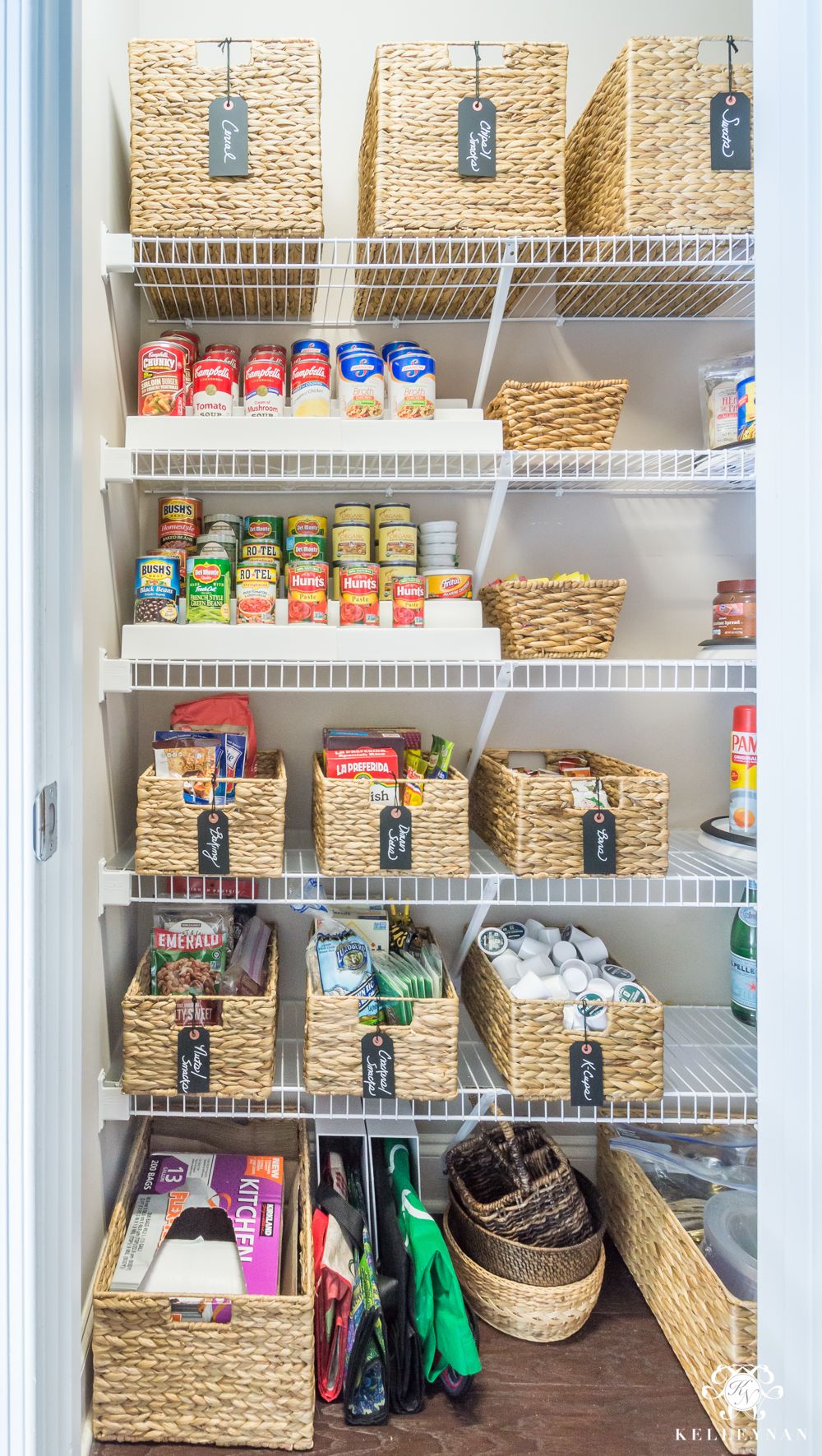
The Goal: Transform a standard reach-in pantry from a zone of chaos into a model of efficiency, maximizing every square inch for food storage. The priority is visibility, accessibility, and long-term durability.
The Workflow:
- Measurement & Planning: The first step is to accurately measure the pantry’s interior dimensions. Using the online Elfa design tool, you can input these measurements and begin virtual space planning. The key is to use varied shelf depths: shallower shelves (e.g., 8-12 inches) at eye level for cans and jars to prevent items from getting lost in the back, and deeper shelves (e.g., 16 inches) at the bottom for bulk items and small appliances.
- Component Selection: Opt for the ventilated wire shelving, as it allows air circulation and prevents dust buildup. Incorporate specialized components like can racks and gliding drawers for packets and spices. A crucial part of the home organization process is to plan for vertical space; the Elfa top track should be installed high enough to allow for a top shelf just for backstock.
- The DIY Approach (Recommended): Purchase all components during a 30% off sale. Installation is straightforward for a moderately skilled DIYer. It involves mounting the horizontal top track securely into studs, hanging the vertical standards, and then clicking the brackets and shelves into place. A level, drill, and stud finder are the primary tools needed. The entire project can typically be completed in an afternoon. Don’t forget to apply a Container Store voucher to your purchase.
- The Outcome: The result is a highly functional, durable pantry that can be reconfigured as your family’s needs change. By choosing the DIY path, you achieve a premium storage solution for a fraction of the cost of a professionally installed system, leveraging the durability of the Elfa system without the service risk.
Use Case 2: Creating a Luxury Walk-in Closet with Avera
The Goal: Achieve a high-end, “built-in” look in a master walk-in closet without the expense of full custom cabinetry. Aesthetics, integrated lighting, and concealed storage are top priorities.
The Workflow:
- Professional Design Consultation: This is a scenario where the free design consultation is valuable. Work with a designer to lay out the space, focusing on creating zones for different types of clothing. The Avera system’s strengths lie in its full-extension drawers, glass-fronted cabinets, and integrated LED lighting options. The designer can help blend these elements for a seamless, polished look.
- Vetting the Installer (CRITICAL STEP): Before signing the contract, you must insist on knowing who the third-party installation company is. Research them independently. Look for their reviews on Google, Yelp, or Angi. Ask for proof of insurance. If you cannot get this information or the reviews are poor, this is a major red flag.
- Installation Oversight: Unlike a simple Elfa install, Avera requires more precision. Be present on installation day. Inspect the components for damage before they are installed. Check that drawers glide smoothly and that shelves are level. Ensure any cuts made to fit your space are clean and that edge banding is perfectly applied.
- The Outcome: If you are lucky in the “installation lottery” and get a skilled, professional crew, the Avera system can deliver a visually impressive closet that feels more expensive than it is. However, this path carries significant risk. The homeowner must take on a proactive project management role to mitigate potential issues, a far cry from the promised stress-free renovation.
Use Case 3: Organizing a Garage Workshop for Maximum Utility
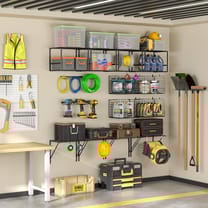
The Goal: Build a robust and flexible storage system for a garage or workshop to handle heavy tools, bins, and miscellaneous equipment. The top priority is shelf load capacity and adaptability.
The Workflow:
- System Selection: Elfa is the only appropriate choice here. Its epoxy-bonded steel construction provides the necessary strength. The Avera and Preston systems, with their particleboard cores, are not suitable for the temperature fluctuations, moisture, and heavy-duty use of a garage environment.
- Focus on Strength: The key to a successful garage install is anchoring the top track correctly. It must be secured into wall studs across its entire length. For concrete or block walls, use appropriate heavy-duty anchors. Use the deeper 16-inch or 20-inch shelves for storing large bins and tool cases. Incorporate the Elfa Utility line, which includes hooks for hanging tools, ladders, and bikes.
- Hire Your Own Help: Instead of using The Container Store’s installation service, consider hiring a local, trusted handyman or using a service like TaskRabbit. This gives you direct control over who performs the work and often comes at a lower cost than the 30% fee from TCS. You maintain the benefit of the product’s quality while controlling the quality of the labor. Save even more on the product side with a Container Store money-saving deal.
- The Outcome: A DIY or locally-hired installation of an Elfa system creates an incredibly versatile and durable garage storage solution. The open-wire design makes it easy to see everything, and the system can be easily expanded or reconfigured as your hobbies or storage needs evolve over time.
Part 6: Competitive Reality Check: TCS vs. The Market
To truly understand The Container Store’s value, you have to see where it fits in the broader market for home organization.
It’s awkwardly “squeezed” between cheaper DIY options and more reliable premium services. From my professional standpoint, they are trying to be everything to everyone and, as a result, failing to be the best choice for specific customer needs.
An honest The Container Store review must place it in context.
| Criteria | TCS (DIY Elfa) | IKEA (PAX) | California Closets | Local Carpenter |
|---|---|---|---|---|
| Price Range (per 8 ft) | $400 – $900 | $250 – $500 | $1,500 – $3,000+ | $1,800 – $4,000+ |
| Core Material | Epoxy-Bonded Steel | Particleboard | TFL over HDF/Particleboard | Solid Wood / Plywood |
| Installation Model | DIY | DIY / 3rd Party (TaskRabbit) | In-House Employees (Low Risk) | Direct Relationship |
| Service Reliability | N/A (DIY) | N/A (DIY) | High | Varies by Pro |
| Customization Level | High (Modular) | Medium (Fixed Boxes) | High (Design-Led) | Total (Bespoke) |
| Best For… | Capable DIYers seeking durability | Budget-focused DIYers | Risk-averse, “Done-for-me” buyers | True custom, high-end builds |
For a comprehensive side-by-side breakdown with even more competitor data, explore our full Container Store alternatives and competitors comparison.
Best For Budget-Focused DIYers: IKEA PAX

- Best For: Homeowners for whom budget is the absolute number one priority and who are willing to undertake a more complex DIY assembly.
- Consider: The IKEA PAX wardrobe system is the undisputed king of budget closets. A comparable DIY closet can be 50-70% cheaper than even a DIY Elfa system purchased on sale (The Organized Home).
- Avoid If: You need a highly flexible system or prioritize material durability. When comparing Elfa vs. IKEA PAX, the primary differentiator is material durability; Elfa’s epoxy-bonded steel is demonstrably superior to PAX’s particleboard in resisting sag and wear over time.
Best For a “White-Glove” Service: California Closets

- Best For: Risk-averse buyers with a higher budget for whom peace of mind and a reliable, full-service experience is the top priority.
- Consider: California Closets uses its own in-house, employee installers who are trained specifically on their products. Their design process, which often involves more detailed space planning and creative solutions for challenging areas, is typically more in-depth, and their standard materials are often thicker and more robust.
- Avoid If: Your budget is tight. California Closets delivers the reliable, “white-glove” service that The Container Store’s marketing implies but so often fails to provide, and its pricing reflects that premium.
This difference in quality is not just theoretical; it’s noticed by discerning homeowners.
“Don’t let anyone tell you Avera is the same as California Closets. We had both designers come out. The CC samples felt thicker, the hardware was heavier, and the designer had way more creative solutions for our angled walls. The TCS Avera felt more ‘off-the-shelf’. The price reflected that—CC was about 25% more for our design.” — A representative homeowner comment from Houzz, 2024
Best For True Customization: Local Carpenters
- Best For: Homeowners with unique spaces (e.g., angled ceilings, historical homes) or those who desire superior materials like solid wood for a truly bespoke build.
- Consider: A local carpenter or cabinet maker offers a genuinely custom solution. They can build a closet from solid wood (a material TCS does not offer), perfectly scribe it to your quirky walls, and match finishes exactly to your home’s existing trim.
- Avoid If: You need a quick turnaround or prefer a structured, corporate process. The quality and professionalism can vary widely, and require careful vetting on your part. However, for a price often competitive with the installed Preston line, a local pro can deliver superior quality.
Regardless of which direction you go, it’s always smart to compare prices. If you decide on The Container Store, grab a Container Store sale price to get the best rate possible.
Conclusion: The Final Verdict on The Container Store
After a deep and thorough investigation into every facet of The Container Store’s custom closet business, my final verdict comes back to the central theme of this review: you are dealing with two completely different companies.
One is a retailer of a world-class organization product, and the other is a provider of a high-risk, unreliable service. Your success and satisfaction depend entirely on which one you choose to engage with.
✅ Pros
- The Elfa system is exceptionally durable, modular, and well-designed.
- DIY installation of Elfa offers outstanding value, especially when purchased on sale.
- The products are GREENGUARD Gold certified for low chemical emissions.
- Frequent 30% off sales make high-quality products accessible.
❌ Cons
- The installation service relies on a flawed third-party model that is systemically unreliable.
- Installation fees are based on inflated retail prices, diminishing sale savings.
- Customer service is widely reported as unresponsive, creating a “black hole” for problem resolution.
- Mid-tier Avera and Preston lines use materials that may not justify their high price points.
Here are my final, segment-specific recommendations from this 2026 The Container Store review:
Recommendation for the DIY Homeowner: Strongly Recommend.
This is the clearest and most confident recommendation I can make. The path to success with The Container Store is to buy the Elfa system during a 30% off sale and install it yourself or with the help of a trusted local handyman. This strategy gives you the highest quality product for the lowest possible price, while completely sidestepping the immense risk and frustration of their installation service. This path leverages the proven durability of the Elfa system and is the highest value, lowest risk option. Lock in the best deal with a Container Store exclusive coupon.
Recommendation for the “Done-For-Me” Homeowner: Proceed with Extreme Caution.
If you are ideologically opposed to DIY and are looking for a full-service, “white glove” experience, The Container Store’s offering is a significant gamble. You are paying a premium price for a service lottery. I would strongly encourage you to explore alternatives: get a competing quote from a brand like California Closets or consider hiring an independent professional organizer who can design a system using Elfa components, giving you expert design without the service risk.
Recommendation for the High-End Buyer: Not Recommended.
If you are considering the expensive Avera or Preston lines, I do not recommend The Container Store. At this price point, you are paying for a premium experience that the company is not equipped to reliably deliver. A dedicated service like California Closets offers better materials and a far more dependable service model. Alternatively, a local carpenter can provide a truly bespoke solution with superior materials like solid wood for a price that is often comparable.
My final thought is a reinforcement of the “Two Container Stores” thesis. The company has a genuinely great product in its Elfa system, a product that has earned decades of customer loyalty.
However, that product’s reputation is being actively and systemically undermined by a broken service model that creates financial and emotional distress for its customers. Choose the product, but be very, very wary of the service.
Frequently Asked Questions
Q1: How much does a Container Store closet cost in 2026?
A DIY Elfa closet from The Container Store typically costs between $800 and $3,000, making it a strong value proposition when purchased on sale.
However, if you opt for their professional installation service with the higher-end Avera or Preston systems, you should expect to pay anywhere from $4,000 to $15,000 or more.
The final price is heavily influenced by the installation fee, which is 30% for Elfa and 22% for Avera/Preston, and is calculated on the full, non-sale retail price (TCS Installation Page). This fee structure can negate a significant portion of the savings from their frequent sales events, making it crucial to factor this into your total budget.
Q2: Is The Container Store worth the money?
Whether The Container Store is worth the money depends entirely on the path you choose.
The Elfa system, when purchased on sale and installed as a DIY project, offers excellent value and is a product I frequently recommend for its superior material durability and modular design. In this scenario, it is absolutely worth it.
However, this The Container Store review finds the full-service installation package is often not worth the high cost due to the significant risk of service failure, potential for property damage, and the immense, unquantifiable cost of your own time spent managing problems (The Container Store BBB Profile). Smart shoppers always use a Container Store discount offer to improve the value equation.
Q3: What are the hidden costs of The Container Store?
The biggest “hidden” cost is the installation fee, which is deceptively calculated on the full, non-sale retail price of your materials.
This can add thousands to your bill and negates much of the savings from their sales events (Clark.com).
Another major hidden cost is non-financial: the personal project management time. If you experience issues with the installation, you may have to spend dozens of hours on calls and emails to coordinate corrections, a significant time investment that undermines the convenience of paying for a professional service. Potential costs for repairing property damage are another unbudgeted risk.
Q4: Should I use The Container Store or California Closets?
I advise clients to choose California Closets if their top priority is a reliable, premium, and stress-free full-service experience and they have a higher budget.
California Closets uses in-house employee installers, which provides a much more consistent and accountable service from design to completion (California Closets Website).
You should choose The Container Store only if you plan to buy the Elfa system and install it yourself to save a significant amount of money. The Avera and Preston lines from The Container Store compete on price with California Closets but do not offer the same level of service reliability. For a deeper dive into alternatives, see our full Container Store alternatives and competitors breakdown.
Q5: Who is The Container Store best for?
The Container Store is absolutely best for capable DIYers who want a high-quality, durable, and modular shelving system (Elfa) at a reasonable price.
To get this value, you must buy during a 30% off sale and handle the installation yourself or hire your own trusted contractor. It is generally not a good fit for customers seeking a risk-free, “white glove” installation service and who are unwilling to manage potential chaos.
For those customers, other brands provide a more dependable, albeit more expensive, alternative. Check the latest coupons page for current savings across all top home organization brands.
Q6: Can I trust The Container Store’s installers?
No, you cannot universally trust the installers, and this is the core problem with their service.
Because they use a decentralized network of third-party contractors, the skill, professionalism, and reliability are highly variable.
You might get a great crew, or you might get a crew that causes significant damage to your home. This “installation lottery” is the single biggest risk of using their full-service package, as documented in numerous customer complaints on platforms like the Better Business Bureau (The Container Store BBB Profile).
Q7: What are the main problems identified in this The Container Store review?
The main problems I’ve identified through extensive research are systemic failures in their third-party installation service, shockingly unresponsive customer support when issues arise, and a premium price point that doesn’t always match the value received.
The reliance on a network of independent contractors creates inconsistent quality and accountability, leading to common issues like property damage and incorrect assembly.
When these problems occur, customers frequently report an inability to get a timely or satisfactory resolution from the company’s corporate support channels.
Q8: Is The Container Store Elfa system good quality?
Yes, absolutely. The Elfa system is widely considered to be high-quality, durable, and reliable, and it’s the brand’s best product by a wide margin.
It is made of epoxy-bonded steel in Sweden and has an excellent reputation for long-term performance (Elfa Website). I have personally seen Elfa systems that are over two decades old and still function perfectly, which is a testament to their design and material quality.
Its GREENGUARD Gold certification for low chemical emissions further adds to its quality credentials for a healthy home (UL Spot Database). If you’ve decided the Elfa system is right for you, save on your subscription with a Container Store best price coupon before ordering.
