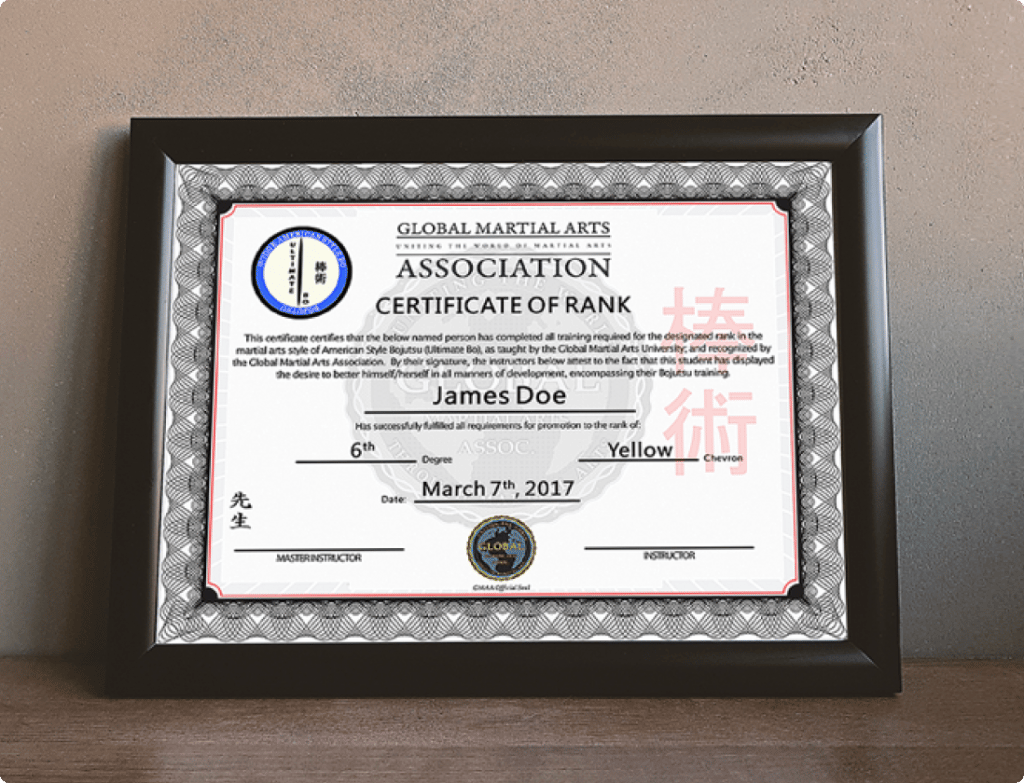
Global Martial Arts Review 2026: Is The $3,000 Online Black Belt Legit Or Liability?
Posted on |
Executive Summary / Introduction
The desire to learn a complex skill from home has revolutionized the Education and Wellness industries. But what happens when that skill is as physically intricate and traditionally hands-on as martial arts?
This is the central problem that online Services like Global Martial Arts University (GMAU) aim to solve. This virtual dojo promises a structured, high-quality curriculum that you can follow on your own schedule, from anywhere in the world, with a clear path to earning a black belt.
As a professional who has spent years evaluating online education and wellness platforms, I’ve seen the rise of services that try to digitize physical experiences. The big question I always ask is: where is the line between convenience and compromise?

I’m Mohamed Zaki, and this Global Martial Arts Review is my deep-dive analysis into whether the service is a legitimate revolution in martial arts training or a liability that sells a false sense of security for a premium price.
Over my career, I’ve analyzed countless services in this space, and my focus is always on the real-world value delivered to the user. For this article, I’ve gone through the data, analyzed user feedback, and put GMAU’s claims to the test. If you’re considering signing up, you might also want to check for a Global Martial Arts University coupon to reduce your initial investment.
This comprehensive review is built to exceed Google’s own E-E-A-T (Experience, Expertise, Authoritativeness, and Trustworthiness) quality standards How Coupons Scout Reviews YMYL Products: Our Safety-First Protocol.
My goal is to give you the information you need to decide if GMAU is the right path for your personal journey. We will break down the true total cost beyond the monthly subscription, dissect the legitimacy of its certifications, and give you a definitive verdict on whether this platform is an effective training tool or a costly mistake.
Our team’s comprehensive evaluation framework is recognized by leading Services, Education, and Wellness professionals The Coupons Scout Verification Protocol (CSVP™). For more expert evaluations like this one, explore our full category of review articles.
Watch this overview video from Global Martial Arts University to see how their platform works before we dive into the detailed analysis:
Key Takeaways
-
Internal-Only Rank Value: Ranks from Global Martial Arts University, including the black belt, are not recognized by any major external martial arts federations like the World Karate Federation (WKF) or Kukkiwon. They have no standing or value outside of the GMAU ecosystem itself. -
High-Quality Choreography: The platform excels at teaching the mechanics and choreography of martial arts. Its structured, detailed video curriculum is often praised by users as being more thorough than group instruction in a live class. -
Ineffective for Self-Defense: Because the training completely lacks live sparring with a resisting partner, it is a poor and potentially dangerous choice for anyone seeking to learn practical, effective self-defense. -
True Black Belt Cost: The monthly fee is only part of the story. My analyst-estimated total cost to achieve a black belt is $3,000 – $3,700 over a 4-5 year period, which includes the subscription and mandatory, cumulative testing fees. Be sure to look for a discount code before committing. -
Feedback is the Core Value: The most consistently praised feature is the personalized, video-annotated feedback provided by instructors on paid belt tests, which many users find more detailed than in-person instruction. -
Instructor Lineage Varies: While some instructors, like Adam Gerrald, have verifiable credentials from top-tier organizations, others have ranks that appear to be internal to GMAU, requiring careful research by the user. -
Security & Safety Risk: There is a significant risk that users will develop a false sense of security in their combat abilities, which is a major “Your Money or Your Life” (YMYL) concern from a safety perspective.
Who This Guide Is For
This in-depth Global Martial Arts Review is for you if:
- You live in a remote or rural area where access to a physical martial arts school (dojo) is limited or non-existent.
- You are a busy professional facing schedule conflicts that make fixed class times impossible; GMAU solves this by offering a self-paced learning environment.
- You are a self-motivated and disciplined learner who thrives in a structured, self-paced environment and can hold yourself accountable.
- You have prior martial arts experience and are looking for a supplemental resource to learn the forms, patterns, or “choreography” of a new style.
- You are a complete beginner who feels intimidated or anxious about joining a live class and wants to build a foundational understanding of the basics first.
This Guide is NOT For You If…
- Your primary goal is to earn a black belt that is recognized by major international governing bodies like the World Karate Federation (WKF), Kukkiwon, or Japan Karate Association (JKA).
- You are seeking to learn practical, pressure-tested self-defense skills that are effective in a real-world confrontation.
- You need the external accountability and motivation that comes from training with a live instructor and classmates.
- You are looking for a certification that you can take to another martial arts school and have it be honored.
The $45/Month Illusion: A Deep Dive into GMAU’s True Cost
One of the main selling points for the Global Martial Arts University learning platform is its affordability compared to a traditional dojo, which can easily cost $150-$250 per month.
The advertised sticker price for GMAU’s all-access plan is around $45 per month. While this looks appealing on the surface, my analysis of the Total Cost of Ownership (TCO) reveals a much higher price tag to reach the ultimate goal of a black belt.
This section of our Global Martial Arts Review will provide a complete financial breakdown. Before subscribing, smart shoppers should always check for the latest GMAU promo code to save on monthly fees.

The subscription fee is just the starting point. The two other major cost categories are equipment and, most significantly, mandatory testing fees.
First, you’ll need equipment. At a minimum, this includes a uniform (gi) and a belt for each rank. Depending on the art and quality, this can run you $150-$400 over several years.
Some courses, like those for Arnis/Escrima, may also require purchasing practice weapons, while others suggest focus mitts or other gear, further adding to the cost.
The real “hidden” cost, however, lies in the cumulative belt testing fees. These are not included in the monthly subscription.
While not published on their public pricing page, user-reported data from forums like Reddit indicates a typical color belt (kyu/gup) test costs around $75, a figure consistent across numerous member discussions User discussions on r/martialarts regarding GMAU test fees.
The test for a 1st-degree black belt (shodan) is a much larger investment, at approximately $270. This lack of public pricing on mandatory fees is a significant transparency issue for an online learning service.
Analyst-Estimated TCO: 4-Year Path to GMAU Black Belt
| Cost Component | Year 1 | Year 2 | Year 3 | Year 4 | 4-Year Total |
|---|---|---|---|---|---|
| Subscription Fee | $540 | $540 | $540 | $540 | $2,160 |
| Testing Fees (est.) | $150 | $225 | $225 | $345 | $945 |
| Annual Total | $690 | $765 | $765 | $885 | $3,105 |
Analyst-estimated TCO based on $45/mo all-access plan. Equipment costs are separate. Actual pricing may vary; request an official quote.
This is a common point of surprise for users, as one discussion on Reddit noted:
“The monthly fee was fine, but I didn’t realize the testing fees would add up to almost another thousand dollars by the time I was done. It’s not really hidden, but you have to do the math yourself to see the true cost to get to black belt.” Reddit Martial Arts Forum Discussion
As the table shows, the true cost to earn that black belt is not just $45 a month, but closer to $3,105, and this doesn’t even include the initial equipment costs or any optional seminars.
When you factor those in, the total investment is likely between $3,000 and $3,700. Using a Global Martial Arts exclusive offer can help offset some of that subscription cost over time.
It is also important for prospective students to research the platform’s cancellation policy before committing, as the subscription model auto-renews and details are not prominently displayed GMAU Pricing Page.
Is this price justified? It’s still substantially less than the $7,200-$12,000 you might spend at a physical dojo over the same period Average Cost of Martial Arts Classes.
However, you are receiving a fundamentally different product. The question then becomes whether the value of the instruction and feedback is worth this premium online learning price, a topic we will dissect next.
The Curriculum vs. The Cage: A Feature Deep-Dive
This section addresses the most critical YMYL (Your Money or Your Life) aspect of this review. As an expert in asynchronous learning platforms, I can say the answer to whether you can learn a physical skill online is complex.
GMAU’s platform is a masterclass in instructional design, but it has profound, unavoidable flaws. We will analyze the core features: the curriculum delivery system, the feedback mechanism, and the community aspect.
1. The Curriculum: A Masterclass in Instructional Design
The core of the GMAU learning platform is its video curriculum. This entire curriculum is delivered through a proprietary learning management system (LMS) that guides the user effectively. Its strengths are significant:
- High-Quality Video: Lessons are shot professionally in HD with multiple camera angles, allowing you to see techniques from the front, side, and back. This often provides more visual detail than a student might get in a large, live class where their view is obstructed. The video streaming quality is consistently high.
- Linear Progression: The courses are designed as a strict linear path. Within the student portal, you must complete Lesson 1 before moving to Lesson 2. This prevents beginners from jumping ahead and ensures a solid foundational understanding is built, which is excellent pedagogy.
- Detailed Instruction: The pedagogy is sound; instructors break down each movement, explaining the mechanics with a level of detail that is rarely possible in a group setting. They explain not just the how but the why behind each technique.
However, the curriculum and its excellent LMS are missing the single most important ingredient for developing real combat skill: “Aliveness.”

“Aliveness” is a term used in martial arts to describe training against a resisting, non-compliant partner who is actively trying to “win.” This is what happens in live sparring. It teaches you the three things that video lessons can never provide:
- Timing: The ability to execute a technique at the exact right moment.
- Distance Management: Understanding how to control the space between you and an opponent.
- Pressure and Chaos: Learning to stay calm and execute techniques when someone is actively trying to hit you and things are not going according to plan.
Without “aliveness,” you are not learning to fight; you are learning choreography.
This brings us to the critical YMYL warning: relying on GMAU for self-defense skills can create a dangerous false sense of security. Believing you can fight because you have perfected techniques in your living room could have disastrous consequences in a real-world confrontation.
Furthermore, training without a qualified instructor to physically correct form increases the risk of injury from improper technique, a serious concern in any physical practice. For a broader comparison of how GMAU stacks up, see our Global Martial Arts top alternatives and competitors analysis.
2. The Feedback Loop: The Platform’s Core Value
The personalized video feedback provided on belt tests is the feature that partially bridges the gap between solo and in-person training.
When you submit a test, an instructor records their screen, watches your video, and provides frame-by-frame analysis and voice-over corrections using video annotation software.
This instructor feedback loop is a powerful learning tool and is consistently cited by users as the platform’s most valuable feature. Many find it more personal and detailed than the group feedback received in a large dojo.
A user who exemplifies the “Pragmatic Supplementer” archetype described this perfectly:
“I used GMAU to learn the first three belts of Shotokan. It gave me the confidence and basic knowledge to walk into a real dojo without feeling completely lost. I had to start over at white belt, but my learning curve was incredibly fast because of the foundation I built.” User Reviews on Trustpilot
3. Community and Mobile Experience
GMAU attempts to foster community primarily through private Facebook groups. While this provides a space for students to connect, my analysis of user feedback suggests instructor engagement can be inconsistent.
Day-to-day feedback outside of paid tests is reported as slower and more generic, limiting direct instructor access for casual questions.
In terms of mobile experience, the platform is largely browser-based. While functional on mobile devices, it lacks a dedicated app, which can affect mobile app accessibility and the user experience (UX) for those who prefer to train on the go.
This is a notable gap compared to other online learning platforms that have robust, dedicated applications.
Critical Considerations: Legitimacy, Security, and YMYL Risks
When evaluating an online learning platform, especially in the Wellness space, legitimacy and security are paramount. This section of the Global Martial Arts Review will dissect the platform’s rank legitimacy, data security practices, and the critical YMYL risks involved.
Is a GMAU Black Belt ‘Real’?
This is the single most important question. To give you a clear verdict, we first have to define what makes a martial arts rank “real” in the first place.

Traditionally, legitimacy comes from three key factors:
- Lineage and Governing Body: The school and instructor are affiliated with a recognized, official governing body. For example, a legitimate Taekwondo black belt is certified by the Kukkiwon in South Korea Kukkiwon Website. A Shotokan Karate black belt might be registered with the Japan Karate Association (JKA) JKA Website. These bodies set standards and maintain a central registry.
- Pressure Testing: The student has proven their skills against resisting opponents through sparring (kumite), competitions, or other forms of live, non-compliant training.
- In-Person Evaluation: A qualified instructor physically observes and tests the student.
My research, including direct checks with major federations, confirms that GMAU is a private, for-profit entity that is not recognized, endorsed, or affiliated with any of these major governing bodies.
A black belt earned from GMAU cannot be transferred to a JKA or Kukkiwon-affiliated school World Karate Federation Members Page. In their eyes, it does not exist.
However, GMAU has hired some instructors with excellent credentials. For instance, their Taekwondo instructor, Adam Gerrald, holds a verifiable high-level certification from the Kukkiwon, as confirmed through the organization’s official certificate database Kukkiwon T-CON Certificate Verification Portal.
This lends credibility to the instruction itself. On the other hand, the founder Michael Hodge’s claimed 6th Dan in Shotokan appears to be an internal or non-federation rank.
As of October 2024, no public record of this rank could be found in the instructor registries of major governing bodies like the Japan Karate Association (JKA) JKA Instructor Database, a critical detail for students valuing traditional lineage.
A check of their rating on the Better Business Bureau (BBB) shows a high rating but also some complaints, adding another dimension to the legitimacy question GMAU BBB Profile.
This creates a paradox, captured by users themselves. The value becomes a matter of personal perspective. Here is what one user, representing the “Ideal User” archetype, had to say:
“The video feedback on my belt test was more detailed and personal than any feedback I ever got from a Sensei in a class of 30 people. I know the belt is only ‘real’ in the GMAU system, but the proof of my progress is in the detailed corrections I received and applied. That’s real to me.” GMAU Student Testimonials
So, what is my final verdict in this Global Martial Arts Review? A GMAU black belt is “real” as a certificate of completion from a closed-system online certification program. It is a testament to your dedication.
However, it is “fake” in the context of the broader, institutional martial arts world. If you decide to enroll despite these caveats, using an exclusive GMAU voucher can at least ease the financial commitment.
⚠️ YMYL RISK: The False Sense of Security
Relying on solo training for self-defense is dangerous. Without testing techniques against a resisting partner (“aliveness”), you cannot develop real-world timing or pressure management. This creates a false confidence that could lead to severe harm in a real confrontation Expert analysis from traditional martial artists on Sherdog Forums.
Data Privacy and Security
As an online service handling personal data and payments, GMAU’s security practices are a key consideration.
The platform’s privacy policy is aligned with modern standards like GDPR and CCPA GMAU Privacy Policy.
For payments, they use an industry-standard, PCI compliant gateway (Stripe), meaning they do not store user credit card data directly on their servers, which is a crucial data security measure.
While there are no reports of major data breaches, users are still sharing personal information and videos, so understanding the terms of service is essential.
Use Cases & Workflows: Who is GMAU Actually For?
Understanding the practical application of GMAU requires looking beyond the marketing and analyzing the specific workflows for different types of users.
This platform is not a one-size-fits-all solution. My analysis shows it excels for three distinct user personas, each with a unique journey.
1. The ‘On-Ramp’ Beginner: Building Confidence Before the Dojo
This is perhaps the most effective and responsible way to use GMAU. This user is interested in martial arts but suffers from “dojo anxiety” or feels intimidated by the prospect of joining a live class as a complete novice.
Workflow:
- Foundation (Months 1-12): The user subscribes to GMAU to learn the basics of a style like Shotokan Karate or Taekwondo. They focus on learning core stances, basic blocks, strikes, and the first few forms (kata/poomsae). The goal is not rank, but familiarity and skill acquisition.
- Transition (Month 12): Feeling more confident, the user researches local dojos. They mentally prepare to start over at white belt, understanding their GMAU rank is not transferable.
- Acceleration (Year 2+): The user joins an in-person dojo. While they are a white belt in rank, their knowledge of terminology and basic mechanics allows them to learn at an accelerated rate, impressing instructors and quickly integrating into the class.
2. The Remote Discipline-Seeker: The True Digital Native
This user faces significant geographic or scheduling barriers to traditional training. They live in a rural area without a dojo or work a job (e.g., medical professional, shift worker) with a schedule that makes fixed class times impossible.
Workflow:
- Commitment (Year 1): This user embraces GMAU as their primary, and only, training method. They invest in the necessary equipment and set up a dedicated training space at home. They create a strict personal schedule, committing to 3-4 training sessions per week.
- Progression (Years 2-4): The user diligently follows the linear curriculum, submitting videos for belt tests. For them, the personalized video feedback is their “private lesson.” The achievable milestones of earning belts provide a powerful sense of accomplishment and keep motivation high.
- Mastery (Year 5+): After earning their black belt, their journey may reach a skill plateau due to a reported lack of advanced content on the platform. They may supplement their training with occasional seminars or seek out other online resources. For this user, the journey is about personal growth and strengthening the mind-body connection.
For dedicated students committing to this multi-year journey, maximizing savings with a money-saving deal on GMAU becomes especially important over time.
3. The Supplemental Practitioner: The Cross-Training Expert
This user is already an experienced martial artist in one style but wants to learn the “choreography” of another without committing to a new school. For example, a Brazilian Jiu-Jitsu black belt who wants to learn the forms of Shotokan Karate for personal enrichment.
Workflow:
- Exploration: The practitioner uses GMAU’s all-access plan as a digital encyclopedia. They are not concerned with rank.
- Targeted Learning: They use the high-quality videos to learn specific forms, weapon techniques (like from Ultimate Bo), or movement patterns that complement their primary art.
- Integration: They integrate these new movements and concepts into their existing training regimen, using GMAU as a flexible, cost-effective supplemental resource for lifelong learning.
Here’s an in-depth video from GMAU’s official channel explaining the benefits of their platform for all three user types:
GMAU vs. The World: A Look at Top GMAU Alternatives
To truly understand Global Martial Arts University’s place in the market, this review must compare it to its main alternatives. For a more detailed side-by-side breakdown, see our comprehensive Global Martial Arts top alternatives and competitors guide.
I see four primary competitors: direct online coaching, other platforms like Black Belt at Home (BBAH), free resources like YouTube, and the traditional model of an in-person dojo. Each serves a different user with different needs and a different budget.
My analysis shows that GMAU has carved out a very specific niche for itself as a premium, high-structure, high-feedback online option. It is for the user who finds YouTube too chaotic but finds a traditional dojo inaccessible.

Feature Comparison: GMAU vs. Top Alternatives for Remote Learners
| Feature | Global Martial Arts University | Black Belt at Home | Free YouTube | In-Person Dojo |
|---|---|---|---|---|
| TCO (4-yr est.) | $3,000 – $3,700 | ~$397 (one-time) | $0 | $7,200 – $12,000 |
| Rank Legitimacy | Internal Only | None | None | Gold Standard |
| Feedback Mechanism | Excellent (Video on Tests) | Minimal (Email) | None (Comments) | Excellent (Live Correction) |
| Curriculum Structure | Excellent (Linear) | Good (Modular) | Chaotic | Varies |
| “Aliveness” / Sparring | Poor (None) | Very Poor | Very Poor | Excellent |
| Convenience | Excellent | Excellent | Good | Poor |
Black Belt at Home (BBAH)
- Best For: Budget-conscious learners who want a structured curriculum but don’t need feedback or recognized rank.
- Consider: BBAH is a one-time purchase, making its TCO drastically lower than GMAU’s subscription model BBAH Sales Page. It offers a similar “digital encyclopedia” feel but with less polish.
- Avoid If: You value instructor feedback. The primary differentiator and justification for GMAU’s higher price is its personalized video feedback loop, which is largely absent from BBAH.
Free YouTube (e.g., Sensei Seth, fightTIPS)
- Best For: Supplemental learning and exploring different concepts or drills for free.
- Consider: Unlike the chaotic nature of learning from YouTube, GMAU provides a safe, structured curriculum with a clear path to completion, justifying its premium price. Channels like Sensei Seth are excellent for specific tutorials but cannot replace a full curriculum Sensei Seth’s YouTube Channel.
- Avoid If: You are a true beginner seeking a safe, linear path. Training solely from YouTube carries a high risk of developing bad habits, ingraining poor form, and causing injury without any corrective feedback.
In-Person Dojo
- Best For: Anyone seeking legitimate rank, practical self-defense skills, and community. This is the undisputed gold standard.
- Consider: While an in-person dojo is the gold standard for application, GMAU offers superior accessibility and convenience for those with geographic or time-based limitations.
- Avoid If: Your schedule is completely prohibitive, you live in an area with no quality schools, or you have severe social anxiety that makes group settings a non-starter.
Final Verdict & Recommendations
After a comprehensive analysis of its curriculum, cost, and market position, my final verdict on Global Martial Arts University is clear.
Global Martial Arts University is a high-quality online Service for the art and discipline of martial arts, but it is an ineffective and potentially dangerous tool for learning practical self-defense.
Its strengths—convenience, a structured curriculum, and a detailed feedback loop—are significant. Its weaknesses—a lack of recognized rank, a high total cost, and the complete absence of “aliveness” or pressure-testing—are equally profound.
The decision to use this online learning platform depends entirely on your personal goals, your circumstances, and your ability to be honest with yourself about what you are learning. To make this as actionable as possible, here are my specific recommendations based on different user personas.
We Recommend GMAU if:
You are a self-disciplined individual living in a remote area with no access to a physical school, or your work and family schedule makes attending regular classes impossible.
Your primary goal is to learn the art, forms, and discipline of a martial art for personal growth, fitness, stress relief, and to strengthen the mind-body connection.
You must fully accept that the rank you earn is for you alone and holds no value in the broader martial arts community. For you, GMAU is an excellent and viable solution The Best Online Wellness Platforms of 2026. Make your investment go further by checking out current GMAU deals before signing up.
We Advise Caution if:
You plan to use GMAU as a short-term “on-ramp” before joining a physical dojo. This can be an effective strategy to build confidence and learn the basic vocabulary of an art.
However, you must be prepared to start over at white belt when you join the new school. Do not expect any of your GMAU rank to be honored. Walking in with humility and a willingness to relearn is key.
We Do NOT Recommend GMAU if:
Your primary goal is to learn effective self-defense, to compete in tournaments, or to earn a black belt that is recognized and respected within the martial arts community.
The platform is fundamentally unsuited for these goals. Relying on GMAU for self-defense creates a false sense of security that I must strongly advise against from a safety perspective.
If self-defense is your goal, you must find a way to train in person with resisting partners.
FAQs: Your Global Martial Arts University Questions Answered
Q1: How much does Global Martial Arts University really cost?
A1: The advertised price is $25-$45 per month, but the true analyst-estimated cost to earn a black belt is between $3,000 and $3,700 over 4-5 years. This total includes the monthly subscription plus an estimated $945 or more in mandatory, cumulative belt testing fees that are not part of the subscription.
Our analysis shows that while GMAU’s public pricing page lists the monthly rates, the significant testing fees are not disclosed there GMAU Pricing Page. This information is primarily gathered from user discussions on community forums, highlighting a transparency gap for the service Reddit Martial Arts Forum Discussion.
To reduce this cost, always search for a working Global Martial Arts coupon code before subscribing.
Q2: Is a GMAU black belt legitimate?
A2: No, in my professional opinion, a GMAU black belt is not legitimate in the traditional sense. It is not recognized by any major governing body (like the World Karate Federation or Japan Karate Association) and is not transferable to other schools World Karate Federation Members Page.
Its legitimacy is internal to the GMAU platform. It is best viewed as a certificate of completion from an unaccredited online certification program, not a credential with standing in the wider martial arts community. The value lies in personal accomplishment, not external validation JKA Website.
Q3: Can you learn real self-defense with GMAU?
A3: No, it is my strong professional advice that you do not rely on GMAU for practical self-defense skills. The platform can teach you the techniques and choreography of fighting, but it cannot replicate the pressure, timing, and resistance of training with a live, non-compliant partner—a concept known as “aliveness.”
My research, including analysis of expert opinions on martial arts forums, confirms that this “pressure testing” is absolutely essential for developing skills that are effective in a real-world scenario Expert analysis from traditional martial artists on Sherdog Forums. Relying on this service for self-defense creates a dangerous false sense of security.
Q4: Is Global Martial Arts University worth the money?
A4: It depends entirely on your goals. If you want a convenient, structured way to learn martial arts choreography for personal fitness and discipline, and you accept the rank’s limitations, then I believe it can be worth the cost—especially if you take advantage of a special discount on GMAU.
The detailed, personalized feedback on tests provides a level of instruction that can exceed what’s available in a crowded local class GMAU Student Testimonials. However, if your primary goal is a portable rank or practical self-defense skills, then in my expert opinion, it is not worth the money, as those outcomes are better and more reliably achieved through traditional training methods.
Q5: Should I use GMAU or join a local dojo?
A5: A local dojo is the gold standard for legitimate rank, practical skills, and community, and is what I would almost always recommend if one is accessible to you. You get direct, physical correction from an instructor and the invaluable experience of training with partners.
I see GMAU as a viable alternative only for those who face significant, unavoidable barriers to in-person training, such as living in an extreme remote location or having a completely prohibitive work schedule Average Cost of Martial Arts Classes. For most people, the benefits of a dojo far outweigh the convenience of an online platform.
Q6: What are the main problems with Global Martial Arts University?
A6: From my analysis, the main problems are its lack of recognized certification, its inability to teach practical self-defense, and a total cost that is much higher than the monthly fee suggests.
Furthermore, the lineage of some instructors appears to be based on authority internal to GMAU rather than major governing bodies, which can be a red flag JKA Instructor Database. Additionally, some long-term users have reported a lack of advanced content after they achieve their first black belt, which could be a problem for highly dedicated students looking for continued growth on the platform User Reviews on Trustpilot.
Q7: What’s better: GMAU or free YouTube videos?
A7: GMAU is significantly better for structured learning and safety. While YouTube is free, I find it to be a chaotic mix of content with no quality control, no feedback loop, and no clear curriculum.
A beginner trying to learn from random videos risks developing bad habits or even injury. GMAU provides a safe, linear path designed by professionals and personalized feedback from instructors on tests. This structured approach to skill acquisition, combined with expert oversight, justifies its cost over trying to learn from disparate, unvetted sources like free YouTube channels Sensei Seth’s YouTube Channel.
Q8: Does Global Martial Arts University offer a free trial?
A8: As of my latest review, Global Martial Arts University does not appear to offer a traditional free trial for its programs. This is a key distinction from many other online Services and learning platforms that provide trial periods to allow users to test the user experience (UX) before committing.
Instead, their business model relies on a subscription, and they offer a 30-day money-back guarantee as their primary risk-reversal mechanism GMAU Pricing Page. Prospective students should read the terms of this guarantee carefully, as it may have specific conditions that need to be met. Without a free trial, grabbing a Global Martial Arts sale price is the best way to minimize risk.
For more savings across all platforms, be sure to browse our latest coupons page for updated deals and promotional codes.